The development of computer memory from fragile cathode ray tubes to reliable magnetic core rings and finally to silicon-based DRAM represents a fundamental technological evolution driven by the need for faster, more reliable, and cheaper data storage. Jay Forrester's 1951 invention of magnetic core memory using the coincident current method solved the critical memory reliability problem that had plagued early computers, enabling the SAGE air defense system and establishing magnetic core memory as the standard for three decades. Robert Dennard's 1966 insight that a single transistor and capacitor could store one bit of data led to the development of DRAM, which replaced magnetic core memory and enabled the exponential growth of computing power through Moore's Law. This progression demonstrates how incremental innovations in memory technology, once considered specialized engineering challenges, became invisible infrastructure that enables modern computing.
The Tiny Ring That Taught Computers How to Remember
Added:It is August 1953.
In a low concrete building on the MIT campus in Cambridge, Massachusetts, a technician named Robert, 26 years old, is running an overnight test on a computer called Whirlwind. His job is simple in description and exhausting in practice. Keep the machine's memory alive long enough to finish a calculation. Whirlwind stores its numbers on the glowing faces of specialized cathode ray tubes. The same basic technology used in a television set. Every few minutes, a stray voltage spike or a moment of tube fatigue erases a piece of the machine's memory, and the calculation has to start over. Robert keeps a clipboard beside him, logging failures the way a nurse logs a patient's vital signs.
This was accepted as the normal cost of owning a computer in 1953.
Engineers assumed that a machine's memory would be fragile, that operators would babysit it through the night, and that computing simply meant tolerating constant, expensive forgetting.
But this wasn't normal. For nearly a decade, from the first electronic computers of the mid 1940s through the early 1950s, American computing had a memory problem that the industry had simply learned to live with. Five specific conditions kept the problem unsolved for years. First, the dominant memory technology was not built for the job. The Williams tube developed in England and adopted across early American machines stored data as tiny electrical charges on the phosphorus screen of a modified asode ray tube. It worked, but it was sensitive to vibration, temperature, and even the humidity in the room. IBM's own engineers referred to it internally as a stop gap, not a solution. The alternative technology was even stranger. Mercury delay line memory used in machines like the UNVAC 1 built by Remington Rand starting in 1951 stored data as sound waves pulsing through tubes of liquid mercury. It was reliable in principle but painfully slow to access since a bit of data might have to wait for a soundwave to physically travel the length of the tube before it could be read. The economics of the computer industry in the late 1940s discouraged real investment in solving the memory problem. There were only a handful of computers in existence in the entire United States. Companies like IBM were still deciding whether electronic computing was a serious business or a research curiosity. And Thomas Watson senior, IBM's chairman, was famously cautious about the commercial market for computers at all. The military customers who funded most computer research, chiefly the US Navy and later the US Air Force, cared more about raw computation speed than about memory reliability. Jay Forester's own whirlwind project began in 1945 as a flight simulator for Navy pilot training, not as a memory research program. Memory was a means to an end, not the focus. So, it received less direct attention than processing speed.
American engineers had culturally adapted to unreliable memory the way earlier generations adapted to unreliable telephone lines. Operators developed checklists, backup procedures, and overnight monitoring shifts. A 1951 internal MIT report noted that Whirlwind's electrostatic memory tubes needed replacement or realignment so frequently that spare tubes were kept on hand by the dozen and rebuilding a memory bank was treated as routine maintenance, not crisis. Struck by these constraints, the American computing industry entered the early 1950s with machines that were fast at arithmetic but slow, fragile, and expensive at the one thing every computer fundamentally needs. remembering what it just calculated. Here is a striking fact. By 1950, some estimates placed the failure rate of Williams tube memory systems high enough that certain installations lost useful computing time to memory errors on a near daily basis. A cost that today would be treated as an unacceptable failure of basic infrastructure. The problem was compounded by a simple unglamorous fact about how computers of the era were actually run. There was no software industry to speak of, and there were no dedicated repair departments in the modern sense. The same handful of engineers who designed a machine were often the ones who kept it alive overnight, which meant that memory failures were absorbed as part of an engineer's job description rather than treated as a defect a customer could complain about. Universities and government labs, the primary customers for computers in this period, had also built their research schedules around the expectation of downtime. Grant proposals and project timelines routinely padded in extra weeks to account for machine unreliability, a practice so normalized that historians of computing later described the early 1950s as an era when computer time and waiting for the computer to work were treated as nearly the same activity.
Cost was its own barrier to a fix.
Building and testing an entirely new memory technology required capital that only a handful of institutions in the country could justify spending. Chiefly the US military, a small circle of universities, including MIT, and a few large corporations like IBM and RCA that were betting on computing's long-term future. For everyone else, living with unreliable memory was simply cheaper than trying to reinvent it. There was also a conceptual barrier. Most engineers of the period were trained in vacuum tube electronics and mechanical calculating devices, not in the physics of magnetic materials. The idea that a computer's memory might be built from something as unfamiliar as fite ceramics, more commonly used in radio transformers, was not an obvious next step. It required someone willing to borrow a solution from outside the conventional toolkit of computer engineering altogether. The moment the problem became impossible to ignore arrived through the Cold War, not through a boardroom. By 1950, the whirlwind project's original purpose, flight training, had been overtaken by a far more urgent mission. The Soviet Union had detonated its first atomic bomb in 1949, and the United States Air Force needed a computer system that could track incoming bomber formations in real time and coordinate a national air defense response. This program would become SAGE, the semi-automatic ground environment. A flight simulator's memory glitches were an inconvenience. An air defense computer's memory glitches were a national security liability. If whirlwind's memory dropped a bit of data while tracking an unidentified aircraft over the Atlantic, the consequence was not a failed homework problem. It was a potential gap in the continental defense of the United States. Jay Forester, the MIT engineer leading the project, had already spent years frustrated by the electrostatic tubes. Internal project reports from Lincoln Laboratory, MIT's new Cold War research division, formed in 1951, described memory reliability as the single greatest obstacle standing between whirlwind and a workable air defense system. The Air Force was funding Lincoln Laboratory at a scale that dwarfed MIT's earlier Navy contracts, and that funding came with expectations. A defense computer that spent its nights being nursed back to health by technicians with clipboards was not going to satisfy a customer building a continental radar network.
The pressure was no longer academic. It was strategic, urgent, and backed by the full weight of a nation worried about nuclear attack. Something in the machine's memory had to change, and it had to change soon. Jay Forester was not the kind of inventor Hollywood usually imagines. In the early 1950s, he was in his early 30s, a Nebraskan, the feedback control systems used to steer gun mounts and radar antennas, and had drifted into digital computing almost by necessity because Whirlwind needed someone who understood both electrical engineering ing and large-scale systems management.
Colleagues described him less as a lone genius chasing a personal obsession and more as a project leader who treated the memory problem as one unsolved item on a long engineering punch list alongside power supplies, cooling, and programming tools. He ran Whirlwind's digital computer laboratory with a practical, almost industrial mindset, hiring engineers, tracking budgets, and pushing for solutions that could actually be manufactured, not just demonstrated once in a lab. By his own later account, Forester began sketching ideas for a more reliable storage method as early as 1947, well before the Sage program existed, simply because he was tired of losing computing time to fragile electrostatic tubes. He was, in other words, an engineer solving the everyday problem in front of him, who happened to be in the right position when that problem became a matter of national urgency. Better electrostatic tubes. The first instinct of MIT's engineers was to fix the technology they already had.
Teams worked to refine the Williams tube design, adjusting phosphor coatings and electron beam calibration to reduce data loss. The improvements helped marginally, but the underlying physics remained unforgiving. A charge sitting on a phosphor screen was always going to be vulnerable to drift, temperature, and electrical noise, no matter how carefully it was tuned. Mercury delay lines. Engineers also seriously evaluated adopting mercury delay line memory, the approach used successfully in machines like the UNIVAC. It was more stable than the electrostatic tubes, but it was fundamentally too slow for whirlwind's real-time mission. Data had to be read sequentially as it traveled through the Mercury as a soundwave, which was tolerable for batch calculations, but unworkable for a system meant to react to an aircraft's position within a fraction of a second.
Early magnetic drum storage. A third path involved magnetic drum memory, where data was written magnetically onto the surface of a rotating cylinder.
Drums were more durable than tubes, but they were mechanical, meaning access speed was limited by how fast the drum physically spun and how quickly a read head could find the right spot. For a defense computer needing to check dozens of data points many times per second, a spinning metal drum was still too slow.
Each failed path taught Forers's team something valuable. Reliability, speed, and true random access, meaning the ability to jump instantly to any piece of data rather than waiting for it to arrive, could not all be found in the technologies already on the shelf.
Something new was needed, and by 1949, Forester had begun looking seriously at magnetic materials shaped not into a drum, but into something much smaller.
The eventual answer was almost absurdly humble. a ring of magnetic ceramic material smaller in diameter than a pencil eraser strung on a grid of thin copper wires. Forers's insight, built on ferite ring research already underway by several inventors including Frederick Vehey and Harvard physicist Anne Wang was what became known as the coincident current method. A single wire running through a core was not enough to reliably flip its magnetic state without also disturbing its neighbors. But if two separate wires each carried half the current needed to switch the core, only the one ring where both wires crossed would receive a full flip, every other ring on the grid, touched by only one wire, would stay put. That single idea turned a simple magnetic donut into an addressable memory cell. Thread enough of these rings onto a grid of wires, and a computer could reach into a specific location instantly and read or write a single bit of data, a one or a zero, encoded simply by which direction the ring was magnetized. Forester filed his foundational patent in May 1951, and the patent was granted in February 1956.
Whirlwind installed its first working magnetic core memory bank on August 8th, 1953, and the effect was immediate. The new memory was dramatically more reliable than the electrostatic tubes it replaced, and it held its data even when the power was switched off, something no earlier computer memory could do.
Manufacturing the cores was by necessity a delicate and highly manual process.
Rows of workers, most of them women hired for their patience and precision, threaded fine copper wires by hand through arrays of ceramic rings under microscopes, a job closer to needle work than heavy industry. As the technology matured, the rings themselves shrank generation after generation until engineers joked that the newest, smallest cores were being punched from the leftover material of the previous batch. Here is the number that matters.
A single ferite core in mass production eventually cost only a few cents to manufacture. Yet, this handful of cents solved a memory reliability problem that had been costing the American computer industry untold hours of downtime and undermining a multi-million dollar national air defense program. A cheap ceramic ring became the physical foundation of Sage and by extension of Cold War America's confidence that it could track its own skies. Core memory scaled nationwide with remarkable speed.
Companies including IBM and specialized manufacturers such as Fabritech built entire businesses around producing core memory arrays. By the late 1950s and through the 1960s, magnetic core memory had become the standard internal memory for nearly every serious digital computer built in the United States, a position it would hold for roughly three decades. Part of what made the solution succeed was how well it matched the manufacturing capabilities already available in mid-century America.
Threading wire through a ceramic ring did not require inventing a new industrial process. It required organizing an existing skill, fine handwork, into a repeatable production line. Factories that produced core memory arrays looked from a distance more like textile mills than electronics plants. Rows of workers bent over frames, guiding wire through openings smaller than a grain of rice. This also explains why nobody had built it sooner.
The coincident current addressing scheme was not a difficult concept once articulated, but it required someone to connect three separate ideas that had previously lived in different disciplines. The magnetic properties of fite ceramics, the mathematics of grid addressing, and the practical constraints of a real-time defense computer. Forester's position, managing an urgent, well-funded project that needed all three at once, put him in the rare spot where those ideas could collide. Once proven on whirlwind, the technology spread quickly into the broader Sage Air defense network and from there into commercial computing.
IBM's mainframe line through the 1960s, including its influential system 360 family introduced in 1964, relied on magnetic core memory as standard equipment, cementing the technologies place at the center of American computing for an entire generation of business and government machines.
Magnetic core memories dominance was total, and its eventual eclipse came from a direction almost nobody in 1953 could have predicted, a single engineer's evening on his own living room couch.
In 1966, an IBM researcher named Robert Dinard was working on a very different problem. Trying to build computer memory out of the same silicon transistors used in emerging integrated circuits rather than out of handthreaded magnetic rings.
Existing transistor memory designs used as many as six transistors just to store a single bit, which made them bulky and expensive to manufacture at scale.
Dinard's insight arriving after a day spent watching colleagues struggle to improve magnetic core memory was that a single transistor paired with a single tiny capacitor could store one bit of data just as effectively using the electrical charge on the capacitor to represent a one or a zero. It was in effect core memory's basic idea a magnetized ring standing for a bit reimagined in silicon instead of fite.
IBM filed a patent on Dinard's design in 1967 and it was granted in June 1968 as US patent 3387286 officially titled field effect transistor memory. The industry did not yet have the catchy name but this was dynamic random access memory or DRAM and it would eventually replace the very fite rins that had inspired it.
Commercialization followed in 1970 when the newly formed Intel Corporation, only 2 years old at the time and founded by Robert Noise and Gordon Moore, released the Intel 1103, a 1 kilobit DRAM chip using a three transistor design. Gordon Moore later called the 1103 his favorite chip Intel ever built, crediting it with pushing the young company over the line into profitability. By 1972, the 1103 had become the bestselling semiconductor memory chip in the world, finally overtaking magnetic core memory and commercial sales after roughly two decades of Kor's dominance. From that point forward, the story of American computer memory became a story of relentless miniaturization.
4 kilobit DRAM chips appeared by 1973, 16 kilobit chips by 1974, and the doubling continued at a pace that closely tracked Gordon Moore's own famous prediction about transistor density. Dinard along with IBM colleagues went on to help define the scaling principles that let manufacturers keep shrinking transistors while keeping memory chips affordable, a body of work that came to be called Dinard scaling. The DRAM lineage that began in Dinard's living room continued evolving for decades. Always chasing the same goals Forester had chased with ferite rings. More capacity, more speed, more reliability at ever lower cost.
Standard SD RAM synchronous with a computer system clock arrived commercially in the 1990s. In 1998, Samsung introduced the first commercial DDR SD RAM chips, doubling data transfer by moving information on both the rising and falling edge of the clock signal. a technique that traced its conceptual roots straight back to the basic goal of squeezing more information through the same physical wires that Forers's team had once wrestled with by hand. DDR2 followed in 2003, DDR3 in 2007, and DDR4 in 2014. Each generation roughly doubling bandwidth while cutting operating voltage, shrinking a technology once built from handthreaded ceramic rings into components measured in nanometers. DDR5 ratified by the Jedex standards organization in July 2020 pushed bandwidth as high as several tens of gigabytes per second at just over 1vt. A functional descendant of Forester's coincident current grid running roughly a billion times faster and vastly more energyefficient than the original. Forester himself never became a household name Steve Jobs or Bill Gates later would. He left computing altogether in 1956 to join MIT's Sloan School of Management where he founded an entirely different field system dynamics applying feedback loop thinking to business and social systems instead of circuits. Dinard for his part remained at IBM for his entire career celebrated with an engineering circles but largely unknown to the public that carries his invention in every phone and laptop.
History tends to forget the people who solve infrastructure problems because a solved infrastructure problem disappears from view. Nobody today thinks about how their laptop remembers a web page address between one click and the next.
In the same way, nobody in the 1950s was supposed to think about whether Worldwind's memory would hold. That is in its own way the clearest measure of Foresters and Dinard's success. The problem they solved became so invisible that most people never learn it existed at all. The economic scale of that invisibility is difficult to overstate.
The global semiconductor memory market built almost entirely on the DRAM lineage that traces back to Dinard's single transistor cell has grown into an industry generating tens of billions of dollars in annual revenue. Dominated today by companies such as Samsung, SKHEX and Micron, none of which existed in anything like their current form when Forester first threaded wire through a fid ring in 1951.
Modern DDR5 memory modules commonplace in ordinary laptops and desktops by the mid 2020s can move data at rates measured in tens of gigabytes per second. A figure that would have been meaningless to describe to a whirlwind technician in 1953 whose entire machine operated on a memory system holding only a few thousand bits. Neither Forester nor Dinard grew personally wealthy from their inventions in the way later technology founders would. Forers's patent belonged to MIT and through licensing benefited the institution and the broader whirlwind program rather than making him an industrialist.
Dinard's patent belonged to IBM. And while he received internal recognition, including eventual induction into the National Inventors Hall of Fame and the National Medal of Technology, he remained by his own description simply an IBM engineer who kept working on the next problem. What both men left behind was not a company or a fortune, but a working principle. so fundamental that it outlived the specific technology it was first built with. A bit of information held in place by a tiny physical structure addressed instantly through a grid of wires, refreshed or reinforced as needed, cheap enough to produce by the billions. Fite gave way to silicon, and silicon has been refined generation after generation ever since.
But the underlying bet Forester made in a Cambridge lab in 1951 that memory could be made fast, dense, and reliable all at once is the same bet every DDR5 module on the market is still caching today. The best engineering becomes invisible. Thanks for watching and don't forget like and subscribe for more
Related Videos

TOP 15 Data compression Interview Questions and Answers 2019 Part-2 | Data compression | Wisdom jobs
wisdomjobs
281 views•2019-06-28

CTS 158: 802.11w Management Frame Protection
ClearToSend
4K views•2019-02-04
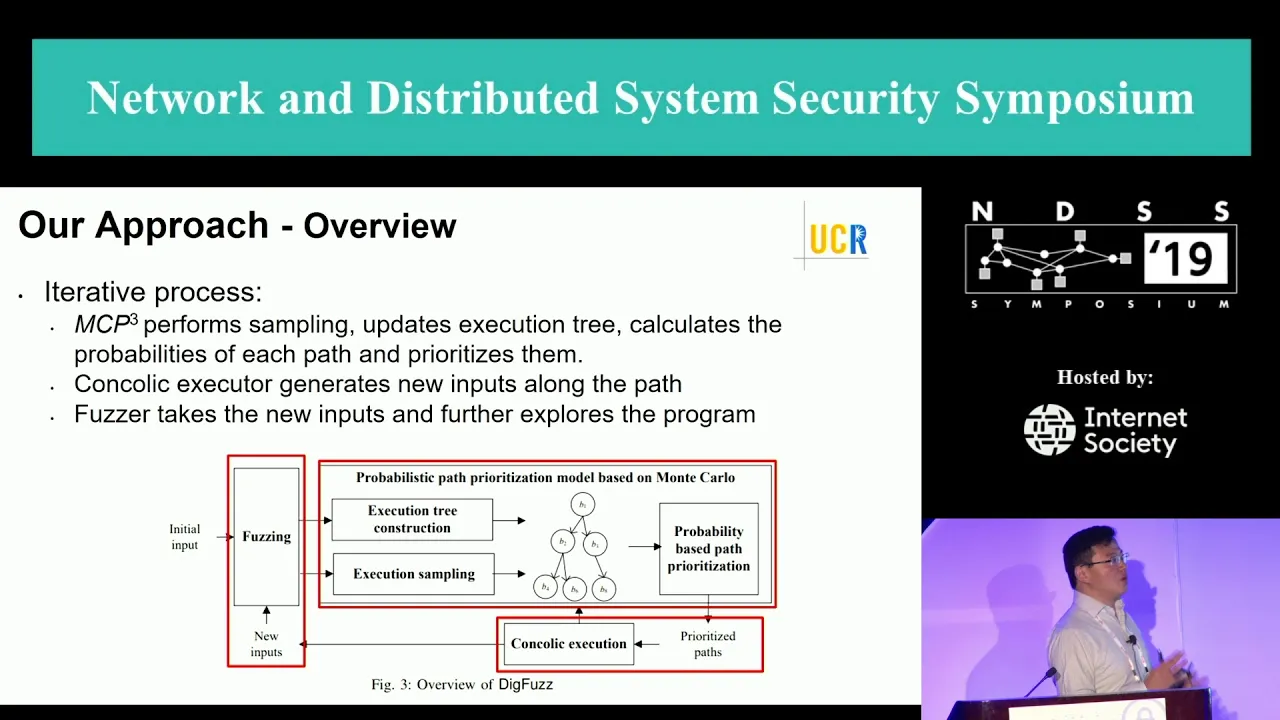
NDSS 2019 Send Hardest Problems My Way: Probabilistic Path Prioritization for Hybrid Fuzzing
NDSSSymposium
496 views•2019-04-02

How realistic is Cities: Skylines?
CityBeautiful
159K views•2019-02-14

GUIs & TUIs: Choosing a User Interface for Your Python Project | Real Python Podcast
realpython
2K views•2025-04-04

The OSI Model - Explained by Example
hnasr
225K views•2019-05-12
Cloud Computing - Introduction
elithecomputerguy
98K views•2019-10-07

From Traveler's Dilemma to Dynamic Routing | Demystifying Networking
IITBombayJuly
5K views•2019-08-04
Trending

One Must Imagine Sisyphus Happy
vlogbrothers
61K views•2026-07-21
Future of Taylor Farms
maighstirtarot5385
11K views•2026-07-21

The Downfall of OnePlus!
techwiser
65K views•2026-07-21

My Friend Locked Up The Engine On His K-Swapped Bug...
boostedboiz
128K views•2026-07-21