The James Webb Space Telescope discovered approximately 80 Jupiter-sized free-floating planetary-mass objects in the Orion Nebula, with about 40 of them forming gravitationally bound pairs separated by 25-400 AU, a finding that challenges existing star formation and planet formation theories as neither can explain the formation of such small objects in binary configurations.
Installieren Sie unsere Erweiterung an, um sofort in jedem Video zu suchen
Jupiter-Sized Worlds Are Floating in Pairs #space #astronomy #shorts #science #jwst #orion #jumboHinzugefügt:
The James Webb Telescope looked into the Orion Nebula.
It found something it was never supposed to see.
About 80 Jupiter-sized worlds drifting alone in deep space [music] with no star to orbit.
But they weren't alone.
They were paired with each other.
Star formation can't make objects this small.
Planet formation can't eject them in twos.
So, how did they get there?
Nobody has an answer.
Ähnliche Videos

Spiral Galaxy NGC 3370 from Hubble | NASA APOD 2025-11-05 #Shorts
galaxygallery
938 views•2026-05-30

🎬 Title: Milky Way & Andromeda Collision: The Future of Our Galaxy 🌌 #astroph #askap
SulaimanKhanSulaimani
429 views•2026-06-01

SOMETHING inside the SUN is CHANGING
RaysAstrophotography
1K views•2026-06-03

NOAA Warning! Massive Double Cannibal CME Impacting Earth: G4 Storm Watch!
worldnewsreporttoday
1K views•2026-06-04
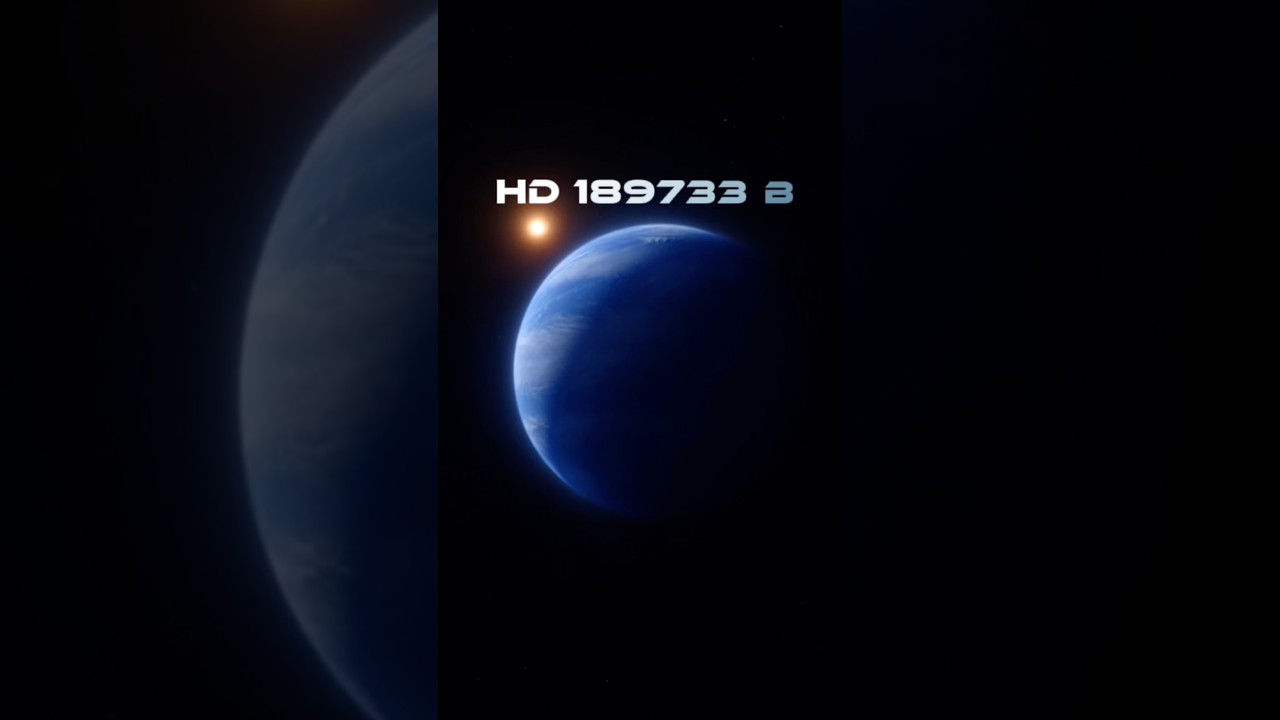
🌌 HD 189733 b | The Planet Where Glass Rains Sideways
EVENTHORIZONUK
3K views•2026-05-31

Captured the Blue Moon (with a twist) 🌙✨ #space #bluemoon #telescope
realAstroExplorer
674 views•2026-06-01

10 Planet Where a Black Hole Replaces the Sun
cosmicexplorer-EN
147 views•2026-06-02

Is this a copy of our galaxy? Discover Galaxy M81!
UniverseDocumentaries-cc4mb
995 views•2026-05-31



