This analysis provides a necessary reality check by distinguishing structural plate stress from volcanic activity. It is a masterclass in using empirical geological data to silence sensationalist fears.
Install our extension to search inside any video instantly.
Aftershocks continue from 6.0 Earthquake Hawaii. Will this trigger Mauna Loa? Saturday update.Added:
All right. What's going on there, folks?
Welcome back here to a Saturday. Good afternoon, good evening out there.
Saturday, May 23rd, 2026 and and morning time as well out in Hawaii. Uh 12:47 p.m. That's local time here in California. Uh the latest activity on the earthquake 3D globe shows a 1.6 across the uh Texas area out there around the Peran Basin and the oil fields out there. Quite a bit of oil fields. So, um I've been up well, I went to bed about 8:00 this morning here. We had a massive power outage where I live where uh well, I couldn't sleep and that came immediately following the update last night of that sixpointer in Hawaii.
So, I'm working on a couple hours of sleep here. Not good. Anyway, let's go ahead and cover what's going on here with the Hawaii uh volcano activity.
It's off here on the western flank of Monaloa.
That six-pointer was quite the shaker. I report I I appreciate the reports that came in last night and still coming in this morning of the uh you know what it felt like and whatnot. This was felt across the entire Hawaii chain here, Honolulu included around the epicenter of that sixpointer that came in early this morning. Uh it's you know some very strong shaking as you can see there on the intensity map. Very strong. In fact, a lot of people uh reported uh you know some decent damage out there from this uh from this sixpointer that struck about 14 miles underneath this area. Uh it has stirred up a little flurry of aftershock activity as you can see. Uh this earthquake originally coming in as a 5.9. It did get upgraded there to the 6.0 status just after midnight my time.
So, Hawaii time would have been uh 8 o'clock, nine o'clock, somewhere around there. Probably about the time as everyone's getting ready to go to bed, right? Um so, they uh they put out a little aftershock statement here. Don't pay too much attention to it. It really doesn't mean anything because threearters of the time this is irrelevant. It always does what they say it's not going to do. Um, and it's uh, okay, let's go ahead and read the tectonic summary here of what they believe is uh, going on there. Uh, the 6.0 earthquake occurred to a bleak reverse faulting at depth of 14 miles.
Large magnitude earthquakes in Hawaii that occur at this depth are typically caused by the lithospheric flexure due to the weight of the Hawaii islands. And we've talked about that a lot when we see, you know, these earthquakes that occur. Let me see if I can pull one up here. Off in this distance, uh, fairly deep, 3.0, 16 milesi deep. Sometimes we'll see three or four pointers out here around where the, uh, Hawaii islands have been forming right throughout time. Obviously, they've traveled or moved. They haven't moved, but the Pacific plate has moved over the hot spot. Uh here's where you know kind of began up here and it's followed this path to where we're at right now as a Pacific plate moves off to the northwest. So over that hot spot these Hawaii chain Hawaii islands will form and it does look like it's kind of taking a southward turn here. But that's uh that's what's forming, you know, and and creating the weight there on the Pacific plate itself, the oceanic crust.
So you do get those uh uh larger quakes.
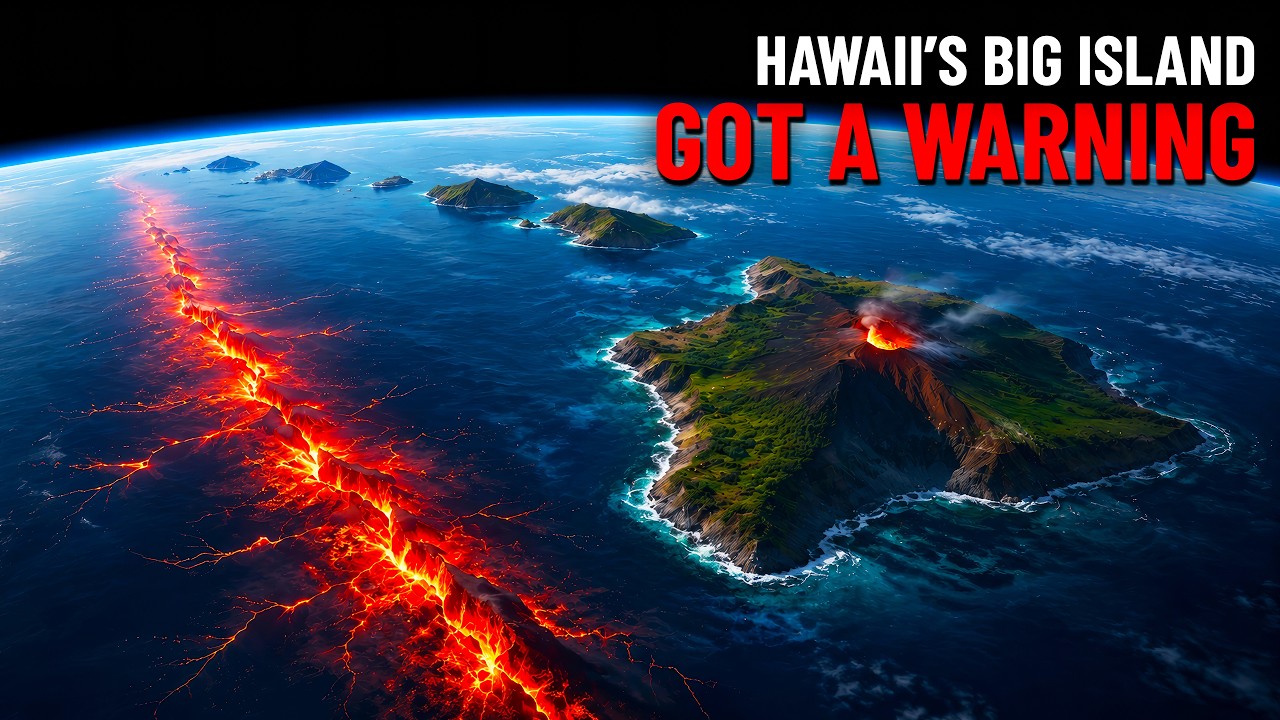
Uh the May 23rd event is not directly related to magmatic processes and that's it kind of made sense being in the position and the depth of where it was at. Yeah, it's on the western flank of the Monoloa area, but it's deep enough there that uh that that it's pointing towards the weight itself of the Hawaii Islands on the Pacific plate, the plate itself, the oceanic crust. Um, so this just tells you, you know, exactly what's going on, how the Pacific plate, um, moves over the hot spot. Uh, the Hawaii Islands is a young island.
The island of Hawaii is a young island and the chain of volcanoes that stretches about 5,500 kilometers uh, in the northern Pacific Ocean. And I showed you guys that it stretches all the way up here to the Illutian Trench.
So the Pacific plate has kind of moved all over the place here.
Um the island chain results from magma generated by a source deep within the mantle. The Hawaiian hot spot, the ocean crest and the lithosphere above the hot spot within the Pacific tectonic plate move to the northwest with respect to the deep magma source. So over millions of years supposedly there new island forms new island form volcanoes form and older volcanoes are carried away from the hot spot towards the northwest erode and eventually subside beneath sea level. So we do get these earthquakes um it's the release of lithospheric stress rather than short-term process.
So it looks like it takes a little long term here.
Uh, there has been 36 earthquakes of magnitude 5.0 or greater within 60 miles of the event today. So, I actually pulled up here the historical model to show you guys, you know, what's going on and what took place here. I'm not for sure why they um have this as a small circle still. I think it's I think they're still counting that as a 5.9 because the 6.0 circle should be similar to this one, but it's not. See, it's I can see the size difference here. Uh but that's where the earthquake struck last night.
North or southeast here of Captain Cook region, southsoutheast.
Uh that area though that can get some bigger quakes as well. You know, look at that. 6.1 back in uh 1841.
This one 1951 6.3. So it's been a little while. you know, to say this is rare would definitely be a good statement because it just doesn't happen all that all that often out here. Um, I pulled up 5.5 and above. It's possible maybe we've seen threes and fours out here, but nothing this big and not in any recent time. You know, the last one was um 6.3 in 1951 uh specifically for this area. Other areas of Hawaii definitely can get uh large and I believe the largest one's a yeah big old 7.9 earthquake. Yes, Hawaii can have a big earthquake that big.
That's crazy. Uh back in 1868 uh more than likely that's associated with the current ongoing Pahala earthquake swarm that happens deep underneath this area. Uh there was also 7.7 here back in 1975.
So, Hawaii no stranger to large earthquakes, but they don't happen all that often over here on the western side of the Big Island. But, uh, you know, reviewing the data and stuff like that, it does look like it's, uh, related to the weight of the Hawaii Islands on the Pacific plate. Um, I don't see anything that would point to, uh, anything other than that. Uh, some of the aftershock activity showing up. There's the uh sixpointer signal on one of the seismograph stations there on the big island that uh definitely uh it showed up there across many seismograph stations um in California in Japan. It picked up the seismic wave from that 6.0 event. And that's a that's a decent size event. That's a major earthquake. Not a mega quake, not a great quake, but it's a it's a uh you know, it's a major earthquake, 6.0 earthquake. and that could definitely do some damage. Since then, um I'm seeing one larger aftershock, but not anything comparable to the um last night's sixpointer. Let's see what we got here. Far as the largest magnitude goes, that's going to be that fourpointer here. 14 miles deep, a number of threes.
Um and you know there's always possibility here that we could see some maybe a similar event. Uh now whether we see something larger than this that that will just have to be watched closely.
You know once you get a little cracker going on the weight the weight there from the Hawaii Islands uh from the Big Island here. You know it's stress definitely stressing this area at depth.
Uh and it's possible we could see, you know, maybe a little domino effect of some further uh stress quakes out here in that size magnitude, but we'll watch it and uh see what um becomes of that.
No effect there on the Kilawea volcano.
I wonder if it showed up on the um let's go see if it showed up on the uh deformation data there at Kilawea volcano. Sometimes uh sometimes those uh they will show up.
See, get rid of this. Trying to find the little triangle down here. Yeah. So, that power outage last night that I had had nothing to do with anyone taking me down. I It was a weird power outage and I still can't figure out what caused it.
I can't get any information on it here where I live. I was out power from uh from 2 to about 8:30 in the morning. So, I've been up since well, I went to bed at 8. Got a couple hours of sleep here, but um took everything down, the internet and the power. Look at that spike right there that the sixpointer stirred up on the um deformation data. That's a killer web volcano. They do show up like that. Uh but it does look, you know, interesting when they they pop up.
That's a big jolt, you know. But for now, they're thinking that uh it is strictly uh just lithos lithospheric flexure, you know, kind of like uh oh, when you're up in the airplane there, you get the turbulence, right? Notice how those wings there of the large airplane to kind of flex with the uh the motion. But this is different in a way.
This has, you know, everything to do with the the buildup of the Hawaii Islands on the oceanic crust and it does add stress in areas nearby. And, you know, they they tend to happen uh oh, I don't know what the regular reoccurrence interval is, but that it, you know, not saying we won't see another one around the area anytime soon, but you just never know. But it uh it can definitely happen.
But I don't see any effect there on Kilawa volcano. Same for the Monoloa.
Now if this if for you know we all know that earthquakes can trigger volcanoes and vice versa.
Um, but if this were to stir up the Monoloa volcano, which you know has been inflating since 2019, since the last eruption, we would see, you know, like a swarm of activity. Uh, you know, but I don't see that right now. I don't see any unusual activity around Monoloa. If we if we had seen that, it would show up here. I don't see it yet. So, that's probably a good sign there that nothing uh got stirred up in terms of any volcano activity out here. This is strictly just the weight putting the stress down there underneath the um the Hawaii islands, the big island here.
That was definitely a good size one.
Yeah, it was up there in the yellow.
Pretty crazy. But, uh, all right, let's see what else we got going on here around the planet, folks.
Watching Hawaii. That's kind of out in the middle of it all, huh? I remember we had a, uh, remember that uh, what year was that? I think it was, let me think here for a second. It was 200 2021. We had that eight pointer up here in Alaska. It's about the same time that we had a uh I think a sixpointer down here.
Sometimes these middle point areas, right, when you got the western Pacific stressed and the eastern Pacific stressed out here, the middle point boundaries tend to pop. Nothing popping up here in Alaska yet. And look at the look at the western Pacific. Look how quiet it is. No, nothing's showing up. Let me check the earthquake 3D globe. There's a couple small quakes in the three range, but whoopde-doo. Wow, that is very minimal old activity here from yesterday in the Alaska area. This is a little concerning. Look how quiet both sides here of the Pacific plate are with activity in the middle.
See, this is reminiscent of of the uh I I believe it was a five or six pointer that struck. I guess I can go back and look here since I have all the um Where did my earthquakes go? It was off here.
Yeah, C2021 6.2 that was out there 35 miles deep.
But it seemed like around that time, excuse me, or shortly thereafter, we had a um something pop up here along the Alaska area that 8.1 I believe it was. Uh but anyway, it just I I find it a little strange, you know, when you look at these maps all the time. Quiet out here, quiet across California, middle area here of the Pacific plate, very active with, you know, a decent size earthquake.
E. All right. Well, I guess we'll see what happens here. I know that's the largest event in the last 24 hours um today after midnight.
And we've had Wow. We've only had actually one fivepointer since that earthquake last night. 5.2.
And that's way over across the Java trench here.
So, a little quiet. Let's see what's going on across California. I know there's nothing big, but let's see if we got any swarms going on here. Oh, wow.
Looks a little quiet, folks. One of those times where quietness may not be a good thing. Little 2.6 down there south of Mexalei. Aside from that, looking at this, it's super quiet.
There's some smaller earthquake activity even around the Broly seismic zone. Got four earthquakes. Uh, and those are from yesterday.
It looks super quiet out there.
Goodness. Bay Area, super quiet as well.
One earthquake just off the Hayward fault early this morning about two o'clock or so. A little little 0.5.
Cascadia subduction zone quite as well.
That earthquake from yesterday.
Uh Mount St. Helens up here.
Got one earthquake outside the zone. I guess we better double check that and see what we have because Mount St. Helens and Mount Reneer actually been having a little bit of earthquake activity in the microquake range.
which uh they've reported a small little fraction of them here recently, but I think there's a lot more happening there than what they're being reported.
Nothing in terms of a volcano getting ready to pop, but look at the S-wave here from that sixpointer in Hawaii. See those wavy lines? So, the earthquake struck right around this time. And it does look like maybe there was one earthquake previous to the S-wave popping up here locally. But yeah, this is the distant 6.0 in Hawaii uh showing up in Washington state that uh definitely made the seismograph station there a little wavy, but as you can see uh I still see earthquake activity out here about 7 o'clock this morning, you know, and some of these other ones are earthquakes as well, but that's at um Mount St. Helens.
So really nothing being reported. It's a weekend. They're not really going to report anything unless it's above I think about 2.5 or so across this area for whatever reason. I don't know, but that's how it is. Uh nothing major going on across the rest of the country and the rest of the world. Let's see what we got here.
I got New Zealand stirring up a little bit. Couple threes down here across North Island. been pretty busy with a lot of deep activity here recently. It's an area to watch closely considering the massive amount of deep activity underneath the North Island. Um but nothing big, you know, nothing big going on. Just a big uptick though. Got that deeper activity up here across the Tonga Trench once again as well. 5.7 south uh the Indian Ocean out there.
That's from yesterday that, you know, it's a spreading center out here. So, that would enhance areas up north along this northern edge here of the um of this plate. Let me show you guys the um general plate movement. So, that earthquake struck right about here where the hand is and to the west of where the arrows are. But the majority of this is a uh divergent zone far as the boundary goes. and pushing apart if you will. Notice the arrows pulling away from each other. And that general stress model arrows point right here towards the Java Trench in the Indonesia area. And that's, you know, following that event from yesterday. It does look like that is indeed happening. Uh we did have a 5.2 earthquake as well following that 5.7 down there and also a swarm back over here. Big crunch going on across the Philippines. Uh so yeah, this this earthquake is the I believe the result of that elevated activity we're seeing right now. Uh just the way the general plate stress model works.
Nothing major across Japan for now.
Let's see here. Wow, we got a what's going on out there. Is that around the Turkey area or off near CIT? It looks like 4.6 4.1.
Quite a few other earthquakes in there as well near the uh Greece area.
Nothing big.
Atlantic Ocean pretty quiet. South America area still getting uh little swarm going on there. Not pretty quiet up here across the middle America trench and Central America area. That is uh quiet. Guess we'll see what happens.
What do we got there? 2.9 coming in.
right now. See, it always find that little odd here.
Where's that 2.9? Every time I cover this area of the Cascadia and say how quiet it is, we get an earthquake up here. That looks like it's right on the southern end of the Cascadia, northern California, Oregon border. Let's see. Is it showing up?
Uh, I don't think it's that. It's possible it could be that if that's the case and it may be a it's a ways away from Petroleia which sits right down here 2.9. See that's coming in right at the southern end of the Cascadia. You get these stress stress crystal quakes up here. When you get maximum pressurization and it's been uh been a little amplified out here in the last 30 days. There's that one that was struck directly on the Cascadia back on the 8th of May. That was a 4.8 literally right on the plate boundary and that's not a good sign. We've seen a lot of tremor counts here, slow slip events happening underneath this area adding stress upstream potentially um you know triggering this area for a partial rupture of the Cascadia. I don't know if we're primed yet for a full rupture, but you you just never know. I do think we are very well due for a partial rupture down here. And that could be up an 8.1 8.2.
Um, and that's not just making up numbers. That is legit.
That's 2.9 right now. 2 miles deep.
We'll check out the trimmer counts a little bit later on this evening when they when they uh come out.
Uh, let's see here. Space weather activity though should be getting interesting, right? We should be able to see a number of sunspots that are coming around the eastern limb. Looks like we just barely can see the leading edge of that massive area back here. It is starting. It's already flaring it. This is a source here of uh quite a few X flares here in the last couple days on the far side. Let me show you guys real quick. This area right here, here's the eastern limb. This is the sunspots facing the planet. This is the side that we can see. Uh this is the far side. And this sunspot is very close here.
Uh should be uh like I said, it's just barely coming into view, but we don't have the full view yet of how massive this thing is or whether it's remains complex magnetically speaking. This thing did pop off uh a number of X flares back when it was back over here and it grew like crazy. If you look at the uh the map here, I believe this is it right here. See it?
Look how big it's gotten as it approaches the limb. There it was.
It just got bigger and bigger. Produced a number of X flares. And we'll get a glimpse of it here. Again, this is the far side, eastern limb, earth facing side. We'll watch that sunspot coming around. Uh it is currently not named yet, but uh it will have a name, I'm sure, soon enough. I am seeing the instability pop up. A little bit of sizzling kicking up here. And that's a sign of uh of an unstable sunspot. And I believe that is the source of this un instability.
That sunspot there that's coming around the eastern limb, southeastern limb there. Notice how it's just crackling and sizzling right here. I think we're going to have a little activity coming up here in terms of flaring activity.
this uh may start tomorrow but I think next week coming up be fairly active right now the flare threat 90% chance inflare at 25 xflare at five these numbers are minimal right now because of the sunspots that are currently facing us there's really not a whole lot of complex ones maybe this area back over here but looks like that's weakened quite a bit and that's going to be out of sight out of mind off the western limb here pretty soon uh but those numbers I'm sure will go up here this coming Uh, no major chronal holes facing us. No major auroras in the forecast for now, but that could change pending. We get a decent CME.
Uh, any close approach asteroids to the planet. I always like to look at this thing daily.
Uh, not because I want a giant asteroid to hit the planet, but you just, you know, they're always discovering these new ones and some of them have been been getting pretty close. It's like, how did you not discover a 140 foot um asteroid up until, you know, yesterday or or the day of? It's weird. So, at least someone's out there looking, though, I guess. Either way, for now, uh the closest one here is going to be this 40 foot newly discovered again bus-siz asteroid that's coming in about 400,000 miles, but that's without a doubt a uh outside the Earth moon distance, which on average is 239,000 miles. So, we're safe from the doom and gloom asteroid department for now.
Little sight risk here. It looks like they added on to the map today. Hey, tornado risk limited though across uh Jackson there down south uh portions of Mississippi and Louisiana and Arkansas here. A little small area also up in the Ohio area near Columbus. Little bit of wind and a little bit of hail threat. No major no major events happening here as far as severe weather today. We do have this, you know, slight risk, but nothing in terms of outbreaks. As far as anything coming up in the future, nothing uh in the future for now.
uh which is a good thing.
Let's see what we got here for the total accumulated precipitation runs. I think uh monsunala moisture is going to kick up here across the uh southern California area and desert southwest.
Let's see if it's picking it up yet. Not yet. But it's supposed to be a dandy of a looks like we got some Look at California. We're just dry, man.
Yeah, supposed to be about 92 degrees today here and just not good.
Uh but anyway, yeah, the monsuno pattern is supposed to be quite wet here. They did put out a um the climate prediction center put out uh some forecasts here.
There's a 8 to 14 day forecast. 6 to 10 quite wet there over New Mexico area.
Um, this was issued May 21st. So, this got this uh was put out fairly recent. See the monsunala moisture here funneling in. They've moved it though. It it did include portions of Southern California, but they moved that further to the east here in your typical monsunal zone below average there across the uh Pacific Northwest. And it's just going to be hot. I think it's going to be a hot summer.
It's already hot. All right. Uh seismograph stations out here. Little spike on Yellowstone.
Um couple smaller events there on Petroleia. Now, if this is the 2.9 up north, then does that mean we have another 2.9 coming in?
Let's see what we got here.
You see what I'm saying though? They they won't report any earthquakes unless it's above a certain threshold out here.
I don't even know if this has been reviewed. Oh, wow. It got reviewed quite quickly here.
So, that is holding steady. Uh, but it does look like there's another event that came in there on the Petroleia station here. But then again, this is all, you know, can't really be certain of a magnitude on it because that 2.9 happened further up north and away from the uh seismograph station which is down here.
But it does tell us that we got some increasing pressure out here and some movement. So, watch the Cascadia. Uh enjoy your Saturday, folks. We will see you guys out here for the Saturday night update. Hopefully, no more power outages. Um, make sure you guys subscribe, hype the video. Appreciate it. Have a good day. We'll see you guys out here a little bit later on. Take care.
Related Videos

Is dark matter real? - Why can't we find it? - physicist explains | Don Lincoln and Lex Fridman
LexClips
1K views•2026-05-30
Saptarshi Basu - Spectacular Voyage of Droplets: A Multiscale Journey to Extreme Flow Conditions
DAlembert-SU-CNRS
152 views•2026-06-02
A 6.0 Just Hit Hawaii — And It Came From The Wrong Place
TerraWatchHQ
115 views•2026-06-03

The Split-Second Mistake That Made Bouncing Bettys So Deadly
NoMansLandChannel
253 views•2026-06-02
Nobody Expected This Lava Reaction 🤯 #faits #facts
TendzDora
28K views•2026-05-30

The Silent Memory of Glass
UnchartedScienceworld
146 views•2026-05-30
The Difference In Charged And Neutral Particles
heavybrainspace
959 views•2026-05-29
A380 vs Every Vehicles Crash Test Challenge | Which One Win?
BeamLap
163 views•2026-05-29



