Voyager 1, launched by NASA in 1977 to explore Jupiter and Saturn, became the first human-made object to enter interstellar space in 2012, now drifting over 24 billion kilometers from Earth and still transmitting data back to us after nearly 50 years of continuous operation, carrying the golden record—a time capsule of Earth's sounds and images—until its power runs out around 2030.
Install our extension to search inside any video instantly.
Where is Voyager 1 After Nearly 50 Years in Space? #ShortsAdded:
Do you know where humanity's most distant creation is right now? It's over 24 billion kilometers from Earth drifting through the dark.
In 1977, NASA launched Voyager 1 on a mission to explore Jupiter and Saturn.
Its original mission ended decades ago, but incredibly, it's still sending signals back. A message that takes 22 and 1/2 hours to cross space.
In 2012, Voyager 1 made history becoming the first man-made object to enter interstellar space, the vast emptiness between the stars.
On board it carries the golden record, a time capsule of Earth's sights and sounds in case it's ever found by someone else.
It will keep whispering until its power runs out around 2030. For nearly 50 years, it's been humanity's loneliest and most courageous traveler.
Related Videos

Spiral Galaxy NGC 3370 from Hubble | NASA APOD 2025-11-05 #Shorts
galaxygallery
938 views•2026-05-30

SOMETHING inside the SUN is CHANGING
RaysAstrophotography
1K views•2026-06-03

There May Be A Giant Hole In The Universe... And We Might Be Inside It | The Cosmic Ledger Entry 015
TheCosmicLedger
145 views•2026-05-31

Captured the Blue Moon (with a twist) 🌙✨ #space #bluemoon #telescope
realAstroExplorer
674 views•2026-06-01

The Map We Sent to the Stars in 1977 — Why Scientists Now Regret It
TheAncientRecord7
183 views•2026-06-03

Is this a copy of our galaxy? Discover Galaxy M81!
UniverseDocumentaries-cc4mb
995 views•2026-05-31

10 Planet Where a Black Hole Replaces the Sun
cosmicexplorer-EN
147 views•2026-06-02
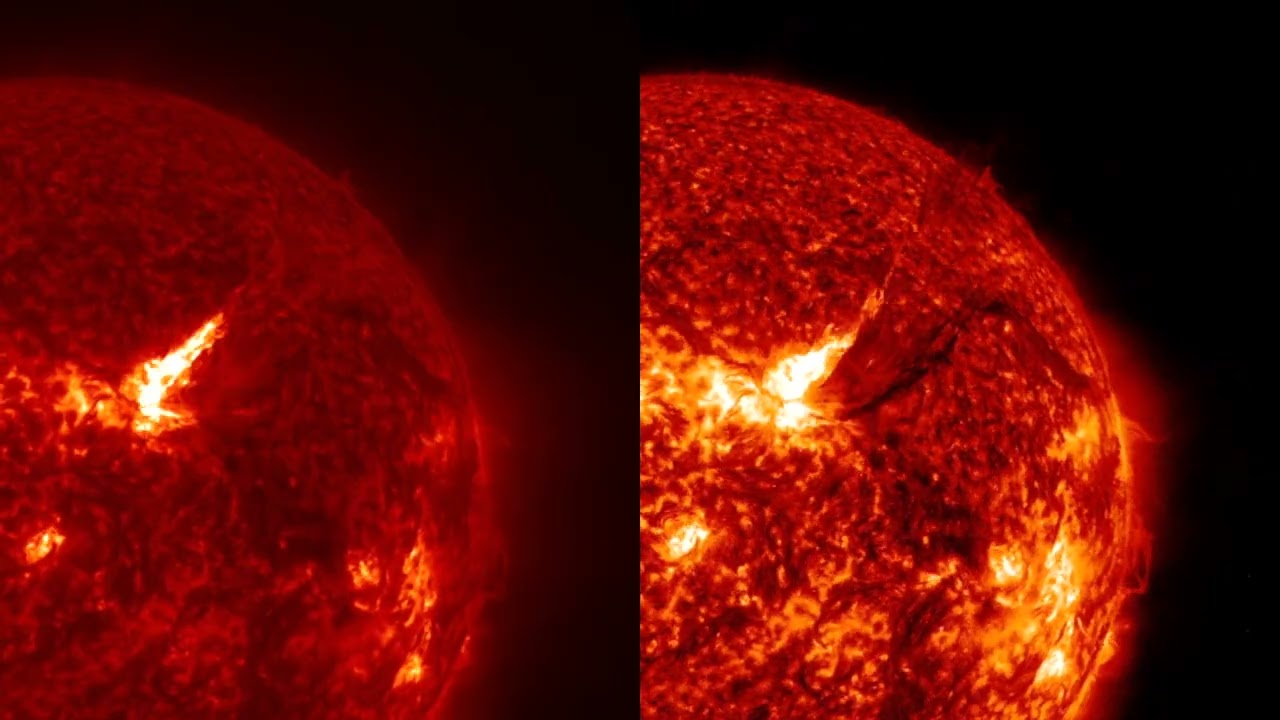
Solar Flares and CMEs at Earth - More Likely | S0 News June.3.2026
SpaceWeatherNewsS0s
2K views•2026-06-03



