Carl Jung's psychological framework reveals that excessive niceness often functions as a defensive persona—a mask built from childhood survival strategies where being liked was prioritized over authenticity. This persona hides suppressed emotions like anger, desire, and needs, creating a disconnect between one's true self and outward presentation. The key insight is that genuine kindness emerges from inner strength and self-acceptance, not from self-erasure or fear of conflict. The journey toward psychological wholeness requires integrating these exiled aspects of the self, which involves the difficult but necessary process of individuation—becoming who you truly are rather than who others expect you to be.
Install our extension to search inside any video instantly.
The Truth About Nice People — Carl Jung
Added:There is a kind of person the world calls easy, agreeable, lowmaintenance, the one who never causes friction, never makes a room uncomfortable, never says the thing that would make everyone shift in their seats. People describe them with a certain relief in their voice. So nice. And they say it the way you describe weather that never turns, water that never rises, safe, predictable, something you don't have to brace for.
What almost no one asks is what that safety costs the person providing it.
Nice people are not born. They are built slowly out of a thousand small negotiations that happened so early most of them were never consciously chosen. A house where anger meant danger. A parent whose moods governed the temperature of every room. A sibling who took up all the air, all the attention, all the permission to be difficult. Somewhere in that early architecture, a decision got made quietly without a single word spoken. It is safer to be liked than to be honest.
That decision didn't feel like a decision. It felt like personality. And so the nice person learned to read a room before entering it. Learned which opinions were welcome and which ones would cost them something. Learned to soften every request into an apology, every boundary into a suggestion, every disagreement into silence. They became fluent in a language most people never have to learn. The language of making yourself smaller so that others can remain comfortable. This is not kindness. It only wears kindness as a disguise. Real kindness is a choice made from strength. It costs nothing to the self because it comes from abundance from a person who has enough regard for their own needs that giving to others doesn't require self- erasia. But the neness we're talking about here is something else entirely. It is a survival strategy that calcified into a personality. It is fear. Wearing a very good costume. Carl Jung spent much of his career studying the gap between who we actually are and who we present ourselves to be. He called the presented version the persona, the mask assembled from what a person's environment seem to require of them in order to be accepted.
Everyone has one. It isn't inherently false. But Yung warned of something specific. When a person begins to believe they are only the mask, when the persona hardens into the entire identity, something essential goes missing. Something gets buried alive.
For the nice person, the mask is agreeableness itself.
And underneath it, growing in the dark, is everything that mask was built to hide. Anger that was never allowed expression. Desire that was labeled selfish before it ever had the chance to be spoken. Ambition quietly shamed into humility. Needs that were early on taught to be inconvenient. None of it disappeared. It went underground the way all suppressed material does, and it waited. You feel it sometimes, don't you? That flash of resentment towards someone you just helped, gone as quickly as it arrived, dismissed before you let yourself examine it. That exhaustion after a conversation where you agreed with everything and meant almost none of it. That strange hollow feeling after being told once again how nice you are.
As if the compliment landed somewhere slightly wrong. As if it wasn't quite a compliment at all. Kindness without boundaries quietly teaches people how to use you. Not because people are cruel by nature. Because human beings when given something that never resists them rarely stop to ask what that lack of resistance is costing the person providing it. They simply keep taking the way water keeps flowing downhill following the path that offers no friction. And the nice person trained since childhood to be that frictionless path rarely notices they've become one until they're already depleted. The people around a nice person tend to describe a very particular feeling in their presence.
relief, ease, a sense that nothing will be demanded of them emotionally, that this relationship, unlike so many others, requires no real labor. And for a while, this feels like connection. It has the shape of closeness. The nice person is included, invited, told how much they're appreciated.
But look closer at what's actually being appreciated. It is rarely the person. It is the function they perform. There is a difference between being loved and being useful. And it is a difference the nice person often cannot detect because both have historically produced the same result. People staying close. So the distinction stops mattering. Usefulness becomes indistinguishable from worth.
And a quiet unspoken contract forms in nearly every relationship the nice person enters. A contract nobody signs but everyone honors. You will accommodate and we will keep you.
This arrangement holds right up until the nice person needs something back.
That's when the room changes. A request for support is met with mild confusion, as if the nice person has broken character. A boundary, however gently stated, is received as an attack, as though the absence of accommodation is itself a form of aggression. Friends who were fine receiving unlimited patience suddenly have none to offer in return.
And the nice person standing in the wreckage of a need they finally voiced learn something they will spend years trying to unlearn.
Being needed is safe. Having needs is not. Most relationships don't end when respect disappears. They end when awareness appears. Because the moment the nice person begins to notice the shape of the arrangement they've been living inside, something shifts that cannot be reversed, they start counting.
Who calls only in crisis, who never once asked how they were actually doing, only whether they could help with something.
Who took the softness and never once wondered what it was covering. This noticing is where Yung's work becomes less theoretical and considerably more uncomfortable.
He wrote extensively about projection, the psychological mechanism by which people unconsciously assign their own disowned qualities to others. What we cannot tolerate in ourselves, we tend to locate outside ourselves, usually in the people who make that quality most visible by contrast. A person who has never made peace with their own anger will often find themselves unsettled by anger in others, even mild anger, even justified anger. A person who has never granted themselves permission to want things will find need in others somehow distasteful.
The nice person becomes a screen onto which everyone else's disowned material gets projected. Their softness reflects back other people's hardness. Their accommodation reflects back other people's selfishness. And rather than sit with that reflection, most people do something far easier. They decide there's something slightly wrong with the mirror. You were too sensitive, too accommodating, too available, somehow impossibly too generous. As if generosity were a flaw rather than the exploitation of it. This is the part that takes the longest to metabolize.
Because intellectually the nice person can understand that the criticism was never really about them. But the body doesn't process things intellectually.
The body has been trained over years, sometimes decades, to interpret any resistance from others as evidence of personal failure. So even once the mind understands the mechanism, some older, more primitive part continues flinching at disapproval the way it always has, continues apologizing before there's anything to apologize for, continues scanning every room for the fastest route back to being liked. People don't resent your accommodation, they resent the version of themselves it makes visible. And somewhere in that unbearable clarity, a question starts to surface that the nice person has spent their entire life avoiding. What would happen if I stopped, not stopped being kind, stopped performing kindness as a defense mechanism, stopped offering agreement as a form of self-p protection? What would happen specifically if the accommodation simply ended? Not through cruelty, not through some dramatic reversal, but through the quiet withdrawal of a pattern that was never actually a choice to begin with.
Most nice people never test this question. The fear underneath it is too old, too welldefended. Because somewhere in the architecture of their early life, the equation was set with brutal simplicity. Disagreement equals danger.
Need equals burden. Authenticity equals abandonment. And a child who learns this doesn't reason their way out of it later simply by acquiring information as an adult. The nervous system holds on to its earliest lessons long after the mind has outgrown them. It runs the old software quietly in the background, making decisions faster than conscious thought can intervene.
This is what Jung meant when he spoke of the shadow. Not evil, not some hidden villain waiting to be unleashed. The shadow is simply everything about a person that got exiled from consciousness because it once seemed too dangerous to keep. For the nice person, the shadow rarely contains cruelty. More often, it contains the opposite of what they present. It contains anger they were never permitted. It contains desire they learned to distrust. It contains an entire self that wanted things, said no, took up space and was never given the room to exist. Jung believed that what we refuse to face in ourselves does not vanish. It governs us from the dark, unseen, unnamed, shaping our choices while we remain convinced we are simply being who we are. The nice person's shadow is not a monster. It is a version of them that was never allowed to live.
And here is where the discomfort deepens because this shadow does not stay buried indefinitely. It leaks. It shows up in the resentment that flashes and vanishes before it can be examined. It shows up in the exhaustion that has no clear cause. It shows up most tellingly in the small acts of self-sabotage that seem to arrive from nowhere. The canceled plans right before something good was about to happen. The argument picked over something trivial. While the real grievance stays unspoken, the sudden inexplicable coldness towards someone who has done nothing except finally ask for too much. These are not random. They are the exiled self knocking. The people who demand your accommodation the most fiercely are rarely the people who have earned the right to it. They are simply the ones who found early on a source that never pushed back and kept returning to it the way anyone returns to something reliable. This is not a moral failing on their part. Exactly. It is what any system does when it discovers an input requiring no resistance. It optimizes toward taking more of it. The nice person, meanwhile, has been taught to interpret their own depletion as a character flaw. Not enough patience, not generous enough, too easily tired, as if the exhaustion were evidence of insufficient goodness rather than evidence of a role that was never sustainable in the first place.
This is where most self-help content stops, and it stops in the wrong place.
It offers the nice person permission.
Set boundaries. Say no. Practice self-care. As though the entire pattern could be dismantled through a vocabulary shift. A few new phrases deployed at the right moments. But permission was never the problem. The problem is that somewhere very deep, the nice person still believes what the room taught them long ago. That their real self, unfiltered, unaccommodating, honestly expressed, is too much to be loved. That belief does not dissolve because it has been named. It dissolves, if it dissolves at all, through the much slower and far more disorienting process of actually testing it against reality and discovering incident by incident that the catastrophe it predicted does not consistently arrive. This is where the story most people expect to hear turns and where this one refuses to.
Because the truth is not that the nice person discovers a new self and is instantly free. The truth is stranger and more unsettling than that. The truth is that the first time a nice person says no and means it, something in the room shifts, and it is rarely relief that follows. It is often loss. People who benefited from the accommodation do not celebrate its withdrawal. They mourn it, sometimes loudly, sometimes by simply disappearing. The way anything disappears once its function has been removed. And the nice person standing in that disappearance has to sit with a question that has no comfortable answer.
Were they ever actually wanted or only ever needed?
This is the threshold most people never cross because the answer when it finally arrives is rarely simple. Some relationships survive the shift, revealing themselves to have been real all along, capable of holding a version of the nice person that includes friction, disagreement, need. Those relationships deepen. They become for the first time mutual. But others do not survive it. And this is the part no one prepares you for. The loss of those relationships does not feel like liberation in the moment it happens. It feels like confirmation of the oldest fear. It feels like proof that authenticity really was dangerous, that the mask really was necessary, that the child who learned to disappear in order to stay loved was right all along. It takes a long time to understand that the opposite is true.
The relationships that end when you stop performing weren't relationships with you. They were relationships with the performance and grieving their loss while real is not evidence that authenticity failed. It is evidence that the performance is finally over and what remains is being sorted slowly into what was genuine and what was only ever transactional. Jung wrote that the privilege of a lifetime is to become who you truly are. He did not describe this as comfortable. He described individuation, the lifelong process of integrating the disowned self back into consciousness, as one of the most demanding undertakings a person can face precisely because it requires the dismantling of identities that once kept us safe. For the nice person, individuation means something specific and uncomfortable. It means allowing the anger back in, not as an eruption, but as information. It means letting desire exist without immediately apologizing for it. It means discovering that a no delivered without cruelty does not make a person unkind. It means understanding finally that the softness they offered the world was never wrong. It was simply incomplete, a fragment of a person mistaken for the whole. Most people who meet a nice person never see this work happening. They only notice eventually that something has changed. That the accommodation has limits now. That the agreement is no longer automatic. That there is underneath the same warmth that was always there. Something with edges now. Something that was not there before or perhaps was always there simply never permitted to surface. They rarely call this growth. More often, quietly, uneasily, they call it a change for the worse. They are wrong, but they will never say so because admitting it would require them to examine what they preferred about the version that never resisted them. What almost no one tells the nice person before they begin this excavation is that the destination is not becoming a different kind of person.
It is becoming the person who was there the entire time underneath the accommodation, underneath the careful reading of every room, underneath decades of translating their own needs into other people's comfort. The niceness was never fake. That's the part that complicates the whole story. It was real warmth, real generosity, real care for other people. But it was warmth deployed under duress. Generosity extracted through fear rather than offered through strength. Care that came with an invisible invoice attached. Love me back for this or at least don't leave. Real kindness asks for nothing in return. What the nice person practiced for most of their life was closer to a transaction dressed in kindness's clothing. And no one, least of all them, ever saw the difference because both looked identical from the outside. They only feel different from the inside. And that feeling, the quiet exhaustion beneath the performance, the resentment that flares and vanishes, the strange hollowess after being praised for agreeableness, that feeling was never a flaw in the nice person's character. It was the most honest part of them, signaling over and over that something essential had been left out of the arrangement, themselves. Jung believed that psychological wholeness required the integration of everything a person had exiled in order to be acceptable to others. The anger, the desire, the ambition, the capacity to disappoint people and survive it. Not because those qualities should govern a life unchecked, but because a self with no access to them is not a complete self.
It is a curated one, a persona mistaken by everyone, including its owner, for a whole human being. The nice person spends years building a life around being liked.
Eventually, if they're fortunate or if the cost simply becomes unbearable enough to demand change, they discover something far more valuable than being liked. They discover what happens when they stop needing to be. Not everyone survives that discovery with the same relationships intact. Some people only ever wanted the frictionless version.
When the friction arrives, so does their exit. This is not a tragedy to be avoided at all costs. It is information arriving late about what those relationships actually were. What remains afterward is smaller, usually quieter, and considerably more honest.
The people who stay are the ones who were never actually looking for someone easy. They were looking for someone real and mistook the performance for the person the way everyone did, including the nice person themselves for years.
There is no version of this story where the accommodation was never necessary.
It kept a child safe in a house where safety could not be assumed. It kept an adult employed, connected, included in systems that rewarded agreeableness and punished friction. The strategy worked.
That is precisely why it is so difficult to abandon.
But strategies built for survival are rarely suited for living. And somewhere between those two words, survival and living, is where every nice person eventually has to decide something no one else can decide for them. Whether they will keep offering the version of themselves that was built to be tolerated, or whether finally, carefully, without apology, they will let the rest of themselves back into the room. The ones who never ask this question spend their entire lives being loved for something they were never actually being. The ones who do ask it discover, often too late to reclaim the years already spent performing, that the self they were protecting everyone else from was never the dangerous one in the story.
Related Videos

0:39
Psychology
Inside Ronaldo’s Team Meeting
RonoSphereCR7
1K views•2026-04-17

7:25
Psychology
You Are Not So Smart: Chapter 4 Hindsight Bias, What is it?
TheBey8nD8
230 views•2019-09-15
49:35
Psychology
Sigmund Freud's Mind - Master Your Inner World (Your Unconcious Mind)
Ngaslife
1K views•2025-01-25

11:29
Psychology
What affects your mood?
RandyPaterson
602 views•2019-05-16
3:45
Psychology
Can you outsmart this logical fallacy? - Alex Gendler
TEDEd
2164K views•2019-11-25

1:02:21
Psychology
Understanding the Relationship between Fear of Falling and Mobility in Older Adults
fallpreventioncommunityofp3788
823 views•2019-04-08
54:04
Psychology
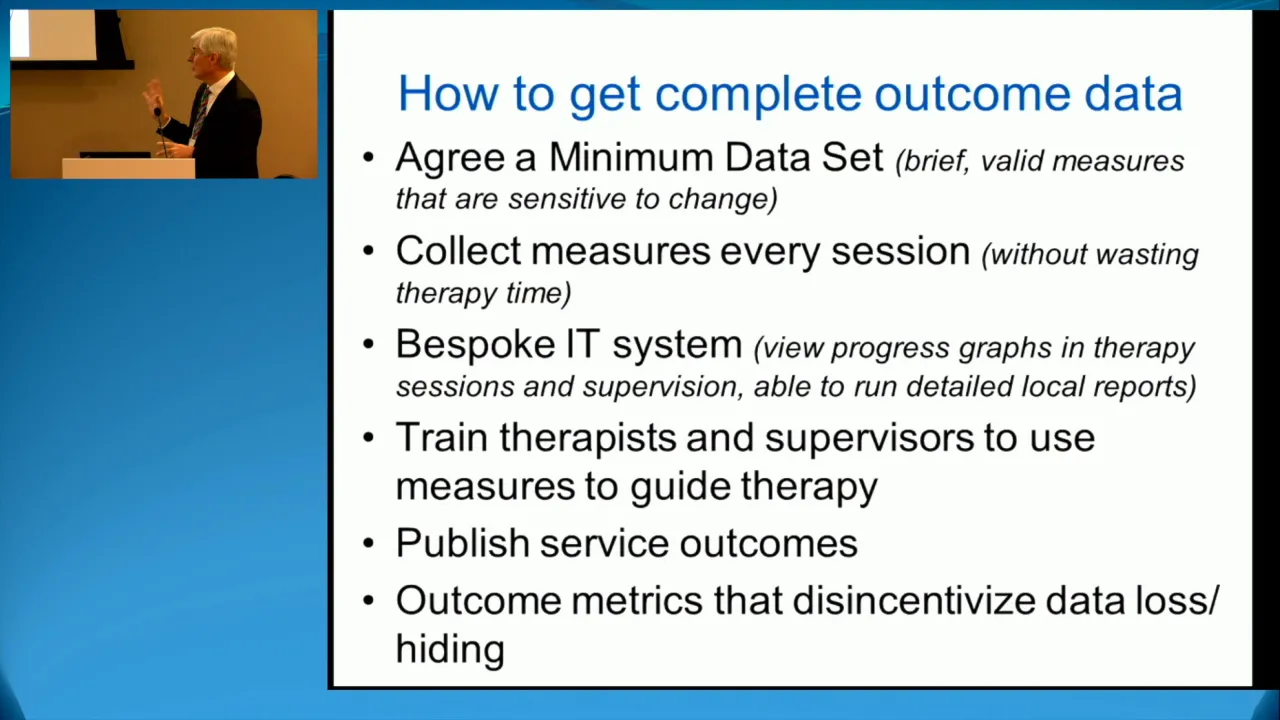
Measurement-based Care in Psychotherapy Workshop - Future of Psychotherapy Conference 2019
UofTPsych
243 views•2019-04-25

51:52
Psychology
Dr. Carol Tavris — Mistakes Were Made (But Not by Me)
skepticmagazine
14K views•2019-05-02
Trending

13:38
Law
WOW! Judge TURNS THE TABLES on Trump in His OWN $10B LAWSUIT!!!
MeidasTouch
197K views•2026-07-23

13:25
Business
Playstation NO DISC/NO BUY Fight Is Over...
DavidJaffeGames
4K views•2026-07-23

22:40
Business
Steam and Xbox Just Dropped The Hammer On PlayStation
OhNoItsAlexx
9K views•2026-07-23

16:52
Anthropology
Americans Confused in Australia for 17 Minutes Straight
IWrocker
17K views•2026-07-23