The video provides a necessary clarification of basic arithmetic conventions that are frequently misunderstood in viral contexts. It effectively demystifies the "left-to-right" rule, proving that most mathematical errors at this level are simply failures of notation literacy.
Install our extension to search inside any video instantly.
Most People Fail This Simple-Looking Math Expression!
Added:Hi friends, welcome to TurboMath Channel. In this video, we are going to solve three questions about PEMDAS rule.
In the first question, we have -5 * (13 13 * 4). Close parentheses.
What is the answer of this question?
In this question, we have multiplication, parentheses, subtraction, and division.
To solve this question, we need to follow the order of operations, which is PEMDAS.
PEMDAS shows the priority of the mathematical operations, and if you don't pay attention to the PEMDAS rule, you get the wrong answer.
In the PEMDAS rule, P stands for parentheses, E stands for exponents, M stands for multiplication, D stands for division, A stands for addition, and S stands for subtraction.
Multiplication and division have the same level of priority. Also, addition and subtraction have the same level of priority. When we have both in an expression, we start from the left and simplify the question.
Okay, guys.
According to the PEMDAS rule, first we simplify this parentheses. Inside this parentheses, we have subtraction, division, and multiplication.
According to the PEMDAS rule, first we simplify this division. -39 / 13 = -3.
Now, we have 13 - 3 * 4 inside this parentheses. The question is -5 * (13 - 3 * 4). Close parentheses.
Okay, guys.
Now, we have multiplication, parentheses, subtraction, and another multiplication.
Again, according to the PEMDAS rule, first we simplify this parentheses.
Inside this parentheses, we have subtraction and multiplication.
Multiplication has higher priority than subtraction. So, first we simplify this multiplication. -3 * 4 = -12.
Now we have 13 - 12 inside this parentheses and the question is -5 * (13 - 12) close parentheses.
Now we have multiplication and parentheses. Again, according to the PEMDAS rule, first we simplify this parentheses. 13 - 12 = 1.
Now the question is -5 * 1. -5 * 1 = -5.
The final answer of this question equals -5.
Guys, if you want to get the right answer of this question, you must follow the PEMDAS rule. If you don't pay attention to the PEMDAS rule, you get the wrong answer. Let's solve another question about PEMDAS rule.
3/4 to the power of 2 divided by (3 - 3/4) close parentheses.
What is the value of this expression? In this question, we have exponents, division, parentheses, and subtraction.
To solve this question, we need to follow the PEMDAS rule.
PEMDAS shows the priority of the mathematical operations and if you don't pay attention to the PEMDAS rule, you get the wrong answer.
In the PEMDAS rule, P stands for parentheses, E stands for exponents, M stands for multiplication, D stands for division, A stands for addition, and S stands for subtraction.
Multiplication and division have the same level of priority. Also, addition and subtraction have the same level of priority and when we have both in an expression, we start from the left and simplify the question.
Okay, guys.
According to the PEMDAS rule, first we simplify this parentheses.
Inside this parentheses, we have 3 - 3/4.
Since the denominator of this fraction is 4, we can write 3 as 12/4.
Now we have 12/4 - 3/4 inside this parentheses. Now the question is 3/4 to the power of 2 divided by open parenthesis 12/4 - 3/4 close parenthesis. Now we have exponent, division, and parenthesis.
Again, according to the PEMDAS rule, in this step we simplify this parenthesis.
12/4 - 3/4 = 9/4.
Now the question is 3/4 to the power of 2 divided by 9/4.
In this step, we simplify this exponent.
3/4 to the power of 2 equals 9/16.
Now we have 9/16 divided by 9/4.
Okay, guys.
To solve this part, we need to follow the KCF rule. In this rule, K stands for keep, C stands for change, and F stands for flip.
We keep the first fraction as it is.
After that, we change the division sign to the multiplication sign, and after that, we flip this fraction.
Okay, guys. Now we have 9/16 * 4/9.
9 / 9 = 1. 9 / 9 = 1. 4 / 4 = 1, and 16 / 4 = 4. We have 1/4 * 1/1. 1 * 1 = 1, and 4 * 1 = 4.
The final answer of this question equals 1/4.
Okay, guys.
Let's solve another question about PEMDAS rule.
11 to the power of 2 minus open parenthesis 87 divided by 2 * 2 close parenthesis then times 2.
What is the answer of this question? In this question, we have exponent, subtraction, parenthesis, division, and multiplication.
Again, to solve this question, we need to follow the PEMDAS rule.
PEMDAS shows the priority of the mathematical operations. If you want to get the right answer of this question, you must follow the PEMDAS rule.
P stands for parentheses, E stands for exponent, M stands for multiplication, D stands for division, A stands for addition, and this is stands for subtraction.
Multiplication and division have the same level of priority. Also, addition and subtraction have the same level of priority.
When we have both in an expression, we start from the left and simplify the question. Okay, guys.
According to the PEMDAS rule, first we simplify these parentheses.
Inside these parentheses, we have division and multiplication. Because division and multiplication have the same level of priority, we start from the left and simplify the question. 87 / 2 = 43.5.
Now, we have 43.5 * 2 inside these parentheses. The question is 11 ^ 2 - (43.5 * 2) * 2.
Now, we have exponent, subtraction, parentheses, and multiplication.
Again, according to the PEMDAS rule, first we simplify these parentheses.
43.5 * 2 = 87. Now, the question is 11 ^ 2 - 87 * 2.
Okay, guys. Now, we have exponent, subtraction, and multiplication.
According to the PEMDAS rule, in this step, we simplify this exponent. 11 ^ 2 = 121.
Now, we have 121 - 87 * 2. We have subtraction and multiplication. Multiplication has higher priority than subtraction. So, first we simplify this multiplication.
-87 * 2 = -174.
Now, we have 121 - 174.
121 - 174 = -53.
The final answer of this question equals -53.
Thanks for watching, guys. Please subscribe to the channel and leave a comment. Goodbye.
Related Videos

Solving a 'Harvard' University entrance exam question
AsadInternationalAcademy
125 views•2026-06-14
Algorithms for Generalized Signed Distance and Winding Numbers (PhD thesis)
NicoleZFeng
269 views•2026-06-15

Notes 6.3 Rectangle, Rhombus, Square
matthewmills6952
1K views•2026-06-18

Does the math actually hold up? Let's break down the logic.
rawXopinion
1K views•2026-06-15

NYT Hard Sudoku Walkthrough | June 17, 2026
Rangsk
2K views•2026-06-17
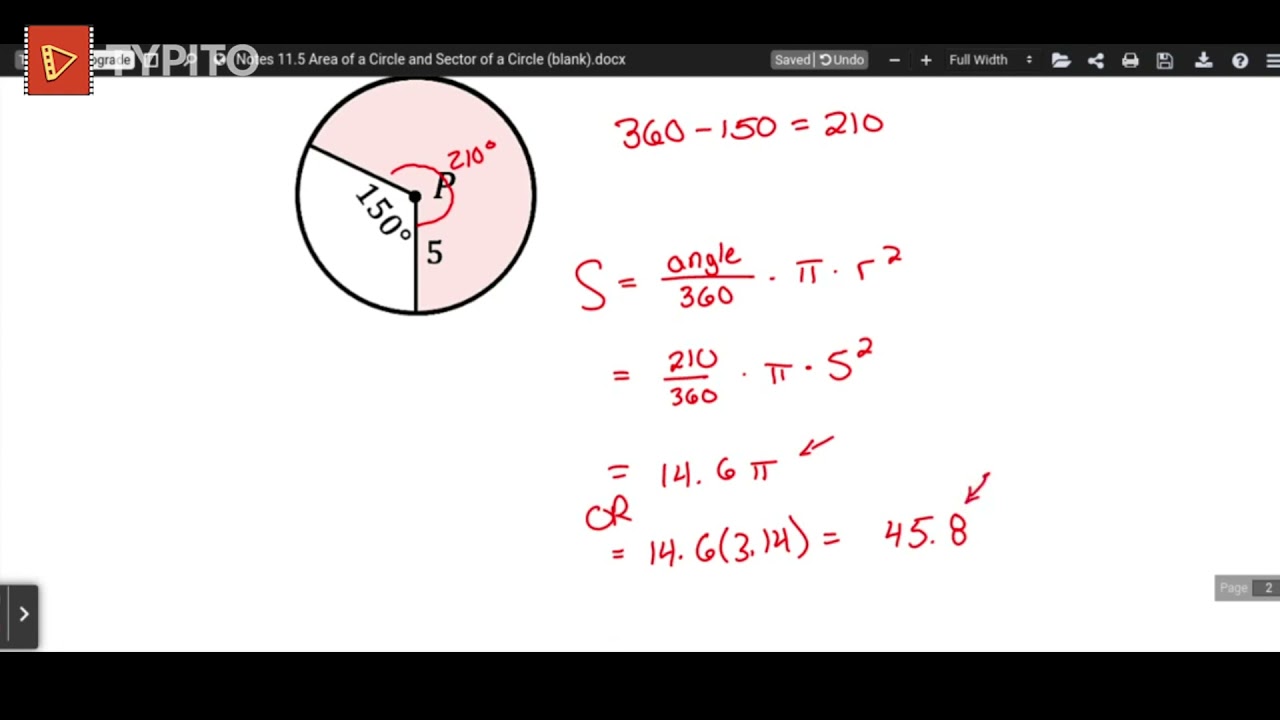
Notes 11.5 Area of a Circle and Sector of a Circle
matthewmills6952
251 views•2026-06-18

Notes 4.2 Isosceles and Equilateral Triangles
matthewmills6952
444 views•2026-06-18
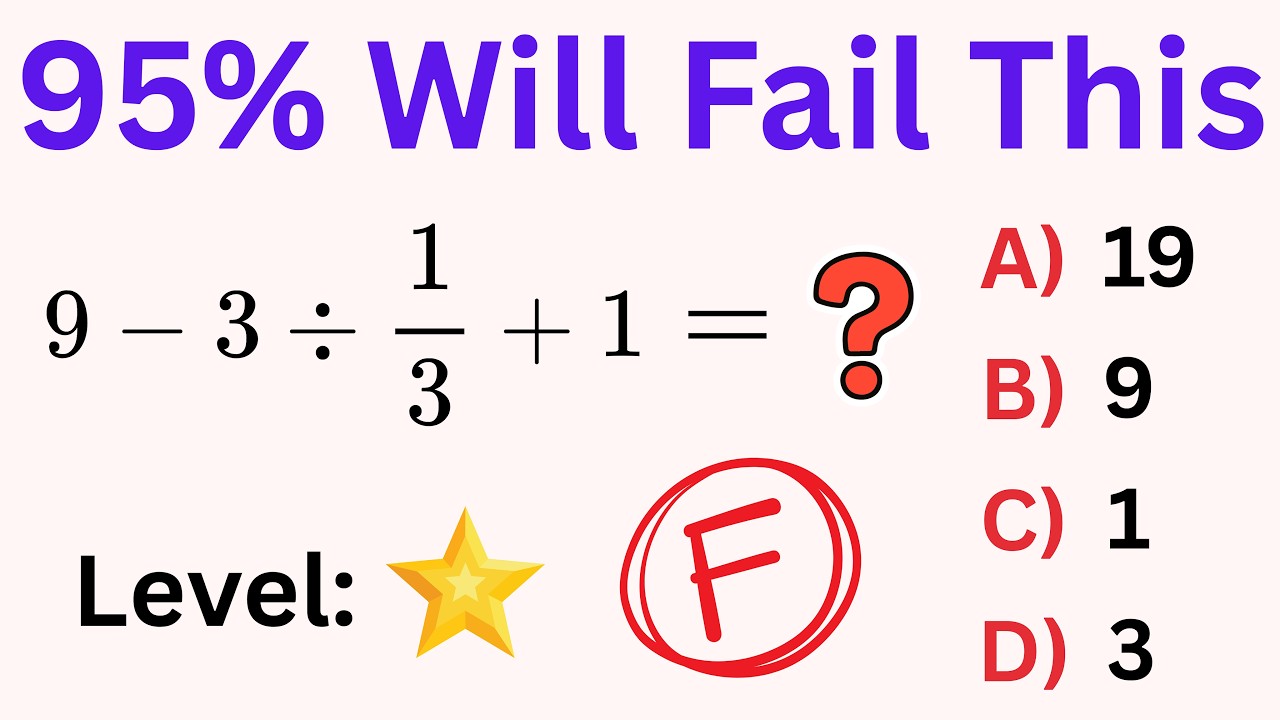
Can You Solve This?
brain_station_videos
1K views•2026-06-15



