Tesla’s pivot to model distillation is a pragmatic admission of hardware limits, cleverly using software optimization to delay the inevitable obsolescence of the HW4 platform. It’s a sophisticated stopgap that prioritizes fleet longevity over the raw power of uncompressed neural networks.
Install our extension to search inside any video instantly.
Tesla Finally Reaches HW4’s Limit and Now Forced To Do This | This Was the Only Option
Added:So, guys, Tesla's been making some pretty interesting changes behind the scenes that most of us probably haven't even noticed yet. And while most of the focus is usually on new software and new hardware, some of these quieter changes reveal just how much Tesla is trying to extend the life of its current vehicles while preparing for what's about to come next. Over the months, we've learned that Tesla's been quietly making significant updates to its hardware 4 computers, changes that are meant to reduce production costs while keeping it performing for as long as possible.
Teardown images shows that several non-essential components have been removed, including extra connectors that were mainly used for testings, diagnostics, and potential future camera expansions. The system also no longer includes a dedicated real-time clock battery, with the vehicle now relying on existing power systems and software for time synchronization.
They've also simplified the entire wiring setup by removing several copper grounding cables and using the vehicle's chassis as the main grounding point, reducing materials and all assembly complexity. Despite all of these hardware changes, however, there has been no noticeable impact on the full self-driving experience. Most of the adjustment happened behind the scenes, meaning that the majority of owners would not notice any differences to their vehicles.
However, with all of that being said, the biggest limitation with hardware 4 was never these smaller design changes.
The main concern had always been whether the current hardware had enough processing power to support their long-term autonomy goals. Now, just recently, new details have emerged on a brand new chip called hardware 4 plus with a much higher compute ceiling. This allows it to process more advanced AI models, while at the same time being more efficient and able to handle all the vehicle functions. However, with the current hardware 4 platform, the strategy appears to be very clear and now focused on improving software efficiency and to work around some of the hardware's existing limitations.
According to new information shared by Not a Tesla App, the latest FSD model running on the current hardware for vehicles are actually smaller, optimized versions of a larger AI model developed for more powerful chips running on the Cybercab.
Tesla appears to be training its most advanced AI models on a higher-performance hardware first, and then using a process called distillation to shrink those models down so they can be running efficiently on consumer vehicles.
Through distillation, a larger model learns complex driving behaviors in data centers before being converted into a smaller compressed model that keeps similar capabilities while requiring a fewer resources.
This is similar to what had happened with FSD V14 light for hardware 3 vehicles, where reduced version of the main model was created to work with an older hardware limitations.
The overall strategy is to develop a much more advanced FSD system on the strongest hardware first, then using software optimization to bring those improvements down to existing vehicles without relying on identical hardware.
With that being said, it's worth that hardware 4 is still in a much stronger position compared to hardware 3 due to having significantly more capable hardware. However, it's becoming clear that the latest version of full self-driving are reaching a point where they can no longer run at the full potential on hardware 4 like they do on the newer platforms. All right, so I probably know what you're thinking.
Hardware 4 is obsolete, it's no longer relevant. And if this were any other company, I would probably agree with you. No matter how much you distill or you optimize the software, it will still never be able to perform as well as the newer chips that are able to run an uncompressed version. Now, some parts of this is true just because of physics, but if you're able to train the data on the powerful hardware and then move the basics down to the lower-end chips, you pretty much got the perfect example of Jim versus locker boy. Matter of fact, Jim boys are doing extremely well from what I'm seeing lately without going through all the hassle of studying and going through private school. All it takes is a little bit of homework copying and pretty much just like hardware for, you've got yourself an A+ student. Now, in other news, just weeks after the first Rivian R2 deliveries, the company has released its first major over-the-air update adding several highly requested features while fixing early bugs and usability issues.
When the R2 first launched, it was missing some of the features already available in the R1T and R1S, but Rivian promised they would arrive through a future software update. And then just as promised, version 2026.24 has just rolled out and now delivers many of those additions.
The update introduces launch mode for the performance edition unlocking its full acceleration of 0 to 60 in 3.6 seconds. Rivian also added pet comfort similar to Tesla's dog mode, which keeps the cabin temperature safe for pets while displaying a message on the screen. R2 now also includes a gear guard allowing the vehicle to monitor activity while parked, record events, and send security alerts to the Rivian app. Other improvements include garage door pairing and in-vehicle Wi-Fi hotspot through connectivity plus subscription and improved digital key support that automatically selects the correct driver profile based on which phone key is paired and closest to the vehicle. Then now in separate news, Tesla has resolved a supercharging pricing glitch that caused unusually high charging fees for drivers. The issue was first discovered earlier this month when some supercharging locations started showing inflated per-minute rates with one station displaying prices as high as $6 per minute. The pricing error was caused by regions' per-minute billing system, which is required because local regulation prevent Tesla from charging drivers based on the exact amount of energy used. After the issue was reported, Tesla confirmed the incorrect pricing and quickly restored proper rates with company stating that all charging fees from July 2nd onwards would be waived. And instead of requiring customers to request refunds manually, Tesla is automatically making affected charging sessions completely free. So, there we have it, guys. It's honestly a little bit of disappointment that we're already seeing hardware 4 reaching its limits when we're just about 4 years in. Tesla is already deciding that it's not good enough. It's not able to handle the latest uncompressed versions that are running inside of possibly the Model Y cyber cabs and some of their future products.
Now, what we're probably seeing inside of these newer vehicles rolling around in the robotaxi network is the new a pre-production version of hardware 4 plus, which we'll be seeing sometime later this year to maybe early to mid next year. There's been a lot of talk about how far ahead of the game and what stages they're in right now, but everything looks pretty solid. From my last video, there has been discoveries and there has been confirmation from Samsung, which they are pretty much on track or even ahead of the game right now with hardware 4 plus. That means that it's going through some validation process and then it's going to go into mass production. Seems like this chip is going to be the one to get the uncompressed full version of full self-driving, which is probably going to be V15. That's going to bring a 10x parameter to the system. It's going to be light-years better than what we have right now. Now, what is up there here and unbeknownst to us is that it's running a distilled version and just like hardware 3, there's going to be so much optimization they can really do.
All of this is going to get bigger and bigger and with the newer updates, it's going to come to a point where they're just going to continuously push out more distilled, more optimized versions and it's just going to get weaker and weaker. It's not going to perform as well. So, this is exactly what we're going to be seeing with hardware 4. The early stages of it have already happened, which is right now. We're probably going to be seeing V15 light working on hardware 4 and then anything better is going to be on hardware 4 plus and hardware 5. But yeah, that pretty much wraps up on my personal thoughts of this. Take it with a grain of salt. I'm just very into this whole upgrade your car only when unsupervised is solved.
And it seems like at this point you want to get the car that can do it. You want to get the best of the best. You got to wait for the next chip. That is the chip that's going to be able to handle everything. It's going to be the one built from the ground up for unsupervised rather than a chip like hardware 4 which was built on a supervised development. In either I would love to hear your thoughts on all of this. Are you going to be waiting for hardware 4 plus? How do you feel about your car running a distilled version right now? For me, I don't like anything that is distilled. I don't like anything that is optimized. I want the full on full production version and the best of it all. So, yeah, I would love to hear everything you have to say. I of course will continue to keep a very close eye out for anything that comes out on this and everything else. So, make sure you stick around. Hit the subscribe and that bell notification if you haven't already done so. And follow me on X at heyjohnny. Over there you will see things that you wouldn't see over here and you can chat with me anytime. I'll respond as quickly as possible. Anyways, this should be it for this one. Hope you enjoyed it. This is John once again.
Peace out.
Related Videos
6:13
Computer Science
TOP 15 Data compression Interview Questions and Answers 2019 Part-2 | Data compression | Wisdom jobs
wisdomjobs
281 views•2019-06-28

27:51
Computer Science
CTS 158: 802.11w Management Frame Protection
ClearToSend
4K views•2019-02-04
23:21
Computer Science
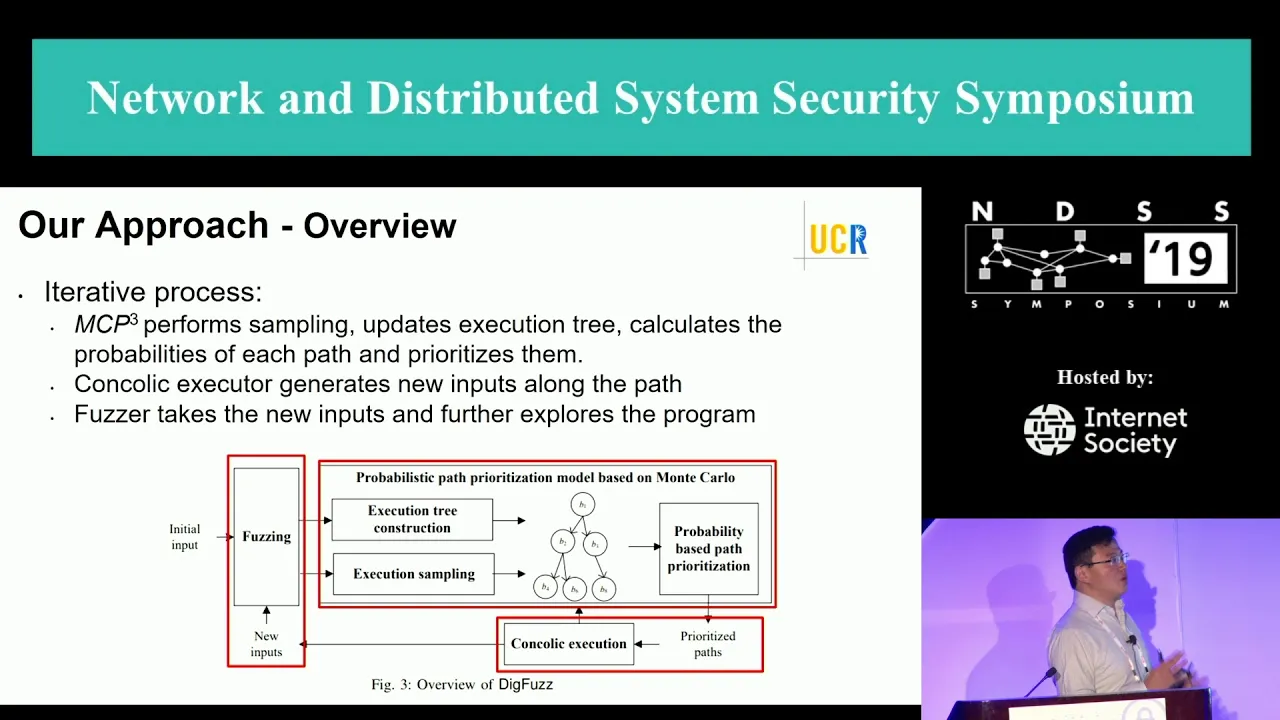
NDSS 2019 Send Hardest Problems My Way: Probabilistic Path Prioritization for Hybrid Fuzzing
NDSSSymposium
496 views•2019-04-02

12:48
Computer Science
How realistic is Cities: Skylines?
CityBeautiful
159K views•2019-02-14
46:39
Computer Science
GUIs & TUIs: Choosing a User Interface for Your Python Project | Real Python Podcast
realpython
2K views•2025-04-04

25:15
Computer Science
The OSI Model - Explained by Example
hnasr
225K views•2019-05-12
1:10:47
Computer Science
Cloud Computing - Introduction
elithecomputerguy
98K views•2019-10-07
2:24
Computer Science
From Traveler's Dilemma to Dynamic Routing | Demystifying Networking
IITBombayJuly
5K views•2019-08-04
Trending

13:38
Law
WOW! Judge TURNS THE TABLES on Trump in His OWN $10B LAWSUIT!!!
MeidasTouch
197K views•2026-07-23

13:25
Business
Playstation NO DISC/NO BUY Fight Is Over...
DavidJaffeGames
4K views•2026-07-23

22:40
Business
Steam and Xbox Just Dropped The Hammer On PlayStation
OhNoItsAlexx
9K views•2026-07-23

16:52
Anthropology
Americans Confused in Australia for 17 Minutes Straight
IWrocker
17K views•2026-07-23