A brilliant demonstration of how intricate constraints can turn a simple grid into a high-level exercise in pure logical deduction. Simon’s masterful navigation through the puzzle proves that true intellectual depth lies in the elegance of the process, not just the solution.
Install our extension to search inside any video instantly.
This Puppy has AttitudeAdded:
Hello. Welcome back to Cracking the Cryptic. Well, it's an absolute pleasure to have a puzzle by Aspartigus again today. even if Spartigus is using the opportunity to do some serious product placement and to trail his favorite band which is apparently called Snarky Puppy and they've got a single called Javi uh or a track called Jvi. Now I listen to it. It seems to be an instrumental and Asparticus tells me that uh Snarky Puppy are a sort of jazz fusion collective with up to 20 members. Um, so you could educate yourself if you want by listening to that. No, don't tell don't pretend you've heard them before. I mean, snarky puppy is a great name. I'll I'll grant that. Anyway, uh, Espartus realized he could use the the word Javi to make an XV Sodoku, and he'd been looking for an opportunity to use one of their songs, and this is it. So, we get the benefit of the puzzle that results. Espartus is brilliant. So, um, we'll look forward to having a go at that and I will explain the rules in a moment. Uh, these lettered puzzles often have quite interesting rules. Um, first of all, I'll do my own product placement and talk about our apps which are fantastic and which feature the new Worm by Blobs. It's called Eclectic Sedoku Worm. It's 12 6x6 puzzles all connected by one or two cells. Absolutely brilliant fun working your way through that. Give it a go. It's on the CTC app.
um you can select that as extra content, pay a tiny sum and uh entertain yourself for hours and there are other apps of course there like classic Sudoku too.
We've also of course invite you to our Patreon where on the first of the month we'll be having a new Sodoku hump which is going to be themed on Spider-Man. Um let's see how that goes. It's going to be entertaining. Um and yeah, the puzzles are all ready. need to write some of the text, I think. Um, and that'll be good. So, that'll be coming out on the 1st of May.
Before then, of course, you can check out our crossword and connections videos. Now, very occasionally, Gridoggram and connections get fused together accidentally, as happened this week. Um, I will say no more about that since it was my mistake.
Now, there's also, of course, merchandise if you if you wanted to do that. We've got um the new ratrun merchandise by Marty Sears. But let's have a look at the rules of Javi or snarky puppy Javi by Aspartigus. So normal Sedoka rules apply. One to nine will go into every row, column and 3x3 box. Harrah. We can get used to that. Um now there is a little bit of fog in the grid and um neighboring digits when we get them we'll clear the fog.
We have neighboring digits along the line must have a difference of at least five. So it's a German whispers line not in green today. Probably relevant I mean it is relevant to the uh album art. Um, digits separated by an x sum to 10. So these two digits sum to 10. Digits separated by a v sum to five. So these two sum to five. Uh, each letter except x and v. So all the letters of snarky puppy and that a and i. Well, a is repeated obviously can represent a unique digit and a cell with a letter in it corresponds to its unique digit. So obviously the two ps will be the same. the two A's will be the same, etc. Give this a try on the first link under the video. It'll be fun because it's by Spartacus. I'm going to start now. You can check the video length to guess how hard it'll be. Let's get cracking. So, German whisper line, right? The things I tell you about German whispers will apply. We We know that you can't put five on a German whispers line.
We know that the numbers along it alternate therefore between high and low to maintain the difference meaning higher than five and lower than five.
And there are a number of cells although not very many in this puzzle where you can't put six or four because they need the same neighbor on both sides. I think that applies to those cells and those cells and no other. Looking at this quickly, I might have made a mistake, but I think those digits can't be the digits. Now, I'm going to mark up in some color the alternating cells so that we can try and identify one set as high and one set as low and they will always be the same. So, we notice immediately that we've got four pinks in this box. Obviously, we know that five will be in one of those cells. Now these three fall in that area where I said you can't put four or six the monogous digits.
So same is true in box um seven. So these cells must contain five and the green digit that didn't get onto this group.
The X and V are going to be the disambiguators between high and low in this puzzle, aren't they? That's interesting. Do I have to start working on them now? Oh, A is is green. I don't know whether that's low or high, but I know it's there. Now I do know which it is because it's on the V, so it's low.
So A go well, all the greens go blue, all the pinks go orange, and they're all high. So here, this is a group of 1, two, three. Down here on the other end of this bone, we have 7 8 9.
Um, I is also low. That's no use because it doesn't appear on the line.
Now, any other groups of three or four?
Not really. They're not. I mean, we've got that's going to be orange because an X will have a low and a high digit.
We've had three blues in this row, but that's not completing the row at all.
These are one, two, three. We don't know anything about the letter status, do we?
Not really.
H.
These are all P's in puppy. So, they're all the same digit. Can we deduce? Oh, that's yes, we can deduce something from that because these two being the same means one of these three has to be the same. But we were told that the letters are unique. So P can't be the same as A or I. So this must be P. And we know that all these P's are now orange. I'm going to give them a little flash of green as well because they're all the same digit. And we've got four of them in the puzzle.
That feels interesting. Uh, there's two Y's. Oh, and they're they're obviously orange both times. I'm left with a U.
Does the U have to be the number five?
Now, that will apply if the number of letters the number of discrete letters in Snarky Puppy Ai are nine. Snarky has six different letters.
With puppy, you add P and U and there's I. I think this U has to be five because it's the only letter that can be. All the others have a color now. Lovely.
That's a lovely. That is the completion of the breakin. I'm going to claim U is five. Now, that digit can't be five and this one must be. I can color this orange because that's the last colored digit in the box. Four of each in each box.
And can I do any more with P?
Yes, I can actually. That's not P and that's not P. P is one of these cells, right? This is this is a slightly deeper deduction, but it's rather beautiful.
This is not P. If P was four or six, that cell would be a P and be four or six. Now, on an X, that would mean this digit would be four. In fact, in fact, I shouldn't put four or six. That's obviously six cuz it's high. But this would be six. This would be four. But that would mean that this would be four.
And four has to touch nines on the line.
Now you may say that in this position it can. But it can't because those are different letters. They are N and R.
So they have to be different. Um and they're not both nine. So A is not four.
That means this green flash P is not six. That means this is not six. And that means I found six in box seven.
Now, that may not do very much. It's going to put green into one of those cells and green into one of those three cells. But it's quite an interesting deduction.
Does also mean this isn't four. So that's one, two, or three. This is two, three, or four. Now, maybe I shouldn't put those characters th those pencil marks in because they are slightly obscuring the letters in those two cells, which I'm probably going to need to know.
Now, S is here.
I feel like this one could be four.
The These I suppose these are NR and P.
No, hang on. Y. Oh, one of them is Y. N R P and Y.
And the blue letters, what are they? S, A, I, and K in some order.
Right, this one is not four because of what we said. So that's one, two, or three. This one also is bounded by two different letters. So A and K are not four. Either S or I is four. If that was four, N would be nine and that would be N and N. Now is that an impossibility for some reason?
Don't think it is.
A or I is four.
Oh, and six is not P. We've discovered it's also not N. So six is either R or Y. So one of these two is a six. And that means they're both bordering this digit which is has which is going to have to be a one. In fact, R can't be six because it's got different digits on either side. So So that digit is not a one. Anyway, we've now found that K is one. So this digit, no, this A is not one. And this must be a 2 three V and that's A and I. So anywhere we've got A and I that's only there. We can mark it up as two or three. But that means anywhere we have oh well if K is one, S is four. And that is going to get us going. Like first of all, I can take nine out of P because it's in this cell with an on an X with a two or a three. Now, this four is going to have to be surrounded by nines. And that reveals the N is nine, and that digit isn't. I mean, that's not There's a nine in one of those cells, as well as the the P, which I've labeled green.
I don't know why I'm fighting so hard to avoid writing letters in the grid today when it would be the perfect day to do it, but it seems it seems that's what I'm doing. Now 4 9 so N is nine and I don't know which letter is six. P is seven or eight.
I don't know. This can't be six, can it?
R is seven or eight and P is seven or eight. This can't be six because that can't be one. So if P and R are seven and eight, Y is six. And that's going to give us a number of ones. Well, actually only two, one of which we already had surrounding that. So we're getting the ones up there. This six is not a lot of use. We've got a 78 pair in this row.
This digit sees one, two, and three. And it's got to be four. That's on the line.
So we surround it with nines.
And now I'm gradually losing the need. I was going to say losing interest, which is rude. I'm not losing interest in which letter is which number. I'm just lo losing the need to keep finding that out. Um, nine there, nine there, nine here by Sudoku. Nine in one of those two cells. We haven't approached the fog yet. That can't be nine. So maybe we're beginning to um this green P. So one of the this is a 78 pair. Oh, and they both touch this cell.
So it can't be three cuz three mustn't be allowed to touch seven on the line. I haven't really done any thinking about that. Now three is here and that must border eight and then we get seven there. Now can we do all that stuff here? We've got a 78 pair there.
And that means this one in between them can't be three. But we've we've done less with one two and three down here.
Maybe because I haven't filled this in.
This is seven or eight.
That doesn't But it's not P. So this cell is actually in the same position as this. This is sandwiched on the line between two different flavors of seven and eight. So that that's the one that can't be three that we needed to find. That makes this digit a three. That has to touch eight.
This one is seven. And that is P.
And that means I can get rid of my greenness.
It's just not necessary. We write a seven into. In fact, we know exactly where this seven is. This will clear some fog and reveal nothing.
Um, that's an eight.
Now, that means this is one, two, or three. I'm not going beyond that. We don't actually have many cells left to do. R is not P, so it's got to be eight.
We don't have many cells on the bone on the on the green line that is gray left to do.
Right, that's a five pair in row four.
That can't be one. This is a 4 six pair.
Neither of these are forced by eight and nine, but A. Oh, A is going to be there.
And we still don't know what it is. What about No, one and two are interchangeable here. However, there is a two in one of those cells and a two in one of those cells. That's an X-wing.
It's going to use up the two in columns two and three. We're going to have to place a two in box one in one of those two.
7239.
That digit is one of these.
This digit is one of those.
Oh, this can't be four. And we do have to place four in this box. That's good.
That means we get a five out of that.
Oh, we might get a naked single down this column. Not quite.
There are some quite restricted cells and one very unrestricted one.
Uh, okay. Oh, seven is on the X. That's really very straightforward if I'd noticed that. Right. That is going to disambiguate lots of things because A is now a three. So, we get all of the letters on the line. All of the numbers on the line. All of the letters are identified. Now, we're solving Sudoku, I think.
Um, and let's do it.
One of these is a one. 279 1 six is also in this group. So these are from 3 4 5 8. I wish I knew what that made them. I don't yet.
Right. One, two, and three. We need a one in this row. We can place that.
And that digit is two or three. That one is going to give us a one in one of these cells.
These are from ah this one in the corner is a naked single now since we got that one sees 48397 in the column 52 in the row and that one makes it a six and nothing is revealed under the fog. Is this going to be the trick of the puzzle? Nothing to be revealed under the fog.
That digit is four or five. I doubt it.
That's It doesn't feel like a Spartigus's style to me. Um, in this bottom row, we need an eight in one of those. No. 4 6 9 7. We need a two in this box. And I can find that now.
So, this is the one. This is the five to complete the column. That's now a four thanks to the pencil marking.
Got 269 still to place in this row and two three in that row. Well, that's going to use up the two twos for the boxes.
I should be better at this. Three, five, and eight still to place in this column.
I can't see how that works yet.
Oh, this one only has two candidates now.
Oh, we need a one in column five. I can place that.
One of these is a four. One of these is an eight.
Oh, this should Oh, this digit is three or four by virtue of everything else it sees.
174. We've got a seven to come in one of those two cells. I I don't feel this should be as hard as I'm finding it.
That digit is one or four by Sudoku, right? That can't be two. These are from 385.
That one can't be three.
That is three or eight.
Is this resolve better than I can see? I don't think it is. I know there's a four in one of these. It's not really helping. I'm not even going to mark it.
Ah, there's probably one naked single somewhere that I'm not spotting.
Three has to be in one of those cells in column three.
Wow. I'm just not getting whatever is to be got here.
857. This is not normally the bit I'm bad at in Sudoku, but today it is.
358.
I wonder if there's some Ywing to come or something. 174 935. This is 2 six or8.
If I could just get a digit here. Maybe there is something under the fog to help me.
Now I mean now my pencil marking is all getting a bit confused between the center marking which is the candidates available in the cell and the corner marking which is the limitation of places where a digit can go in the box.
So we had 1 7 9 2 all restricted.
Six is somewhere there. I haven't marked that.
Then we got eight in one of the corners of the box.
Three in one of those cells. Four and five. Four in one of those places. And five somewhere in that 2 by two. It's really not resolved. I feel like this thing is going to resolve in Oh, look.
Eight. Eight. It's eight.
That's going to make a difference. I think that can't be eight. Now, eight must now be in one of these two cells.
Now, what else has happened here? Two can't be in any of those by Sudoku. So, it's definitely in one of these two.
And then it's definitely in one of these two. Oh, that's not going to help.
That can't be six. So, there's only one place for six in this column since we got the eight. You're right. You're right. Well spotted. That must be nine.
This is two. And this is going to get us home because that deals with twos. And I feel like they were being a bit of a blocker. So, I think that's going to help. We've got three and four to go in here. So, all the bottom three rows are done. That finishes box five. That's an eight naked. One six pair there. 54 here can go in now. Yes, we're looking at that cell. So, I haven't quite touched the fog, but nearly. That's a 35 pair now in this row.
That is a naked two. And that's going to put a two in the corner. And the fog will clear to reveal one digit that we obviously need to disambiguate. That's gorgeous, actually.
That's very good. Okay. Thank you, Asparticus. Very neat puzzle construction there. We get a nine. Um, that's a six to complete the row. That's a seven cuz we pencil marked it. That's a four three and a five pair. And a 53 pair. And that is the solution to Zavi.
Snarky puppy. Zavi. Lovely idea from Aspartigus.
Um, I am clearly not qualified to comment on the music.
I will just say that um not a massive fan of jazz normally, although that's not entirely fair. I do like the famous two Dave Breubck pieces, Take Five and Blue Rondo Alurk. So maybe I'm being unfair on jazz. Um now what was the six there for? So can we spot the deadly pattern that that six is in?
that it had to sort out.
Is it 216 as a group?
No, I don't think so.
Normally, you you need a you find that the disambiguator is sorting out some sort of very obvious deadly pattern, but I'm not seeing that immediately here.
All it's a nice construction anyway. So, thank you to Esparagus for creating that. That was enjoyable. I do like a letterbased puzzle actually. They're they're quite good fun. Um, and do watch us again tomorrow if you have the chance. Do subscribe to the channel.
That would help us. And, uh, do feel free to like the video or even comment on it. Um, especially to congratulate Aspartigus. Thank you for watching. I will see you again soon on the channel.
Bye for now.
Related Videos

Olympiad Mathematics | Indian | Can You Solve This One?
PhilCoolMath
650 views•2026-06-03

Escaping the Fog
LogicLemurGaming
760 views•2026-06-03

H2 Math June Holiday 2026 Intensive Revision | H2 Math Tuition by Achevas #singaporemath #h2math
AchevasTV
304 views•2026-06-01

A Brutal Radical Expression Made Easy! The Shortcut Changes Everything.
tamoshop
112 views•2026-06-02

V : jee main /advance class 11 mathematics : Binomial Theorem class-1 ( 29 may 2026 )
dcamclassesiitjeemainsadva9953
125 views•2026-05-29

Is This Pentomino Tileable?
3cycle
241 views•2026-05-30
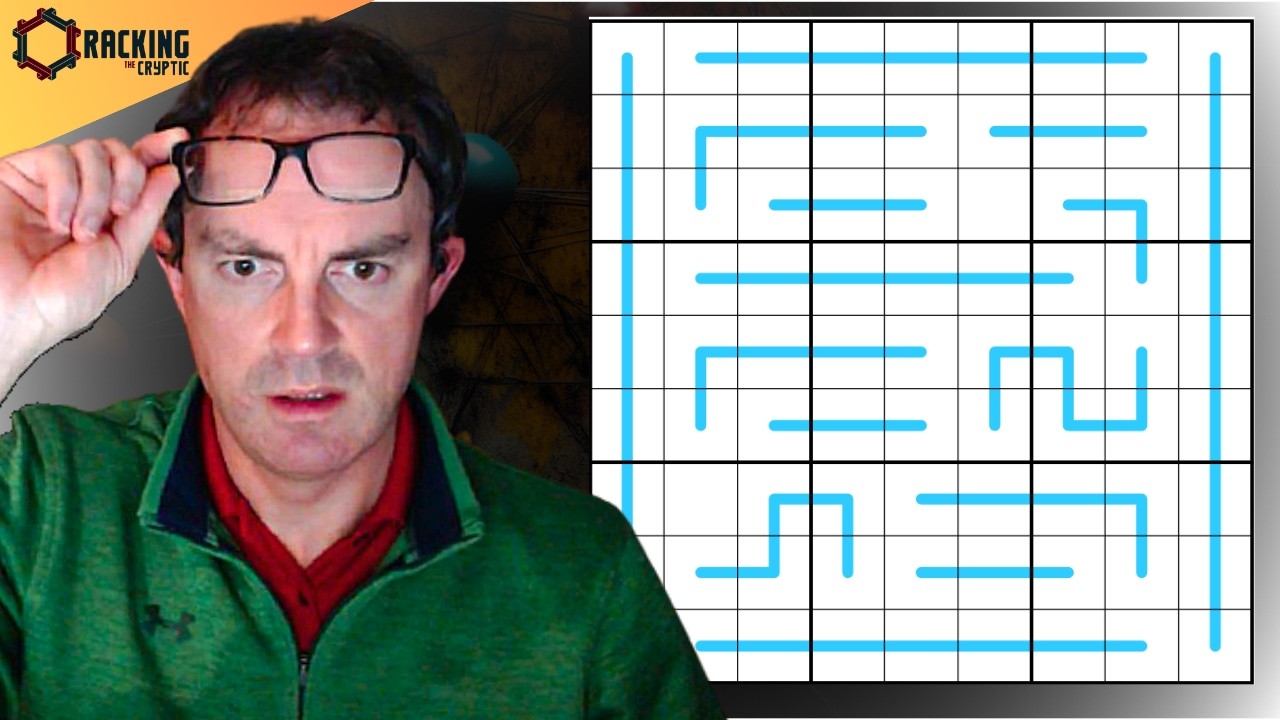
This Sudoku Has Many Lines!!
CrackingTheCryptic
2K views•2026-05-29

Olympiad Mathematics | Indian Can You Solve This One?
PhilCoolMath
268 views•2026-06-02



