Leo Notenboom delivers a pragmatic reality check by prioritizing password length over the outdated illusion of complexity. It is a concise, essential guide that replaces technical paranoia with actionable digital hygiene.
Install our extension to search inside any video instantly.
How Long Should a Password Be?
Added:How long should a password be?
Hi everyone, Leo Notenboom here for askleo.com.
For a long time, the common thinking was the best, most practical password consisted of random combinations of upper and lowercase letters, numbers, and a special character or two.
If so composed, the password length needed to be only 8 characters.
Randomness remains important, but as it turns out, size matters more, much more.
And 8 characters isn't enough these days.
It's not even close.
The short answer is that passwords should be longer.
Longer is always better.
Here's what I mean by that.
Traditional 8-character passwords, They're getting compromised easily these days, and I'll talk about that more in a minute.
16 characters at a minimum.
Now, ideally more. I use 20.
A multi-word passphrase makes longer passwords easier to remember, of course.
And if you use a password vault, you can make all of these really good security decisions easy.
When you hear about lots of accounts being stolen by a hacker from a service provider, you're naturally concerned that the hacker might now have access to your account username and password.
If the service stored your actual passwords, well, that could be the case.
If the service is storing your actual password, be clear, they don't understand security or they have made some horrifically bad decisions.
In fact, most services store an encrypted, technically a hashed form of your password.
For example, if my password were password, and of course, that's a really bad password, then the service might store something like what you see here on the screen, this really long stored hash.
That's a hash value that corresponds to the password.
Hackers do not get a list of usernames and passwords.
They get a list of usernames and password hashes.
And what's great about password hashes is that you can calculate a hash from a password, but you cannot calculate the password from the hash.
As a result, one would think that if a password is hashed, it's pretty unhackable, right?
Sadly, not so much.
The most common type of password attack is simply a high-speed guessing game.
This doesn't work on a login page.
They're slow and they deny further access after too many failed attempts.
But it works wonderfully if the hacker has the entire stolen database of usernames and passwords sitting on their computer.
Those attacks start with exhaustive lists of possible passwords.
Common simple passwords, common combinations of words, common obfuscations of words.
For example, instead of password, maybe mixed case password or password with 4 and 0 instead of A and O. You get the idea.
Lists of all variations people think will hide their passwords.
Lists of all previously discovered passwords.
This might actually be the most successful because people so routinely reuse passwords across multiple sites.
They calculate the hash of each guess,, and if it matches what was found in the database of account information they stole, they know they've got a match.
They have figured out the password for that account.
It's easy for hackers to make an amazing number of guesses, millions and millions of guesses in short amount of time.
That's why you're not using a short password or common obfuscations, right?
That's why a password created from totally random combinations of characters is best.
It forces the hackers to move on to a true brute force attack of every possible combination in order to gain access.
Now, computers are fast.
In fact, the computer on your desk is so fast, its ability to do operations is measured in terms of billions of operations per second.
Creating a password hash is not a simple operation on purpose.
However, it is still something that could be done very quickly on most computers.
Spread the work over many machines, perhaps a botnet, and the amount of processing power that can be thrown at password cracking is amazing.
The net impact is that it is now feasible to calculate the encrypted hash values for all possible 8-character passwords comprised of upper and lowercase alphabetic characters, digits, and special characters.
72 possible characters.
26 uppercase, 26 lowercase, 10 digits, and say 10 different special characters in each of the right position equals 72 to the 8th, or over 722 trillion combinations.
Now, that may seem like a lot until you realize that an offline attack, which is easily performed once you've stolen a database of usernames and encrypted passwords, could be completed in a few hours.
This assumes technology that can guess something like 10 billion passwords per second, which is very, very possible.
Doesn't matter what it is.
If your password is 8 characters long, the hackers already have it, even if it was well hashed by the service they stole it from.
Now, as we've seen, 8-character passwords give you over 722 trillion combinations, which can be guessed in an offline brute force attack in hours.
16 characters gives you over 521 octillion The offline brute force guessing time in this case would be measured in centuries.
20 characters?
Well, that's 14 undecillion.
I had to look up that number.
That's why 20 is better than 16, and both are better than 8, or even my previous recommendation of 12.
Every time I update this video, those numbers keep getting bigger.
Now, what about special characters?
I usually leave out special characters from my password unless the system I'm using that password on requires them.
Here's the deal.
Instead of 72 raised to the power of the password length, it's 62, upper and lowercase plus digits.
So we run those numbers.
A 16-character password has 47 octillion combinations.
A 20-character password has 704 dekillion combinations.
So to begin with, those numbers all by themselves, they're fine.
However, adding even a single non-special character gets you more additional combinations than it would had you used special characters.
A 16-character random password with special characters is 72 to the 16th.
A 17-character random password with no special characters is 62 to the 17th.
If you compare the numbers, which you'll actually see printed out in the companion article for this video, 62 to the 17th is 5 times larger than 72 to the 16th.
Yep, using special characters makes your password better.
But significantly better yet is just to add one more character or two or six.
Long passwords are good, but passphrases are better.
What's the difference?
Well, in general, a password is a random string of characters.
A passphrase is a longer string of words.
Passphrases are easier to remember, so it's easier to make long ones.
As we saw, Password length is the single easiest way to increase the security of passwords.
You may have a nice, secure, 20-character random password that's difficult to remember.
In fact, the only way to use this is with a password manager that remembers it for you.
On the other hand, a passphrase like its fleece was white as you know nothing, Jon Snow, at 50 characters is wonderfully long, secure, and most of all, memorable.
Much like the now canonical example of correct horse battery staple, 29 characters, you might even have a difficult time forgetting it.
The biggest problem with passphrases, many services that use passwords don't allow spaces or such lengthy passwords.
What about quantum computing?
Of late, quantum computing has entered the discussion for sure.
The concern is that its capabilities are supposed to be such that, well, No password is safe.
That's not quite true.
Two things keep me from worrying about it.
First, while we've certainly heard the hype and the promise of quantum computing, it's still a long way off.
Hackers aren't getting access to it anytime soon.
And while corporations and nation-states will probably have initial access, you'd have to be targeted for them to even care about your passwords or the accounts you have.
We're talking many years before any of this becomes commonplace.
And even so, second, we're already seeing the development and deployment of quantum-resistant encryption algorithms.
While there's certainly no way to tell what's being used to hash your password, a form of encryption after all, it's likely that some passwords are already being stored in a quantum-resistant form.
As I said, it's just not something I worry about today.
Shouldn't services fix this and do better?
Of course they should, and many do.
But passwords shouldn't be kept in plain text anywhere by the services at all, and yet some still do.
There are techniques that make brute force attacks significantly harder, yet many services use techniques that are easier than the examples I've shared above.
Some services do a great job of keeping your information secure.
Some services don't.
The problem?
You can't be certain which is which.
To be safe, you have to act like they're all at risk.
So the bottom line for staying safe is pretty simple.
Don't trust that the services you use handle passwords properly.
Well, many, even most of them probably do, it's become painfully clear that many do not, and you won't know which kind you're dealing with until it's too late.
Use longer passwords, 16 characters at a minimum and 20 if possible.
Use even longer passphrases when they're supported or where the information is particularly sensitive.
Always use a different password for each site login that you have.
That way, even if a password is compromised on one service, it won't give the hackers access to everything else.
Even the best 8-character password should no longer be considered secure.
12 is barely good enough for now, and you should be moving on to 16 or even more for the long run.
For updates, for comments, and for links to related topics, visit askleo.com/4844.
I'm Leo Notenboom, and this is askleo.com Thanks for watching.
Related Videos
6:13
Computer Science
TOP 15 Data compression Interview Questions and Answers 2019 Part-2 | Data compression | Wisdom jobs
wisdomjobs
281 views•2019-06-28

27:51
Computer Science
CTS 158: 802.11w Management Frame Protection
ClearToSend
4K views•2019-02-04
23:21
Computer Science
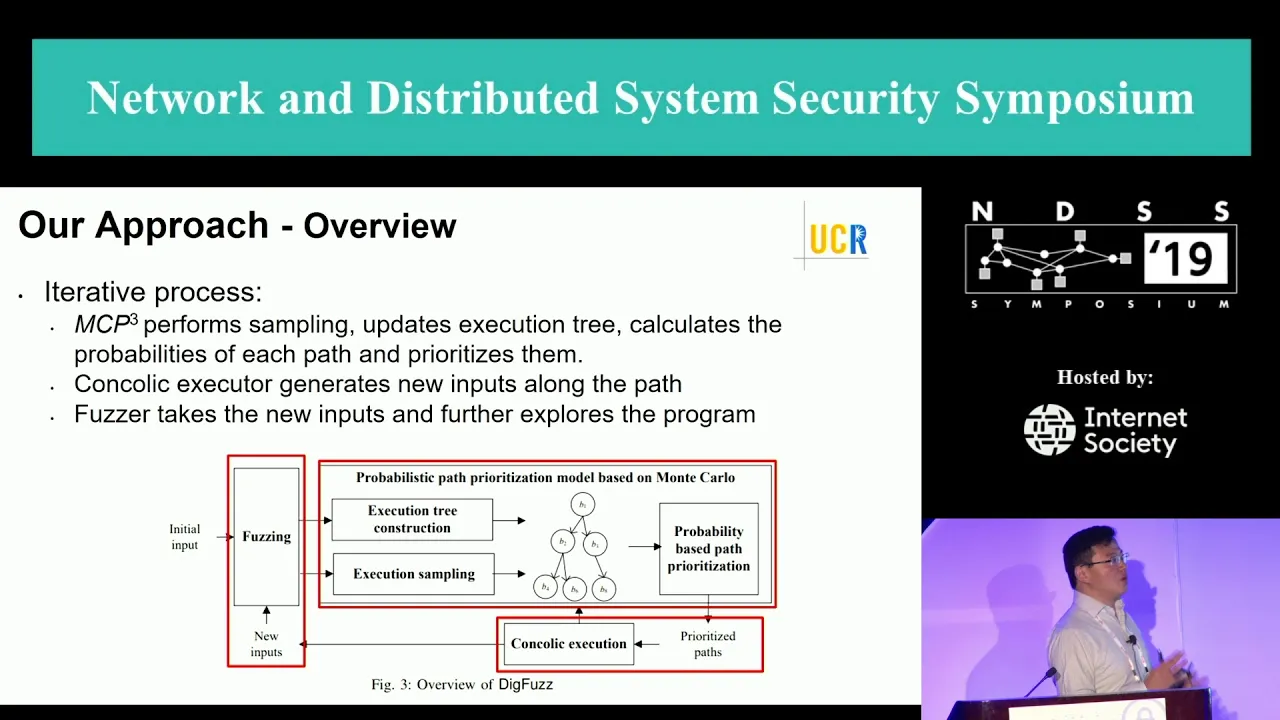
NDSS 2019 Send Hardest Problems My Way: Probabilistic Path Prioritization for Hybrid Fuzzing
NDSSSymposium
496 views•2019-04-02

12:48
Computer Science
How realistic is Cities: Skylines?
CityBeautiful
159K views•2019-02-14
46:39
Computer Science
GUIs & TUIs: Choosing a User Interface for Your Python Project | Real Python Podcast
realpython
2K views•2025-04-04

25:15
Computer Science
The OSI Model - Explained by Example
hnasr
225K views•2019-05-12
1:10:47
Computer Science
Cloud Computing - Introduction
elithecomputerguy
98K views•2019-10-07
2:24
Computer Science
From Traveler's Dilemma to Dynamic Routing | Demystifying Networking
IITBombayJuly
5K views•2019-08-04
Trending

13:38
Law
WOW! Judge TURNS THE TABLES on Trump in His OWN $10B LAWSUIT!!!
MeidasTouch
197K views•2026-07-23

13:25
Business
Playstation NO DISC/NO BUY Fight Is Over...
DavidJaffeGames
4K views•2026-07-23

22:40
Business
Steam and Xbox Just Dropped The Hammer On PlayStation
OhNoItsAlexx
9K views•2026-07-23

16:52
Anthropology
Americans Confused in Australia for 17 Minutes Straight
IWrocker
17K views•2026-07-23