When a star exhausts its hydrogen fuel, its core collapses under gravity, generating extreme heat that causes the star to expand into a giant and pulsate, violently ejecting its outer atmosphere to form a planetary nebula, which is the eventual fate of our Sun in a few billion years.
Install our extension to search inside any video instantly.
The Terrifying Death of a Star 🌌Added:
When a star runs [music] out of hydrogen fuel, its core begins to collapse. With no outward energy, crushing gravity squeezes the center tighter than ever, but this extreme pressure [music] sparks furious heat, causing temperatures to skyrocket. That immense internal heat [music] forces the star to swell up into a giant. The unstable star begins to pulsate, violently [music] ejecting its outer atmosphere. These drifting layers form a breathtaking cosmic [music] cloud called a planetary nebula. In a few billion years, this will be the exact fate of our sun. [music]
Related Videos

Spiral Galaxy NGC 3370 from Hubble | NASA APOD 2025-11-05 #Shorts
galaxygallery
938 views•2026-05-30

🎬 Title: Milky Way & Andromeda Collision: The Future of Our Galaxy 🌌 #astroph #askap
SulaimanKhanSulaimani
429 views•2026-06-01

SOMETHING inside the SUN is CHANGING
RaysAstrophotography
1K views•2026-06-03

NOAA Warning! Massive Double Cannibal CME Impacting Earth: G4 Storm Watch!
worldnewsreporttoday
1K views•2026-06-04
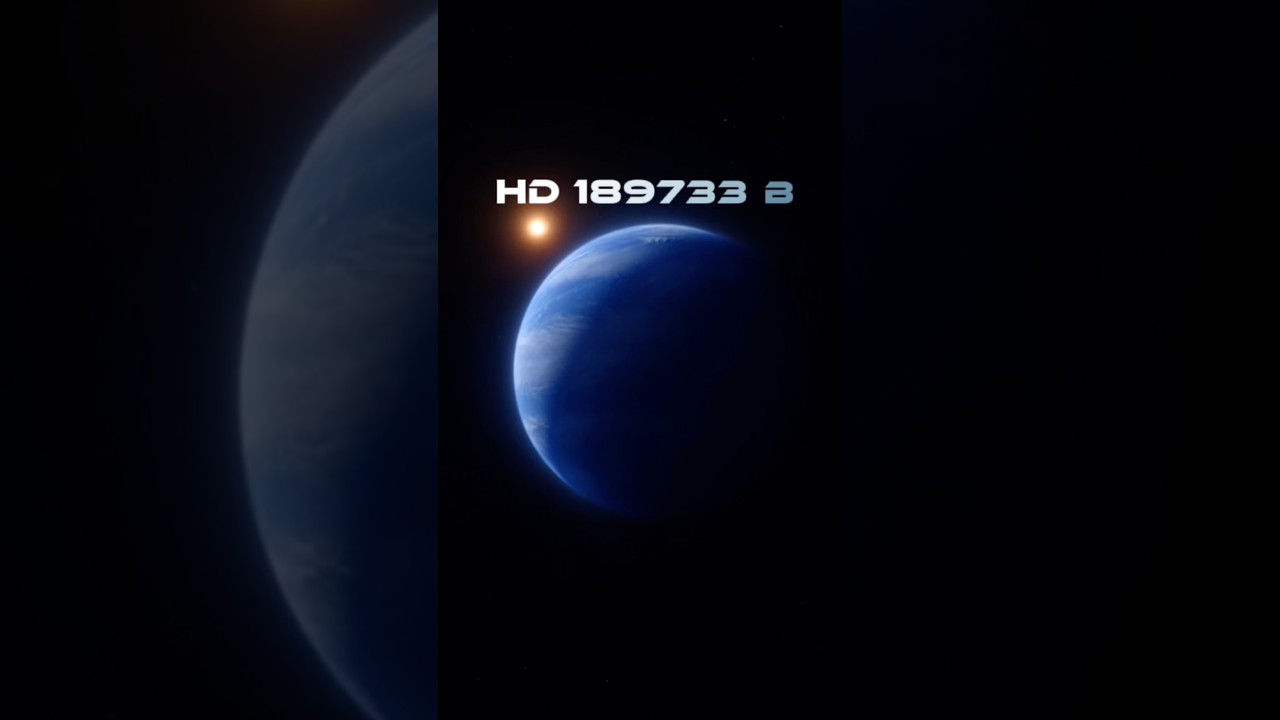
🌌 HD 189733 b | The Planet Where Glass Rains Sideways
EVENTHORIZONUK
3K views•2026-05-31

Captured the Blue Moon (with a twist) 🌙✨ #space #bluemoon #telescope
realAstroExplorer
674 views•2026-06-01

10 Planet Where a Black Hole Replaces the Sun
cosmicexplorer-EN
147 views•2026-06-02

Is this a copy of our galaxy? Discover Galaxy M81!
UniverseDocumentaries-cc4mb
995 views•2026-05-31



