Tesla's Optimus production line in Fremont uses a modular manufacturing approach where different components (arms, legs, torso, hands) are assembled separately in different areas before final assembly, allowing for faster deployment and flexibility to add or exclude features as development progresses. This differs from traditional automotive assembly lines where products move sequentially through stations. The production ramp is expected to be extremely slow initially because everything is new, and field acceptance testing is still ongoing in Germany and other locations. The key challenges in humanoid robot manufacturing include: (1) data collection and training requirements, (2) hardware dependency on supply chains, (3) dexterity limitations, and (4) finding high-value tasks for deployment. Additionally, softness and compliance in humanoid robots are critical for safety and adaptability, as the human body naturally incorporates soft tissues (muscles, fat, skin, tendons) that robots lack, making them more rigid and potentially dangerous in human-designed environments.
Tesla Optimus Production: What You’re Not Being Told
Added:So Elon Musk recently walked the Optimus production line at the Fremont factory and then later tweeted saying Optimus production will be extremely slow at first as everything is new and then Tesla head of engineering Lars Moravi said Tesla has already begun installing the first Optimus line and started field acceptance testing on the automation. He expects the line to be modular and quicker to bring up than a car line because Optimus is smaller and the line is designed to be more flexible and reusable. We'll be diving into all of that that's been revealed about Optimus plus the figure 03 humanoid robot has started performing a logistics workflow at the BMW plant in Spartanberg and how far can humanoid robots get in our world designed around humans without being soft. All that and much much more in this chat with the rock paper scissors spark gang back together. Scott Walter is a mechanical and aerospace engineer, two-time founder of robotics companies.
Gustav Anderson is a hand surgeon and associate professor of anatomy in northern Sweden. And Meridat Farmani also based in Sweden has been designing humanoids and other service robots for over a decade. He also advises startups and investors on the robot product roadmap. So gentlemen, welcome. It's so great to have you back. We've got a lot to chat about.
>> Good to be back. And boy, have I got a load in my head.
>> I've been a man of a lot of hats recently.
>> And like this past month, I've seeded quite a few. Let me say I got machine to machine. I got a West Mag hat. This is like from Automate and then from Reindustrialize. I got conduit in there.
I got Ultra. Let's see. Standard bots.
>> Nice.
>> I got a figure hat. I end up getting Oh, also Dex made hat. And then a Knox medals hat.
>> So is it a saying in English as well?
>> What?
>> So is it a saying also in in America that you're wearing many hats? Swedish.
>> A man a man of many hats. Ben, I looks like I should probably put the hat back on.
>> So yes, >> at least one hat at a time.
>> At least at least one hat at a time here. Yeah. So it's hard to choose. I don't know. Um but yeah, the past month has been crazy. I've been uh at many different conferences and saw lots of neat things and some of which we'll probably discuss about today.
>> Yeah. Yeah. Looking forward to that.
It's getting difficult to catch up on everything that's happening in the world of humanoid robots and AI. Marad, you've been traveling as well, haven't you?
>> Yes. So, I've been in the exact past months, I've been traveling four different countries and four different conferences. But, uh it's interesting. I don't know. I have my kind of summary, short summary conclusion. What are most of the talks about? But yeah, I would love to hear Scott's first. Let's see.
>> Yeah. All right. So, um, before we dive into Tesla, do you want to kind of quickly give us your top down view?
Because Gustav and I are we're stuck where we are unlike the two of you. We'd love to hear your high level takes on everything that's been happening in the world of robotics in the past few weeks.
So, who wants to start? cut.
>> We you can't be in two places at the same time. So basically Midad and myself our paths have not crossed because he's at one conference in either Japan and I'm in one somewhere else and back and forth and so it it's really been a very busy su season. So different humanoid conferences um you know and a re-industrialized conference uh there was also the automate conference in Chicago which is the largest North American gathering of automation and robotics and they had uh for the first time a a humanoid pavilion there that was sponsored by Nvidia. So you had a chance to see a lot more of the the humanoid sort of up close to see what's going on there.
Yeah. Uh really quite a busy uh month.
>> There's a lot of interest VC interest in robotics. all of a sudden which is great.
>> Yeah. Oh yeah. Yeah. Yeah. I think it was um A16Z uh put out infographics showing the interest in suddenly a spike up uh in the in physical intelligence space. I think like in the last quarter uh as a lot of venture capital and investors suddenly grow very very interested in the sector and you know understandably so that I think they're beginning to realize that there is going to be a big push to the need for physical intelligence because you can't just do everything in software that at some point people need stuff and if you want stuff it has to be built somehow so you know that's all stuff in the physical world so not a surprise >> is this a clear signal that um rub is about to meet the road or it's just around the corner in robotics, humanoid or other form factors.
>> Yes. Yes. And and and as usual, I mean, it it you're going to be going through the normal cycle. Uh a lot of people think it's it's like going to be overhyped and everything else and it's going to be a bubble of the bus. And that's what every one of them does. And that's usually the way capitalism works is that you have a lot of companies going after the same thing. Uh only a few make it to the finish line and those that do are going to be very strong. And then on the other side we end up uh with some rather remarkable technologies and advancement. So you can talk about like you know a telecom bust or something like that that that happen somewhere along but you know along the way we got this and so >> uh yeah we have plenty examples of that.
So it's and that's why you have to be very careful when you're investing in the space to make sure you're not fomoing in but you know really doing your homework and and deep research as best you can. And that's where Robbo strategy comes in.
>> Yeah, we try our best, you know.
>> Financial advice.
>> Yes, financial advice.
>> Where's that hat or was >> He's got it. He's got it emblazed in his heart.
>> Right there.
>> Yeah. Yeah. You Well, you'll have to talk you have to talk to Kevin about that. I keep on asking where's that hat, too. So, >> yeah, we I mean, we we need to get you guys on for a a chat, a deep dive chat with us. I think the time is right with all the VC interest in robotics. But Merad, are you do you echo everything that um Scott has been sharing?
>> Absolutely. Absolutely. And especially as Scott said, we are we are covering different markets, me and Scott. So >> yeah, which is really fascinating the way it is. Yeah.
>> No, it's it's it's very interesting. uh like I I try to uh summarize all the talks I've been hearing in different conferences and our dialogues into four different points and they are very dumb.
They they seem very silly but I think they they they can cover a lot of things. The first point that comes up uh in every conference and every dialogue is oh we need a bunch of data to train the robots like that is still a very very common and everywhere they talk about that. The second one is oh hardware is still hard. We haven't figured out we are still very reliant reliant on China supply chain. So a lot of the Europeans at least are trying to figure out how to get away from the Chinese supply chain when it comes to humanoids. And the third one is that dexterity is very hard and the more we get to know about how dexterity works the more we realize how much we don't know about it. So it's it's a kind of a dead end unknown. um uh process also going and the last thing is um basically we need to find very high value tasks for humanoids as soon as possible to be able to get them running like these four points I got to realize like they've been repeating uh in almost every conferences which are good points which are true and very valid but at the same time um it's interesting that nobody's really giving a concrete answer at least some companies are giving answers in from their own perspective because that's their product or something They are they're certainly saying that our model is the best. For example, one of the new dialogues nowadays is WHAM WAM as opposed to VAS for example, right? Uh so VA was vision language actions and then we have world action models uh which young lun is promoting and um many people are saying oh no VLA VLM doesn't make more does doesn't make sense anymore we because they need a lot of data and training so we need to go with models such as world action models or world models that they need less data so we we don't really know it's it's very vague my last point is I had a visit to uh Toumb Technical University of Munich and I knew some people there some other professors back in that time they were researchers and now they they had this very we had this very interesting dialogue hearing their perspective was very interesting for me as opposed to people in industry perspective and the the dialogue or the conversation was around what we've been hearing quite a lot that oh uh software today is so good that it can compensate the shortcomings of the hardware and they believed that when it comes to humanoid that's not really a valid point. Uh so we still need to create better hardware because software uh no matter how strong it gets, it cannot really cover the the problems of the hardware. So yeah, this was my my summary at least and yeah, some overlaps with Scots, but um uh it's interesting.
Let's see. We are still in the process.
I have no judgment, no conclusion to be honest.
Yeah, I'd say that that's basically sort of the same themes I've been seeing.
It's like uh the data collection aspect has kind of been the butt of the jokes of a lot of the conferences because there's so many companies out there trying to sell you uh all the data that they're they're collecting uh some of the memes about.
>> Oh yeah. Yeah. Yeah. It just Yeah. It's Yeah. You've probably seen that meme uh circulating around that. and um and and and everyone agrees you need a certain amount of you need the data but it's always a question of how well curated it is and the kind of the control and it so it's it's not the quantity of data it's really the quality and so everyone's and you you can't even argue over like what what is going to be the quality data until you figure out what your world model is going to be you know so now you're shifting from DLA so it's like well what's the data we have you know the argument over you know the your hands it's like do you need tactile or not tactile is this vision going to be okay can the embodiment be five fingers is all right with the two-finger grip pain. It's like all that. So, there's still so much arguing that's going on that seems like every single point is valid and everyone is like realizing this is a much harder problem than they thought. Now, I keep on seeing and and I have said this many many times and I will reiterate is like everyone likes quoting Elon. It's like prototypes are easy, you know, but production is hard.
>> Production is hard.
>> And I I've always said this is the first case where the prototype is going to be hard, the production is going to be easy. And but I still see people thinking that you know that's you know Tesla is um you know is going to do so much better because they know how to scale. It's like yeah but you can't scale until you actually have a decent prototype and everyone's finding the prototype is very very hard to get to and you've even seen the words coming from Elon to that effect.
>> I mean which is kind of weird. It's like they're supposed to be good at scaling and stuff like that and it's like oh the scale is going to be really slow at first. is going to take a while. And it's like, is that because you don't actually have a fully active prototype yet? Or you realizing that even if you have a good prototype, you know that that we don't know enough about the hardware because we haven't got enough real world data of out there to see when does it start to fail.
>> You know, is it failing really early in the labs? In which case, you know, you have problems like it's fine and then you put in the real world and you you find all sorts of different situations and cases. So uh yeah that's I think all >> this is the post that yeah the 1 of July Elon posted this saying walking the Optimus production line in Fremont. Um so there was a bit of s sorry go ahead.
>> No it must it shows a lot of confidence from them. I mean they really sure the SNX was not the most profitable lines but they were still selling those cars and they probably made a profit on them.
So, they're really like betting the the line or betting the car on this. Like they they built the production line and we don't really know what the final product is going to be and it's probably >> they didn't they didn't build a production line. That's the thing. There is no production line. The production line you see behind there is probably like for the Model 3 and the Model Y.
That's not the outcome destruction line behind them. This is the former production line that's now empty. So, they've emptied it out and and Lars made it very clear in his podcast with uh with Herbert um that they're still doing the F feet like what the um the field acceptance tests um in Germany and in other locations and so they still haven't completed all those tests and then you mentioned then we're done they're going to ship them over. Okay, there's a lot of equipment. How are they going to ship them over? Are they putting in a container on a boat that takes weeks >> or are they, you know, is it so urgent that they're going to use cargo flights or something like that? So, I think it's it's it's a while before you're going to start to see it populated in there. And again, when everyone was very excited about what they were seeing, the reality is what you didn't see. You didn't actually see a production line there.
What what you saw is is a line that was cleared out for it. And you have to listen very carefully to what Lars is saying and also listen very carefully to some of the posts that Elon put underneath the excitement that everyone's had and he was saying that cautioning everyone that the ramp is going to be slow >> so be ready for that.
>> Yeah indeed. He says no Optimus production will be extremely slow at first as everything is new. This is not like making a car.
>> Yeah. I mean when they set up the tent for Model 3 they were really quick. I think it was this German company basically who provided with the optimization and the robotics to build the cars and that happened quite fast.
Maybe not the building but they set it up in the tent to basically improve their production. So I mean they've have some experience in this but it's still like finding the balance about how much we produce of a product that we don't really have collected data for and it will I don't know >> again you may not have a prototype that's that that's going to do anything so you can start producing these things.
So my feeling is that the early optimists are going to be just there for training purposes. They're not >> I mean that's where they probably have bigger advantage of other companies as well, but that they can actually churn a few out and to collect their own data and not buy data that is not optimized for Optimus.
>> So they they build a product, they put it out there and they can throw some money at having that collect actual data. similar to what we talked about a few weeks back where if you had a prosthetic that you give to patients, the patients will collect the the the real data for your robotic hand or for your prosthetic.
>> Indeed. So there are a couple of technical things um that Lars did say about the modularity and the uh the fat the field test that um are >> they that are currently being conducted before they deploy also that they can deploy these uh lines very quickly once the field tests are concerned are over.
So I both um Scott and Merida I I'm hoping you can break the technicalities down for our audience. Scott especially because you're a fact you've got a decades of background as a factory simulation expert. So when it comes to production lines what did what did Lars say? Um he said that um of course this is different um uh production line because Optimus is smaller than a car. um the production line is going to be modular but the bring up can be faster and um he also said there are 40 more lines to go when he was talking about the scale of the roll out. So let's just tackle what each of those ideas one by >> and yeah this is where it wasn't quite clear what he meant by a line where there's like there's there you know a line is able to produce optimist robots >> and by then having 40 of them we're able to produce 40 times more like I got was that you have this modularity thing and the and he was also talking about all the different parts for the for the actuators >> so the the first one is wrong that it's not like it's it's a line what it sounds like it's it's one um area that is producing some of the sub assemblies that are going to go into Optimus. So that's like and and you might need like 40 that's what it sounds like 40 different ones because then he was talking about it's like an unboxed process but it's not like then it was like and then you had like a tributary kind of and it's like >> okay I'm getting really confused about what this my assumption is that they they have all these modules they are making one part it might you know hands legs arms torso stuff like that other different things that just start finally coming together to put it together and what they may be doing is not going with your traditional assembly line method But, you know, having um basically like maybe all these groups are almost pods where these different assemblies kind of come together and then you can go ahead and put together an Optimus whenever you need to because to me it doesn't seem like you need your traditional assembly line where you have this chassis slowly being built up of people putting stuff on that moves slowly on down where everyone's doing it. What you can do is you can have these static final assembly stations where product just kind of comes in and then people like put everything together. So someone's built the arms, they built the legs, they built the torso. And if you look at like the 1x factory and I think if you even see a little bit of the the figure video, you're seeing something akin to that that you'll see that the the final bot is sort of hanging almost from a gallow there while everyone comes in and starts putting the parts in. Where are those parts coming from? coming from some other areas there that are putting those together. So, more than likely that's what he's talking about.
Something like that is my expectation.
>> I can I can add something to what Scott said actually that um what I think is very important in the manufacturing of human robots to be honest. I've never seen a mass production of a human robot in real life but at least in prototyping is that you need to do testing for every single subsection. Meaning that when for example the hand is being built or manufactured then it need to be tested.
It would probably takes a few minutes or maybe up to an hour or something to test all the features and then is the time that you assemble it on the main unit.
So but car is a bit different right in car we we have all these different subsections that they do quality assurance but it's very quick and also the quality assurance is being done usually at the OEMs or the other suppliers end. So I think here is one one of the main differentiators. So quality control and and uh testing by the end of the each not line but tiers right. So each line is like multiple tiers. And then uh the other thing I wanted to mention when when they say modular manufacturing line my interpretation was that there might be a scenario that they don't exactly know what >> parts or modules will be uh will be developed like maybe maybe in six months they develop more modules or more features for the robot that they still don't know. So that's why they are making it modular because they want to have this flexibility to add or exclude different things.
>> Yes. and and you may not know what the cycle times are going to be. You don't know what the limiting factor is. So that means oh okay uh you know maybe you're able to produce hands three times faster than you thought >> or three times slower. So then you need like okay we need to throw more resources over there or or balance the thing. So line balancing is something that's always tricky to make sure that all the components arrive just in time and that you're not overstocking and that you you also aren't starving the line because components aren't coming in when they're supposed to. So I think that's part of the reason why you're adding the flexibility is because when you have that one long assembly line, one part can bring the whole thing down.
But if you have these different modules, it just means one or two modules are underperforming right now and needed just something to kind of bring them up, but you're still able to get some things assembled.
>> So this clip we saw that was and I think you mentioned that, Scott, some months back when they showed this clip, the rod >> that that is actually in Germany due to these a Yes. Yeah. So I I believe that's at the Tesla Groman. Uh and the the the Abus crane there is very common in a lot of the German ML stons when you see these.
You can also see how low the ceiling is >> compared to where the SNX line are going. So that means this is seems to be what they're doing the the field acceptance tests on right now. And when they're all done, they have to pack it up and then ship it over. Now, it could be >> it could be that you could air freight a lot of those things if you really wanted to if if you needed to get there in a timely basis. Usually, when you see like an automotive assembly line with all the robots and stuff like that, these things go in something the size of a rail car.
At that point, you're just thinking, "Ah, they just, you know, you're going on a container ship. It's not an airplane." It would take days to set it up in Fremont >> when it arrives. Yeah.
>> But it arrives, right? Which is a big thing.
>> Yeah. Yeah. which is a a little bit different than a big assembly line where every it's like laying down railroad track and all the stuff has to be connected together, make sure it's working. In this case, it's all modular.
You just put it in, set it up, and either it's working or it's not.
>> So, I'm trying to understand this um wrap my head around it. Does this mean that because of the modular nature they can actually start test production on various parts of the ultimate bot before they actually have the entire line kind of cohesively working >> there there probably won't be a line.
That's that's the whole thing is is that there's just going to be these areas where where bots start coming together.
So you're going to be producing all these components and at some place components are going to go to wherever someone is putting a final assembly together. And if >> you want to ramp it up, you might just have more locations than that.
>> Like the cyber capab isn't isn't that exactly how the cyber cab is at the end?
>> Yeah, I I think that's kind of the idea of the unboxing process and and um but I think that might so I don't know does a cyber cab even have an assembly line concept is it more or less like the end?
>> Yeah, it comes together in a station.
So, normally like the assembly line is you've got multiple stations that you start at one end and you go along there and sequential and something happens at one of those stations like everything stops >> until you get that thing fixed.
>> Um and and usually you're doing it because there's so many things that have to come together to build the car. In this case, it's like someone is just building legs >> and whether he's fast or slow, it doesn't have any impact on what's going on. You just like you're just putting them together. someone's doing a left leg, someone's doing a right leg, others doing hands and arms and at some point those things get carted off and literally I mean probably just carded off or carried off as opposed to like on an assembly line where the car is so heavy you've got no choice but you need this big transport mechanism.
>> So that thing just kind of goes down and there's a bunch of dudes just sitting over there waiting for the stuff to come together and they just start setting it up. you know, they they've got it, you know, the torso is sort of hanging uh from this tiny little gantry or stand and then they just start putting everything together and they they take whatever time they need to do it to get it up and running and they're not on this 30 second clock like you are on an automotive assembly line where you go 30 seconds to get the door on and then like you walk back and you pick up another door and you do it again and again. case they they add a certain degree of flexibility that may get rid of that time constraint of of you know some people can be fast some people can be slow >> you think they will start churning out bots without hands or without forearms I mean >> well they already did you know and it's possible you just simply I mean you've seen situ like I think during co there were situations like that where you know cars were in the parking lot missing one or two parts >> and then you know waiting for those so rather than and and but you never want to do that I mean you really really don't want to do that. That's that's like your your last ditch to to have to do something like that.
>> But it's also like giga press, right?
You have you have the various parts that are punched out by the gig of press and they're all stacked up outside before they >> Yeah. Yeah. Yeah. Yeah. Th those have to because they they're they're um they're rate limited a little bit. Like a lot of stampings you were producing stampings much faster than um they're being consumed on the line. So like hoods, you're just like boom. Now the hood has like multiple stages, but when the thing gets going between, you know, when you start feeding that pipeline, they're coming out maybe like every five seconds or something like that. Boom. You get them and you're stacking them up. And then after a matter of hours, you've got way more hoods than you're going to be producing cars for like the next several days. And then you put those and you store them someplace because now what you're going to do is you're going to take those die presses and you're going to take the dyes out and you're going to put something else and you're going to do body panels. you know, some side body panel like that. So, usually that's what's going on because you don't have enough presses to do all the parts at the same time to feed them at that rate.
Those presses can run so fast. Um, and that's usually and ideally you would love to feed that because you'll see what what happens to all that material.
It piles up, you know, you get this big big and so it's got to be stored and then it's got to be pulled out and kind of brought in there. In in the ideal world, you're doing everything just in time that that as soon as that thing comes out of the press, it's then being consumed by the car and you don't have to worry about any interlogistics. And automotive has managed to do that. It's what they call uh just in time >> for like like seat manufacturing. It's it's what will happen is that the seat manufacturers have all the stuff they need to put together a seat, but they don't put together a particular type of seat until they actually get the request usually a couple hours before it's actually needed to go in the car. And so usually the seat manufacturers are located colllocated where wherever the final assembly is within like 30 minutes to an hour away.
And so all these seats get built and they get built actually in the order that they're going to show up in the line and they get shoved in the back of a truck in the order because you can have all sorts of different seats of, you know, different color, different material, power, not power, heated, whatever. They all go in the back and they roll off the back of those trucks and they get right into the assembly line in the exact order and they just magically show up at the right place at the right time and and that's like just incredible logistics. And you know that's an ex and the reason they do that is because they do not want to have warehouses full of seats that you're pulling from and that you have to build up because that storage costs time and it costs money.
>> And if you could do that throughout the whole process, you would. But there's some processes that's like you've got no choice. Yeah, I don't want to run my stamps that like, you know, take 60 seconds to build to build a I don't need to. I can build them in six seconds. So why would I do that?
>> You were making a point. Sorry.
>> Yeah, just I was just wondering when they say manufacturing line, is it really production line or it's mostly assembly line? meaning that all the parts are already built by some suppliers elsewhere and comments like there ex also. So it's more of a assembly line which in automotive also assembly line is usually the last line for the last warehouse or something right. So that's my assumption. The second question I had about this 1 million bots per year which is h by the math it would be something around one bot per 30 second or something. No, no, no, no. It's one one It's like one bot every 1.9 seconds 247.
>> Yeah. If you're doing a movie.
>> Yeah. It's like Yeah. It's It's crazy.
And And that would be running if you're running 247.
>> Yes.
>> You know, it's it's like every 1.9 seconds is is when you'd have to be producing. And so that's extremely fast.
>> Uh which means you can't you wouldn't have one line that's doing it. You'd have to have multiple lines doing it.
means the amount of material that's coming in and out is just like phenomenal. So, you have to be having and you're right, there's going to be a lot of these components. What we don't know is like are they getting a fully assembled actuator or are they getting you know reducers and then motors and then control boards and then are they doing that assembly then there what we you just don't know where that's coming from but I'm pretty sure they're not making the reducers right there. They have suppliers that are producing the reducers and eventually they may do that but then that's done kind of offsite somewhere else that they just be cranking them out as quickly as possible and shipping them and then they just consume them as needed.
>> And this 1 million but that must include also the Austin area as well. I mean >> no that's that's Fremont only. So they say it's the capacity will be 1 million a year just in Fremont and then Austin's going to be 10 million.
>> Yeah. So that's even crazier. Yes.
>> 10.
>> Scott, I wanted to mer both of you guys.
I wanted to ask you um from the looks of it, this is going to be uh a line with a very small footprint.
>> These are very few people.
>> Well, yeah. But it's also much of the cyber of the cyber cab production line.
Uh also the cyberp production line if I remember correctly uh correct me Scott if I'm wrong but it is at different levels uh and they've designed it in such a way that it's because it's split across different levels and different parts of the car are being built uh at in a modular fashion it all comes together right at the end. Yes. So the overall footprint of that production line is much smaller than the other production lines.
>> Are we to expect the same from Optimus?
>> Oh yeah. Yeah. partly because it's so much smaller. The material handling needs are very very easy. Uh a person can could carry the Optimus out. They can't do it with a Model 3. You have to drive the Model 3 out, right? No one can actually carry it. And um >> or just walks out on its own.
>> Yeah. Yeah. It walks out on it own. But but basically Optimus and then each individual component that goes into Optimus, anyone is able to handle that.
Now whe doesn't mean they necessarily have to carry it, but it means your material handling systems are very different. they're they're much lighter compared to what you would expect for automotive. So, um that makes it a lot easier. The fact that everything you anyone be able to pick up and move around. So, material handling becomes a lot easier. Um just the movement of it.
Um it's it's not going to be as dangerous. You don't have a lot of the same issues you have the the automotive where you have to, you know, paint the vehicle and do all these other things which are really exotic and hard and are are extremely expensive which is why the cyber cab was designed the way it was because they said no paint shop. We didn't want >> Exactly. Do you think that's going to be the same for Optimus?
>> Well, yeah, it's not going to need a paint shop. Uh it shouldn't. Um um now the Optimus they have right now that's gold. I'm not sure if they painted it gold or if they ended up just like printing or the injection mold, but if they're just doing injection molding out there, there's absolutely no reason for them.
>> Yeah.
>> Yeah. It might be some decaling or something like that, but it's not going to be the same as like you do with a car.
>> Comparing with automotive, I think the at least the exterior parts of a human robot is more closer to the interior parts of a car rather than the exterior parts of a car. So basically like the dashboard pieces and all those things those are like equivalent to what you put on a humanoid in the external and those are prepainted and everything like that. So, but regarding what Scott said, um, one of the differences I see also in a in a typical robot is that in automotive, we have a process, I've just seen Volvo manufacturing line, but we have a process called filling and that is all the liquids that need to go inside the car including the the gas, all the oils, water and all those things, right? So, those actually takes time. basically means that for one liter of water for example to go into the radiator that takes a certain amount of time right we cannot really make that so much faster but in a robot we don't really have that one it's only the the battery basically to be fil char charged which probably is pre-charged somewhere else the lithium battery so it would uh it would just come like that so that would also be one of the main differences I see although one thing that I still don't know is that I'm still focusing on the testing part even in automotive for example they have um a rain test or shower test they call it which means to make sure it's waterproof right and then uh uh we don't even know what is the IP rate on on such human robots right so we don't >> even an umbrella >> exactly >> yeah and maybe in a they would say oh the first three million optimus will be only used indoors in a factory so we don't really need a proper uh IP67 or anything like that. So those are still very much there are too many unknowns basically. So that's why >> that's a great point and that that that brings me to ask both of you um the cyber cap production line is built to be completely autonomous. What do you think are the chances that optimist could be deployed there and that could be the opposite because they've got enough of them. Why not just deploy them at at the testing phase right now? Do you think that's possible? A and B probable.
>> No, no, >> no.
>> Yeah. Yeah. It's possible they've they've they've automated a lot of things there. Uh because there's no reason why you could not automate a lot of things that not only put humans out of business, but put humanoids out of business as well. So it's it's possible that they've really minimized the the amount there. I don't think it would would be optimist. There certainly hasn't been any indication that anything like that's going on. Um and you know I thought it's like the perfect line to do it would have been SNX line but uh it's not there now. So >> to deploy Optimus at the SNX line you mean >> that that would have I I would have been doing all sorts of testing on that. I mean why not you know just see what it was. You think they probably did to an extent?
>> I think they may have. I always heard rumors of people saying that, oh, there's like optimists down in Fremont.
They're testing this and that something.
So, they may have been going down in certain areas testing out and SNX line would have made sense because many cases it was idle so they could just go in and use it as a playground.
>> Interesting.
So, um, what's your best guess on how soon they can get, um, these field tested modular components of the of the production line to Fremont and then actually start building some of the parts, even if it's not complete, optimize, >> they were targeting what, late July, early August. And again, if if they've Lars made it sound like they were close to finishing the the feets on a few I don't know if all of them. And what I just don't know is um whether all of it's over in Germany. It sounds like a certain amount is but they also talked about the Midwest and Toronto or something like that is what they had mentioned a month or so ago is where a lot of the other components are.
So those would be a lot easier to truck across country. Um but if they are coming from Germany that's that could take a while because again unless they plan on air freighting off everything >> um you know with ship is going to take a bit and then it's like well okay this out in Fremont is this Germany are we going through the Panama Canal or are we we coming to an east coast port I mean ideally you should be putting on rail air freight them right because of the modularity and that's maybe you know again it just assumes how how massive and how how heavy they are. So again, it looks like they could air freight those things because I don't see anything that's as as big as like automotive assembly lines. Like even when you tear it used to be they would they would build up a line and literally like tear the whole thing down and send it to an automotive company and you have to rebuild the whole thing and they realize that's kind of stupid. Can we make these things a bit more modular now? And so, um, the a lot of, uh, roboticized automotive lines are set up that they can put them on the big skids that just go into the back, like I say, of a container and you can ship it and you bring it out and then you just kind of put all these things back together.
But then there's all the other work they got to put around there, like the the final safety fencing, a lot of other things. So, usually it takes takes more than a couple of weeks to to just kind of stand them up and get them up and running. And I I will take them at their word. They say it's going to be slow at first. So, you know, that that really is going to be the case. So, if they're saying that, I think we should listen and expect that it will be slow.
>> All right. So, speaking of uh humanoid bots being deployed on uh automobile production lines, we have had this announcement from Brett Atcock. Figure 03 has arrived at BMW. This is a Spartanberg.
we see consistent progress from Figure and this is really fascinating. So Scott, you're our guy for all the lowdown on everything happening at Figure Robotics.
>> Um now this is a rather familiar looking operation that I think we've also seen Boston Dynamics doing something very very similar.
I've seen a lot of other things where people pointed out like, "Wow, this is silly. You know, we have mobile robots."
It's like, >> um, they pro probably were maybe positioned there, but if you actually go down to the factory, you'll see there are people taking those carts and actually dragging those carts around.
So, it's not like they're trying to invent work. They're basically doing the exact same thing the way the operations are set up right now. And sometimes the carts come in and the easiest thing is just for the operator to grab the thing and move it rather than have to hail a taxi or an Uber to come over and and pick up my little cart and move it uh three inches or something like that. So, uh it it is showing the ability of it to do it exactly the way the standard operating procedures are for doing these operations. And usually this is just going ahead and kind of doing a pre-sorting to making sure again like we talked about like making sure the seats arrive in the right order so they just go into the right car. Uh it's going to be the same thing here is that you want to sort these things up so when the operators need to grab these these components that it's the right component the right place >> progress.
>> Yes. Yes. I mean it's um so yet one more uh set of operations. It's rather interesting to see. will hopefully learn a little bit more later on on how uh how successful this is and whether they're able to maintain sort of the same rates.
Now, this these are kind of let's say areas or stations that are while they're important, they're not something that would necessarily stop the line in its tracks right there. So when you're looking and I think you know Mayor Dad was sort of touching on this is that we we need to make sure that the the robots are able to do useful work and that was one of the things they were saying is like we've got to do something that they start adding value fast and um a lot of the robots are are getting like in the high 90s or more in in their KPIs as far as success rates and everyone's like really excited about that and I and I keep on reminding people that you know a 99 might give you an A+ in in a college exam but in industry That's a failing grade. You you've got to be, you know, way way way higher than that. So, in many cases, if you're like right on the line and you're doing something and you you fail to put that part in where it's supposed to be at that right time, then suddenly everything stops and you got to do a reset and nobody likes that. So, you want to make sure that those things are absolutely flawless. But then there are a lot of pre-staging kind of things that you can make a mistake and you can recover in more than enough time without it being something that's going to end up shutting down the whole line. So many cases, these things are something that are almost done well in advance. Um, and they just have to make sure that they're ready to be sent. So, you know, it's more or less thinking of like a prep cook. You just got to make sure the stuff is prepped um before um the customers start showing up and you can take your sweet time and just make sure it's all kind of done. So, if you're a little bit slower, a little bit faster in the day, doesn't matter. But obviously, when people start showing up, that stuff's going to be there ready and and the chef can't make any mistakes. He wants to move as quickly as possible.
100% what I could add is that um >> go ahead and uh I have a question uh after that I'll follow up.
>> Yes, thank you. So um my observation was that I don't really see any human in the scene and that basically proves the point that Scott said that this is more like a pre-work or a side work or something that is not really affecting the actual line. If that was the case then we should have seen these robots among other people who are working in the manufacturing line which is not the case here.
>> So >> but uh if you remember this package sorting uh test that figure had which was spectacular. I really liked it but there was one section of that that they put a human doing the package sorting and they put the robots doing the same right and they were trying to prove that robots are actually more efficient in that sense. Could they do the same about this task?
>> If a human is going to do the exact same task and a robot side by side, what's gonna happen? So >> we know already the answer that human is much more efficient. Now please start.
>> Yeah. Yeah. Yeah. I agree. It's like uh that for short bursts, but then when you kind of look it over in an entire shift, >> marathons >> because because of the u the the brakes that's required, the bot can get up there. So in some cases the bot only has to be somewhere around 85% the speed of a human and then over shift they're going to end up being right at the same level. At the same time it's a question is like is this a non-stop activity or is this an activity that is usually done in uh let's say two hours by a human and then that then that's enough for the rest of the day. And if the bot takes three hours you're like oh we don't care. Um, so it can be a little bit slower than the person, but what it will just come down to is what's the actual cost to do these operations. So if for what I have to get done there, is it cheaper for me to do it with a bot versus having a human? And then there's but there's a lot of these weird hidden costs is that people try to do these direct comparisons and usually it's it's a lot more than that. This is something that my colleague Jack pointed out in a in a long post about a week ago that you you have to look at some of these hidden costs and hidden savings that you're not aware of like the fact that we can't find anyone that even wants to do this work. You know it or we're constantly cycling through is that the people come in they they do it for a couple of weeks and now they want something more fulfilling. We got to do that and so like a lot of these other costs that kind of go in there which is the motivation for doing a lot of this. So it does not have to be exactly the same speed. They just have to make sure that whatever needs to be done in this particular subsection is done within a certain reasonable period of time. And I've had that discussion of people with like all sorts of automation.
Our dishwashers are really slow if you think about them. When it comes to washing dishes, they they take forever.
Um so if I need a dish, I can do it a lot quicker by hand. And of course, the same thing with, you know, my favorite robot out there, the Roomba. like super slow at vacuuming floors and yet for some reason people put up with it. They have no problem because it's not a question of whether it does it as quickly as me. It's a question does it get it done when it needs to be done?
And that is like is is like I I leave in the morning when I come back are the dishes cleaned. That's all I care. The same thing like is are the floors vacuumed? So you have these similar things that these are not 247 operations that are going on. they are something that might require worker for a couple of hours and then there's like something else the worker goes to do and something else so that you try to basically make work for the worker throughout the whole day to make sure they get their eight hours.
>> Thank you. That is a that's a great segue to what I wanted to ask you was a humanoid bot the form factor is supposed to be a generalized solution.
>> Mhm. So even if you have a t particular task as you and mead were just saying that this probably was been done for let's say two or three hours what do you do with a bot that's deployed and that you that you've paid for to be available >> is the figure 03 bot ready do you think at this point in time to be generalized enough to have value in other posts on the floor >> while cleaning yeah >> cleaning and does all those clean things >> tiding the common area >> in in in theory. Yes, it should be able to take up a lot of the same operations.
Now, I don't think it would necessarily be cleaning because usually the people are janitorial and they that's all they do and people who are are doing these kind of operations will be doing something similar somewhere else. So, I would think the bot in should be able to do that. We'll have to see over time.
And in many cases, these are still sort of research projects where they they may not be um actually giving return your normal return on investment right now, but they're seeing a trajectory. It's there. So, a lot of this is like R&D spend. We're doing this because we know in the future this is going to create very good productivity and we can say see the downward trends that we we need to have on here as far as how the productivity is improving, everything else, what the costs are going to be. So um that would would definitely be one thing I would see and yes the the I in order for these to become useful they have to be able to adapt to different jobs and I've already seen that in many cases that automotive industries heavily roboticized >> through the 80s 90s already yes >> um but I was shocked to to find like in in the 2010s aerospace companies that you heard of big you know big aerospace companies that had yet to to actually buy or use an industrial robot in their production. And I was really stunned and it came right down to like that the fact is their production was not high enough that whatever job task that they had for the robot was over within half an hour and they were trying to figure out how to get more use out of the robot and it was like very difficult to say how do we take this robot and then find different jobs for it to do during the day. So that's always been the challenge and that's the idea of having the general purpose robot like this is that it can do a variety of tasks very easily without it requiring intense integration.
>> So talking about figure it says 1159 on the side of its head. Is that product product like serial number 1159? Is it number 1159 or is it just a random number?
>> I think it shows up when it's like >> observation >> first. Is it the one minute to lunch or is it actually the >> Oh, yeah. Yeah. Yeah. Oh. Oh, I think that's I think that's okay.
>> Is that the serial number?
>> So, there's a there's a battery unit underneath, >> right?
>> I think the battery like What time is it then?
>> Could be the clock. Could be the clock.
Yeah, could be that was shot right at noon. That's uh >> Oh, we can actually wait for one more minute and see if it becomes 12.
>> It says 9 in another scene as well. So either they shot it all in one minute.
It's only one minute clip >> but uh >> or maybe it is a ser I don't think that's the production number.
>> We've seen they may have made about what um short of 4 500 or what was the latest one? Maybe 600. I'm trying to >> Yeah, that's what I thought. Maybe >> I think close to 600 out there.
>> Well, trust the surgeon to have great eyes >> that are failing. Um I I just wanted to add something also uh Scott said about the hidden costs uh of um yeah taking labors to do the same job which I totally agree but counterargument is that humanoid also have a lot of hidden costs that many people don't see it many people think if they get a unit three with like $20,000 then that's the cost that they have but in reality there are so much many more costs of I don't know it could be cloud it could be computing it could be Not the same thing with industrial robots.
>> I think that's what's >> also also the majority of beat up humans.
>> Yes, we have the depreciation and everything. So, one of the I heard during the conference in Munich, somebody said something very interesting. He was coming from a different sector. he was in the more like cabling and energy sector. But he said in average a um the consumption of electricity or power consumption of a average human nowadays is the same as a human uh eating one Big Mac hamburger every 10 minutes. I think that was a very very good analogy and and he had the breakdown of the of the consumption and it makes sense. So the amount of energy that a Big Mac McDonald's burger gives in gives you a human is basically eating that every 10 minutes. So it means it's actually in reality also a very high power consumption and everything. So I'm wondering like would be interesting if somebody do all this breakdown of hidden cost on both sides and then we see what we can do and as a Scott said I think whenever we are evaluating these cases we need to just look at long term in long term in 10 years maybe all these numbers would make sense but by today it might not necessarily make sense. Yep. Absolutely.
Absolutely. And yeah, and it's not just the electricity. There's going to be some kind of fleet management. How you plug it into whatever the management software is that you have that doesn't exist yet that everyone's going to start to realize, oh, it's not there. We're going to need that layer. Who's going to maintain that? So, yeah, there there's also a lot of hidden costs and no one knows what they are yet.
>> True.
>> Interesting.
Okay. So um I also want to get in your thoughts about a post from Brett. This is um a little while back. This is from uh the 30th of June, a few days back, but then the the cadence of development is so fast in the world of um AI and robotics that feels like it's been a while back. But he's talking about we're on generation seven of our hand design. They're so hard. Our latest design is so humanlike it looks like a person wearing a glove. Is this Do you think that's the design? Uh >> yeah. Yeah. Yeah. So um the we what we're seeing there I think is is the gen six. So um there were a couple generation of hands even before figure one came out. And then I think by figure um figure two was using the fourth generation hand. Then there was like they kind of jumped from five and then six. So I think what you're seeing here is number six. If I don't think we're seeing any abduction going on in there.
So the seventh generation now has the abduction that's in there. And we did get a sneak peek of that a couple of months back. So I think it's pretty much Brett was commenting on pretty much what Humanoid Hub had brought up there talking about what they've been able to do in the past four years. And that Brett just wanted to highlight that in that four years they've actually gone to seven generations of hands even though there's only been like three generations of robots. And that's that's very important because really that the hands are are the hardest part. And he mentioned also in one of his recent podcasts how the very first hand they built was actually a tendon based hand.
And u it was so challenging they decided okay it looks like the the proper approach is to take more of this linkage based which is what all the subsequent hand designs were. But then as you do that, you you >> um you kind of handcuff yourself uh as as far as you know the degrees of freedom that you're first getting in there and then you have to start thinking about oh okay now now that we're able to do do the flexion stuff like that with the linkage mechanism how do we also get abduction in there then you have to rethink your whole design how do that so uh those are some of the challenges that everyone is seeing how do you make it have adequate dexterity and also be robust enough.
>> Gustaf, you want to weigh in?
>> No, I'm still waiting for more than this blurry video clip that they've shown a few months back. So, uh yeah, I I remember that talk when he mentioned that they stepped away from the tendon based design. I mean, I'm still rooting for that direction at least partly, but he made a good point or many good points about why they left it behind. So, >> yeah. But yeah, I want to see number seven. It's not We haven't seen it aside from this blurred abduction adduction movement. Um, we need to same here. I' I'd like to like to see a little bit closer. And I I I think um we had a discussion with Kairo Labs the other day and and Jonathan made a a pretty good point there about how they're really looking at the certain applications that their hand is going to be really good at and they they're like there we can't do everything, you know, but we can do some of these things very well and we're going to focus on those things and do them very very well. So I think you're going to see tendon based hands and you're going to see linkage based hands. You're going to see high degree of freedom hands, you're going to see low degree of freedom hands because it depends upon the use case. And in China, I think we are seeing that that there are a lot of robots aware that seem to be used in production >> and low degrees of freedom but adequate.
And that's why earlier I kind of stressed, you know, adequate dexterity because that's what really the name of the game is. And if you're trying, everyone's shooting for the moon. They want to have AGI and they want to have like a completely general purpose robot.
And it's like all very nice, but um just give me the 80%. You know, I can do a lot if you just give me a robot that can only cover 80% of the bases. And then from there, I will get utility and everything else. And sometimes to get the 80% you actually get some things that is going to be much harder when you go ahead and that is like robustness.
>> It's we've seen some really good hands out there that are super dextrous. The thing is they break and they break really quick. U but there are other hands that seem to have a high degree of robustness even though they don't have, you know, they can't shuffle a deck of cards and and and deal the cards. It's like I don't care. It's like all I needed to do is like just kind of pick up this automotive component all day long. That's it without breaking.
>> Exactly. So one regarding that what Scott said that's what Sanctuary I don't know if you noticed but that was the chair uh twist or pivot that Sanctuary did in the past couple of I think the three weeks ago. So they basically moved towards simple grippers and just robust automation and they are trying to mostly cover that 80%. uh there was a post about them that uh the the hand was basically there were some items moving on the conveyorables and the hand was trying to connect some ports while the items were moving and that is still a very very high quality automation with with yet simple grippers. So I see the time because Sanctuary was most of these companies.
>> Exactly. Exactly. And also Sanctuary was much earlier than most of these humanit companies. So they have realized something that my assumption says or my um intuition says that most of the other human companies will go to that direction soon which is that let's think about ROI and this think let's think about covering that 70 80% of automation instead of sticking to this 20 30 extremely hard parts of automation.
I mean, we heard some I think it was on all in podcasts last week or this week, but >> they mentioned the figure packaging sorting. I don't remember who it was.
And I said, "Yeah, and I've seen Optimus really and it's much better and much more impressive."
>> And I mean, >> Jason probably.
>> Yeah.
Is that really true or was it just an impression? I have a hard time seeing that, especially since maybe they see have seen things we have not. But >> I I've I've seen a lot of of Optimus videos also doing some amazing things and they're all AI generated. And I think this is the problem is like depending upon how much you consume, sometimes you're not sure whether you're actually consuming reality or something someone generated. So like if you're really busy person, you see something in the corner of your eye, oh wow, that's pretty impressive. Um or it it could have been that behind the scene he he was able to see some simulations they're doing showing what the bot will be capable of doing but you know we haven't seen any concrete evidence at all.
>> So um that's I I can't base on anything more than what that what is publicly available not based on speculation.
>> Speaking of which, any take any take on when you're expecting to see um a teaser at this rate? I don't know if we're going to see that uh Optimus Gen 3 revealed this year at all. No, no, I I I don't think so. I know a lot of people did not think I was right saying it was going to be coming later and it is and if you actually listen to Jeff Lutz, he I think it was in a I think he he posted something underneath where Elon's post was is going to be slow that he didn't think it was going to be till Q3.
>> So after his interview, he he was already going for something like that.
>> Kind of interesting.
All right. Well, uh, speaking of Kyber Labs, we've got, um, that in the the chat with them that will be coming out soon, so stay tuned for that. But they also released this, uh, video, which uh, tiny edge transitions are critical when interacting with parts. We slid a kyber nail kyber fingernail over thin shims and it reliably felt like kachink as it dropped onto the table including relative magnitude for paper films foils and assemblies that tactile state change helps the robot find edges and manipulate and uh assemble parts more accurately.
>> Now where did they get that idea?
>> Yes, I wonder.
You should have gotten the video out last week.
>> I know, guys.
>> You need to bring the latest to over the horizon.
>> Yeah.
>> I mean, they brought it from over the horizon.
>> Yeah. Yeah. Yeah. So we we had a bit a bit of discussion that uh there's so much information that's coming from the environment uh that you can use short of actually having to have a touch sensor. So everyone wants to have tactile and we agree it's like it's nice to have more information and we sort of talked about that. Well, wait a minute. Uh you know you could do these things kind of acoustically. You've got tendons.
Tendons are like strings. strings tend to vibrate. So, if there's some impulse or something on the tip, that's information that may show up somewhere.
In this case, I think they might be picking it up in the the change of the current down on the the motors. Um, but it's also possible they can pick it up otherwise. And so, they're using a fingernail, which is, you know, not something that's soft, but as you go over is definitely going to vibrate. And I could imagine making it out of a different kind of material that specifically kind of resonates or rings when you go and we all know that it's like just go ahead and put a piece of paper on the table and run your fingernail over it and you will feel that. But you you won't feel it through a sense of touch. It's like it really is it's like it's this vibration that almost like transmits through your bones. You're like, "Oh, I just felt that." And so it's like there's information there that there's probably so many other ways that you can come up with proxies for having to have legitimate touch sensing. And in many cases, it might just being really smart.
So maybe the the backside of your fingernail or of a robotic fingernail will be able to provide a lot of the the tactile behavior that you might be looking for for actually putting something on the pulp.
>> And it will be more robust. And just think about you you don't need to run any wires. Yeah.
>> You know, it's like >> the whole finger, everything is already conducting the signal.
>> Yeah.
>> Yeah. The best part is no part.
>> Yeah.
>> You don't need to add additional parts.
Yeah. Simple and elegant. Well, um Tyler and Yent it was great chatting with you and um next time you post do give us a shout out >> when um so to everybody watching uh we've got a a deep dive with Tyler and Yon uh the guys at Kyber Lab coming up so stay tuned for that. It'll be out uh pretty soon.
All right. So, let us move on to an interesting listing.
Tada. Agility is now listed through a spec.
What do we make of this? So we've talked about a there being a lot of uh VC interest uh in the robotics field but um a spack route I'm not quite so sure and any any um kind of takes on why they took this particular route is it just more convenient or what's going on and how is the company doing any takes?
It's been a while since we heard about I mean >> I mean we we love Chris >> a few years back.
>> He's one of the guys. So >> Mhm. shout out to Chris. But u >> Okay. I I think I think the first the first thing we have to I just wanted to make sure we get kind of the facts right here. Uh while it's been announced the merger, it is not officially trading yet from what I understand. So, um, so I think they may have come up with a ticker, u, but I don't think it's it's officially, uh, been listed yet, but that's probably imminent when that's going to happen.
And it's a special purpose acquisition company. So, evidently there are ways of creating um, kind of these shell corporations that I think they have to already be capitalized. They have to have a certain amount of capital and it's uh the idea is I think maybe they have like 12 months or something like that to find a merger. Double check me I'm not exactly but I think there's kind of time limited the expectation that they merge with some other company and they may have some sort of description of what that might be. And I think there's also some other things that when you create a spa you can't already know who you're thinking of merging with. So there's there's a lot of rules like that. So you come up with a spack and you might say oh I want to do something like I don't know in you know pharmaceuticals and now I'm going to go find a pharmaceutical startup >> but they but they've said here that they've announced their merger with Churchill Capital Corporation.
>> Yeah. Yeah. Yeah. So so so that I believe the spa for Churchill Capital has already existed for a certain period of time. So it was already out there and it already had to have a certain amount of capitalization in there already. And then they went out and they basically found an acquisition target and now they've decided that that target will be agility and then they're doing everything and then it I think the money that's in there then becomes part of the investment then directly into agility and through this sometimes it's called like a reverse merger. There's there's other other terms for it, but uh it's one of the So, what ends up happening is is that that special purpose acquisition corporation has to go through all the filings, but usually it's a little bit cleaner and easier than the typical filings you'd have to do with another company. Um, if you're do the listing yourself, it's quite arduous and everything else you have to do. So many companies like almost prefer this way because then they don't have to go through the initial, you know, the scrutiny that you would have to do a direct IPO, >> right?
>> What I found funny was this post.
>> Sorry, Merlin. Go ahead.
>> Yeah, I was wondering uh so they they they were funded in 2015, right? 15 or 16. So it's almost or over 10 years that the company's running. So it seems like naturally everybody kind of expected it to go public after all these years given that it's it's much older than most of the other humanit companies. But the question of um being profitable to go public or not and all these different questions I think um nowadays it doesn't matter anymore. So >> Facebook wasn't wasn't profitable. I don't think >> that is a good point. Exactly.
>> I mean a bunch of those were were not >> and now and now with this I would say X um or SpaceX um and everything I think it makes more sense that companies they just go public without >> any number being very clear. So everything makes sense like the timing and everything. The only thing that is uh strange here is that you know these targets that we see from other humanoid companies such as like oh now we are building a manufacturing line or now we are having this many units produced and all these things. We didn't really hear this from agility like they were playing a different game apparently since a while back and uh let's see maybe now they're also playing a different game compared to other human companies. Well, there was this um tongue-in-cheek post from Chris. Um so Brett Atco on the 8th of November last year said, "You'll be bankrupt in 12 months." He was responding to Agility Robotics. And um Chris says, "I really respect that he kept this tweet up, lol."
>> It's nice to see some uh healthy, robust >> needling going on.
>> It's funny. I was also looking for that tweet and I expected Brett to delete it, but I actually found it also on his profile. So, >> yeah.
>> Yeah, it's it's I think it it was a reply to a post from Agility that I think was actually throwing shade in his direction anyway. So, he just decided to reply back. So, that's more or less where it came from. He said >> there there you go. That's that's the post. This has the same energy as that time your friend told you he was the first to make a cool new drink by adding lemon juice to water. What was that in response to? Brett Atcock saying, "One of my proudest moments was sending an autonomous humanoid robot into real world into the real world. To this day, I believe figure is the first and maybe the only company to achieve this."
>> This was on the 7th of November. Agility then uh threw some shade and of course Brett responded saying you'll be bankrupt in 12 months.
>> Never a dull moment. Who said human robotics was boring?
>> What a drama queens out there. Yep.
>> Indeed. Indeed.
>> I mean apparently specs have a hard time in their first years. So 60% more or less struggle significantly the first year after a merger. Just a quick Google check. And I mean it might >> it sounds a little too close to home.
Gustav, have you been burnt in any of these specs?
>> No, I actually never get burned on that. But I mean it >> I got burnt and then I swore never again. I was like, "Oh my god, what have I done to myself?" Thankfully, it wasn't much.
Yeah, >> I mean it kind of gives the impression that perhaps Brett was on to something.
I don't know these things, so I'm not financial.
>> Yeah, I just lose finances.
>> Yeah. So, I think famous spaxs were of course Nicola and Lucid Motors.
>> Yeah.
>> I mean, we also had the Swedish company recently had this back with it was called android. It's a autonomous truck company. pretty famous at least in Europe but they yeah um they they did the same process and there are so many discussions about yeah if it's right or wrong let's see >> indeed all right so let's talk about a really interesting post that I came across on LinkedIn this guy called Maharad Farmani >> talking about whether robots need Yeah, he's got a soft corner for for humans and for humanoid robots. He says humanoids can't get too far without softness. We often say we build humanoids because the world is designed around humans. Pair. But then the question is what part of the human are we actually designing for? The height, the proportions, the doss, the reach, the hands, the sensor placement.
Probably all of them. But one part is still not discussed enough. the amount of soft and compliant tissue in the human body. The human arm is not a rigid structure with a thin cover on top. It is bones surrounded by muscles, fat, skin, tendons, and other soft tissue. A lot of interaction with the world happens through that softness. Yes, indeed.
>> Yes. So, yeah, just a bit of background.
Uh this is not something new that I invented or created. This is um something that is very known in the industry for many years. Um but my observation was basically exactly an MRI of a hands that I was thinking oh how how much is smaller all our bones are in comparison to all the the soft tissues and muscles and tendons and everything.
And then I thought like oh in a typical robot we have um we have it exactly the other way around. The structure is usually much much bigger than what the cover and the panel is. So, and >> yeah, maybe can't get it to focus, but yeah, the little bone in the pinky is really, really small.
>> Oh, focus on me.
>> It won't focus on the fingertip. Yeah, there. Maybe. So, I mean, yeah, you're right. It's sometimes it's almost just a few millimeters across from the back to the front when it comes to the bone. So a lot of the designers are focusing on like connect copying the skeleton not so much the whole >> packaging. So I think you're on to something here and that's going >> Thank you very much.
>> I think like based on my experience in the research labs like this is usually coming from where engineers assume things same as they assume gravity is 10 or something. they assume uh that things are solid like in mechanics at least when you assume everything is solid it's much easier to solve that equation rather than if it's flexible right so nowadays even with this very advanced simulation softwares that we have we still are relying too much on things that are um solid like just having solid points of contact that's the the easiest way to go so therefore we ignore this point quite a lot and some companies are also out there and they put like soft bodies and everything like that. But again, being into those design process, I don't think that that is exactly the answer to just like put like a foam or something on top of the robot or the joke about bubble wraps. Actually, that was pretty funny.
Thank you, Kristoff.
So, um that's that's really not the point. The point is a level of compliance that make us adaptable to our environment and how the products are designed. I remember there was a case of um um for example this hand tools like drill for example every hand is different obviously for different humans but all the drills are basically designed they have this indentation on the same place and what they assume is that human hands are flexible and form morphable basically or formable so therefore they will adapt to this tool so that's how most of these products are designed around our our body and our hands But in in robotics, we we basically assume solid because it's easier to solve. It's h it's also very extremely hard to manufacture soft uh panels in that sense.
>> Um overly just to Oh, yeah. And one very funny uh post I read on Reddit that was actually one of the sparks of writing this article. Uh somebody said, "Oh, I I keep uh hitting my car around and it and the body scratches. Why don't we make the body of a car the same material as a shoe that it doesn't scratch so easily?
So it was I mean we know from this engineering perspective there are a lot of things wrong about this meme but but it it it has a point in it that says um yeah so a humanoid is not as high does not have as high inertia and mass as a car. So you could realistically make it a bit softer in the body to to not to get all this scratches both on the robot itself and also the the um components around it. And um yeah, Gustaf added that that case about um Boston Dynamics Atlas that was just destroying the the fridge >> panel by by scratching into it.
>> But overall, just to wrap it up, I think as Scott said, >> um what did you say Scott?
Soft is hard or something.
>> Yeah. Yeah. Something like that. I can't remember. Yeah.
>> Yeah.
>> Softness. Softness is is really hard.
Yeah.
>> You probably don't need it all over the place, but I think the hand would be a really good place to get it to kind of you see in these spots who can use tools, but they are really hard to get to stick in place. And we we use the soft pads to kind of >> Yeah.
>> place.
>> And maybe the arm would also be good to not scratch your your >> with your environment. Yeah, you you don't want that that you're you're not you're always going to be rubbing up against things. So, you want to make sure that uh you're soft enough that you don't scratch anything, but at the same time have whatever rigidity you need.
And a lot of it just comes down to it.
Things have to be naturally compliant.
If it becomes an afterthought, you're in trouble. Um so, if if you have a a really rigid structure underneath, you know, your padding gets to be a bit too thick. So you got to think about how do we do something so we don't have to have quite so much padding um because we don't want to add more mass and everything else and things just have to naturally conform without there have to be a software layer to detect it because that that's not a that's a failed strategy I think and the other is compliance has to be in the joints. So you can put as much bubble wrap as you want on the forearm, but if your elbow is like just a rigid joint when you you hit something, it's not going to react right. And again, that's so that's why you keep on talking about back drivability. You know, is your joint back driveable? Some are and some aren't. And the ones that aren't will say, "Well, we are, but we do it in software." So again, it goes down that problems like that's not really what you want. you really want to be able to when you hit something react and and the other of course just comes down to plain old inertia.
>> Um that if your robot is light then when it hits you at high velocity it's not going to hurt and we it it's all about momentum. It's it's never about actually the velocity. It's really the inertia.
So that if you throw a beach ball at me with extremely high velocity, it's going to just bounce off me and I'm not going to notice it. But if a Mac truck hits me at slow speed, it's going to toss me really, really far because it's really the momentum transfer that's going on there. So, um, yeah, you is you can't put safety features around a bot that has a lot of inertia that just you can't defeat it. And it has nothing to do with like, oh, change your gravitational field. No, inertia is the same in all gravitational fields. you you get slugged by the G800 on on Mars, the moon, Earth orbit or on Earth, it's going to have the same impact 100%. And regarding safety, actually, that's a good point because uh in in many cases, for example, the the elbow joints when we design for robots, h if a human finger goes there, h it can actually to some extent cut a human finger if it goes over. So, there are a lot of different strategies for how to make this one safe. basically this this joint or even wrist joint and one of them is basically to put as much as soft material on both sides that that morphers around the human finger basically so it wouldn't get hurt so this is also extremely important when it comes to safety and also the point that Scott said like if it's hitting with a with a certain mass of momentum then then the impact would be damped basically to a high extent there is another point also as Gustaf said in hand it becomes important now I want to talk about something that is not being talked about so much and is that uh imagine a um humanoid hand is holding a pen and it's going to write something on a on a whiteboard or something a marker on a whiteboard and in many cases if you see that scenario which not many human companies actually demo that for some reason is that you will see that the lines are extremely shaky and and they're not really precise. One of the reasons for that lines being shaky besides the accuracy and everything is that a humanoid hand when and also the whole uh all the actuators they are creating a certain uh level of resonance or or vibration basically that this vibration goes all the way to the tip of the finger and it actually amplifies there. So this vibration can be damped by some soft material. So when we are holding a tool h in in human I mean we don't have that level of vibration but all the vibrations that are being concentrated here they can actually be damped by all these soft tissues that are holding that.
>> Just think of how what it feels to hold a jackhammer.
>> Uh >> exactly. Yeah. That's the other way around basically. Yeah. Yeah.
>> So an artificial fasia a fasia using artificial muscle.
>> Scott's favorite part.
>> Yeah. But just flip it around and as the robot arms and hands get more and more complicated with sensors and all, >> you also have the shock absorption function that softness provides to these sensitive parts inside the robot especially. And just think of anybody in your family that's a calamity chain.
>> Uh constantly bumping into things as humans tend to do. um you'd want to protect the sensitive part of >> a valid um example of that is basically the the shoe that some companies are developing for robot we saw from Boston dynamics right they had this shoe p soul that they developed all of those are extremely important when it comes to all these external impacts that are going into the robots and and so on and there's another company we should give a shout out to Marva I think we also talked about it before but Marva was working on a project that is like some sort of a flexible shoe or humanoids. So um these are and also um on the hand like the hand interacting with objects there can be scenarios that this object is just vibrating for some reason or um I had an experience recently actually it's a the um washing machine was on and it it's an industrial washing machine so it was actually having vibration and I was trying to change the the HMI or the the rotary knob and they couldn't actually move it because it was just shaking so much. So there could be scenarios like this reverse scenarios as you said that yeah softness actually helps quite a lot.
I mean it will probably be an issue with the material and that our softness generates and if skin gets >> scuffed off it will grow back into most whereas >> you know what we need we need to get someone on to talk about artificial skin. Mhm.
>> So if you guys know anybody >> you know I don't know what but one thing in that sense is that whenever we talk about we think about the softness we think of one material that we can just put it here one layer of material and can do everything based on my experience we need multiple different foams or fabrics with exactly layers with different density >> so and that's how human bodies I mean exactly much better than so so we have multiple layers and they they have this very nonlinear effect of for example our fingertip is very soft in the beginning but the more you push it the harder it becomes and that's how we can do very very accurate small things with our bone basically so that level >> how about how putting a layer of nonnewtonian uh liquid >> liquid >> yeah I mean non liquid is is pretty pretty hard because it's unpredictable at some point right But yeah.
>> Yeah.
>> Corn starch. Interesting. Yeah.
>> Yeah. Cornstarch are so soon you put pressure on it becomes very hard otherwise. Yeah.
>> Exactly.
>> H >> sorry Gustav you said something.
>> I know I just said that there are actually multiple layers of fascia as well. So there's not just one fascia but you have the deep fascia and superficial fascia. So Scott's got his >> You just made Scott, didn't you? I know it's going to be lots of it.
>> Can I add a last point also about this u remark is that it's all about priorities. Human companies are through a lot of complexity and already. So they don't really have the time and resources to uh put on this area because they're not there yet. And that's because I have this prediction of seven to 10 years is because yeah they they they just haven't got there yet. These are very very front end type of problems compared to I don't know they're still they're still struggling with slam and and locomotion and stability and stuff.
So yeah.
>> So what we're looking for is oobleck.
That's what it's called.
>> Oobleck. Yes.
>> Oobleck.
>> That's the cornstarch slurry.
>> Oh okay.
>> All right. I'm going to put a link to Mara's article in the description to this video. So please do go and check it out. It's going to make give you some food for thought. Mhm.
>> All right. So, let's talk about something interesting happening in China. The CCP has done something I'm not too sure we were expecting them to.
A major blow to China. Uh the Chinese robotic industry. New regulations in China will take place on the 15th of July which will heavily impact a wider widely popular robot application. The Chinese government will not allow robots to threaten the foundations of the marriage and dating sector says says lens on world.
While China is already facing a birth rate crisis of only 7.92 million babies born in 2025, the lowest figure since records began in 1949.
New regulations will take effect on the 15th of July. the interim measures for the administration of AI anthropomorphic interactive services which explicitly ban under article 8 the creation or provision of obscene pornographic or intimate simulated interactive content and hardware functions. Emotional companionship is classified as an anthropomorphic interactive service with its core purpose centered on elderly care. Physiological counseling and everyday companionship products may not incorporate realistic reproductive organs, mechanical structures designed to simulate sexual acts or algorithms built for neurotic interaction. And if you're wondering where we are all getting this from, this is the official um announcement by or from the CCP, the Chinese uh Communist Party. This is interim measures for the administration of human humanized interactive services based on artificial intelligence. It was out notified on the 10th of April 2026, but it does come into effect on the 15th of this month.
All right, that's quite a decision. Um, fascinating from a sociological point of view. I mean, >> I'm not an expert in Chinese law, but where would they draw the line? I mean, it's clear if it's like a if it's a sexual act, if they're making like a sex bot, but it also says emotional.
>> Yes, >> it's like getting close to care, counseling, all of this. So it's and it includes AI algorithms and now we know what's going on with uh with AI models and >> I know Randy Kirk always says he wants his massage from the bots and I mean is that too much massages massage therapist or whatever would that be >> masseuse >> masseuse >> masseuse masseuse >> I mean would you be allowed to have that kind of bot in China because then how would you employ that bot how would you use it I Yeah, >> the the way I could understand is that as long as it's not anthropomorphic, then it should be all right, right? For example, if it's only a cobalt doing massage, that should be all right. Or if it's zumorphism, like if it's an animal for emotional interaction, maybe it's fine.
>> Emotional support.
>> Yeah.
>> Yeah.
>> It's no longer anthropomorphic.
>> But >> but it's interesting. I mean this is probably going to come up all around the globe.
>> Exactly.
>> Correct me if I'm wrong, but guys, most of the research happening in this this area of robotics is happening in China, isn't it? with artificial skin and um bots that look a lot like humans in the way they walk uh in was it in the shop bot uh that we talked about in one of our episodes that uh was designed in such a way that it could be >> it could interact with humans at the at the auto at the car showrooms and stuff and guide guide people around. So when you draw a line A and B is China now essentially saying no you can't use this domestically in China but it's okay if we export this to the rest of the world.
So one point actually I think most of the research is happening was happening in Japan historically like we had this person who was also invited to humanoid summit Hiroshi I forgot his name he basically made a very realistic robot similar to himself >> and uh we saw it actually live demoing and it was extremely realistic. So they have been doing this actually for 20 25 years but but it seems like I I feel like the adaptation seem to be increasing in China rather than production. That's maybe one thing they were concerned about. That that's my assumption.
>> Can you uh expand on that a bit when you say adaptation rather than production?
What what exactly are you saying?
Because as we understand it, China is the king of the supply chains when it comes to >> Yes, maybe I was wrong about the word production maybe. So the research has happened in in Japan mostly and also in Europe we had a lot of cases then we had the production maybe also yeah in China because we have the production of sex dolls in China that that's very known which are not robots right they're just yeah >> static and then uh now my assumption about produ consumption is that um because they have a high population and a very wide and diverse range of people's tastes Maybe that uh is something that uh that's what they are concerned about not the production of it and not the research of it but the consumption of it and since not many data comes out of China so maybe we don't know we know it more clearly about Japan that they actually it's a thing people get married with these dolls and robots and everything but about China maybe just the news was not out there but they know something that we don't know >> okay because it's it's also it kind It goes contrary to if you if you read the 15th five-year plan of of the CCP, I mean the amount of focus on AI and automation and robotics of all form factors, not just humanoid. Uh it's very clear that China wants to not only control the supply chains or be the one that the the the country that is providing the the supply chains to the rest of the world but also manufacturing these robots and exporting them, deploying them across the world. So it kind of goes in the face of a contrary to uh what they're planning. So it's a it's a bit of a confusing situation.
>> 100%. Um one interesting thing is last week there was a conference in London called if I'm right ICSR. It's basically the conference of emotional social robotics research and there they actually had a lot of cases of anthropomorphic and zumorphic robots that are social robots and companion robots and one of the I'm sorry uh one of the discussions there was exactly around human attachments. So that that is basically where the problem comes that human get attached to these systems and not get attached to human on the other hand that affects the birth rate and everything. So we cannot really talk about like import and export part of it because I feel like um it's it's also very highly cultural aspects. Maybe in Europe people will not really get attached to robots as much as Korea or Japan or China. That's my assumption.
But um that's actually a good question.
Does this law means that they shouldn't produce this systems or they shouldn't sell it inside China?
probably uh the latter because there are a lot of products that are produced in China that are not allowed in China that can't be consumed there.
>> Uh we have a funny case actually I don't know if it's a place to bring that on but in Sweden there is a law Gust that says selling sex is legal but buying sex is illegal.
So, and it's one of those very deep laws that if you think about it, it makes sense, >> but um but yeah, in the the beginning it's it's a bit sounding weird.
>> Yeah. It's okay if you do it as long as you're only on one side of that.
>> Yeah. And and since we just had the Fourth of July, it's very similar is they have all these states where um you can buy fireworks in the state, but you're not allowed to use them and you have to transport them outside the state within like a couple of hours of having bought it in there. The problem is you bring it into a state where it's illegal to actually import fireworks to the state. So it's like you know it's like so yeah it's it's probably you know kind of a similar thing is that you know very clear there's there's a large industry there but at the same time they they want to control it domestically because they they know it can have a deletterious effect on society and they want to be able to control that but it's like it's okay outside of their borders as far as they're concern I mean you know take classic example I think that the largest number of AK-47 type of of of weapons are that come into the US are manufactured in China.
Okay. Yet I I don't think the Chinese are allowed to own them. So yeah. Yeah. Also I just want to go back um to this and um dwell a bit more. So I was just looking at the scope um and definition.
So um as far as the permitted uses um are concerned this it says the state explicitly supports domestic R&D on algorithms, frameworks, chips and standards for anthropomorphic services including exploration of electronic signature authorization.
providers are encouraged to expand orderly orderly into areas like cultural dissemination, child care, elderly companionship, and support for special groups, positioning emotional AI as a welfare and culture tool. So that's permitted uses and encouraged applications. But prohibited content and behaviors include uh providers must not generate content that threatens national security, undermines national unity, promotes terrorism or historic nihilism, uh violates core social values, promotes illegal religion, ethnic hatred, obscinity, uh gambling, violence, crime or def defames and harms others rights. Uh the rules specifically ban content encouraging or glorifying self harm or suicide, abusive or violent speech that um harms users dignity and mental health. Introducing disclosure of state, work, trade, secrets or personal information, harmful content for minors.
Uh excessive emotional catering that induces dependence, addiction or damages real world relationships and using emotional manipulation to induce unreasonable um decisions. So, it's a bit nuanced.
Um, and I kind of uh it's echoes what a lot of other countries are kind of trying to uh wrap legislation around. We've seen uh an increasing number of countries now uh ban access to social media because of AI and algorithm etc. for for kids under the age of 16. Um, do you think this is somewhat along those lines when where the application of AI and then robotics comes in? It's more social than anything, but there's also the security and information security aspect of it that you know, you don't you don't want to be seduced. You you don't want a humanoid robot that could seduce you and then get your secrets out to you like a matahari.
>> I'll repeat myself there, Ryden. It's it's a touchy subject. Oh, one of those ones.
Good one.
>> And I'll leave it at that.
>> Done yourself >> because my face is getting redder than your shirt right now.
I can see that.
But I mean but it's a fact of it's it you can't wish this sector away. It is there is a very real market for it across the world. Um and it exists in one form or another at some point of maturity in the evolution of this technology. Do you think other countries will have to follow suit?
Is China leading the way in this as far as legislation is concerned? I mean, at least I've gotten the impression that China is very regulatory also when it comes to social media and everything else that they are very worried about how this will affect the populace and when it comes to I don't know mental health but also recreation reproduction and building families.
That's just my layman understand.
>> Well, China does have a population problem.
>> Yeah. Yeah. But I mean we we all >> and they're not the only one that >> No, I mean also the western world does in many countries but we don't regulate Tik Tok or Facebook or anything as strictly at least. I don't think we do.
>> Not yet.
>> Not yet.
>> Australia did, right?
>> Australia, the UK did recently.
>> Yeah.
>> Yeah. I I know America's looking at it.
as well.
>> So I mean maybe we will and as Murdoch was implying I mean Northern Europe and Europe in a way we are very strict when it comes to um pornographic material and anything when it comes to porn porn I guess. So this will probably be quite strictly regulated as well but I don't think it will be forbidden. I have a hard time seeing that. But >> if you don't have the producers in China having a market to kind of make a profit, then maybe this will never develop, at least not in a long time, or some other country will step in.
>> But just ju just so that I'm I'm clear on this and and I'm going to rely on you guys because you you're the experts here. Is am I right in understanding that China is okay with building this, developing this, and exporting it and selling it outside, but just as long as it's not happening within their borders?
>> Just to clarify, I'm not an expert in that area.
>> Yeah. Yeah.
>> You are an expert at humanoid robotics.
>> Yeah. But I don't even other sorts of service robots. That's how I introduced you.
>> Correct. Actually, yeah. Now you got me.
Sorry, Scott. Go ahead.
>> Uh yeah, as as far as I know, again, because my understanding is they they are producing already um uh a lot of products for the sex industry that um are probably not permitted to be there or, you know, would almost kind of fall close in that category. And it's just going to be a question of um do they take what could be a growth market and uh and you know prevent prevent China from having potentially dominance in that one. I mean this this this is always the conundrum between wow you know we >> but I mean jokes apart there is serious money here in this >> Yeah yeah yeah there is and so there's always a thing it's like you know there there's a lot of money in selling cannabis or something like that you know so would that be one of the things that well let's just ramp it up but not allow people to have that same thing with opiates and things like that. So it's just, you know, we make sure it's not our problem. We don't care to someone else or at some point you come in and just say, you know, it's just wrong.
We're not going to export that whether it's uh it's a huge market or not. So I don't know that there's going to be some sort of decisions that come that are going to be driven by economic um decisions as well as a decision of whether they think it is morally the correct thing to do. And I'm not sure exactly where you're going to fall because you you'll see every country.
Okay. So let's not point the fingers to China. Every ch every country is like incredibly hypocritical about what they're for and against.
>> So you just go and go down there, they'll say one thing, but then they do something completely the other. So >> I was I I I I found your uh comments about acceptance in Japan and Japanese society. Uh very interesting. Could you just uh expand a bit more on so you were there for the humanoid summit and you've interacted with a lot of entrepreneurs in uh the robotics field there what what is the sense that you're getting on this subject >> okay so the the way exactly I can analyze this case is is according to that cultural part so culturally some con cultures uh they they basically accept to have uh this type of interactions with with robots and some other cultures don't and I found Japanese culture much more accepting generally to robots to get emotionally clo close to them and I think that is basically the case that this culture is just more accepting letting the robots home without being really worried about all the consequences because they they can say that yeah the values are more than all those consequences but and that is as opposed to I don't know I can just say European culture that they first analyze all the consequences and all the risk that this system can have and later try to decide if they want to accept it or not. And so therefore regarding Japan again I even know that there is a museum that they have all the type of sex robots there right so pretty popular people go there and see and very very they're very curious about it and also all the other type of companion robots now what differs here in my opinion is that Japanese culture is as I could understand I might be very wrong here but when it comes to accepting these kind of technologies is not really going towards too much anthropomorphism. It goes towards abstraction. Meaning that even those dolls and and tools and everything, they're not really humanlike. They're not really realistic.
They're more like animated or or abstracted.
>> So, but what I could what we could all see from what comes out of China recently is realism. And maybe that is where the problem is that they are thinking too close to human likeness is is dangerous at some point. I don't know.
>> Uncanny Valley.
>> I was just about to say that. Yes.
>> Because that that raises a lot of questions about the deployment of uh humanoid robots in various fields where you're interacting with humans. You're you you're human facing really whether it is in sales or advertising or tourism or or whatever you know. So where do you draw the line? Uh >> I mean there are no western companies who are really going for the h the real human looking bot right or are there maybe some small startups but none of the >> even like engineered arts that is the most notable one with that one is still very abstracted it's not even human color skin right it's more like a grayish style >> but yeah there the concern is to mimic human muscles and movements rather than hard to make >> exactly Yeah. Right.
Um one point I could add actually on that regard also is when it comes to um basically this type of regulations the way the way kind I I wanted to analyze it from the human perspective and I thought what if unitary next month come up with a a robot that is very humanlike and is being made for that certain application >> like companionship sex all those things.
So what would be the reaction there?
Because so this is one scenario. The second scenario is that what if people started to use a unit3 G1 for that application >> and uh what would be the decision of this Chinese law regarding that and I wanted to also connect it to the law that many a lot of um European and American companies signed it about being against weaponizing robots.
>> Yeah, >> that makes sense, right? But China didn't really accept that. So it seems like to me with this law you can use a unit three >> as a soldier but you cannot use it as a sex >> as a companion.
>> Yeah. Exactly.
>> Yeah. Absolutely. Thank you. I was just about to say that. That's that's a brilliant point and that kind of also that worries me because then it's it doesn't show a clear it doesn't demonstrate clarity uh on you know, the impact on societies.
>> Well, they care about their society. I mean, that's the main point, I guess, the worry that the Chinese society would be like negatively affected by these types of thoughts. Um and I mean maybe there are things in in everyday life now that that's the main reason for decreasing birth rates that it's not only the way we live but also certain aspects that actually lower the fertility rate so to say or the the interest in having of kids.
So maybe they're on to something but I mean I don't think this is going to make that big of a difference. One one final point uh Gustav since you're the uh the medical expert here um as you look at the evolution of robots for these use cases how um I mean do you think the human um experience can be replicated or captured through AI and robotics sufficiently enough to replace humans from an interactivity point of view.
>> Yeah. When it comes to the pure biology, it might be hard, but I mean, emotionally, a lot of what we experience as love or even sex and like getting aroused that that's up here. Sure, it helps to have certain body parts react in certain ways, but I mean it is you could get a lot of enjoyment just from non-physical activities.
>> Mhm.
>> So I mean getting the the the sure we could probably get there. There are a lot of tools you could use already today depending on what gender you are.
>> I mean think about the clone bot, right?
Um, it like it it kind of wears people out how it looks because it's so anthropomorphized. If you peel the skin off a human, it'll kind of, you know, the muscles and fibers and all will resemble a clone clone bot in many ways.
>> I guess it turns some people off.
>> I'm not too sure about that. But I guess in terms of the physical aspects of of a human interaction, >> I mean again the soft coming back to the softness that Meridal wrote about >> actually I wanted to comment on that.
Yeah, that's maybe one of those areas that we shouldn't use robot softness for. But >> but then there's also texture and there is temperature and there is a lot of things. But as I said, I mean people are already using different sex toys to good and it seems to be working for them. So, I mean, he will definitely, >> you know, the one of the primary reasons I'm I'm I'm prolonging this part of the discussion because I'm thoroughly enjoying watching Scott change the color of his skin.
>> I'm doing the same.
>> He gets deeper and deeper in the face.
>> I'm constantly adjusting my screen bright screen. Yeah. Saturation.
>> All right. All right. Let's let's move on. Let's let's give Scott a break. But I want to talk about another application of robotics. Right? So we've talked about one social aspect. There's another aspect which we did touch upon which is bots for military applications. Now we've talked about foundation robot uh which I think in in the end of February deployed a couple of the uh mark one if I remember correctly humanoid robots to the front lines and Ukraine >> uh mostly for logistic uh purposes. We had Sankit uh on for a chat with us, the founder of um Foundation Robotics. Um and Sankit, if you're listening in or this comes to your attention, please come on back because we've got some interesting things to talk to you about about the latest revelations. But this from Ukraine, Ukraine wants humanoid robots on the battlefield as Brave One launches a new program. So, this is just out on the 2nd of July.
Uh, Ukraine will launch a grant competition focused on developing humanoid robots for the needs of the defense forces. Um, Brave One head Andre I'm sorry, but I'm I probably going to butcher that name. Rhys Tinik uh said during the brave one advantage event uh attended by a militar cons correspondent on the 2nd of July. The main goal of the initiative is to roboticize as much of the first line of contact as possible and reduce risks for Ukrainian service members. The project follows a wider global trend as humanoid robots robotics is rapidly developing in the United States and China. At the initial stage, Ukrainian developers are expected to focus on simpler platforms that can gradually receive more advanced functions. So, here's another aspect of um that is worrying, but it is a reality that we can't look away from, right? Um your takes >> I mean for me it goes away a little bit from the whole the need for a humanoid.
Sure, a generalized bot is probably also good for this type of environment and this type of use, but I I still think that we're too far away from having a well functioning humanoid bot to make it useful. I'd say that these four-legged dog bots or whatever is a better fit for a long time. Um, so but I mean it we will go this direction most likely, but we talked about similar things before. I mean, they will the bots, if we're going to use them for warfare, they will probably not use AK-47s or grenade launchers. They will have control drones or deploy different type of armaments.
So, I'm not convinced that this is the correct route, but um >> funny you say that because Foundation just took uh their Phantom MK1 bought to Vegas and then had it uh >> Yeah. So >> I mean it's >> foundation thinks otherwise.
>> Yeah. Yeah. Yeah.
>> And I mean sure for lo logistics there might be use cases where it's really hard to get a bot that is good enough to kind of do the things that humans are doing now when it comes to unpacking boxes or moving equipment helping wounded soldiers up onto a transport or or whatever. But um I think was Scott mentioned that I don't think that they will use mortars. They will just send FPD drones instead to >> or maybe they'll just carry those crates of mortars to the line and let the humans fire them.
>> Oh yeah. or they carry >> from from what I understand and remember, correct me if I'm wrong, but what Ske told us was that it was essentially for logistic support so that you didn't have humans uh at the front lines having to do those logistic work that uh could put them in the line of fire and so hence you'd save human lives.
>> Yeah. More like defense application rather than offense applications, right?
>> Yeah.
But I mean obviously they're seeing a market.
>> I mean 100% what you have learned from drones in Ukraine Russia war is that um if they want to use this kind of technologies in the front line it should be cheap and reliable and as Gustaf said I don't think if we have any type of advanced modern type of robotics that is there yet. They they are using actually I know a company in Denmark that is producing a lot of UGBS like the wheelbase robots for the front line in Ukraine but I think humanoids in the front line are a bit farfetched yet even quadroped I I see them as yet expensive systems to be able to be blown up because that's that's what will very likely happen basically.
>> Yeah.
>> Yeah. Again, I I think it's I think I mentioned the last time it's like the generals are already always fighting the last war. U and the the idea of the humanoids going in and just kind of taking over what the soldiers are doing.
I mean, they're just being replaced anyways. The mortar is being replaced by a drone without a doubt. It's going to be something different. Um, more than likely everything makes sense somewhere in the supply chain where it's really something that only a human can do because everything's been organized around the human form factor.
>> But as you start to get more and more things at the front, um, I don't know that the humanoid form factor is necessarily the best one at the tip of the spear. could be a bunch of, you know, drones, maybe some kind of quadriped, you know, fast moving or some something like that that's able to do certain operations, but they're all probably going to end up being specialist. There's there's no doubt about it. And the humanoids will only be serving more of a logistics role because they're going to be sitting ducks. It's I think that they'll just be too easy to take out. And again, they'll be super expensive.
>> Yeah. this $500 drone taken out, you know, $500,000 um humanoid.
>> The cost exchange ratio is going to be very high. Yes, indeed.
>> Yeah. Yeah. Yeah.
>> Good stuff.
>> No, it was just following up on the same point as my dad said that and with the cost I mean already you have these drones taking out tanks basically just or at least taking out the ones controlling the tank damaging them enough to make them unusable. So >> were you You might see them as more like a military police kind of situation.
>> Yeah.
>> Robocop.
>> Yeah. Yeah. That kind of thing is that when you know when you occupy um a region isn't like that when you know you no longer actually have defined front lines or anything like that in that case then maybe you're talking about having humanoids more because you need something that's able to enter into those. So you know again securing an area um going like bomb disposal stuff like that you >> It's interesting you say that Scott because when you look at um the level of deployment of automation and AI in various use cases whether it is a land sea you have them all meshed together through an AI layer let's say something like a palunteer I could really easily see uh one or two or more humanoid bots that are that are linked into that mesh controlling automation uh and robotics of different form factors for different users in a particular place let's say to hold ground that has been captured >> or or or convey or or carry out logistics you know resupply missions or stuff like that so what do you think of that where something that would hitherto be done by humans humans planning uh at a command center and then humans implementing those logistic supply runs uh across a certain area whether it is through vehicles or other forms. You could just take all the human soldiers out of the picture and have an entire operation logistic supply operated by humanoid robots controlling >> um AI robots of different form factors.
Yeah, there there's no reason why that that couldn't become a future possibility where you know it wars really start to become more war games than anything else.
>> Who runs out of their robotic supply chains faster?
>> Yeah.
>> I mean, >> how long will the batteries last? I mean what my immediate question is like how do you I mean in a war zone where you can't depend on something what are you going to put up solar solar panels >> yeah that that that's going to be the the biggest problem is that uh yeah >> wasn't there Chris Rock who made a standup or someone else maybe was Dave Chappelle about making like the gun problem that's around in certain countries not going to mention names But if they made all the bullets extremely expensive, like a bullet cost $10,000 US, they're like, "No, you're not worth it." Then they will not stop killing each other.
>> I mean, you just get countries to run out of money building these bots and weapons that are too expensive.
>> Yeah, that's idealistic.
>> Yeah.
>> Or was it also Billboard saying how the war is still legal?
>> That was interesting. It's basically why the war is still legal. So just to make my stand here, I'm very much against any type of weaponizing human. So I don't even like to think about scenarios of how to do that and and why to do that.
>> But it's either way they will do it.
Exactly. They they will do it either way. But I wouldn't be a part of that at least.
Yeah, but I guess I mean that's that's um and the the the logic is that if I mean if China's doing it, we might as well do it.
>> And that's what we heard from as well and others in the past.
>> That's always been the case.
>> Yeah. And that's actually >> true.
>> I mean, we were this close to getting a a nuclear bomb, but we kind of decided, no, we don't want to go down that route.
We're not going to kind of play their game. So now we're >> now we're scared. everyone instead. But we were really close at building nuclear weapons back in, I don't know, 60s or 70s.
>> How's that working out for you?
>> Yeah, pretty good. We got Merida to move in, so keeping us safe.
>> That was a good one.
>> Yeah.
>> Yeah.
>> All right. Well, um, it was fun. We have officially just crossed the 2hour mark because once I edit it down, it'll be just under. Another record one, but it's been good. We've missed having the gang together. It's been a few weeks. Uh, but this is good. And, uh, might I say that I think we should, um, uh, maybe focus a little more, uh, on the uncomfortable military applications of robotics because whether we like it or not, this is happening.
>> Is it more uncomfortable than the sex robots or >> I, you know, that's a great question.
And I don't know what is more damaging to to have less less >> or or to have people die out more.
>> Yeah.
>> But it's been fun, gentlemen. Thank you so much and uh look forward to the next.
>> Thank you very much.
Related Videos
Setting up a curved screen with Immersive Calibration Pro 4 and multiple cameras (P3D v4)
FlyerOneZero
23K views•2019-07-21

Robot Learning with Sparsity and Scarcity
allenai
379 views•2025-10-14

Jorge Mendez-Mendez: Unlocking Lifelong Robot Learning With Modularity (2023-10-05)
umassmlfl
237 views•2024-01-06

Northwestern’s MS in Robotics: Student Robotics Projects, 2023
NorthwesternEngineering
1K views•2024-05-31

"Perfect" Turns: Turning by the Gyro - FIRST LEGO League (FLL) SPIKE Prime + EV3 RePlay Programming
ZacharyTrautwein
94K views•2020-10-02
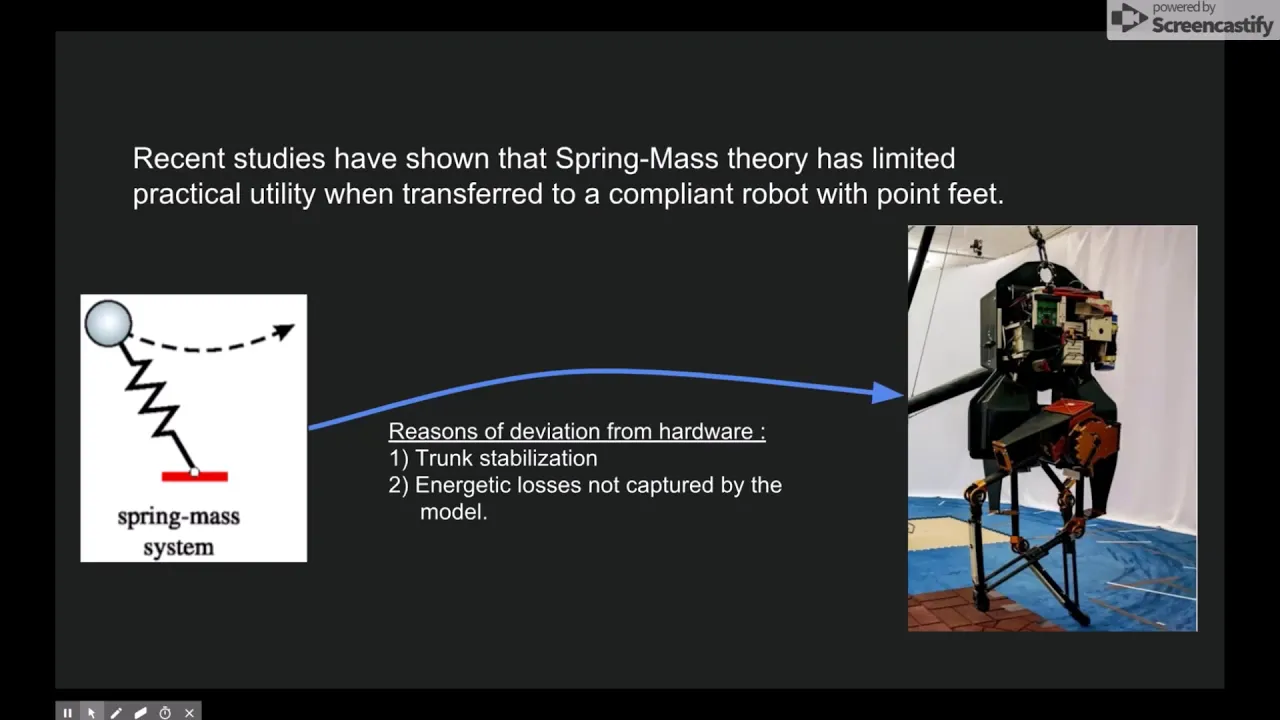
Gorkem Secer: TSLIP-based Deadbeat Running Control of Bipedal Robot ATRIAS
DynamicWalking-wv6qm
298 views•2018-06-22
Self-Driving Cars Need Lessons On Human Drivers | Maddie About Science
skunkbear
26K views•2018-08-21

Milrem Robotics’ THeMIS UGVs used in a live-fire manned-unmanned teaming exercise
MilremRobotics
99K views•2021-05-20
Trending

WOW! Judge TURNS THE TABLES on Trump in His OWN $10B LAWSUIT!!!
MeidasTouch
197K views•2026-07-23

Playstation NO DISC/NO BUY Fight Is Over...
DavidJaffeGames
4K views•2026-07-23

Steam and Xbox Just Dropped The Hammer On PlayStation
OhNoItsAlexx
9K views•2026-07-23

Americans Confused in Australia for 17 Minutes Straight
IWrocker
17K views•2026-07-23