The Artificial Intelligence for Materials Design Laboratory (AIMD-L) at Johns Hopkins University has developed an autonomous robotic laboratory that combines AI algorithms with high-throughput testing to dramatically accelerate the discovery of materials capable of surviving extreme conditions such as high velocity impact, intense heat, and radiation. By integrating robotic sample handling systems (Maximum for X-ray analysis, Helix for shock loading testing, and Sphinx for nanoindentation) with cloud-based data management and AI-guided experimental design, this approach enables rapid screening of combinatorial samples and systematic learning from each test result, fundamentally changing how materials are designed and discovered for aerospace, energy, defense, and manufacturing applications.
Artificial Intelligence for Materials Design Laboratory | AIMD-L: Reinventing Invention Itself
Added:At Johns Hopkins University, the artificial intelligence for materials design laboratory or a IMDL is making progress possible by reinventing invention itself. In order to usher in the next generation of aerospace, energy, defense, and manufacturing technologies, we need materials that can survive extreme conditions like high velocity impact, intense heat, enormous pressure, and punishing radiation.
This isn't your typical lab. Here, our scientists and engineers are dramatically accelerating technological progress by combining artificial intelligence and robots with human ingenuity and creativity.
Traditional experiments on materials are too slow for AI, which need mountains of data to sift through to identify subtle patterns and explore entirely new avenues of investigation. That's why we needed to build a new kind of laboratory that didn't exist until now.
A I A IMD is an autonomous robotic lab.
It is designed to collect data about the structure of materials and about their behavior under extreme conditions.
Humans can't match the speed, the precision, or the endurance of our robotic sample handling system. And the new experiments that we've been developing dramatically accelerate the rate at which we can acquire data that is actually needed to design the next generation of structural materials for extreme environments. For example, we've designed and built Maximum, a uniquely powerful X-ray system for studying structure and chemistry of materials, which can analyze thousands of samples per day.
Helix is a miniaturized and automated instrument for measuring the response of materials to shock loading. It is capable of testing hundreds of samples in the time it would take a traditional facility to measure just one. Finally, Sphinx is our robotic nanoinder which maps the strength and other mechanical properties of materials over large areas enabling rapid screening of combinatorial samples to identify promising avenues for investigation.
Every test we do feeds the AI algorithms which basically means that we have to be very sophisticated in how we handle our data. Every sample has a unique persistent identifier and the data and the metadata are autonomously streamed to the cloud. So we can instantly have access to that data and inspected through human researchers or use it directly by the AI.
What makes our approach different is integration. Instead of testing materials one at a time and hoping for the best, we're using AI to guide our experiments and learn from every result.
We're solving real world challenges, but at its core, this project is about combining AI and high throughput testing to completely change the way we design and discover new materials. We're always looking to push boundaries and form new collaborations. Whether you're a student, a researcher, a potential industry partner, or just curious about the future of materials, we'd love to connect.
Related Videos

Setting up a curved screen with Immersive Calibration Pro 4 and multiple cameras (P3D v4)
FlyerOneZero
23K views•2019-07-21

Robot Learning with Sparsity and Scarcity
allenai
379 views•2025-10-14

Jorge Mendez-Mendez: Unlocking Lifelong Robot Learning With Modularity (2023-10-05)
umassmlfl
237 views•2024-01-06

Northwestern’s MS in Robotics: Student Robotics Projects, 2023
NorthwesternEngineering
1K views•2024-05-31

"Perfect" Turns: Turning by the Gyro - FIRST LEGO League (FLL) SPIKE Prime + EV3 RePlay Programming
ZacharyTrautwein
94K views•2020-10-02
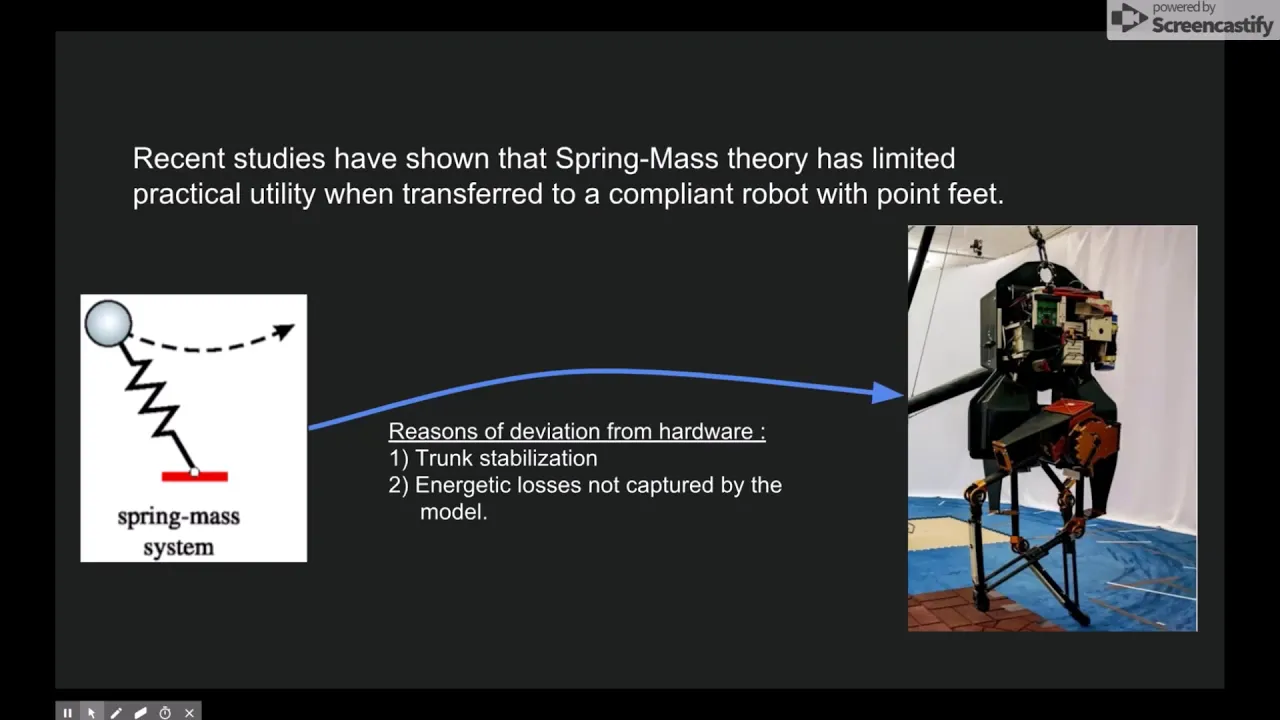
Gorkem Secer: TSLIP-based Deadbeat Running Control of Bipedal Robot ATRIAS
DynamicWalking-wv6qm
298 views•2018-06-22

Self-Driving Cars Need Lessons On Human Drivers | Maddie About Science
skunkbear
26K views•2018-08-21

Milrem Robotics’ THeMIS UGVs used in a live-fire manned-unmanned teaming exercise
MilremRobotics
99K views•2021-05-20
Trending

NOLAN WELLS AUTOPSY: DEEP TISSUE DISCOLORATION BACK OF HEAD, NECK BONE MISSING
nancygrace
561K views•2026-07-22

Big Tech's Biggest Gamble Is Finally Falling Apart
houseofel-ai
79K views•2026-07-22

we're almost finished the house (ep.125)
JennaPhipps
347K views•2026-07-22

We flooded a field - the results blew our minds
MossyEarth
73K views•2026-07-22