In 1990, NASA's Voyager 1 spacecraft, located 6 billion kilometers from Earth, captured the iconic 'Pale Blue Dot' photograph, which dramatically illustrates humanity's insignificance in the vast cosmos. This mission, along with Voyager 2, documented over 67,000 images of the solar system, including the giant outer planets, their rings, and 48 moons, fundamentally transforming our understanding of space and our place within it.
Install our extension to search inside any video instantly.
How Voyager 1 Changed Our Perspective on the UniverseAdded:
This iconic photo, known as the pale blue dot, was taken by Voyager 1 in 1990 when it was 6 billion kilometers away from us. And it sure has a way of putting our significance into perspective, or lack of significance.
This photo is just one of over 67,000 incredible images that Voyager 1 and 2 took of space, transforming our understanding of the solar system, giant outer planets, their rings, and 48 of their moons. It's hard to overstate how much knowledge these probes [music] have given us about life beyond our Earth.
Related Videos

Spiral Galaxy NGC 3370 from Hubble | NASA APOD 2025-11-05 #Shorts
galaxygallery
938 views•2026-05-30

SOMETHING inside the SUN is CHANGING
RaysAstrophotography
1K views•2026-06-03

There May Be A Giant Hole In The Universe... And We Might Be Inside It | The Cosmic Ledger Entry 015
TheCosmicLedger
145 views•2026-05-31

Captured the Blue Moon (with a twist) 🌙✨ #space #bluemoon #telescope
realAstroExplorer
674 views•2026-06-01

The Map We Sent to the Stars in 1977 — Why Scientists Now Regret It
TheAncientRecord7
183 views•2026-06-03

Is this a copy of our galaxy? Discover Galaxy M81!
UniverseDocumentaries-cc4mb
995 views•2026-05-31

10 Planet Where a Black Hole Replaces the Sun
cosmicexplorer-EN
147 views•2026-06-02
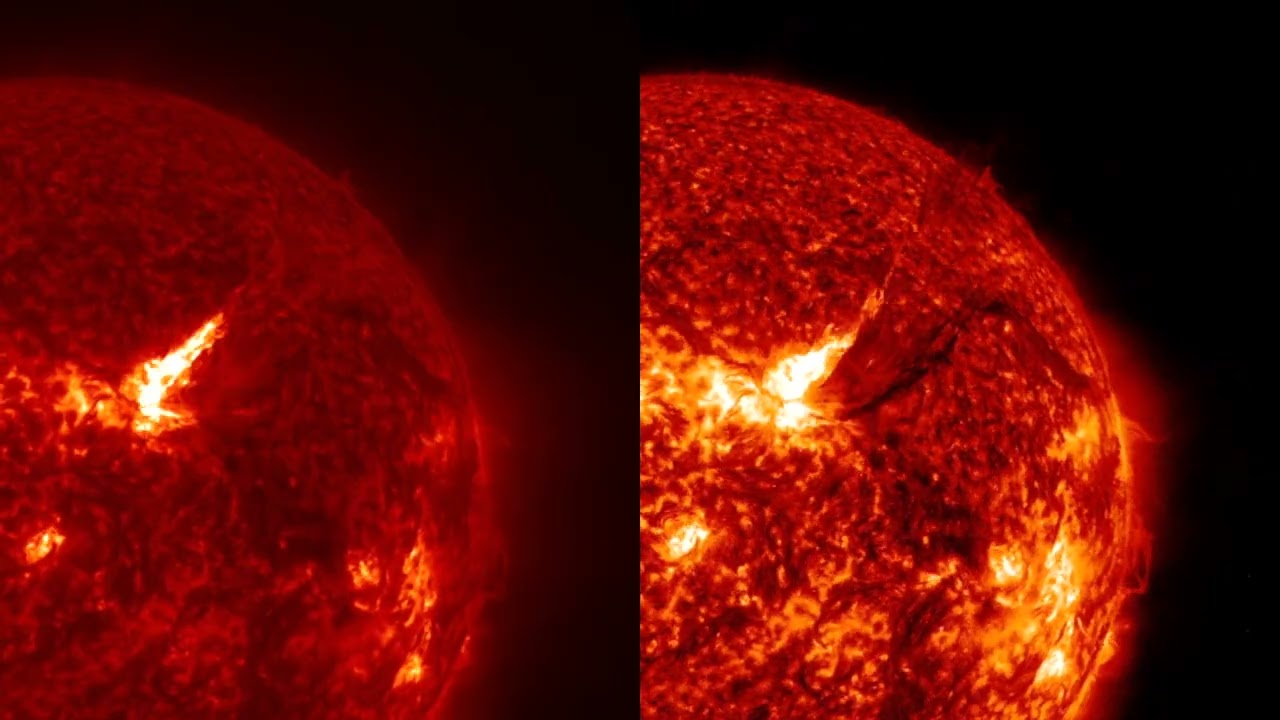
Solar Flares and CMEs at Earth - More Likely | S0 News June.3.2026
SpaceWeatherNewsS0s
2K views•2026-06-03



