Ganymede, Jupiter's largest moon and the largest moon in the solar system, is larger than Mercury and may harbor a vast subsurface ocean containing more liquid water than all of Earth's oceans combined, while also generating its own magnetic field through an active iron core, making it a unique world that could potentially support life.
Install our extension to search inside any video instantly.
5 Facts About GanymedeAdded:
And today, five staggering facts about Ganymede, the largest moon in the solar system. Ganymede is not just the largest moon in the solar system. It is larger than the planet Mercury.
If it were orbiting the Sun instead of Jupiter, we would call it a planet without hesitation.
Beneath that ancient surface lies something extraordinary.
Scientists believe Ganymede harbors a vast salt water ocean buried roughly 800 km below its icy crust. An ocean containing more liquid water than all of Earth's oceans combined. It never sees sunlight. It sits under crushing pressure.
And yet the same conditions exist in Earth's deep oceans, where life thrives in complete darkness.
The possibility that something lives in Ganymede's hidden ocean is not science fiction.
It is a genuine scientific question.
What makes Ganymede truly unique among all the moons in the solar system is that it generates its own magnetic field.
No other moon does this. Its iron core is still active, still churning, producing a magnetosphere entirely its own.
It was actually those auroras that confirmed Ganymede's hidden ocean.
Scientists noticed the auroral bands were rocking back and forth less than expected.
And the only explanation was a vast electrically conductive salt water ocean beneath the surface dampening the effect. An ocean discovered from the behavior of light. Extraordinary. The world's space agencies are taking Ganymede very seriously.
The European Space Agency launched its JUICE mission, the Jupiter Icy Moons Explorer, in 2023 with Ganymede as its primary destination.
It will become the first spacecraft to orbit a moon other than our own.
When JUICE arrives in the 2030s, it will map Ganymede's surface in extraordinary detail, study its magnetic field, and probe the depths of that hidden ocean.
Everything we think we know about Ganymede is about to be rewritten.
Ganymede is larger than a planet. It has an ocean bigger than Earth's. It generates its own magnetic field. It hosts auroras.
And it may harbor life. It is not a moon in the way we usually think of moons.
It is a world, complex, ancient, and very possibly alive, quietly orbiting in the shadow of the solar system's largest planet.
Waiting for us to finally give it the attention it has always deserved.
That's our five facts. If Ganymede just changed how you see our solar system, smash that like button, and subscribe for a new video every week.
Drop your next topic in the comments.
I'll see you there.
Related Videos

Spiral Galaxy NGC 3370 from Hubble | NASA APOD 2025-11-05 #Shorts
galaxygallery
938 views•2026-05-30

SOMETHING inside the SUN is CHANGING
RaysAstrophotography
1K views•2026-06-03

There May Be A Giant Hole In The Universe... And We Might Be Inside It | The Cosmic Ledger Entry 015
TheCosmicLedger
145 views•2026-05-31

Captured the Blue Moon (with a twist) 🌙✨ #space #bluemoon #telescope
realAstroExplorer
674 views•2026-06-01

The Map We Sent to the Stars in 1977 — Why Scientists Now Regret It
TheAncientRecord7
183 views•2026-06-03

Is this a copy of our galaxy? Discover Galaxy M81!
UniverseDocumentaries-cc4mb
995 views•2026-05-31

10 Planet Where a Black Hole Replaces the Sun
cosmicexplorer-EN
147 views•2026-06-02
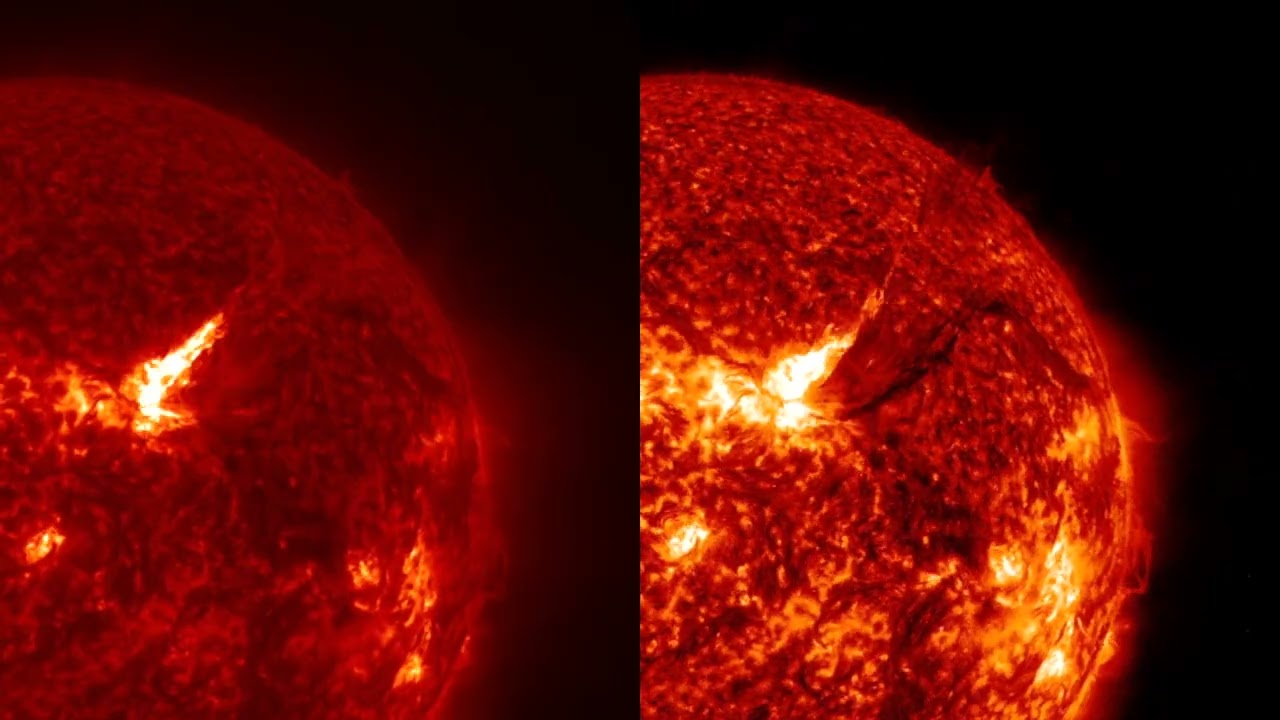
Solar Flares and CMEs at Earth - More Likely | S0 News June.3.2026
SpaceWeatherNewsS0s
2K views•2026-06-03



