A sobering reminder that even the universe's most violent spectacles can be humbled by a simple veil of galactic dust. This is textbook clarity meeting cosmic irony at its finest.
Install our extension to search inside any video instantly.
2026 May 07 - Supernova in a Sideways SpiralAdded:
Greetings and welcome to the Astronomy Picture of the Day podcast. Today's picture is titled Supernova in a sideways spiral.
So, what do we see here? Well, here we see an image showing us a spiral galaxy.
Now, spiral galaxies, if we look at them from above or below, we see the great spiral structure swirling around from the center. However, spiral galaxies are very flattened, a very thin disc. So, if we see them sideways, we see just that thin disc of the galaxy. Now, this is actually a video clip that we're going to play and it is showing a supernova explosion that occurred in this distant galaxy.
Now this was discovered this year and this is supernova 2006 KID and that is how supernovi are named.
It's the year in which they're discovered and then the letters of the alphabet afterwards and as we go through the alphabet once a second and then a third letter is added and that allows us to count the now thousands of supernovi that we find every single year. So you can see how far we are through the alphabet. And here it is only May. Now let's go ahead and watch the video and let this play. And we can then see the galaxy here. Now we're not seeing the supernova yet. We are seeing various trails going across the image. And those are caused by satellites that happen to come through the same field of view. And if we keep an eye on this, we'll then see the supernova appearing marked there with the red arrow that shows the location of a star that appeared that was not there before. Now, a supernova is an exploded star. And in this case, this is what is known as a type 2 supernova. A type two supernova occurs at the end of the life of a massive star which builds up an iron core, becomes unstable, and then explodes. And that star can in many cases outshine the entire galaxy for a period of time. Now the supernova that we see here does not look quite that bright. It's because we're looking at a disc galaxy which has a lot of dust in it. So the location of this star is important. Were it on the near side of the galaxy where we could see it easily, it would be significantly brighter. But if it's towards the middle or the far side, that dust dims the light, making even a supernova explosion very hard to see. Now, there are many prominent supernovi that have occurred in history, we know of the supernova of 1054, now seen as the Crab Nebula. And the brightest supernova seen a few decades before that, supernova 1006.
And that was reported to be brighter than the planet Venus. and could be visible during the day. So you get an idea of how bright these supernovi can actually be to be able to be seen during the day whereas no stars and no planets can be seen during the day. Here we could see another star appearing and you can see why these were very interesting and often recorded by peoples thousands of years ago when a new star appeared in the sky. Now, in terms of recent supernovi, there's been a lot of them, but not within our galaxy. Now, in a typical spiral galaxy, a supernova will occur about once every hundred years or so. However, it has to be in the right location for you to see it. Supernovi are going off in our galaxy all the time, but we can't see them if they're on the other side of the galaxy or hidden behind areas with a lot of dust.
they will go off but there even a supernova will not be visible through that much material. The last supernova that occurred in our galaxy that we were able to detect visually would be the supernova that occurred in the early 1600s less than a decade before the development of the telescope. So in our own galaxy, we have not been able to study a supernova close within the time that we have had telescopes. One will occur eventually, but when that will be is a very good question. So that was our picture of the day titled supernova in a sideways spiral. We'll be back again tomorrow for the next picture previewed to be open star cluster. So we'll see what that is about tomorrow. And until then, have a great day everyone and I will see you in class.
Related Videos

Spiral Galaxy NGC 3370 from Hubble | NASA APOD 2025-11-05 #Shorts
galaxygallery
938 views•2026-05-30

SOMETHING inside the SUN is CHANGING
RaysAstrophotography
1K views•2026-06-03

There May Be A Giant Hole In The Universe... And We Might Be Inside It | The Cosmic Ledger Entry 015
TheCosmicLedger
145 views•2026-05-31

Captured the Blue Moon (with a twist) 🌙✨ #space #bluemoon #telescope
realAstroExplorer
674 views•2026-06-01

The Map We Sent to the Stars in 1977 — Why Scientists Now Regret It
TheAncientRecord7
183 views•2026-06-03

Is this a copy of our galaxy? Discover Galaxy M81!
UniverseDocumentaries-cc4mb
995 views•2026-05-31

10 Planet Where a Black Hole Replaces the Sun
cosmicexplorer-EN
147 views•2026-06-02
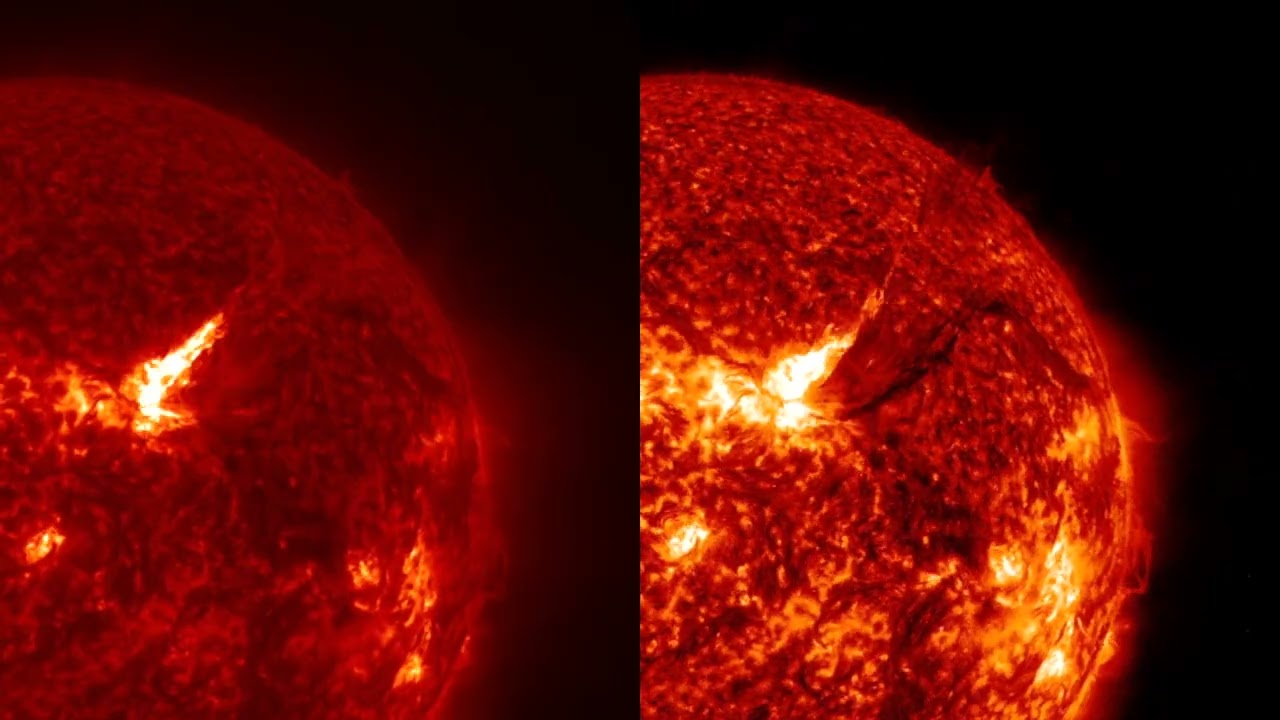
Solar Flares and CMEs at Earth - More Likely | S0 News June.3.2026
SpaceWeatherNewsS0s
2K views•2026-06-03



