The International Space Station (ISS) is a massive orbital laboratory orbiting Earth at 408 km altitude, traveling at 7.66 km per second to complete a full circuit every 92 minutes; launched in 1998 and continuously inhabited since November 2000, it spans 109 meters and weighs over 420,000 kg, serving as the largest human-made structure in low Earth orbit where astronauts conduct microgravity research in fluid dynamics, cellular biology, and material science that cannot be replicated on Earth's surface; due to atmospheric drag, the ISS requires periodic reboosts to maintain its altitude and prevent gradual decay and atmospheric re-entry, while remaining visible to the naked eye at magnitude -3.6, making it one of the brightest objects in the night sky after the Moon and Venus.
ISS The Station #iss #space #shorts #cosmicexploration #science #spaceexploration #orbitAdded:
The International Space Station orbits Earth at an altitude of approximately 408 km traveling at 7.66 km per second.
Fast enough to complete a full orbital circuit every 92 minutes. Launched in 1998 and continuously inhabited since November 2000, it is the largest human-made structure in low Earth orbit spanning 109 m across and weighing over 420,000 kg. On board, astronauts conduct research in microgravity that is simply impossible to replicate on the surface.
Fluid dynamics, cellular biology, material science, all behaving differently when the force of gravity is effectively removed. The station's orbit is not fixed. Due to atmospheric drag at low Earth orbit, it requires periodic reboosts to maintain altitude. Without them, it would gradually decay and re-enter the atmosphere.
Visible to the naked eye at magnitude -3.6, it is one of the brightest objects in the night sky, outshone only by the moon and Venus.
Related Videos

Spiral Galaxy NGC 3370 from Hubble | NASA APOD 2025-11-05 #Shorts
galaxygallery
938 views•2026-05-30

SOMETHING inside the SUN is CHANGING
RaysAstrophotography
1K views•2026-06-03

Captured the Blue Moon (with a twist) 🌙✨ #space #bluemoon #telescope
realAstroExplorer
674 views•2026-06-01

There May Be A Giant Hole In The Universe... And We Might Be Inside It | The Cosmic Ledger Entry 015
TheCosmicLedger
145 views•2026-05-31

The Map We Sent to the Stars in 1977 — Why Scientists Now Regret It
TheAncientRecord7
183 views•2026-06-03

10 Planet Where a Black Hole Replaces the Sun
cosmicexplorer-EN
147 views•2026-06-02

Is this a copy of our galaxy? Discover Galaxy M81!
UniverseDocumentaries-cc4mb
995 views•2026-05-31
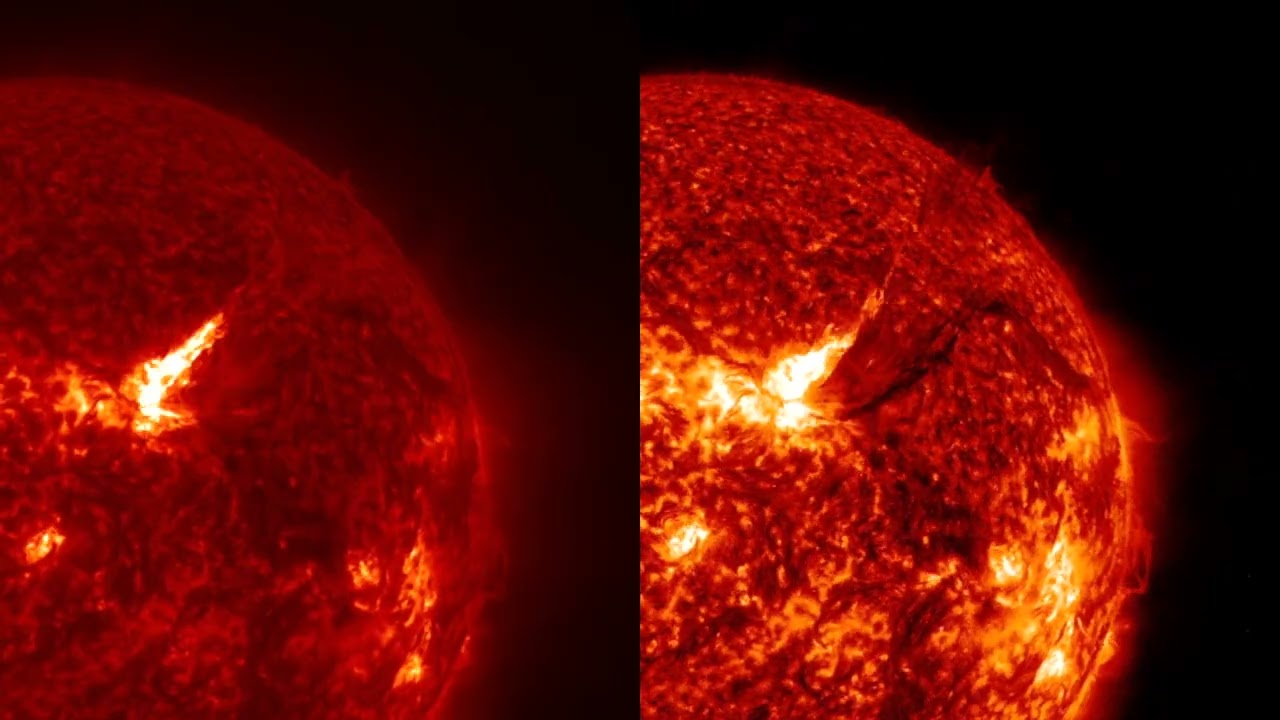
Solar Flares and CMEs at Earth - More Likely | S0 News June.3.2026
SpaceWeatherNewsS0s
2K views•2026-06-03



