Astronomers at Johns Hopkins University used the James Webb Space Telescope to map the first daily weather cycle ever observed on an exoplanet, WASP-94A b, a hot Jupiter located 700 light-years away that is tidally locked to its star; the telescope detected thick magnesium silicate clouds forming on the cooler night side, being blown by strong winds to the dayside where intense heat causes them to evaporate, revealing a long-standing error in how scientists have been reading exoplanet atmospheres for years.
Install our extension to search inside any video instantly.
James Webb maps first daily weather cycle on an exoplanetAdded:
On a planet 700 light-years away, every morning brings clouds of vaporized rock that vanish by sunset.
A team led by Johns Hopkins University used the James Webb Space Telescope to map the daily weather on WASP-94ab, a giant gas planet about the size of Jupiter.
The planet is tidally locked to its star, so one side is always in daylight and the other in constant night.
Web found thick clouds of magnesium silicate on its morning side. That is essentially vaporized rock.
The clouds form on the cooler night side, then strong winds push them into the day side, where the intense heat makes them evaporate.
By the evening side, the sky is clear.
The discovery is the first daily weather cycle ever mapped on an exoplanet.
It also exposes a long-standing error in how scientists have been reading exoplanet atmospheres for years.
Related Videos

Spiral Galaxy NGC 3370 from Hubble | NASA APOD 2025-11-05 #Shorts
galaxygallery
938 views•2026-05-30

SOMETHING inside the SUN is CHANGING
RaysAstrophotography
1K views•2026-06-03

There May Be A Giant Hole In The Universe... And We Might Be Inside It | The Cosmic Ledger Entry 015
TheCosmicLedger
145 views•2026-05-31

Captured the Blue Moon (with a twist) 🌙✨ #space #bluemoon #telescope
realAstroExplorer
674 views•2026-06-01

The Map We Sent to the Stars in 1977 — Why Scientists Now Regret It
TheAncientRecord7
183 views•2026-06-03

Is this a copy of our galaxy? Discover Galaxy M81!
UniverseDocumentaries-cc4mb
995 views•2026-05-31

10 Planet Where a Black Hole Replaces the Sun
cosmicexplorer-EN
147 views•2026-06-02
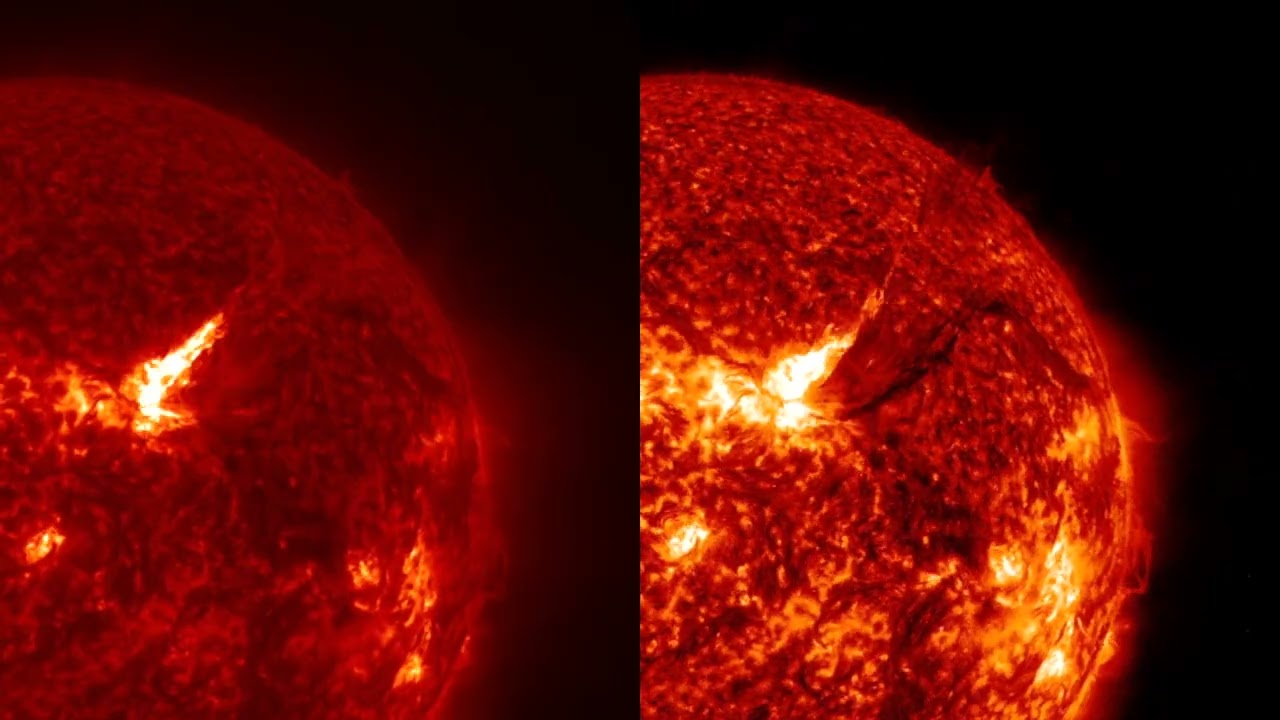
Solar Flares and CMEs at Earth - More Likely | S0 News June.3.2026
SpaceWeatherNewsS0s
2K views•2026-06-03



