Astronomers use spectroscopy to identify space objects by analyzing how different materials reflect light at various wavelengths; when NASA detected a mysterious object near Earth, spectroscopy revealed it matched the titanium oxide paint used on the Saturn V rocket, confirming it was the long-lost Apollo 12 third stage that had been orbiting Earth since 1971 before being ejected into solar orbit.
Install our extension to search inside any video instantly.
NASA Thought It Was an Asteroid… But It Was Actually Apollo 12 🚀😳 #facts #vitalshorts #nasaAdded:
Over the course of 2 months, Earth pulled the third stage into a highly elliptical orbit around the Earth, just like the one it was in before. At [music] this point though, astronomers still had no idea what this object was.
And so, in order to confirm the identity of the object, astronomers did spectroscopy observations to determine [music] what it was made of. Every material reflects light in slightly different ways. More specifically, the amount of light that is reflected will differ at each wavelength. And so, to determine the material of this object, astronomers took light measurements of the third stage at many different wavelengths, which gave them a spectroscopy graph. With this, they could compare it to other spectroscopy graphs and see if it matched any other materials. It turned out that it was very similar to the spectroscopy graph of white titanium oxide paint, the exact kind that was used on the Saturn [music] V. Astronomers were also able to trace the object's trajectory back and found that it left Earth's orbit [music] in 1971. And so, with this information, astronomers could confidently say that this really was the long-lost third stage from Apollo 12. Astronomers continued to track the orbit, and after just a year, it was once again thrown out into an orbit around the sun.
Calculations made by astronomers showed that it would return to Earth in the mid-40s. This object will spend [music] many more years racing through space, but the laws of physics will always make sure it returns home every now and then.
Related Videos

Spiral Galaxy NGC 3370 from Hubble | NASA APOD 2025-11-05 #Shorts
galaxygallery
938 views•2026-05-30

SOMETHING inside the SUN is CHANGING
RaysAstrophotography
1K views•2026-06-03

There May Be A Giant Hole In The Universe... And We Might Be Inside It | The Cosmic Ledger Entry 015
TheCosmicLedger
145 views•2026-05-31

Captured the Blue Moon (with a twist) 🌙✨ #space #bluemoon #telescope
realAstroExplorer
674 views•2026-06-01

The Map We Sent to the Stars in 1977 — Why Scientists Now Regret It
TheAncientRecord7
183 views•2026-06-03

Is this a copy of our galaxy? Discover Galaxy M81!
UniverseDocumentaries-cc4mb
995 views•2026-05-31

10 Planet Where a Black Hole Replaces the Sun
cosmicexplorer-EN
147 views•2026-06-02
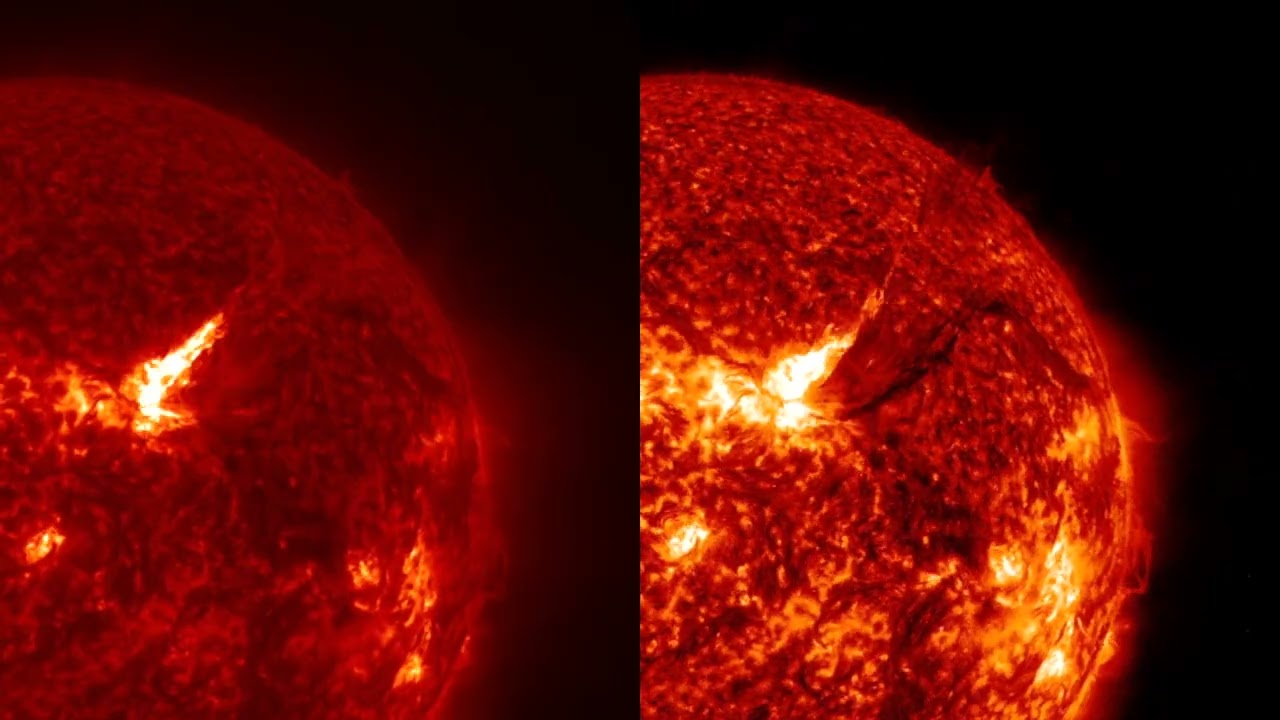
Solar Flares and CMEs at Earth - More Likely | S0 News June.3.2026
SpaceWeatherNewsS0s
2K views•2026-06-03



