The cosmic microwave background radiation is the oldest light we can observe in the universe, originating from approximately 13.8 billion years ago, very close to the Big Bang. Since light takes time to travel through space, looking at distant objects means looking back in time—when we observe something a billion light years away, we see it as it was a billion years ago. This principle allows astronomers to study the early universe by observing increasingly distant objects, with the cosmic microwave background representing the furthest point in time we can directly observe.
Installez notre extension pour rechercher instantanément dans n'importe quelle vidéo
Looking billions of years into the past… 🌌⏳ w/ Brian CoxAjouté :
But the most distant light we can see is from the cosmic microwave background radiation. If you look at the Andromeda galaxy, which we can see with the naked eye, it's the most distant object you can see with the naked eye, and it's about 2 million light years away, which means the light took 2 million years to get to us. We can actually look so far out >> [music] >> that we can see almost back to 13.8 billion years ago, which is very close to the Big Bang. So, we can look to light that began [music] its journey before there were galaxies.
And that's the the oldest light in the universe. As you look further out into the universe, to more and more distant galaxies, you're looking further back in time. If you look at something that's a billion light years away, then the light took a billion years to get to us. So, you see it as it was a billion years in the past. But
Vidéos Similaires

Spiral Galaxy NGC 3370 from Hubble | NASA APOD 2025-11-05 #Shorts
galaxygallery
938 views•2026-05-30

🎬 Title: Milky Way & Andromeda Collision: The Future of Our Galaxy 🌌 #astroph #askap
SulaimanKhanSulaimani
429 views•2026-06-01

SOMETHING inside the SUN is CHANGING
RaysAstrophotography
1K views•2026-06-03

NOAA Warning! Massive Double Cannibal CME Impacting Earth: G4 Storm Watch!
worldnewsreporttoday
1K views•2026-06-04
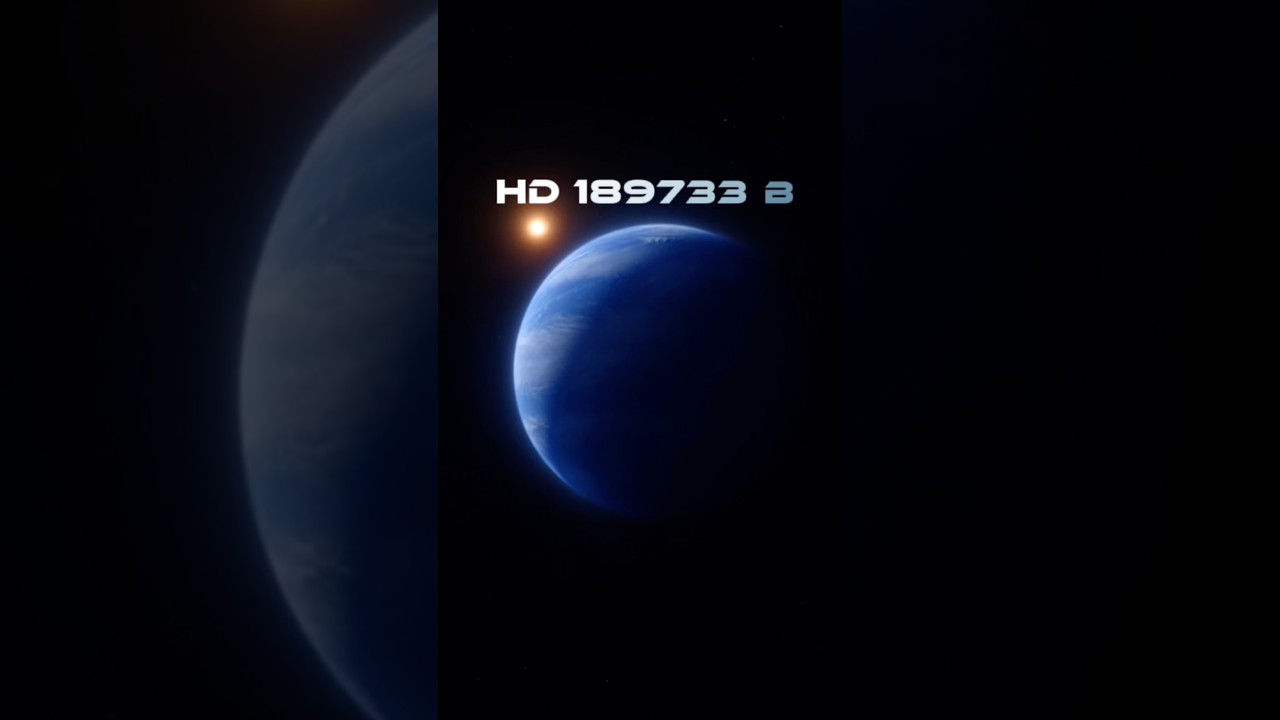
🌌 HD 189733 b | The Planet Where Glass Rains Sideways
EVENTHORIZONUK
3K views•2026-05-31

Captured the Blue Moon (with a twist) 🌙✨ #space #bluemoon #telescope
realAstroExplorer
674 views•2026-06-01

10 Planet Where a Black Hole Replaces the Sun
cosmicexplorer-EN
147 views•2026-06-02

Is this a copy of our galaxy? Discover Galaxy M81!
UniverseDocumentaries-cc4mb
995 views•2026-05-31



