Predictable security protocols, such as fixed encryption key rotation schedules, create exploitable vulnerabilities in networked systems. In this scenario, a 16-minute key rotation window occurring every 4 hours created a critical vulnerability where automated backup systems could not be triggered, resulting in 31 minutes of total network darkness across an entire intelligence network. The vulnerability was identified through traffic pattern analysis rather than content decryption, demonstrating that predictable timing patterns in security systems can be exploited even when the underlying encryption cannot be broken.
Install our extension to search inside any video instantly.
Ukrainian Drones DESTROY Russia's Most Critical FSB Command Center — Then THIS Happened...
Added:At 0200 in the morning, the encryption key rotation sequence begins at the FSB coordination facility in occupied Kersson Oblast and the 16-minute window that Senior Lieutenant Larissa Bondar had been waiting 10 weeks to use opens.
Not a window in the building, a window in the network. Somewhere inside the boarding house that Russia had converted into its primary intelligence coordination center for southern Ukraine, a seaside resort on the coastal zone of occupied Keron Oblast, chosen for its civilian appearance and its distance from the Ukrainian- held bank of the Denipro, the communication relay equipment, begins its handshake protocol with the FSB directorate in Symphol.
Every field agent node in the southern Ukraine network receives the rotation initiation signal and suspends outgoing traffic. The network goes into transition and at the same moment the first cell of 13 SBU Alpha Special Operations Center drones crosses the facility's outer perimeter. The FSB coordination center in occupied Kerson Oblast is not a headquarters. It is a router. Russia's FSB operations in southern Ukraine, the agent networks, the informant management, the counter inelligence operations against Ukrainian partisan activity in Kon Zaparisia and Mikolai of Oblasts are not run from a single large facility that would be visible and targetable. They are run through a network of small field nodes that relay encrypted communications between agents on the ground and the central FSB directorate for occupied Ukraine in Sfarapole, Crimea. The boarding house facility is the primary relay node for the entire southern network. Every encrypted communication between every FSB handler and every informant in three occupied Oblasts passes through this facility's communications equipment before reaching Simfurup. Destroy it and the entire southern Ukraine FSB network loses its connection to the central directorate simultaneously. not permanently. Russia will establish an alternative routing node within days. But for the hours between the destruction of the primary node and the activation of the backup, every handler agent communication in southern Ukraine goes dark unless the backup cannot be activated automatically. The FSB communications relay system operates on a scheduled encryption key rotation, a standard communications security protocol in which the encryption keys protecting the relay traffic are replaced at fixed intervals to prevent crypt analytic attacks. At the Keran facility, the key rotation occurs every 4 hours synchronized with the serupole directorates rotation schedule. The rotation itself takes 16 minutes to complete. 16 minutes during which the relay system is cycling through the handshake protocol. The new keys have been generated at simaropel but not yet distributed to the field nodes and the old keys have already been invalidated.
The network is suspended. No new communications can be routed from field agents because the new keys have not been distributed. No communications can be received from Simfer because the old keys are gone. 16 minutes of network suspension every 4 hours at 0200, 0600, 1000,400, 1,800, and 2200 every day. And if the primary node is destroyed during those 16 minutes, the automated backup activation protocol cannot be triggered.
The activation signal from Simaropel is encrypted with the new keys that are being distributed during the rotation.
The backup node has not yet received the new keys because the distribution requires the primary node to be online to relay them. The backup node cannot decrypt the activation signal. The automated system at Simfer escalates to manual override status. The manual override requires a duty officer at the Simfer directorate to manually authenticate, generate the outofband key distribution package, and transmit it through a separate channel. Minimum time under emergency conditions 14 minutes.
16 minutes of suspension window. 14 minutes of manual override delay after it closes. 30 minutes minimum of total network darkness if the primary node is destroyed at the right moment. Bondar had found the 16-minute window in week three. Not because she had decrypted anything. The FSB's current encryption standard was beyond her unit's capability to break in any operationally relevant time frame. She had found it in the traffic pattern. 10 weeks of monitoring the southern Ukraine FSB communications emissions had produced a precise traffic map, not content, just timing. The signals intelligence collection showed encrypted relay activity across the southern network punctuated by 16-minute gaps that appeared at 0 to 200 every day like clockwork. The clockwork was the vulnerability. A key rotation on a fixed schedule was predictable. Predictable meant targetable. She had spent weeks 4 through 7 cross- refferencing the traffic pattern against the location data for the relay facility, a signals intelligence product from a separate collection stream that had identified a boarding house facility on the Keren Oblast coastal zone as the likely primary relay node from its communication emissions signature. The emissions signature was consistent with a mobile military communications relay system, the type the FSB deployed for field coordination centers. The 16-minute gap pattern in the traffic matched the gap timing at the Hersan facility's emissions exactly. She filed the initial assessment in week six. FSB primary relay node for southern Ukraine identified at boarding house in occupied Keren Oblast coastal zone. 16-minute encryption key rotation window identified at 0200, 0600, 1000,400, 18,800, and 2200 daily. Strike during rotation window prevents automated backup activation. Delays network restoration by duration of manual override process. Request authorization for strike package time to rotation window. The response strike on FSB relay facility in occupied territory requires independent confirmation of facility location and communications function.
Signals traffic pattern analysis alone is insufficient. Continue developing assessment. She had anticipated this.
She spent week seven in the archive. A SBU human intelligence product from three weeks earlier filed by a separate unit under a different case reference described a source report of an FSB coordination facility at a boarding house in the Keran Oblast coastal zone with a description of the facility's communications equipment that matched the emission signature precisely.
Rooftop antenna array external power connection. Vehicle park with over 70 vehicles. Engineering barriers.
underground shelters around 100 SB personnel. The human product had not been cross-referenced against her signals collection work because they came from different collection streams under different analytical cells. She built the cross reference in week seven, filed it in week 8. Authorization came through Friday. The Alpha Special Operations Center prepared 13 drones in four cells. The four cells had four objectives. the communications building on the facility's northern end, the building with the rooftop antenna array, the vehicle park on the eastern side, the personnel accommodation block on the southern end, the underground shelter access points that the facilities defenders would use to protect personnel from exactly this kind of strike. The timing was specific, 0200, the start of the 16-minute rotation window. The package time to arrive at the communications building at 020 and 0 seconds. Not before, not after the moment the rotation begins when the network is suspended and the backup activation cannot be triggered with the key distribution already frozen.
Midcycle minute 0200.
The key rotation sequence began at the Keran FSB coordination facility. The communication relay equipment started its handshake with Simfer. Every field agent node in the southern Ukraine network received the rotation initiation signal and suspended outgoing traffic.
The first cell of four drones crossed the outer perimeter at the same moment.
The facility's armed security detachment, 12 guards with small arms at perimeter positions, two armored vehicles at the main gate checkpoint, engineering barriers around the compound, detected the incoming contacts at minute 0 and 14 seconds. The guards opened fire with small arms. Against drone contacts at night, the probability of effect was low. The first cell crossed the perimeter under small arms fire. Two drones struck the communications building directly. One struck the rooftop antenna array. The fourth struck the external power supply connection at the cable entry point where the facility's commercial power connected to the building, destroying the power supply to the communications equipment. Even if the equipment itself survived the impact, the communications relay system went offline at minute 0 and 47 seconds. Minute 1 15 minutes remaining. The key rotation had been running for 47 seconds when the communications building was struck. The new encryption keys had been generated at Sim Ferraple, but had not yet been distributed to the field agent nodes.
Distribution required the relay system to be online, and the relay system was gone. The field agent nodes across the southern network held their suspended state. No outgoing communications.
Waiting for key distribution that would not come. The automated system at SFAL was waiting for the Keran facility to confirm receipt of the new keys before sending the backup activation. The confirmation would never arrive. The second cell of four drones reached the vehicle park at minute 1 and 12 seconds.
Over 70 vehicles, the logistics and mobility infrastructure of the FSB's southern Kersson operation parked in two rows on the facility's eastern side. The second cell hit the park in a sequential pass, each drone targeting the densest vehicle concentration. Three of the four drones completed their attack runs. The fourth was downed by concentrated small arms fire from a guard at the park's eastern boundary, the only drone in the 13 drone package, stopped by the facility's defenders, and impacted 40 m short of its assigned aim point, starting a ground fire in the perimeter scrub that spread to the park's southern vehicle row within 4 minutes. 12 of 13 drones still operational, three cells complete. The vehicle park fire was visible from the Denipro River 3 km west within 90 seconds of the first vehicle ignition. Minute 3, 13 minutes remaining. The third cell of three drones approached the personnel accommodation block on the facility's southern side. The main building of the boarding house where the human source had described FSB officer accommodations, the building where the 100 personnel estimate had been made.
The alarm had sounded at minute 0 and 14 seconds. The 90-cond shelter reach time in the FSB's facility emergency protocol meant that personnel who successfully evacuated to the underground shelters had done so by minute 1 and 44 seconds.
The third cell's approach to the accommodation block crossed above the vehicle park fire. The thermal updraft from the burning vehicles affected the lead drone's altitude control. It climbed 3 m above its planned approach altitude as it crossed the fire, bringing it above the guard positions small arms engagement threshold for 4 seconds. The guards on the accommodation blocks eastern checkpoint fired during those 4 seconds. One burst clipped the lead drone's airframe. The drone continued on damaged flight characteristics, reduced maneuverability, slight yaw right, and struck the accommodation block's main entrance rather than the central structural section that had been its assigned aim point. The second and third drones arrived 6 seconds later, having flown around the vehicle park fire's southern edge. They struck the accommodation blocks northern face and roof sections simultaneously. The combined impact and the fire that followed from the fuel loads of the three drones merged with the vehicle park fire's smoke column into the single largecale blaze that SBU described in its operation report. Minute 4, 12 minutes remaining. At minute 4, the Simopol FSB directorates automated system registered that the Kersson facility had failed to confirm receipt of the new encryption keys. The automated backup activation timer, a 60-second countdown beginning when the confirmation timeout threshold was reached, started at minute five. The automated system sent the backup activation signal to the designated backup relay node in the occupied Zaparisia Oblast north of Molita. The signal was encrypted with the new keys generated for the rotation. The backup node had not yet received those keys.
The distribution had frozen when the Kersson facility went offline before distribution completed. The backup node received the signal and could not decrypt it, could not act on it. The automated system escalated to manual override status. The duty officer at the Symphol Directorate had been asleep since midnight. His secure phone activated at minute 5 and 40 seconds.
Minute 6, 10 minutes remaining. The fourth and final cell of two drones, the drones assigned to the underground shelter access points, reached the facility at minute 6 and 20 seconds. The underground shelters were the facility's primary personnel protection. Concrete reinforced structures beneath the compound that the FSB emergency protocol required personnel to reach within 90 seconds of an alarm. The access points were the only way in or out. The fourth cell's two drones struck both primary shelter access points simultaneously at minutes 6 and 20 seconds. The stairwell entries above ground exposed concrete structures, absorbed the warhead detonations, and collapsed. The shelter structures beneath were intact. Their occupants were unharmed. Their exits were sealed. The facility's defenders were now either in the burning above ground structures or sealed underground.
The large-scale fire that SBU described in its operation report was the merged fire from the accommodation block and the vehicle park, consuming three of the compound's four structures simultaneously by minute eight. The administrative building on the western side of the compound survived the strike package unharmed. It had not been assigned as an objective because the objectives were the communications capability, the mobility capability, the personnel complement, and the shelter access. The administrative building had none of those functions. Minute 7, 9 minutes remaining. The Seraple duty officer, a lieutenant colonel, reached the FSB directorate's secure communications room at minute 7. He began the manual override procedure.
Authentication of identity.
Authentication of authorization level.
Generation of the outofband key distribution package. Transmission to the backup node through the secure channel that the manual override procedure specified. Under normal conditions without urgency, the procedure took approximately 22 minutes.
Under emergency conditions with a trained officer, the SBU's assessment based on signals intelligence collected 18 months earlier was that the minimum time was 14 minutes. He had started at minute 7. The backup node would not be operational before minute 21 at the earliest. The 16-minute rotation window would end at minute 16. The FSB Southern Ukraine network would be dark for at least 5 minutes beyond the end of the rotation window. Minute 8, 8 minutes remaining. The fire response team from the nearest occupied settlement reached the facility's outer perimeter at minute 14. The engineering barriers, the same barriers described in the human source report confirmed in the operation authorization, visible in the thermal footage that SBU's surveillance drone had been recording since before the strike began, blocked their access. The fire inside the compound had merged into a single event across three structures.
The response team did not have the equipment to address a fire of this scale at a compound with blocked perimeter access. They waited outside while the compound burned. Minute 14. 2 minutes remaining. At minute 14, the FSB engineering teams inside the facility used tools from the surviving administrative building to begin clearing the collapsed access point debris from the shelter stairwells. The concrete debris from the fourth cell's impacts had sealed the stairwells, but had not destroyed them. The warheads had been sized for access point denial rather than structure penetration.
Clearing the debris would take approximately 20 minutes under the current conditions. The personnel sealed underground were alive. They were working to get out. They would get out eventually. The communications building they would emerge to find was a burned structure with a collapsed rooftop antenna array and no external power connection. Minute 16 0. At minute 16, the key rotation window closed. The encryption keys generated for the 0200 rotation, the keys that would have been distributed to every field agent node in the southern Ukraine network if the Kersson relay facility had been online to distribute them, were superseded by the automated system, which began preparing the 0600 rotation cycle. The 0200 keys were gone. The 0600 keys had not yet been generated. The field agent nodes were still waiting for a 0200 key distribution that would never come.
Every FSB field agent in southern Ukraine, informants in Keran city, handlers in Enerhodar, counterintelligence teams monitoring Ukrainian partisan networks in Nova Kakovka and Henichesk was in suspended silence. Their standing protocol for communication loss was to maintain silence for 4 hours before attempting emergency contact through an alternate channel. a protocol designed to prevent counterintelligence exposure in case the loss was caused by SBU electronic interference rather than physical destruction. They did not know their relay facility was burning. They held their silence and waited. Minute 21 0 + 5. At minute 21, the duty lieutenant colonel in Simar completed the manual override procedure and transmitted the outofband key distribution package to the backup node in Zaparisia. The backup node received and decrypted the package.
Its relay system came online. It began routing traffic for the southern Ukraine FSB network. At minute 27, the backup node transmitted the new encryption keys to the field agent nodes across the southern network. The field agent nodes received the keys and exited their suspended state. At minute 31, the first field agent communications reached the simupole directorate through the backup nodes routing. 31 minutes after the communications building at the Kersan facility was struck. 31 minutes during which every FSB handler agent communication in Kon Zaparisia and Mikolai of Oblasts was impossible. The southern network was operational again.
The directorate's first priority at minute 31 was damage assessment. How many personnel had been at the facility?
How many vehicles had been lost? What intelligence materials had been in the facility's administrative building?
whether the underground shelters had protected the facility's compliment or exposed them to the sealed access points. The second priority was counterintelligence assessment. Ukraine had known where the facility was.
Ukraine had known its communications function. Ukraine had known its rotation schedule. The precision timing of the strike arriving exactly at 0200 on the rotation start was not coincidental.
Someone had identified the rotation window. The question the director its counter intelligence section would spend the following weeks trying to answer was how. The answer was in the traffic pattern, not the content, the timing. 16 minutes of silence appearing every 4 hours at exactly the same six times each day in the communications emissions of a facility that had been chosen for its remoteness and civilian cover and had been monitored for 10 weeks by a Ukrainian SBU signals analyst who had not been looking for secrets but for gaps. The boarding house compound was assessed as a total loss for communications infrastructure. The administrative building survived physically and was not immediately targetable. Its administrative function depended on the communications building that was gone. The underground shelters were opened at minute 40 when the engineering teams cleared the access point debris. The personnel who emerged found three burning structures and a vehicle park that was still on fire.
Russia did not publicly comment on the strike. The Russian media blackout on FSB facility losses was standard protocol. The thermal footage that SBU's surveillance drone had recorded throughout the operation was published on July 20th and showed exactly what the operation report described. a large-scale fire at a compound that had been welldefended, well sheltered, and invisible on any civilian mapping of the Kersson Oblast coastal zone until the gap in its communications traffic at exactly the right times each day had made it visible to someone reading the right data. Russia had positioned its FSB coordination center for southern Ukraine at a seaside resort in occupied Keron Oblast because the civilian appearance provided cover and the coastal remoteness provided distance and had protected it with engineering barriers and underground shelters because the facility's importance justified the investment and had never changed its encryption key rotation schedule because changing a fixed rotation schedule across a network of dozens of field nodes required a coordination signal. that the rotation schedule itself made difficult to transmit securely. Senior Lieutenant Larissa Bondar spent 10 weeks reading traffic timing data from a facility whose content she could not decrypt until the 16-minute gap that appeared every 4 hours at the same six times each day told her that the encryption key rotation window was the moment when the backup could not be triggered and the human report in a different unit's archive told her where the facility was and the Alpha Special Operations Centers 13 drones arrived at 0200 on the rotation start and And the southern Ukraine FSB network went dark for 31 minutes while a duty lieutenant colonel in Simfer worked through a manual override procedure that took 14 minutes longer than the window that had just closed. post.
Related Videos

6:13
Computer Science
TOP 15 Data compression Interview Questions and Answers 2019 Part-2 | Data compression | Wisdom jobs
wisdomjobs
281 views•2019-06-28

27:51
Computer Science
CTS 158: 802.11w Management Frame Protection
ClearToSend
4K views•2019-02-04
23:21
Computer Science
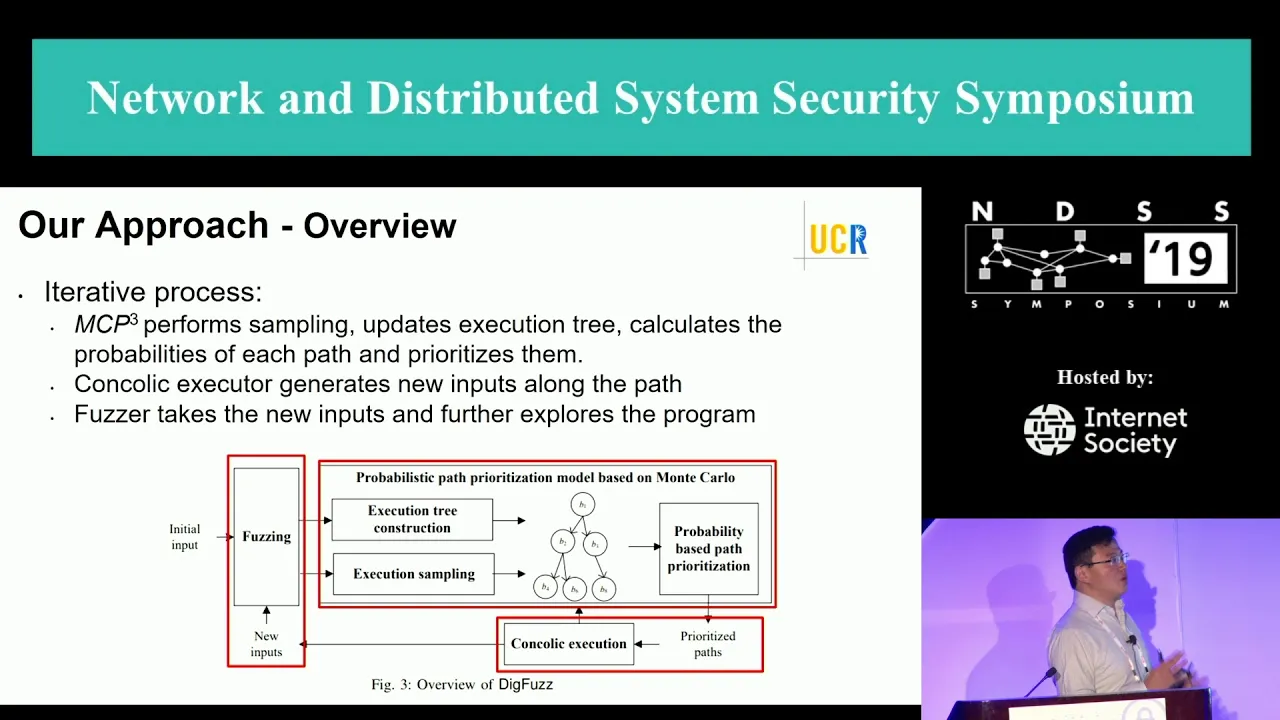
NDSS 2019 Send Hardest Problems My Way: Probabilistic Path Prioritization for Hybrid Fuzzing
NDSSSymposium
496 views•2019-04-02

12:48
Computer Science
How realistic is Cities: Skylines?
CityBeautiful
159K views•2019-02-14

46:39
Computer Science
GUIs & TUIs: Choosing a User Interface for Your Python Project | Real Python Podcast
realpython
2K views•2025-04-04

25:15
Computer Science
The OSI Model - Explained by Example
hnasr
225K views•2019-05-12
1:10:47
Computer Science
Cloud Computing - Introduction
elithecomputerguy
98K views•2019-10-07

2:24
Computer Science
From Traveler's Dilemma to Dynamic Routing | Demystifying Networking
IITBombayJuly
5K views•2019-08-04
Trending

13:38
Law
WOW! Judge TURNS THE TABLES on Trump in His OWN $10B LAWSUIT!!!
MeidasTouch
197K views•2026-07-23

13:25
Business
Playstation NO DISC/NO BUY Fight Is Over...
DavidJaffeGames
4K views•2026-07-23

22:40
Business
Steam and Xbox Just Dropped The Hammer On PlayStation
OhNoItsAlexx
9K views•2026-07-23

16:52
Anthropology
Americans Confused in Australia for 17 Minutes Straight
IWrocker
17K views•2026-07-23