A fireball is a bright meteor that occurs when space debris enters Earth's atmosphere at speeds up to 30,000 miles per hour, superheating the atmosphere and creating a brief green glow from elements like magnesium and nickel; these events are common but often go undetected, and the apparent increase in sightings is due to improved technology rather than more frequent occurrences.
Install our extension to search inside any video instantly.
Fireball in the sky reported across Washington, British Columbia, and OregonAdded:
If you saw this bright light flash through the sky, you may still be wondering what you really saw. When those things hit the Earth's atmosphere, they really superheat the atmosphere.
This is a fireball, or really bright meteor, and it happens when some kind of debris from space comes soaring through the Earth's atmosphere at up to 30,000 miles an hour. Astronomy experts say they're fairly common, but can happen over the ocean or in the daylight, so they're often undetected. No place on Earth is either safe or uh um particularly likely to get hit. Its green glow is because of elements like magnesium and nickel found in the debris, and the fireball only lasts for a few quick seconds. While it may seem these sightings are on the rise, Dr. Chris Law says that has more to do with our technology than what's actually happening in space. The general consensus among scientists is that the the main reason we're seeing more of them is because we have more of these doggone things. Debris rarely hits the ground intact, so experts assure these fireballs aren't dangerous, but they do create a special view. More than 130 people have reported sightings of this fireball to the American Meteor Society, and now tracking that information will help tell us more about where in space this debris came from and how high in the Earth's atmosphere it blew up.
Related Videos

Spiral Galaxy NGC 3370 from Hubble | NASA APOD 2025-11-05 #Shorts
galaxygallery
938 views•2026-05-30

SOMETHING inside the SUN is CHANGING
RaysAstrophotography
1K views•2026-06-03

Captured the Blue Moon (with a twist) 🌙✨ #space #bluemoon #telescope
realAstroExplorer
674 views•2026-06-01

There May Be A Giant Hole In The Universe... And We Might Be Inside It | The Cosmic Ledger Entry 015
TheCosmicLedger
145 views•2026-05-31

The Map We Sent to the Stars in 1977 — Why Scientists Now Regret It
TheAncientRecord7
183 views•2026-06-03

10 Planet Where a Black Hole Replaces the Sun
cosmicexplorer-EN
147 views•2026-06-02

Is this a copy of our galaxy? Discover Galaxy M81!
UniverseDocumentaries-cc4mb
995 views•2026-05-31
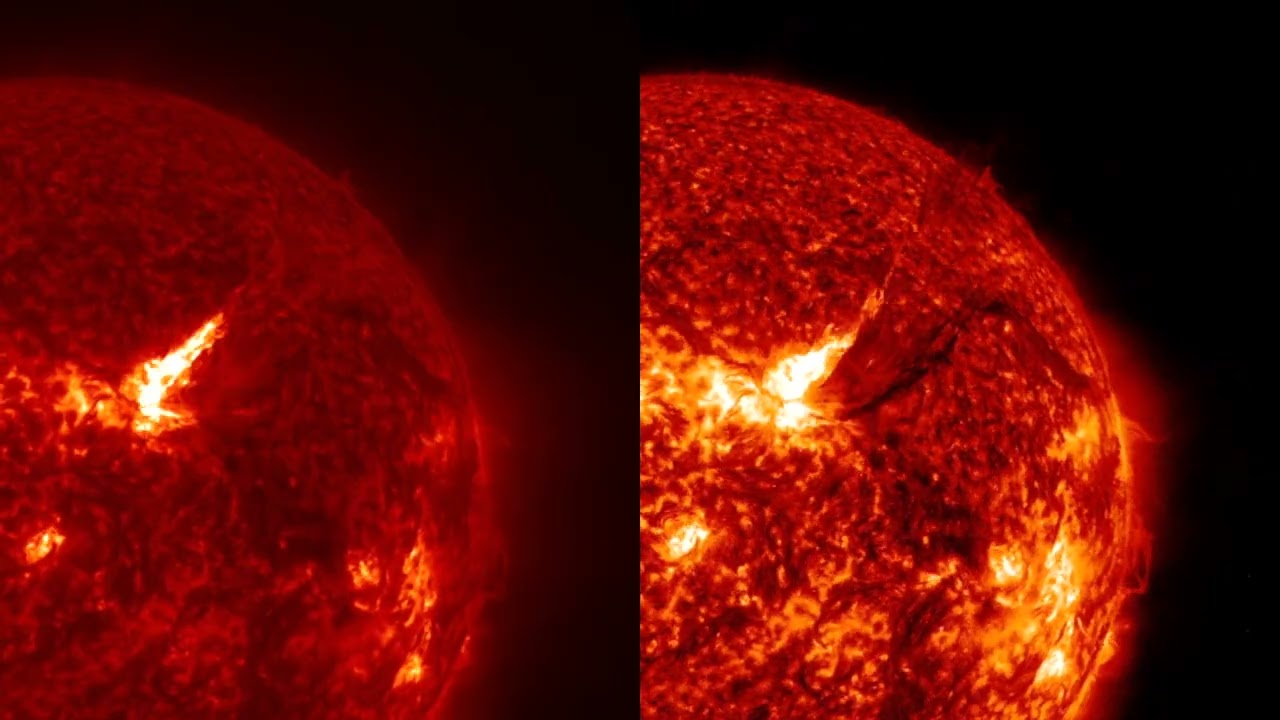
Solar Flares and CMEs at Earth - More Likely | S0 News June.3.2026
SpaceWeatherNewsS0s
2K views•2026-06-03



