The Roman Empire's expansion into Scotland was ultimately limited by the fierce resistance of native Caledonian tribes, the extreme geographical distance from the empire's center, and the logistical challenges of maintaining supply lines across hostile territory. Despite building extensive infrastructure like Hadrian's Wall and the Antonine Wall, and deploying advanced military technology such as the ballista, Rome could not achieve lasting conquest of Scotland. The Ninth Spanish Legion's mysterious disappearance in the early 2nd century AD exemplifies the dangers of Roman expansion into this region. The empire's frontier ultimately settled at Hadrian's Wall, which Emperor Hadrian himself built in 122 AD as a defensive barrier, recognizing that further conquest was neither strategically nor logistically feasible.
Why Rome Could Never Conquer Scotland | Walking Britains Roman Roads
Added:Today, we take for granted the motorways, a-roads, and city streets, over 2,000 miles of them, that form the skeleton road map of Britain. And all because of the Romans with their ingenuity and dogged determination to conquer everything in their path. I'm Dan Jones, and I'm going to retrace the story of our Roman past along six of their most iconic roads.
Each road tells a story of our Roman legacy and its rich history. From their very first road across Kent, which powered their invasion, to the vital roots which helped them conquer most of Britain before being beaten into retreat by the Scots. In nearly 400 years of occupation, the Romans changed Britain forever by bringing their armies, ideas, buildings, and religion. But the Romans couldn't have done any of it without one thing, their roads.
This time I'll be looking at two important roads which intersect in the northeast [music] of Britain. Deer Street and Staingate. Together they were integral to the expansion of the Roman Empire here.
Deer Street runs for 226 mi. It heads north from York and loosely follows the route of the A1.
When the Romans built Deer Street, their aim was to extend their territory as far as they could. This road goes to the furthest reaches of their entire empire.
Deer Street runs all the way into Scotland where it dissolves into a series of byways, but before it gets there, it crosses Stanggate, a key east-west route. So when I reach that junction, I'll explore some of Staingate, too, because the Romans built their great stone barrier across Northern England [music] right beside it. Hadrien's Wall is now recognized as one of the wonders of their empire. Deer Street, Stanggate, and Hadrien's Wall are part of a story about Roman military and colonial ambitions in Britain. Now, the Romans saw no reason that their empire should have any limits. And while some of our native tribes were happy to collaborate, in Scotland it was a different story.
The history of Deer Street is one of an invading army being tested to the very limit.
I'll explore how the Romans, faced with forceful resistance from the native tribes, had to rethink their whole invasion plan.
Its starting point, York, was founded in 71 AD by a legion of the Imperial Roman army known as the 9inth Spanish Legion.
Their name for the city was Ibarakum, which means place of the UT tree. My journey starts at a place of great significance to the Roman invasion.
This is York Minster, one of the world's most magnificent medieval cathedrals.
Where the minster stands today was once the Prinipia, a military headquarters in the middle of a vast legionary fortress.
Now, this column was found in excavations under the Minster is one of 16 that once held up the Prancipia's great hall. And I suppose it's ironic that a place where today people pray for peace was once filled with Roman centurions planning for war. When York was founded, the Romans had already been in Britain for 30 years. In that time, the southern tribes in our land had been mostly pacified.
But the north remained a contested and rebellious region for centuries. [music] York still bears the hallmarks of an army defending its territory from hostile tribes living nearby.
This is the Multangular Tower. It once formed a corner of the fortress. Now, that top part was rebuilt in the Middle Ages, but you can still see the bottom section contains the original Roman bricks. Archaeologists believe it would once have stood 9 m tall. And for local people who mostly lived in singlestory buildings made of thatch, wood, and mud, that must have been quite a sight.
Adam Parker of the Yorkshire Museum knows the history of the Roman civilization here and of the tower.
Why is there this massive wall in the middle of town?
>> So the multangler tower and the city walls that come off on the side of this, this is the legionary fortress uh at Ibraham. It was first constructed in AD 1771 by the 9inth Legion and was originally big timber fortress and and this designed to house 5 to 6 thousand men of the Roman legion whilst they're here in the north. So this is the launch pad for the rest of the invasion further north past Yorkshire. So why did the Romans need five or 6 thousand men right here?
>> Geographically, we're between two big Iron Age tribes in the region, the Brigantes and the Pareesy. The Brigantes had a client relationship with Rome, uh, which eventually broke down in the middle of the first century AD, requiring greater military invention on the parts of the Romans.
>> So you're between these two dangerous tribes. Are the walls then just to keep them out?
>> This was a big monumental imposition in the north of Yorkshire. So, it's a place to house the troops and then they're going to move forward beyond it. It was never really designed to be a place where soldiers are fighting from the battlements down onto an invading group of people underneath them. So, the walls here just to impress people.
>> They have several functions. One of which is to impose initially the dominance of the Roman Empire in this part of Britain. Um, but they also serve to show the uh the power and the importance of the Legion in this part of Britain. And it had some pretty illustrious visitors as well. at least four times the city of Ibarak and was visited by Roman emperors. So the emperor Hadrien, he's the great builder.
He's on a great tour. He visits different parts of the empire. And then this is the furthest fringe in the north. In the 3rd century, Septimius Seis comes here because he's on a military campaign further north into Scotland. And Constantius Chloris comes here to impose some more Roman dominance on the region. Why would an emperor feel the need to come all the way to the end of the empire? Why not just sit in the middle and send your generals? It's important to be able to deal with regions that are politically unstable as quickly as possible. York was founded because of this unrest with Brigantes and it could very easily have the the history could have been very different if there were different political uprisings against people against Rome.
Having the emperor here with leading the front of the army, bringing additional troops in as well very much stamps that down.
10 years before York was founded, the Romans quashed a rebellion led by Buudaca, Queen of the Eini tribe at the Battle of Watling Street. They were determined to keep hold of their precious territory in Britain. York was a strategic place from which they could control the surrounding territory and more importantly launch expeditions further north. And to reach those wildlands, the Romans did what they always did. They built a road.
This is more or less where Deer Street begins. Now, this archway is medieval.
It stands on the site of an earlier gate, the northwest gates of the Roman fort. This is where my journey begins, and I'll be following in the footsteps of many a Roman legionary.
As those [music] soldiers marched up Deer Street to expand the Roman Empire, they hoped for glory. As I journey north through Yorkshire and beyond, I want to discover why the Romans met so much resistance from the local tribes.
Deer Street was built on the orders of the Roman governor of Britain, a Gria, as he set about conquering the territories north of York, 17 miles beyond the city walls. My first stop is the village of Oldbra. In Roman times, it was known as Isurium Brigantum.
This was what the Romans called a civitas, essentially a local town for local people. And in this case, the people were a native tribe called the Bgantes.
In the early years of the conquest, they seem to have had a sort of onoff alliance with the Romans. By the middle of the second century, that alliance had stabilized, and this town was built as a sort of Roman style capital for the Brigantes.
For the last decade, archaeologist Rose Ferby has been uncovering the story of Assyrian Bantum. I've come to find out more about life here during the Roman occupation.
>> So, where are we standing now if this were Roman times?
>> Well, we're on the edge of the Roman town, on the western edge. So this uh rather sort of submarine looking like structure here is actually the town wall and out where the conifer trees are that was the defensive ditches.
>> Okay, >> and it's dipping away down there. And then if you imagine that's the wall, that's outside and here's inside. Our surveys have started to give us an impression of the road system and the governance. And what we've realized is that basically this is a town built fresh. So this is a sort of Roman newbuilt town like Milton Kees in the sort of 2nd century AD. Why would the Romans build a town for this region?
>> Is on a point where it's on a trade route, but also it's when the Romans decide to go north and we know that it's a town. It seems to have been established properly and built in the its formal layout in about 120 AD.
>> Would the people of this region ever have seen anything like this town before? I think this town itself would be unusual for the local population. We now know that the forum is about three times as big as the present church and it's built of uh beautiful white limestone. It would have shone out in the landscape. So imagine coming out across the river and seeing this this big town with its imposing red walls and its big forum and basilica in the center. It's hard to imagine what Roman Ulra would have looked like, but this artist's impression of a Roman forum gives us an idea of the kind of architecture seen throughout their empire.
Grand. It was meant to showcase the best of Roman life in an attempt to civilize the locals.
Evidence of their lavish lifestyle was uncovered in the 19th century.
That is incredible. I mean, I don't think I expected to see a mosaic out in the middle of, you know, a village in Yorkshire. What's the story?
>> So, what we've got here is um a lion sitting underneath a palm tree. And all that's really left of him, you can see his tail >> and sort of his crossed paws at the front.
>> Yeah.
>> So, the story is that someone was burying a dead calf in here and they dug a hole and that's when they came across the mosaic. So actually quite a bit of the lion is missing because of that. But we can see the general outline of it sitting under his tree. And what this is telling us is that uh the residents of far from being at the far-flung edge of the empire uh shivering in the cold were well off. They were um part of a sort of wider Roman culture. And they were doing things like bathing. They had uh underfloor heating.
>> Well, the best rule in the world. I don't think anyone in Yorkshire, particularly in Roman times, had ever seen a lion sitting under a palm tree.
So, this is probably giving us a sense of real cultural interchange within the Roman world.
>> Exactly. And not just that, but the fact that there are very talented crafts people coming through as well. The image of the lion may have come that the craftsman bought the image with them.
But also there's the small chance that they may have seen lions in the amphitheater which has >> and the fact that has an amphitheater is another indication of just how kind of well off its residents were.
>> That's amazing. I mean, what a picture this gives us of of this town 15, 16,700 years ago as somewhere that was, you know, in its way, I guess, like a mini road.
>> An amphitheater with lions and gladiators similar to these ruins. It shows how important the town was. The Romans were able to build it here because the queen of the local Brigantes tribe had agreed to their governance.
She was called Cartimandua.
According to the Roman writer Tacitus, Cartamandia had an affair with a Roman soldier, was kidnapped by her jealous husband, and eventually had to be rescued by the Romans.
Despite becoming a sort of client state, it seems that the Bgantes continued to revolt against Rome for more than a century. Now, it's hard to know exactly what lay behind the fighting, but seeing as the Brigantes controlled a vast amount of territory stretching from Darbisha to Northland, it's unlikely that everyone within that was signed up to project Rome.
Like most native tribes in Britain, the Brigantes left no written records. Most of what we know about them was documented by the Romans, so the information is one-sided.
Whatever the cause of the fighting, the Roman army was kept busy here well into the second century.
Forts were built along Deer Street to try to quell descent.
As I continue my journey through North Yorkshire, it's obvious that geographical and physical obstacles presented no issues for the Roman engineers who built this road.
This is Pierce Bridge near Darlington where deer street crosses the river tease. Now before Roman times there would have been a ford across this river but using it would have meant diverting the road and that was simply not the Roman way.
The Roman way was to build a bridge. In fact they built two. The first was made of wood crossing the river roughly where the George Hotel now stands.
The second bridge dating from the 3rd century AD was built of sturdier materials. These stones are all that's left of the Roman bridge that once crossed the river TE's here. Now, in its prime, it was 123 m long, held up by a series of stone peers.
>> It may have looked something like this artist's impression of a similar bridge in Kent.
Where's the river gone? Well, over the years, erosion has gradually moved it that way to the north, leaving this bridge stranded on dry land. Now, in Roman time, such a valuable piece of engineering would never be left undefended. So, the Romans also built a fort here, staffed with hundreds of soldiers, one of their tasks being to maintain the bridge. That's a lot of effort to go to just to avoid a bend in the road.
Further north along Deer Street, the modern A1 heads off towards the coast.
It's the A68 which now follows the Roman route deep into Northland and towards the Scottish border. At the town of Corbridgeidge, I find the junction where Deer Street running north to south intersects [music] with that other important Roman road, the Stain Gate, which linked the east and west coasts.
As so often happened, where the two roads met, the Romans built a fort to control the crossroads. Over time, the fort grew into a town. This town was a bit different because this was a town right at the edge of the Roman world.
Corridge stands 100 miles north of my starting point in York. It's probably one of the best preserved Roman towns in the whole of Britain. And over the years, some extraordinary finds have been made here. They tell us a good deal about [music] the Roman legions who built it and their plans for defending their empire.
Dr. Andrew Roberts is one of the historians who looks after the site and he's going to give me a private tour.
>> Andrew.
>> Hi. Nice to meet you.
>> How you doing?
>> I'm okay. Bit cold.
>> Bit cold. So, here we are in Roman terms. Right at the end of the civilized world.
>> Why were the Romans here? Well, they were intending to conquer um all of Britain and Corb was an important part in a strategic networks of forts that was intended to help that happen.
>> So, what came first the town or the military? uh the military come first and they build a series of forts uh in the late 1st century uh into the second century and then sometime probably about after AD 160 uh the military don't need it in the same way as they used to and so a town grows up where the fort used to be and how was that town connected to deer street >> corridge uh sits at an intersection uh between uh the major north south road which is is deer street and also the major east west route route which we call the stain gate. What the residents did was that they created effectively a high street at the point at which these two uh major routeways connected. A Roman high street is is pretty much like a high street is today. You're going to get the butchers and the bakers. You're also going to get artisans. You're going to probably have some pubs here. There would have been some temples here to Roman gods. And so travelers might want to stop in and and worship. So even though we are right at the fringes of empire here, there's still a sort of connection with the center of the Roman world. I know things are fused with local culture and local styles, but this it feels very Roman even though we are, you know, right on the way to Scotland.
It does and and I think part of that is because of the communication network, the road system because you still get the same kind of material culture um the same kind of objects, still of clothing, same kind of jewelry or pottery and the same kind of of of cultural influences such as architectural influences traveling across the Roman world and they even end up with place like this like culpage. Wherever you go in Roman towns across Britain, there seems to be quite a set pattern of town building.
You know, it's almost like it comes off the shelf in a builder. Is that a lack of imagination? Why not sort of vary it wherever you look?
>> It's some something of an archaeological joke, which is that the Romans did things the same everywhere apart from all the exceptions. And we get a little bit of both at Corbridgeidge in the fact that they do try to establish that same broad pattern where you have a kind of a high street and you have all the important buildings at the center and and different zones. But Corbridgeidge itself is a little bit unusual because it doesn't quite become a town like any other uh in the Roman world. We've never, for example, discovered a forum at Corbridgeidge, which is pretty much a standard building that you'd expect to find.
There's more to Corbridge than the remains of a once booming Roman high street. In 1964, archaeologists unearthed something extraordinary here, the Corbridge Horde. It's a remarkable set of personal effects from a soldier's life, dating back to the era when the town was still a fort.
Sometime in the early 2nd century AD, uh, a soldier or maybe a group of soldiers, um, decided to pack away some of their equipment and personal effects into a box and to bury it.
>> Any idea why?
>> Any idea why? No. Well, possibly they were moving. They were posted somewhere else. They were moving on. Um, they couldn't carry everything that they wanted to carry and they probably intended to come back for it someday.
>> I'm really interested in this armor. Now obviously on the left hand side that's replica but tell me about what's what this was made up of.
>> Well what you're looking at is the famous Laurica segmentatarta or the segmented armor breast plates. Now until this was found we didn't actually know how it worked. So we knew that they had segmented armor. We didn't really know how it was worn, how it fitted together.
But because the cord was so carefully packed away, buried and preserved, uh, archaeologists could figure out how it was worn and how it was fastened.
There's a huge range of weaponry and other tools here. What just talk me through what we've got.
>> Well, we have uh bundles of different spears here. We've got some tools, including a pickaxe. We have a scabbard uh from a from a sword. So actually it's pretty complex life and and certainly a complex facility that you had here with an enormous amount of material needed to sustain a soldierly existence.
>> Exactly. And and a unit of soldiers was essentially almost like a traveling town and you had to have all of the skills that you would need for not just your um your military uh duties but also for your life uh in general. So the soldiers who would have worn and used all this, would they have come from Italy or would they be local lads or who would they be?
>> I think maybe from the soldiers from northern Spain, but you've also got to remember that some of them came from places like Germany and Northern Europe.
So the climate and and the is not so different once they were here. They probably remained here for for for the rest of their lives in many cases. and multiple generations of of of the soldiers of and their families would have would have stayed here.
>> By the early 2nd century, those soldiers defending Corbridge and the northern edge of the empire were stretched to the limit.
In the face of the constant raids coming from Scottish tribes, the time had come for a big military intervention.
I'm traveling the Roman roads of Britain, exploring two key routes that helped the Romans expand their empire here in the 1st and 2nd centuries AD.
Deer Street and Stanggate. I've traveled a 100 [music] miles north from my starting point in York through snowstorms and strong winds.
In a sense, we're only in the middle of the British Isles geographically. We're sort of in the center of Britain, but it feels like the end of the world. And it must have felt like the end of the world to people coming to this most northerly frontier of the Roman Empire. I mean, sometimes it can be perfectly nice and sunny and warm and and actually quite picturesque up here, but when it's bleak in the winter, it's really bleak.
I've turned off Deer Street for a moment onto Staingate, the Roman road built sometime between 77 and 85 AD to run from east to west across Britain. The reason for this detour is that I'm approaching a key landmark, one of the most famous and imposing Roman remains in their whole empire.
In the year 122, the emperor Hadrien came to Britain in person to sort out the problem of constant rebellions by the native tribes. His solution for peace was a particularly Roman one.
Build something and make it big.
And this is Hadrien's Wall stretching for 74 miles. It's so impressive that it's a world heritage site.
Unable to conquer the Northern Territories which form modern Scotland, Emperor Hadrien built this long barrier running from coast to coast across the narrowest part of Northern Britain. It's a strange thing really because today this is somewhere to walk the dog or go for a ramble or just come and inspect a piece of our ancient national past. But once upon a time this was a really serious piece of [music] military engineering designed to overall people on both sides of it.
In its heyday, this wasn't just a wall.
It was an all inspiring defense system manned by 10,000 soldiers and measuring more than 4 m in height. Every mile along its length, there was a gateway and small watchtowwer called a mile castle with a dozen soldiers guarding it. And every 7 mi, there would have been a fullscale fort. I've come to a reconstruction of one of those forts, Vinderlander, to understand what life by the wall would have been like in Roman times. So, in the 1970s, there was a replica of Hadrien's wall built using original Roman techniques. And this is it. And actually, this is the first time that I've come face to face with what Hadrien's wall really would have looked like for someone trying to get through it or even trying to get over it. I mean, there's just no chance. It's absolutely enormous. First of all, it's the scale of it. And then it's the sense that if you had only ever seen singlestory buildings made of timber, thatch, mud, basically, and then suddenly this foreign power, this invading colonial force comes through using techniques and materials you've never seen before and just cuts a sway through the landscape from coast to coast. It must have been absolutely astonishing. You stand here and even even though this is a replica, you get the sense that Hrien's wall wouldn't just have been intimidating. It would actually have been terrifying.
>> Dr. Andrew Burley runs the trust which looks after the fort today.
>> He's agreed [music] to reveal some of the secrets of the wall. This really gives us a sense of what life on the wall would have been like.
>> Yeah. uh gives us a sense of scale which is so hard to see on the ground when you just see a little mound or an inverted monument or just a few feet high. So here we've got a tower that's about 8 m tall and this is what we think is a sort of typical height of the towers that are between the mile castles. So we've got the curtain wall itself the main sort of barrier physical barrier and then between every mile castle there's a little sort of fortitle every mile with a gate so you can go from one side of the wall to the other. We've recreated one of the towers here to give you an idea of scale and the sort of view you'd get from the top of the wall.
>> So, this is just a really one of the smaller towers along the wall. And that's quite amazing to me because it's massive. How long did this take to build? This was this was built in the 1970s.
>> This was 1974. It took about 6 months to put this up. Yeah. With volunteers, >> uh, you know, doing the bulk of the work.
>> So, when the original Hadrien's wall was built, >> legions doing it rather than volunteers, how long would it have taken then? We can imagine that with the sort of whole military supply and scheme everything around about them, it would take them three or four months to put up an equivalent section to this little bit that we're standing on. And not just towers and bits of wall. They've got to do the mile castles and there are forts behind and the road and the infrastructure.
>> This isn't something that just the, you know, the governor of the northernmost bit of of Britannia would do. This is something that's centrally planned.
Every single person paying taxes in the Roman Empire, a little bit of their tax is going into this.
>> Wow. Did people complain about the wall at the time? Do we know?
>> Well, we know that tourists visited the wall because we some have some tourist memorabilia that have been found as far away as Amain in France. Uh where you get little cups with Hadron's wall forts carved along the edge of them and the little names across the top. So there's, you know, as it is a tourist attraction today and and and the landscape and a monument, people come to visit. The same thing happened 2,000 years ago. It was such a such a big thing, such an event in this landscape that people all around the empire got to know about it.
>> How much did it cost to build this Hadrien wall? Must be massive.
>> Well, in modern terms, you're talking billions.
>> Yeah.
>> Yeah. Quite simply, >> maybe it just sounded Maybe Han just like Donald Trump of the time. I want a wall, so build me a wall. and then we'll think through the reasons for doing it afterwards.
>> Building this colossal wall required some 30,000 men with a support network of a further 60,000 over the best part of a decade.
For its entire length, a defensive ditch ran in front of the wall. This can only have increased its overwhelming appearance in the local landscape. Where did the people who came to build the wall, to man the wall, what parts of the empire were they coming from? and they come from all over the Roman Empire. So this fort here has got mixed garrisons of Dalmatian mountain soldiers, but we've got Tungrians from Belgium, Betavians from Holland, we've got Spanish cavalry, we've got bargemen from the Tigris, we've got, you know, it's the whole Roman Empire distilled on this narrow bit of land in Britain. It must have been a bit of a shock to come from Dalmatia, that's modern Croatia or that that Adriatic coast, and come and be freezing your nether regions off up here. And >> well, it would certainly help to keep you working, wouldn't it? You know, warmth through work. Absolutely. That's probably an imperial message as well.
>> Emperor Hadrien himself came to supervise the building of this defensive structure. Unprecedented in the whole empire.
In the very same way you get dignitaries inspecting, you know, big public works dete you can imagine the Roman soldiers put on a good show and some of the most impressive sections in the middle here.
No doubt he inspected.
>> So the emperor kind of shows up, puts his hus and his hard hat on. Yeah, lads, that looks all right. And off he goes back to Rome.
>> And as soon as he leaves, they make some of the the mile castle smaller. They make the wall thinner. You know, they think, right, we got to get this done.
>> Forts along the wall would have been busy multicultural settlements.
Vindelander itself was built on a bogggy site which must have been unpleasant for anyone posted here. But the Romans loss ended up being our gain because waterlogged soil is ideal for preserving organic items like leather and wood.
Andrew has unearthed a treasure trove of Roman items that tell us a lot about the people who lived in the shadow of the wall.
>> Well, these look rather fine. Are they found here?
>> They're found here. Yeah. This is just a a selection of the over 7,000 items of leather that come from this site, of which over 5,000 are shoes.
>> Do we know who would have worn shoes like these?
>> Yeah. And this is the we do and we get a really good impression of the sort of population that was here through the items of footwear. Partly because we're we're a dorphic species. So men and women have different shaped feet, which is really useful on on average, >> but also the different shapes and sizes tell us of the different sort of type of population that's here. So the first two examples here are both men's boots, military boots from the first century.
So this is just after the staining gate road has been built. And we've got these sort of open boots here with the very fine lace work you see at the back.
>> They look a bit too delicate to be tramping about around Hrien's wall. I mean, I'm not a military man, but I would want something a bit more sturdy.
>> Well, I I kind of agree with you. I mean, if if I was going to if it's a sort of daylight today and it's a bit sort of snowy out there, I prefer this one to this one.
>> Yeah, for sure.
>> But you can see this has actually been cut off a little bit. I'll hand it to you. You can sort of >> I can hold it.
>> Yeah. Yeah. Yeah. Yeah. You can sort of get a feel for the weight of it.
>> Can I have a sniff?
>> You can have a smell if you want. You smell a leather.
>> I can't smell a Roman's foot.
>> The crowning glory of the collection is a set of small slices of wood known as the Vinderlander tablets. They give us an incredible insight into everyday Roman life and turn on their heads many of our ideas about them.
>> And so on the tablet you've got oh looks like someone's shopping list.
>> Very simply not too far from the truth.
And what this tablet actually is is a thin piece of wood about the size of a modern day postcard couple of millimeters thick covered in ink handwriting. And again it's a message from 2,000 years ago. This is somebody's mail. It's it's a letter that's been sent to Vinderlander from a merchant in Katrick. He's called Octavius and he's writing to Candidus.
He's saying hello and he's talking about a business deal they've got involving a huge amount of wheat and leather goods like the shoes we got down here hides.
>> He's got problem. The roads that they talk about being so fabulous, the first Roman reference from Britain about those roads, he says, "Dumal, the roads are awful. Oh, terrible.
>> So, you know, everything we've taught at school, is that complete rubbish?
According to the Romans, it might be.
They're not impressed with their own highways.
>> Wow. So, they got what? Potholes and and ruts and and what have you, have they?
>> Too dangerous to send the wagons. Not prepared to risk the beasts pulling the wagons because of the state of the roads. These are people having to deal with the conditions on the ground 2,000 years ago to keep this base supplied on the edge of the frontier. Massive amounts of stuff have got to come up those roads. They've got to work. And for poor old Octavius writing to Canada, they are simply not good enough. Those are the the everyday things which we can't get from any other way.
>> So to to travel back 2,000 years into Britain where we have so little, you know, recorded history from Roman authors to get the people on the ground, the everyday person telling us what life was like, that's priceless.
>> Roman roads like Deer Street were not just used for military purposes. They were also vital for postal services, keeping towns connected right up and down Britain. Some of the letters found at Vinderlander show us that the Roman army found time for social events.
This is a birthday party invitation >> between a commanding officer's wife who's not basic inviting our commander's wife to her birthday party on the 11th of September. And she's finished off the letter in her own distinctive handwriting which is the earliest female handwriting we have from Western Europe.
>> That's astonishing.
Amazing.
>> You know, if we think of history as being the written word, >> this sort of stuff is stunning. We're learning the sort of stuff which we couldn't get in any other way. Wonder what the party was like.
>> Well, I hope it was a cracker.
>> The extraordinary items found at Vinderlander are testament to the thriving communities traveling along Roman roads like Deer Street and Stanggate to the very edge of the empire. What's more, Hadrien's war wasn't just a physical barrier against the native tribes. It was also a mystical one. Soldiers carved images of fallacuses into it. And while it may seem like dirty graffiti to us, they would have intended it as symbols to ward off evil, which is how they might have viewed some native tribes.
I'm close to the end of my journey along Deer Street, the northernmost road in the Roman Empire and not far from the border with Scotland. By the mid 2nd century AD, Hadrien's wall had done its job in keeping the peace between the Romans and the native tribes in northern Britain. But Hadrien's successor, Emperor Antonyinina's pious, wasn't ready to give up on the conquest of the whole of Britain. Once again, the Roman legions took to Deer Street for a long march north. When Hadron's wall was built, I mean, maybe this was supposed to be the the end of the empire, but actually within a generation under Anthony Pas, they're pushing up further again into what we now call Scotland and trying to build another wall even further north. It's just this incredible military infrastructure project centrally planned, you know, ordered not by a local governor, but by the the Roman emperor himself. It just shows how important this part of the world was in the minds of of emperors. Going beyond Hrien's wall takes me through the beautiful and rugged territory of Northland and across the border into Scotland. From Darlington to Melrose in the borders, Deer Street gradually reduces in size. Having been the A1, it turns into the A68 and then a series of unpaved trackways.
The lands of Scotland were never really part of the Roman Empire. But even here, Deer Street runs as straight and as true as anywhere. Even in the middle of hostile enemy country, the legions stuck to their task. You kind of got to admire them.
>> The Romans called this region Caledonia and they wanted it to be their own.
In Scotland, Deer Street never outgrew its original purpose, which was as a line of communication for the army. So all the key Roman sites north of the border like this one at Tramonium relate to the military.
After Hadrien's death in 138 AD, Antonyinus Pius made a determined effort to try and conquer Calonia.
At first, he was successful and by 142 AD, he started building the Antonine wall about 100 m north of Hadrien's wall. But unlike Hadrien's creation, this was a series of huge earthworks, mounds, and ditches designed to slow attackers down.
Antonyinus Pius tried to secure this territory using a series of existing forts built by his predecessors Agricola and Hadrien such as the fort of Traantium 60 mi south of Edinburgh. I've come to meet Dr. John Reed to find out more about the type of resistance the Romans faced in Calonia.
So, traditionally this has been a fortified area.
>> Yeah, I mean this was a native stronghold. Every one of the hills around here has got a hill fort on the summit. This is one of the densest areas of hill fort construction in Europe. So there are nearly 200 hill forts within a sort of 50 mi radius of this area.
>> Now it seems to me that this was a very hard site for the Romans to hold. Even when they were here, they needed massive troop numbers just to stay here.
>> Why don't they just leave it out and head back down south? Why do they keep coming back up north? I think it's to finish the job because Britain wasn't entirely um conquered. So they had to draw this line of Hrien's wall and as soon as you put a wall up, you get bad feeling on both sides of the wall. So every generation, every 20 years, there would be an uprising and the wall would be attacked.
>> What was it about the tribes up here in what we call today Scotland? Wasn't they just harder? This was a clan-based um society steeped in in tribal warfare and this would have been a landscape where people were used to um warfare between tribes.
>> It's another part of the problem simply the fact that we are now just so far away from the from the center of the Roman Empire and even with great roads like deer streets you know cutting a sway through the British ales it's just really hard to to keep in touch with this part of the empire.
>> Yeah. I mean, you're right at the the end, if you like, of a of a supply chain. Uh the portrait in the fields here is coming from Spain. Um the the the oyster shells that we're finding here have been brought in live in salt water from the coast. So So you've got a a supply chain that kind of is stuttering to to an end. The line of the the vad up there is where Deer Street crosses the Tweed and that is at the end if you like of a a very long um infrastructure.
Beyond the River Tweed, Deer Street is really just a track leading through beautiful but windswept countryside towards the Further Fourth. Even though this is the very edge of the empire, that didn't stop the Romans from transporting their military equipment here for their battles with the native tribes of Calonia.
Their weapon of choice was the ballista.
A few were found buried in the well underneath Traumantium. And John has a working replica.
>> What's interesting to me is to get something like this up to somewhere like Traumantium or do you need a road?
>> Yeah, you're going to need a road.
You're going to need uh carts and you're going to need transport because these are heavy. Although two people can lift it, you can't lift it very far. And there's going to be a wagon train of artillery for every major movement of troops.
>> And what does it shoot?
>> Well, this particular one shoots large wooden arrows with >> uh shaped spiky end armored piercing.
[snorts] >> Um probably about 2 ft long, roughly two and a half ft long.
>> Okay. What do I do?
>> Well, you need to get the bow string back. This is under pressure, under tension now.
>> So, you use a pulley system.
>> Okay.
>> And there's a ratchet mechanism that stops the bow string going forward until the trigger is pulled.
>> So, I'm just turning this around.
>> Literally, just wind it.
>> You hear the ratchet.
>> I see. So, if I stopped, it wouldn't >> It doesn't go forward.
>> Right. So, we just keep going.
>> Keep going. Okay. Good. I can feel it getting tenser. Obviously, that's what we want.
>> Yeah. One more. That's probably going to take out the barbarians. Oh my god.
>> So that's it. So trigger mechanism here releases the string. Your arrow lies in the groove there and the string just propels it forward.
>> And someone about 250 m down there.
>> Yeah.
>> Falls over. Yeah, that's the idea.
>> Yep.
>> Should we see if it works?
>> Yeah. Go on then.
>> I'm just pulling this.
>> Yeah, just pulling that.
>> Should I be nervous? I am nervous.
>> Yeah, you should be nervous. But just let it go.
[laughter] I mean, that's an amazing amount of power from a bit of string, isn't it?
>> Yeah, certainly is.
>> Um, but a lot of engineering that goes into doing that. I mean, how many of these would be operating at one time >> in a legion? Between 20 and 30 of these, >> right, >> per legion >> and rate of shooting?
>> Well, the modern reenactors can get up to three or four bolts a minute, >> right? So, you got 20 or 30 in a legion.
Three or four a minute. That's my math isn't good enough. That's a lot of arrows all coming at you. Um, >> very, very fast.
>> Very fast.
>> Despite having these lethal weapons, the Romans never got the upper hand over the mighty Caledonian tribes.
The fighting up here was so incredibly fierce, it gave rise to a famous legend, that of the 9inth Spanish Legion. Now, the Ninth were a storied fighting force.
They were the same legion that had founded York in AD.71.
Sometime in the early 2nd century, they marched up here and never came back.
Now, what happened to them is a mystery.
Some people think there's just a gap in the historical record and they were actually reassigned to the continent, but others think they came here to fight and were all massacred.
What we do know is that after numerous attempts to occupy Calonia, the Roman army eventually gave up. Only 8 years after completion, the Antonine wall was abandoned in 162 AD.
The Romans fell back to Hadrien's wall, reinforcing it as a strong border. It still makes a vivid impression today.
Back in the days of Julius Caesar, before the legions arrived here, many Romans expected that they'd be able to keep on conquering new territory forever. They even had a phrase for it, imperium cine, empire without end. But it turns out the empire did have a limit. And this was it. Deer Street became a road to the end of the Roman world.
Heat.
Heat.
Related Videos

The 'Obsolete' British Battleship That Scared Off Two German Battleships Without Firing A Shot.
BritishNavalHistory
108 views•2026-06-09

History Quiz | Which war was sparked by the assassination of Archduke…
DailyTime_Capsule
213 views•2026-06-10
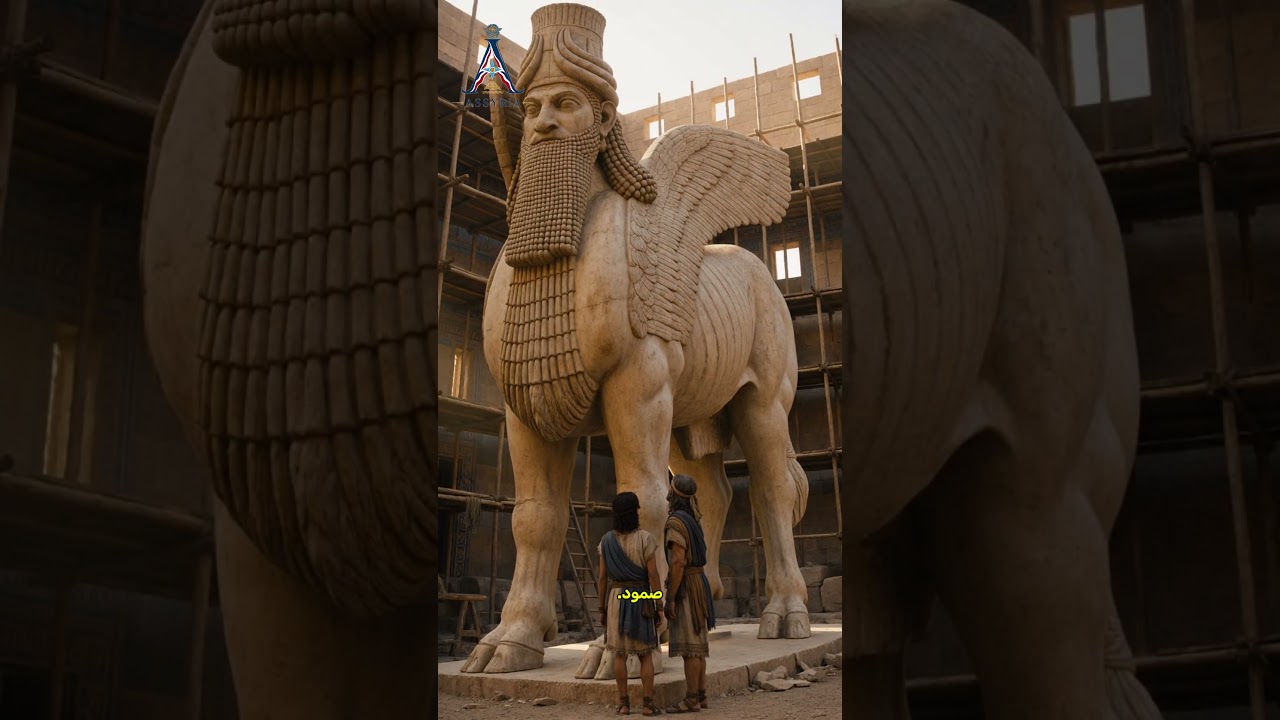
The Guardian Takes Shape#ancienthistory #assyrian #facts #foryou #akkadian #assyria #history #reels
AssyriaTheGreat
733 views•2026-06-06

What If France Kept the Rosetta Stone? 🗿
Off-ScriptHistory
601 views•2026-06-08

The BRUTAL Execution of Louis Collard *Warning REAL FOOTAGE
NaziDarkHistory
138 views•2026-06-06

Egyptologists Can't Explain the Marks in This Aswan Quarry
Epoch-Mysteries-offical
212 views•2026-06-08
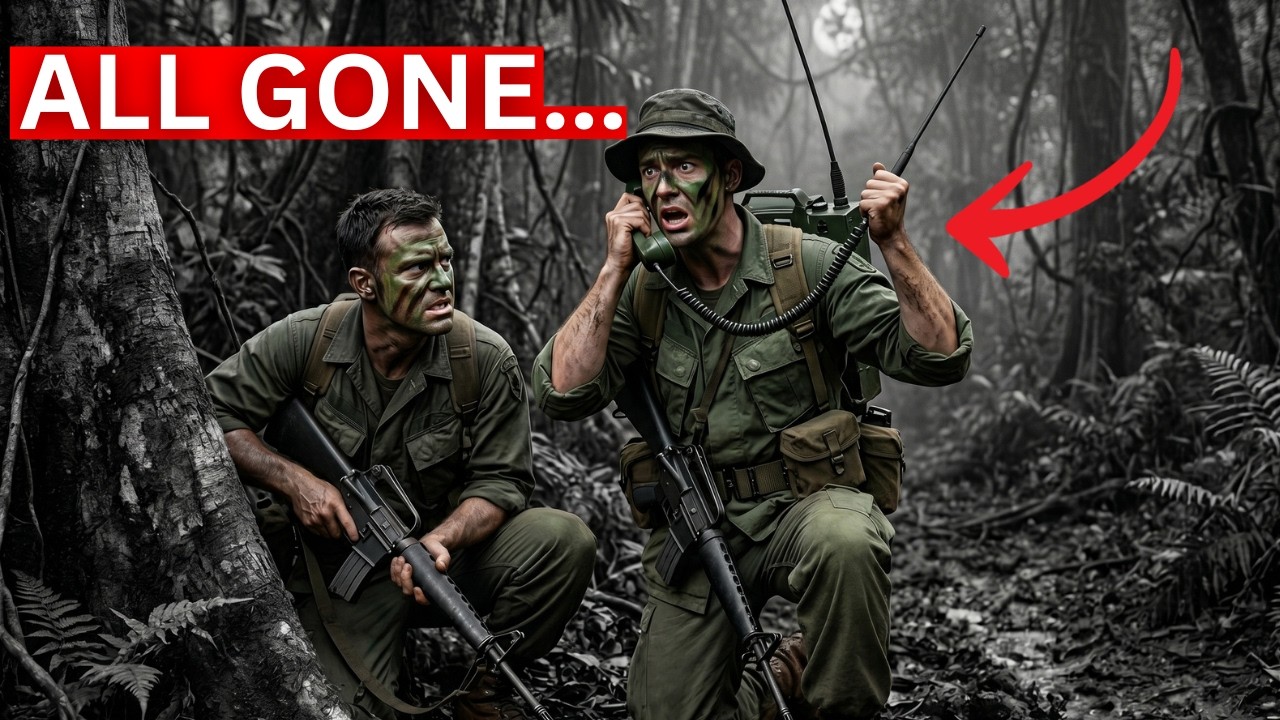
“We Lost Contact” — What Happened To MACV-SOG Teams In Laos
GhostofVietnam
117 views•2026-06-06
How Saddam Hussein Sparked the Gulf War I SLICE HISTORY
SLICEHistory
291 views•2026-06-11