This guide highlights the absurdity of modern tech hiring, where navigating a broken compiler is as vital as understanding algorithms. It is a pragmatic survival manual for candidates trapped in a system that values test-case hacking over genuine engineering.
Install our extension to search inside any video instantly.
Flipkart GRiD 8.0 Round 2 — Real Questions & Exam Pattern | 90 Minutes Exam
Added:If you are writing Flipkart Grid, 8.0, round two, watch this video fully.
Please don't skip any part. In the next few minutes, I'll show you exactly what came in the real exam, the format, the four questions, how to attempt them, the marks, and the traps that cost people.
Even if you miss single part, then you'll be in the trouble during your exam. So, stay with me till the end.
Let's get started.
Guys, honestly I'm saying from last 3 to 4 days, I'm continuously working on this Flipkart program only, responding to the all over YouTube messages, community posts, WhatsApp groups, mails, Zoom meetings. I'm doing everything alone with your support and gathering information and compiling so many things, analyzing the patterns, and understanding the new patterns, back-to-back videos, so many things, creating thumbnails, recording, re-recording, editing, creating materials, sharing them freely. I just need one support from you, a like and hype. It gives me the more motivation to create videos like this for other programs also. Share our channel with your one friend that grows our community so that I can run more programs like this. And I'll continue video for the round three as well if you all are interested. Without wasting time, let's dive in. Before we start, one quick and honest note. See, I'm not from Flipkart and I'm not connected to them in any way. Everything I'm sharing here, the pattern, the marks, all of it is from students' own experience and community posts and social media. It is not official Flipkart information and the syllabus and the model papers I made are just my own understanding based on what students told me. So, please take all of this as helpful guidance to prepare, not as anything official, okay?
Now, let's get into it. Quickly, this is what we'll go through.
First, the real format and the four question pattern, then the language trap, this one caught a lot of students, then how to actually attempt each problem, a simple calm method, and scoring plus one important warning about the compiler. And at the end, I have a free pack for you, a syllabus and a full model practice paper.
Okay. First, the format. It's a 90-minute test. Now, some of you saw a 30-minute slot in the mail, that 30 minutes is just the system setup before the test. The real test is 90 minutes.
There are four questions and it's purely coding, no MCQs. All four are shown at once, so you can solve them in any order you like. And basic code is already given like HackerRank, so you don't write from scratch, you just fill the part they ask for. And one common doubt, the secure extension, you don't install it separately, it gets added automatically when you log into the exam. That's exactly why they ask you to join 30 minutes early for that setup.
The platform is HirePro and it's fully protected, video, audio, and screen are recorded. Suppose if you missed the my previous video uh regarding the setup, please watch that before going for the exam.
Now, important part, the pattern of the four questions.
Two of them are DSA coding questions, you solve these in C, C++, or Java, 15 marks each.
One is SQL question, a simple query in MySQL, 10 marks.
And one is a Python question, data framework, 15 marks. Honestly, most students found this one is the hardest one. So, that's the 55 marks in total and see, this same pattern came for all three tracks, software development, data science, and AI engineering.
A community member confirmed that AI track two, only the order of the questions may change. Now, listen carefully because this trapped a lot of students.
The two DSA questions must be done in C, C++, or Java. Python is not allowed there.
Python is only for the data frame question. That's the only one place you use it the Python.
And the SQL question is plain MySQL.
So, see, if you only practice DSA in Python, you will get stuck in the exam.
Keep at least basic C++ or Java ready.
This is the one thing I don't want you to miss it.
Now, how do you actually attempt a problem? Let me give you a simple method. First, read the question twice.
Don't rush. Honestly, most mistakes are just misreading the question. I have seen similar pattern in my interviews also. Many candidates doing same thing.
Whenever I'm seeing the problem statement, they're directly trying to solve the problem. That is where they are going to spend more time, wasting more time. So, be clear on the inputs and outputs, what goes in and what must come out. Now, write the logic in plain English first.
Just steps in words, no code yet. Get the idea straight in your head. So, you don't use the any notebook physically. I don't don't look at down.
So, use the same editor to write the algorithm also with comments. First, basic version that just works. Don't chase the perfect solution. Just get something running.
Now, once you have written it, the debugging part.
If it throws an error, don't panic. Just read the error first. If it gives a line number, jump there and fix it. If not, comment out that part. Find where it breaks. Very important. Add print statements. Print the values at right spots so you can see what your code is actually doing.
Check the edge cases, empty, zero, negative, very large, and null checks, and watch out for infinity loops. Once it passes the test cases, leave it. Move on to the next question.
Don't sit there, you know, to polishing it or to improve the performance. And if you have time left at the end, then come back and improve it. Working is first, performance is later. That's it. Now, you're at the scoreboard.
Partial marks are real. You get marks for every hidden test case you pass.
It's not all or nothing.
The questions are weighted. DSA 15 each, Python 15, SQL 10. About 55 total. And they did not show input limit, so just use a safe wide data type like long, so nothing breaks with big numbers.
Remember this, you don't need a perfect score, you just have to clear the cutoffs. That's it.
Okay, one important warning, please this. A lot of students said the compiler, the run button was not working properly. Some lost 20-30 minutes because of it. So, write clean code the first time. Don't depend on the run button. Think it through before you type. And dry run it in your head.
Trace your logic by hand.
Check the edge cases mentally. If run works, good. If it does not, you're still safe. So, what should you practice?
Keep it simple.
For DSA, arrays, sorting, binary search, recursion, basic math, stacks, and hashing.
For SQL, joins, group by, the aggregator function, having, sub queries, and ordering for the ties.
For Python, reading tables, grouping the totaling, filtering, and printing the exact output they ask for. Don't over prepare. A simple answer that runs beats a perfect one you never finish it. Now, before I close, I made a free pack for you. One is the exam pattern and syllabus, exactly what to prepare for all four types, and the other is model practice paper, four fresh questions in the same format with a full answer key. See, this covers the format and what to practice for DSA, SQL, and Python. I have given the syllabus as well, and important points also I noted here.
Go through it once.
Guys, this is the model paper which I created for you. Don't expect similar questions coming in your exam. They're just a model paper. It's a full practice paper, same pattern as the real exam, two DSA, and one SQL, one Python with the diagrams, the tables, and the solutions at the end. Just give this file to ChatGPT and ask similar questions.
Then it generates for you and practice it. So, both are in the description. Go grab them. It's free. Before I close, a big thank you to everyone who finished their own round two and still took time to message me in our community, the questions, the marks, the traps. Thank you so much. Honestly, this video exists because of you only, and it's going to help every student writing the exam tomorrow. This is what our community is about. We grow together. If you really like my efforts, smash that like button.
That gives more motivation to create more videos like this. And let me know if you want a round three video. Just comment round three. And also, whatever you're learning here, it won't only end with Flipkart. Almost the same approach works for the other programs as well.
So, keep learning, focus on DSA. See you in the next video. Thanks for watching.
Related Videos
6:13
Computer Science
TOP 15 Data compression Interview Questions and Answers 2019 Part-2 | Data compression | Wisdom jobs
wisdomjobs
281 views•2019-06-28

27:51
Computer Science
CTS 158: 802.11w Management Frame Protection
ClearToSend
4K views•2019-02-04
23:21
Computer Science
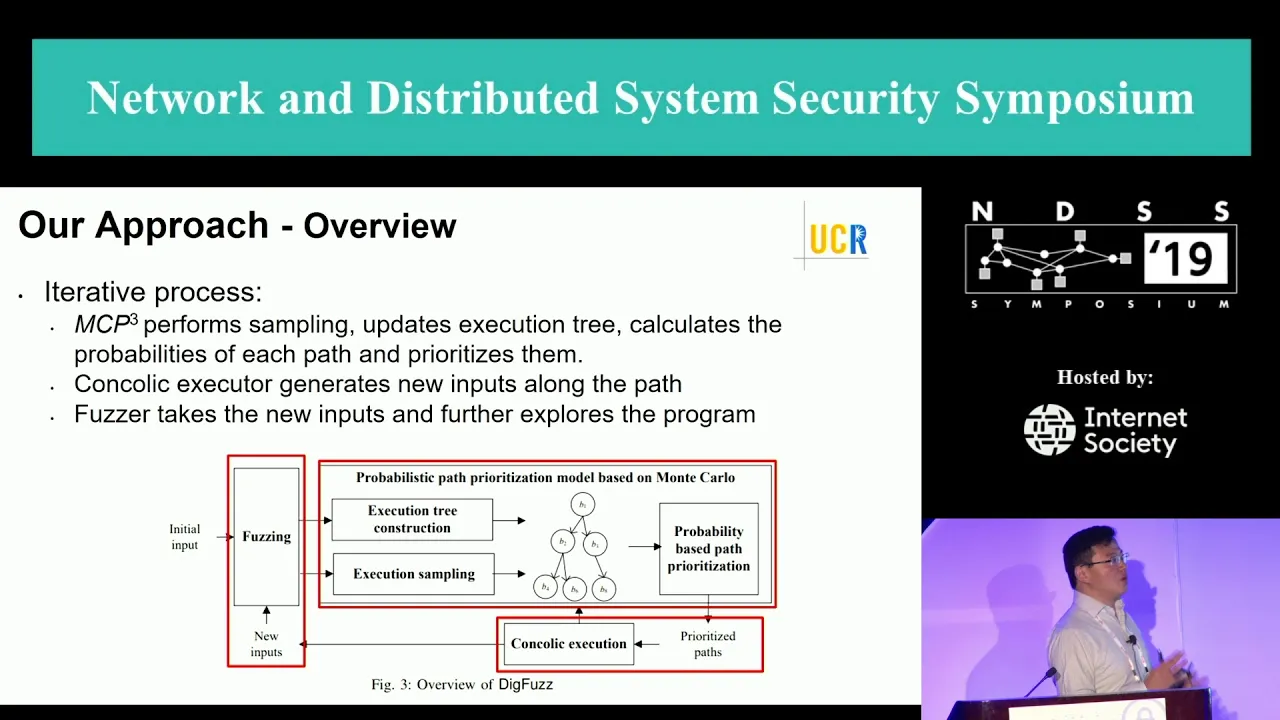
NDSS 2019 Send Hardest Problems My Way: Probabilistic Path Prioritization for Hybrid Fuzzing
NDSSSymposium
496 views•2019-04-02

12:48
Computer Science
How realistic is Cities: Skylines?
CityBeautiful
159K views•2019-02-14
46:39
Computer Science
GUIs & TUIs: Choosing a User Interface for Your Python Project | Real Python Podcast
realpython
2K views•2025-04-04

25:15
Computer Science
The OSI Model - Explained by Example
hnasr
225K views•2019-05-12
1:10:47
Computer Science
Cloud Computing - Introduction
elithecomputerguy
98K views•2019-10-07
2:24
Computer Science
From Traveler's Dilemma to Dynamic Routing | Demystifying Networking
IITBombayJuly
5K views•2019-08-04
Trending

13:38
Law
WOW! Judge TURNS THE TABLES on Trump in His OWN $10B LAWSUIT!!!
MeidasTouch
197K views•2026-07-23

13:25
Business
Playstation NO DISC/NO BUY Fight Is Over...
DavidJaffeGames
4K views•2026-07-23

22:40
Business
Steam and Xbox Just Dropped The Hammer On PlayStation
OhNoItsAlexx
9K views•2026-07-23

16:52
Anthropology
Americans Confused in Australia for 17 Minutes Straight
IWrocker
17K views•2026-07-23