Moons in our solar system can be classified into 17 distinct types based on their composition, origin, and orbital characteristics, including rocky moons (like Earth's Moon), icy moons (like Europa), giant moons (like Ganymede), ocean moons (with subsurface liquid water), volcanic moons (like Io), cryovolcanic moons (like Enceladus), atmosphere moons (like Titan), regular moons (formed alongside planets), irregular moons (captured from elsewhere), shepherd moons (that sculpt planetary rings), co-orbital moons (sharing orbits), Trojan moons (occupying stable gravitational points), binary moons (like Pluto and Charon), temporary moons (briefly captured), and exomoons (orbiting planets outside our solar system).
Install our extension to search inside any video instantly.
Every Type of Moon ExplainedAdded:
Rocky moon. These are the moons most people imagine first, solid cratered worlds made mostly of rock, often with very little atmosphere and ancient surfaces shaped by impacts. Earth's moon is the clearest example, but many rocky moons across the solar system show how smaller worlds can preserve the early history of planetary systems for billions of years. Icy moon. Icy moons are worlds where ice plays a major role in the crust or surface, often mixed with rock underneath. Many of them orbit the giant planet and they matter because ice-rich moons like Europa and Enceladus may hide liquid oceans below frozen shells. Giant moon. These are the largest moons, big enough to look almost planet-like in their own right, with layered interiors, complex geology, and in some cases even atmospheres or magnetic fields. Ganymede is the largest moon in the solar system, and giant moons matter because they blur the line between a moon and a small planet. Ocean moon. An ocean moon is a moon believed to contain a global ocean beneath its surface, usually buried under an outer shell of ice. These moons matter more than almost any other type because hidden water, internal heat, and chemistry together make them some of the strongest places to search for life beyond Earth. Volcanic moon. A volcanic moon is a moon with active eruptions driven by internal heat rather than simple surface damage from impacts. Io is the most famous example, and it matters because it is the most volcanically active world known, showing that some moons are still violently alive inside. Cryovolcanic moon. These are moons where volcano-like eruptions throw out water, ammonia, or other volatile materials instead of molten rock. Enceladus is a key example, and this type matters because cryovolcanism reveals internal heat and can bring material from deep below the surface out into space where scientists can study it. Atmosphere moon. Most moons are airless or nearly airless, but some are wrapped in real atmospheres, with Titan being the standout example. These moons matter because an atmosphere changes everything: weather, surface chemistry, erosion, and even the possibility of complex prebiotic processes.
Regular moon. A regular moon usually orbits close to its planet in a fairly circular path and in the same direction as the planet spins, which suggests it formed alongside the planet from the same surrounding disk of material. These moons matter because they preserve the story of how giant planets built their satellite systems during formation.
Irregular moon. Irregular moons orbit farther out, often on tilted, stretched, or even backward paths, which strongly suggests they were captured instead of forming in place. They matter because they are likely outsiders, objects that were pulled in by gravity and kept as permanent companions.
Captured moon. A captured moon is a moon that likely began somewhere else, such as the outer solar system or a nearby population of small bodies, before being trapped by a planet's gravity. Triton is the classic example, and this type matters because a captured moon can carry clues from an entirely different region of the solar system.
Shepherd moon. These are small moons that orbit near planetary rings and help shape them through gravity, keeping ring particles in narrow lanes or carving out gaps. They matter because they show that even tiny moons can control huge structures, acting like invisible sculptors inside ring systems.
Ring moon. A ring moon is a small moon associated closely with a ring system, often embedded near the ring edge or moving through the ring environment itself.
These moons matter because they help scientists understand how rings form, evolve, and sometimes even build new moons over time.
Co-orbital moon. This is a moon that shares or nearly shares an orbital relationship with another moon, moving in a carefully balanced gravitational pattern. It matters because it shows that moon systems are not always simple, and that orbital mechanics can create surprisingly stable partnerships.
Trojan moon. A Trojan moon occupies a stable gravitational point in relation to a larger moon, rather than following the usual isolated path people expect.
It matters because it reveals that even in crowded planetary systems, gravity can create special pockets where small companions remain locked in place.
Binary moon. A binary moon system is a pair of worlds so closely matched that they orbit a common center of gravity, rather than one clearly dominating the other. Pluto and Charon are often treated as the best known example of this idea, and they matter because they challenge the usual picture of a moon as just a minor object circling a much larger parent. Temporary moon. A temporary moon is a small object that gets caught by a planet's gravity for a limited time before escaping again.
These moons matter because they show that planetary systems can briefly capture wandering objects, turning moon making into an ongoing process, rather than something that happened only in the distant past.
Exomoon. An exomoon is a moon orbiting a planet outside our solar system, and while these are very difficult to confirm, astronomers actively search for them. Exomoons matter because they would prove that moon systems are not unique to our neighborhood, and could greatly expand the number of places where complex environments exist.
Related Videos

Spiral Galaxy NGC 3370 from Hubble | NASA APOD 2025-11-05 #Shorts
galaxygallery
938 views•2026-05-30

SOMETHING inside the SUN is CHANGING
RaysAstrophotography
1K views•2026-06-03

There May Be A Giant Hole In The Universe... And We Might Be Inside It | The Cosmic Ledger Entry 015
TheCosmicLedger
145 views•2026-05-31

Captured the Blue Moon (with a twist) 🌙✨ #space #bluemoon #telescope
realAstroExplorer
674 views•2026-06-01

The Map We Sent to the Stars in 1977 — Why Scientists Now Regret It
TheAncientRecord7
183 views•2026-06-03

Is this a copy of our galaxy? Discover Galaxy M81!
UniverseDocumentaries-cc4mb
995 views•2026-05-31

10 Planet Where a Black Hole Replaces the Sun
cosmicexplorer-EN
147 views•2026-06-02
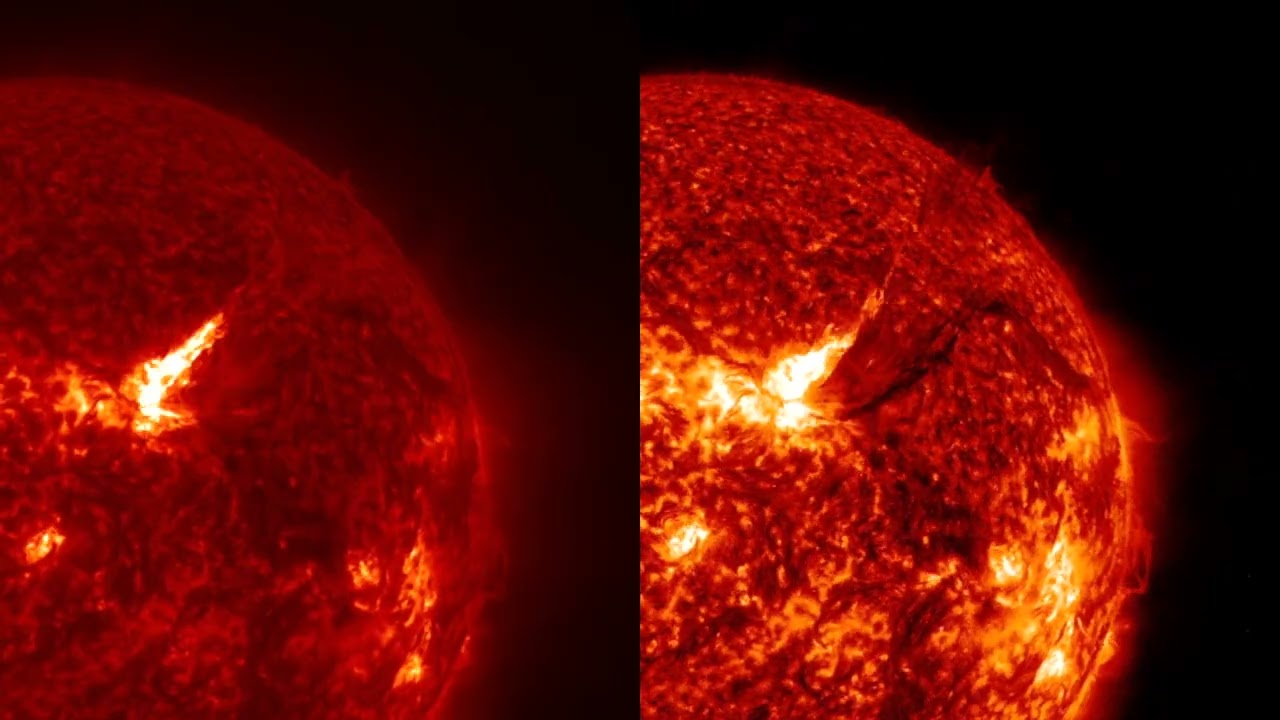
Solar Flares and CMEs at Earth - More Likely | S0 News June.3.2026
SpaceWeatherNewsS0s
2K views•2026-06-03



