This transition from rigid programming to intuitive AI agency marks a pivotal shift in making industrial automation accessible to the masses. Yet, the industry must still prove that "one-shot" learning can survive the chaotic edge cases of a real factory floor.
Install our extension to search inside any video instantly.
Automate LIVE, Wednesday, 1 pm to 5 pm CT
Added:Hi everyone, my name is Rebecca Scoututac and welcome to Automate Live.
Today I'm joined by Xavier Chief, the co-founder of Embody AI who just won Automate Startup Challenge and we're here to talk about the company and sort of everything good that comes along with that. So Xavier, why don't you start by just telling us a little bit about what the company does?
>> Yes, absolutely. So well, I'm co I'm Xavier, co-founder of FBI. Uh what we do is basically an AI software that can be plugged into any robots uh mostly starting focusing on collaborative robot industrial robots enabling anyone to simply go and talk to the robot teach skills with natural language and then robot can run reliably by themselves in production. That's a I would say the easy way to simply pull a human out of the manual repetitive stuff and squeeze a robot in and just have the robot operate and learn like a human. And I know you guys have a pretty interesting approach to how you do get the robots to learn compared to some of the other competitors in the market. If you want to talk about that.
>> Yes. So uh the way we are approaching this is we are building we built an agentic system. It's a lot of AI agents coordinating and on task and it's a combination of generative AI and classical robotics. Because of that, we have a system that we can actually plug in anywhere no matter what the environment is and we can have the robot learn task one shot without a lot of training data and the robot can perform quite reliably in production right after that. So we actually like have this uh this metric of like 99.96% success on the pick and place task we do for one of our customers.
>> It's a pretty high success rate. Yes.
And I know we talk a lot about AI agents in a bunch of different fields, especially say like the enterprise space. You don't hear about it as much as far as training robots goes. Why is this a good approach as opposed to some of the other ones we're seeing in the market right now of building generalist foundational models or sort of world models and things like that?
>> Yeah. The problem with robotics is that there's no alike chat GBT there's no data out there to to scrape and because of that uh every robot also every robot looks different action space is different you have to have data for every type of robot in all kinds of environment to do all kinds of thing but there's no data and there are many ways to do it for example telea operation or or have video data transferred but still it's not enough and the physical world is a limited possibility it's it's a challenge It's a big challenge to really scale that into like a full solution that works reliably and also when the model is trained it's like a black box and when it fails in production we have no idea what's going on in there and hope we should collect more data and train the system so that maybe it can fix the error it it just did and that's a big challenge especially for customer in the industry for production line uh people want something that's reliable that can work 100% or close to 100% of the time with minimal downtime. And because of that, that's how we're thinking about the space. And we build this agentric system and we use different AI skills for our AI agents to pull out. And those skills are very reliable. We know what's going to happen with different skills. And because of that, we have the system that people can actually oneshot teach the robot. And after that, we freeze the policy and the robot can just execute it reliably by themsel.
>> Yes. And what kind of feedback have you guys gotten from this approach?
Especially because you're probably talking to companies all the time as potential customers who see all these other options in the market and you guys are bringing something just a bit or even you could argue quite different.
How are you explaining this to people?
What questions are you getting?
>> So this is actually a good question uh from from our customer side. Uh there are a couple of feedback. For example, one of customer they what they need to do is they need to pack a package or a tray very differently every day or every week and in a new pattern. And the problem with that is that it's so hard to automate traditionally. And what we can do is we enable the operator not the engineer to tell the robot the task for the day just like a human. Now we have a human worker. We can also tell the robot what to do for the day and the robot can just do it themsself like right after several minutes without collecting a lot of data without like programming like the traditional way and for any high variability task we see a lot of interest from our customer both on the manufacturing side because a lot of manufacturing line change from time to time also the logistics side because the logistics naturally is very messy so we have a lot of great feedback there and especially because it's reliable uh we can actually deploy this out there very quickly. Young >> and of course we're talking here because you won the startup challenge and I definitely want to hear your thoughts on what drove you guys to enter yourselves in the competition to begin with and how is the process been?
>> I mean the the startup challenge is great. We we heard about it like since last year and then we thought we should just apply and it's uh automate is a great show. It's our favorite show actually, one of the biggest in the whole robotic space and we just thought we should like go on stage and pitch our our product our technology and see how people react to it and looks like it's we got some really good feedback from people from all across different domains. So that's a really great experience and well apparently we we won the challenge. So that's great.
>> Always helpful to win at the end.
>> Yes, absolutely. And I wanted to ask you about sort of what has changed in the company since we last spoke. Xavier and I actually spoke I think it was in October. Yes.
>> And so based on the speed of innovation, I'm sure if we talked about things like AI, AI agents, we could be having a totally different conversation than we had last year. Yes.
>> So what with the company's tech has changed since then?
>> I think couple of there are a couple of aspects. Uh last time it was like uh around November something couple couple months ago, right? And now our system is a lot more reliable and it's production ready. We actually turn a lot of our vision stack onto the edge devices uh as requested by a lot of customers of ours.
And so we can run a lot of that pipeline uh locally in people's factory or or warehouse. And we have also this like productionized system completely and the new designed modular solution that we can simply just squeeze in to any work cell manual cell and automate it.
>> Yeah. on edge seems to be a big point of conversation not just for this type of um solution specifically but kind of across the robotic space in general. How hard was it taking that tech and being able to translate it to an oni an on edge device as opposed to kind of sending stuff back to a main hub? I think I think it's uh there are definitely a lot of challenges uh on edge device because uh we have to make sure the cost is effective and because of that the GPU might not be the best and we have to do some work on the model itself to make sure they can run on edge perfectly without sacrificing the performance. We did do quite some work there to make sure things are things are running as smooth as possible and eventually the idea is simply to make this whole solution very accessible very easy to deploy plug-andplay into any station just to have it work like a human >> and how has sort of the accuracy and the precision changed if at all since you as you mentioned you're maybe not working with as advanced GPUs to kind of get this on the edge devices how has that affected that >> actually like from what we measured it's the exact or the same kind of level accuracy and reliability. So that's great.
>> That is great. How did you guys manage to do that?
>> Um well we we did some quite some work on the on the engineering side to make make that happen.
>> Some magic on the engine.
>> Okay.
>> Yes.
>> And thinking about the commercialization here. I know when we talked last year you had mentioned that you guys were working with a proof of concept of a huge Fortune 100 company which we couldn't talk about at the time. Yeah.
But maybe we could talk about it now or sort of how has commercializing gone since then and sort of what interest are you getting from customers? How is that side?
>> Yeah, absolutely. Well, uh I still cannot say the name uh at this at this moment but uh it's a great customer and we're piloting with them and also we have a lot of interest from the pharmaceutical space as well. Uh we have like uh we're starting pilot with two of the largest pharmaceutical company in the space and that's very exciting automating a lot of the pick and place related tasks. Mhm.
>> Yes.
>> And how are you seeing demand? Is it is it a lot of inbound? Are you guys still kind of like reaching out or anything like that?
>> We see a lot of inbounds and we also reach out to targeted people and I think like on our side there's always too much work and like to do and we have to allocate resource like very efficiently on these several customer are the most important one. We have to make sure things goes very well with these as flagship and expand and scale up like that. Yeah. And like this whole space is moving really fast. And because a lot of the work are still manual, it's really hard to automate that in the past. And as a matter of fact, the world is way less automated than it's supposed to be because robots are not that accessible.
They are not like PCs or iPhone we just buy and just simply set them up and use them. Robots still requires heavy integration and long time to program them. And that's actually accessibility problem for a very long time. And for this next generation technology, we can actually solve that >> because of generative AI.
>> Yeah. And do you think products like yours kind of help with that accessibility piece? And if so, how?
>> Yes, exactly. I think like with uh for example with the AI technology we have with the robots people can simply use the robot like for example catcht or like how however people's using iPhone or buy a computer and set it up easily themsel and just have the robot do the stuff they want and well for example but car manufacturing uh requires a lot of heavy integration for sure but a lot of lightweight task we can actually automate quite easily with the robot and a system for example like ours.
>> Yes. And since you just mentioned it, I definitely want to ask, are there tasks you don't think are well suited to this approach or maybe too complicated or maybe something that will kind of come along in the future but is just not quite ready quite yet?
>> For example, uh task like very repetitive task repeating the same complicated sequence of motion for years then like I would say traditional programming of these robot will be good enough for them. uh for example car assembly stuff like that like for repeating the motion for many many years then I think they're running good but any task that requires just a little bit of variability it's really hard for traditional automation and those what we're good at >> and as you think about commercializing the tech more and of course taking on more customers as we already mentioned the speed of innovation in AI in general is just moving so fast >> but it's not always moving so fast in the right direction how do you think about kind of keeping up with the pace of innovation and latch latching on to new tech, new innovations in the AI space that are worth latching on to without getting caught up in the inevitable hype that kind of surrounds everything that's happening.
>> I think that the key is ground to what the customer wants and eventually we have to make sure the technology works for the customer on the production floor in factories and warehouse. We need to know what they want and how they want it. It has to meet all their needs. The reliability, the flexibility, the and like the cost as well. And I also I always talk about this interesting concept of the impossible triangle to really sell a good robotic solution or scale to scale it up. We need to make sure about the flexibility, capability, the speed, throughput and cost so it makes sense for the customer and we have to maximize all of those three aspect to make sure it really works. So that's kind of important the most important thing for us and we don't want to for example stay in research mode for for many many years like I don't think that's the right way to do it. The right way is to make sure we listen to our customers, scale this product out to them.
>> Yeah, I remember you mentioned that the last time we spoke that you guys are not a research company. You're a company that wants to build a product that's going to be deployed and is out there in the market. And how do you think about making these big technological advances when you aren't taking that sort of okay, we'll research for 5 years and figure it out approach? Like how do you think of taking the company to the next level from here? With that kind of dynamic, >> we have to uh well, we have to always make sure we follow what's going on in research and always know like all the different technologies that's available out there, the research topic that's out there, but we have to ground it as a company, as a startup, we have to ground it towards a real solution that can be like sold or deployed out there.
>> Yeah.
>> And as a startup, of course, funding, we talk about funding. Yes. What has reception been like from investors for your company thus far and kind of are they seeing the vision? Are there questions there because you guys are taking such a different approach to this robotic training or how has that process gone?
>> Yeah, like there there are many different types of investor. We do see a lot of like uh for example our existing investor PE there are a lot of people loving our agentic and practical approach because this is a way to actually deploy this out there and have the data flywheel and make the system better and better over time from production deployment. So that's uh that's a really good angle. They're also like u investor more interested in like training foundation models or or we also see because in the past there are some like failures or frustrations with robotic software companies. So we also see some people losing confidence in this field. So they are many many different types.
>> Yeah. Yeah. But we we love our investors.
>> And I think probably my last question would be we're here we're at automate.
You guys have just won this startup competition. What's next? I know everyone loves to hit a milestone and then immediately be asked what's next, but what is next when you think about the next year for the company and sort of what tech you guys have in the pipeline?
>> I think the biggest theme for us next year will be get get our stuff out there, deploy it, scale it up. That's the most important thing for us at at this point. Yeah, we want to actually get this work in factories and warehouse very nicely and scale as much as possible and at least have this repeatable kind of rinse and repeat mechanism for our system then I think this will unlock a huge potential for many many task many customers.
>> Yes, >> I think that brings us close to time.
Yes. So thank you so much for coming on automate live.
>> Thanks so much for for having me.
>> [music] >> Meet Vupod by Apera AI. Fin picking productized. A complete self-contained cell that chips vision trained and robot [music] pre-programmed. No integration project. No vision expertise required.
Just connect, calibrate, and run in days, not months. Vupod is built on a pair's 4D vision technology [music] and expertise. Battle tested on production lines. across North America and Europe.
Stop planning. Start [music] picking.
Missed defects are costly. Mashi AI helps prevent them. Our Sendient software uses active eye [music] deep learning models to catch the defects traditional inspection misses, turning every scan into realtime insights. Our new production [music] ready modular platform is smaller, allowing for faster deployment at lower cost, backed by our team at every step. Smarter inspections, superior [music] results. Mousashi AI.
[music] The wait is over. Flexib has just launched two brand new robots at Automate 2026. Enlighten and Miko.
From whole body sensitivity to advanced dual arm manipulation. This is what's next for automation.
Head over to booth 2844 right now to catch the live demos. Heat.
[music] Heat.
>> [music] >> Heat. Heat.
>> [music] >> Heat. Heat. N.
[music] >> [music] >> Automation is evolving fast. Your design tools should too. With On Shape's CloudNative CAD and PDM platform, your entire team can work together in real time from anywhere on any device. No installs, no downtime, no waiting. Just faster collaboration, faster iteration, and a smarter way [music] to build products. For a closer look at the future of automation design, stop by booth 3778 and see On Shape in action.
>> [music] >> RTL and e-plan are live at Automate 2026 demonstrating exactly how we're better together.
Don't miss your chance to experience the power of software, hardware, and automation in one system. We're showcasing live demos and real world success stories.
Come see us at booth 2018.
>> [music] >> Hey, what's up everyone? Welcome back to Automate Live here on day one of Automate 2026. My name is Chris Luki, host of Manufacturing Happy Hour and I'm joined this afternoon by Olaf Moonit.
Olaf, welcome to the show.
>> Thank you.
>> And here on Automate Live, we've had a full day. I should say a lot of the people here have had a full day to explore all that automate has to offer at least a sampling of that and this conversation today is all about machine vision. So very excited to get into your area of expertise. Uh machine vision is all over this show but let's go into your area. Could you share, you know, some of your background, the original motivation and core considerations behind MVTEC's decision, the company that you co-founded the the decision to specialize in machine vision software?
>> Yeah, sure. Um, we have to go back a little bit in time, like 30 years ago.
>> Yeah. I saw that you've been doing this for 29 years. Am I seeing that right?
I had way more hair >> first of all. uh and um but still the topic is pretty hot. So like 29 30 years ago uh we were actually a spin-off of the University of Munich and the Bavarian research center for knowledgebased systems.
>> So today you would probably say we are a startup company doing AI and we have a strong university background.
>> Yeah.
>> Uh so by that time the language was a little different. uh but the topics were actually the same which is like quality inspection, quality insurance, absence presence detections and all that. So we had with this background we had a piece of software which we developed into an industrial-grade software. We quickly could understand that um customers they're not looking so much about fancy algorithm. They want to have a solution in terms of algorithms which really deliver what they want to have. So we were you know quickly understanding what are the requirements and from that we could get first customers and so we bootstrapped the company over these many years.
>> Yeah and and I think you bring up a great point. There are many things that might be different about starting a machine vision software company today.
There would be a lot more terms like AI leveraged in that. I mean you were saying hey it was a solution for quality inspection. um which is ultimately what a lot of these things still do, right?
Yeah. We're going to get into some of the broader areas that you get into, but MVTEC machine vision software Halcon has been around as we said 29 years. What has allowed you to stay you know not only competitive but cutting edge to remain a leader in this market for nearly three decades?
uh I think uh we quickly could understand what are the customer's requirement and uh if you look at an industrial inspection task uh usually customer starts with one particular inspection then he noticed oh my objects changes which I'm producing so I need to inspect that as well and I have another requirement so the algorithm so to speak have to change in order to inspect this as well >> so we developed a toolbox over the years >> where you have all the tools inside to uh tackle these different applications.
So once one of our customers is using our toolbox, he is so to speak uh has the free offering to take out the tools he needs to uh set up his uh application.
>> Mhm.
>> And um this kind of flexibility which we offer is greatly appreciated because it secures the investment of uh the customers. Mhm.
>> And um last not least uh over the years of course Hagen uh can be deployed in many different settings. It can be deployed on the edge. This is how we would call it today on a PC. You can also deploy it in a cloudbased environment on premise or in one of the hyperscalers cloud. So it offers different packages so to speak which makes this flexibility a big advantage for our customers.
>> Yeah. Well, I like that you bring up, you know, your own toolbox because there's a lot of collaboration that you do with upstream and downstream products as well. Yes.
>> So, I'm very interested to know how do you promote let's say collaboration with those solutions to present to customers a more comprehensive automation solution.
>> So, you're very right. Um, we provide a single component in the value chain of a machine vision >> application. So it starts off with the illumination with the lens technology with a camera with the interface technology and you end up in a PC on a computing environment where you have the software.
>> So and our software is sitting in that part so to speak. So we live on the images which we get from along the value chain inside the CPU so to speak.
>> Yeah. So in order to uh facilitate and ease the integration of these parts, we have set up a technology partner program. Yeah.
>> Many years ago already. This is today the largest technology partner program in the industry in the machine vision industry >> where we do have um more than 60 uh companies uh where they do 2D cameras, 3D cameras or 3D sensors, illumination also PLC's. So it's all about uh making the integration of the different components into an application as easy as possible for our customers.
>> Yeah. Well, let's go beyond that, right?
Because you're talking about the integration between the whole, let's say, machine vision suite. When people think of MVTEC, you know, Halcon is one of the first things that come to mind, but your portfolio is even larger than that. Can you describe, you know, your products and their unique, you know, selling points beyond Halcon? Yeah. So um Helen, uh is a programmer's tool. Say it in very basic words. We found out that um not everybody is very comfortable in programming. There are so many engineers out there which are very comfortable with uh configuring. So we have developed over the years uh our product Merlik which is a no code environment.
>> Uh and this can be configured. This is one advantage. Another advantage is that um it can be fully integrated into existing solutions pretty easily because it offers all the interfaces.
>> It also offers interfaces to PLC's which of course are widely used in this industry.
>> Mhm.
>> And uh last not least uh it also has features like an audit trail which are particular important if you have an application in pharmaceutical industry.
>> Yeah. Well, one other area I want to go into is, you know, you've been doing this for three decades. What is your vision for where this industry is going over the next, let's say, three to five years? Like what is MVTEC's overall product and technology development direction?
>> Yeah. Right. Um I think um we first have to understand that uh customer demand is driven driving uh our company. Mhm.
>> So, um let's let's have a look at AI for example. Yeah, this was a super hot topic starting 10 years ago and we've been integrating this also this technology since 10 years uh ago uh into our products. So, we have a very long track record uh in understanding where does AI really deliver a benefit for the customer.
>> Yeah.
>> Uh and I think this differentiates us a little bit. So the understanding uh that uh AI is something which can be very helpful but you can also waste a lot of time if you're not really focusing on what you want to do and you uh don't know really where to start. So we help our customers to start to jump directly into the topic and have a say gain uh immediately. For that purpose, we also developed the deep learning tool which is a labeling tool, a training tool for deep learning applications >> and also you can verify whether the results are good enough and this is a uh also uh just a graphical user interface uh which is super easy uh to to be used by our customers. We think that this technology will continue to evolve >> the next few years. We will see uh in a stronger integration between what is called rulebased systems and AI based systems.
>> And um probably one more comment >> uh which I noticed today on the show if we have a look and you know look at the show a little bit here. the past uh couple of years we saw AI as a super hot topic and you saw AI as a logo or as a brand everywhere.
>> If you now walk the show >> it's almost no longer visible >> because it is already integrated in the products. It's already part of the offerings. Uh so what is now uh more important is what the actual product can do. So >> the fact that AI helped to make this happened >> is simply like a natural thing.
>> So it's not really worth to mention any longer. Uh and uh talking about AI a little more so to speak if we extend this into the world of large language models for example >> we think of AI as a persona. So as a kind of uh person which uh ask uh for example our software please give me uh a hint how to how to solve this and this application this and that application.
>> Mhm. So we uh believe that offering the right interfaces to AI agents uh would actually help our customers then to more quickly develop an application.
>> Yeah. Well, you're certainly, you know, on the cutting edge. You were talking earlier about no code applications. We got into the areas you're focused around AI in that most recent part of the conversation. you know, as we go a bit further wrapping wrapping up this discussion, I've got two more quick questions for you. What is your strategy for serving the US market in particular?
Right, we're here in Chicago right now.
You know, what's your overall development strategy for this particular market?
>> So, we've been uh active in this market for almost 20 years. So we have uh since almost 20 years uh subsidiary site uh in Boston, Massachusetts >> uh and we're serving this market uh since that uh I have to say um the US market is very diverse in uh in the sense that uh you have uh say requirements which are super high-tech and uh on one end and on the other end you have requirements which are very basic >> and this spread uh this is the challenge here uh to fulfill the spread and to deliver the right product and the right solutions to our customers and we've been doing this successfully since so many years and uh we think we can continue doing this also in the next 20 years >> well I'm going to go across the pond for this next question the EU recently introduced the cyber resiliency act and I'm curious you know is you what needs to be taken into account here in the US? Is it relevant here? What what are your thoughts on that?
>> It becomes relevant in case um a US company delivers a product with some digital content into the European Union.
>> Mhm.
>> So that means if there would be a machine builder here which uh integrates machine vision for example and ships that product into the European Union, he has to comply with the cyber resilience act. Cyber resilience act is about um security issues. So how can you make sure that what you deliver into the market really is secure from a user's point of view?
>> Has it vulnerabilities or can it withstand that? And it's basically a setup or framework where you have to report if something goes wrong and you have to fix it.
>> Yeah, >> this is the main point. you have to fix it uh at least five years.
>> Mhm.
>> And at MBTech we pay of course high attention to that because we originally based in Munich in Germany. Uh and uh we have to make sure that our software complies with the cyber resilience act which starts in September and then finally in December this year. So uh we provide uh software bill of materials already with our products uh and our products of course are ready for cyber resilience act.
>> Yeah you know Olaf we've got about one minute left so is there any final parting advice or something you'd like to leave the audience with as we wrap up our conversation?
Uh actually thank you very much for the opportunity to deliver a little bit of my messages here and I'm very glad that um this show uh is really getting bigger and serving the uh North American market so well and we are proud to be part of that market.
>> Yeah. Well, thank you for being a part of the A3 community for as we've said close to three decades. Shows like this are as big as they are because of folks like you that have been leading the industry for that long of a time. So Olaf, thanks so much for jumping on uh Automate Live. We'll be back for more interviews very soon.
>> Thank you.
Well, one of the things that that really interested me the first time I came and visited you over there in the uh Akami building in in Boston was and and maybe this maybe this goes back to the decision to remove Boston Dynamics from the beginning of the name is that the company is relatively or maybe entirely uh hardware agnostic, right? I mean, you were buying a lot of spot robots, but you've also been buying different humanoids to test out.
>> We have about 50 robots here. Some of them are arms mounted to the table like uh like an industrial arm which we bought from um you know universal robot.
We have a couple of unitry humanoids here uh both the big one and the little one. We're also have a lot of spot robots from Boston Dynamics. I think we have maybe 20 of them here. We have uh some antibiotics robots. you know, we we don't have a direct relationship with them other than being customer, but uh Marco Hutter, who's one of their founders, is our uh the director of our Zurich office. Uh and he's working, you know, halftime with us and halftime with ETH, where he's been for a professor for a while. Uh so yeah, we're we're hardware agnostic and we build our own hardware. We have, you know, a variety of uh hardware activities. You probably seen the the jumping bicycle, the you know the parkour bicycle. Uh we have uh arms and hands and torsos that we've been building and we're you know we're building more stuff.
>> Yeah. You've been pretty open about this too that you know you were I don't want to speak for you but m maybe to a certain extent you were hesitant to productize because you feel like productization can kind of in a way get in the way of innovation.
>> Hesitance is too weak. We are not making any products. Uh I think that we're really trying to work on the future. Uh the next generation after the current generation, you know, we want to make robots really smarter, more like easy to interact with, more like people. You know, people know so much already that the task you're giving them is just kind of fits into the world uh that they know about. They have understand situational understanding. And that's really important, I think, for getting robots to be the next level beyond uh where they are now. You know, anybody who uses a robot today finds out pretty quickly what the limitations are. And, you know, that doesn't mean they're not useful, but it's a lot of work uh to uh make them do the things that that they need that you want them to do. So, we're trying to, you know, go past that. I think when you work on a product, there's lots of demands that you don't need to be working on if you're working on the future. uh underlying technology like the reliability of the robot. You know, Boston Dynamics spends a lot of resources on making their you know, the spot robot out in the thousands of hours of time between failures or between interventions and uh you know, we want to concentrate on getting the new thing just starting to work.
>> Yeah. I I suspect maybe one of the biggest hurdles there. Um and and I'm curious, you know, what your thoughts are as far as the uh electric Atlas humanoid, but is pricing, right? I mean, Boston Dynamics has been able to build these incredible robots for for decades now, but in terms of actually being able to sell a humanoid robot, you kind of >> Hey, welcome back to Automate Live. I'm Nikki and I'm All I All I All I All I All I All I All I All I All I All I Ally >> and we're the Automation Ladies and today we have a conversation with Sarah from Retal and Hook from Eplan. Welcome.
>> Thank you. Thank you so much for having me today. We're really excited to be here and talk a little bit more about what we do over at Retal and at Elplan.
Absolutely. It is day two of the show and it has been crazy today. How are you guys feeling about the show?
>> So far so good. You know, I was a little nervous moving it from Detroit to Chicago, especially with the kind of turnout we saw in Detroit last year, but so far so good. We have a ton of activity going on over at our booths, 2018, and really promising event for us thus far.
>> All right. I haven't made it over there yet, but it is always one of my go-tos at these shows.
>> Looks pretty good.
>> It looks always looks good. It's very inviting. And then obviously the people and the technologies that you have, it's a can't miss. Yeah, this one is very similar to the one that we have in Germany, the SPS automation show.
>> Okay.
>> And I think it's making kind of a competition globally now. So, let's see how it goes.
>> Yeah. Who can put on the best show?
Well, this is definitely since I have not made it over to Germany yet.
>> This is uh high high up on my list here at Automate.
>> Yeah. So, I guess I'll start with for those that don't know you guys and don't know your companies, can you introduce yourselves and tell us a little bit about e-plan and RL um for somebody that has no idea who you guys are?
>> Sure. Absolutely. So, my name is Sarah Groden. I'm the vice president of sales for RTL LLC, which is our North American subsidiary. Uh, Rattal is a global leading enclosure manufacturer and in addition to industrial controls enclosures, we also manufacture a plethora of air conditioning units, climate control, we have extensive IT application support and some really interesting bus bar applications.
>> All right. And Hook, you want to tell us a bit about you and e-plan and how that fits together?
>> Yeah, Hal Mendes. I'm now 15 years by a plan. So fits very well I I assume. So a plan is you know together with the we really support ecosystem of industrial automation with software hardware and automation systems from EPAM point of view. We deliver the software part and we make sure that uh it's not only good and the best for the electrical engineering but meanwhile we concentrate on the total business of the customers and the industry really from the sales cycle up to the engineering then manufacturing having the right systems right hardware to automation and the manufacturing but also service and maintenance. So it's a it's a whole process whole kind of a value chain of the customer that retail and e-lan together provide the right solutions and also with partners by the way not >> yeah big partner ecosystem you guys have a a a data portal of all kinds of parts of you know anything that the engineer needs to make their designs right so the the value chain is something I hear from you guys quite a bit and I guess that's kind of taking that one piece and and moving it up and downstream which when you think manufacturing is very very logical So Ally and I have both gotten a chance to see your facility in Houston.
>> Oh, excellent.
>> Which has quite a bit of production capability and and stuff like that.
>> Yes. Rall as well as e-plan in general, anytime we approach a problem, our goal is to always to come up with a solution that will make our customers lives easier. So when you look at the product offering from either RL or e-plan in addition to our RL automation systems, we're trying to identify a known issue in that panel build space and offer something that is just going to make things a little bit a little bit more efficient, a little bit more scalable, a little bit easier.
>> All right, so out of the two of us, the only person that's actually designed and built panels, Ally over here. So I'll let her take the mic here for a sec. So in in the life cycle of control panels, what are some of the biggest inefficiencies you see today? Do you want to start with that one?
>> Yeah, I can start with that. But first of all, you mentioned data which is very interesting and it's not only the data portal. It's only a part of the game.
>> We together provide the data that that really goes along through the value chain of the customer from all process.
I mean the data needs to be consistent without any media breaks that supports not only the engineering not only production but the one thing that we really are unique is the the systems itself it's hardware software and the automation is the best inclass and the best probably in the market but however the connection and connection also with the partners provided with the data if I look to the penal building there are there are few things which are very very important the one thing is that we based on we work based on the standards standards for the industry but standard of the hardware which makes the life of the customers very easy make it scalable uh gives them them the opportunity to be working in a modeler and configurable environment and the engineering part supports all of it that they with the solutions that are coming from both companies that they can work seamless and scalable and at the Hence uh to be honest deliver higher quality, better results, more quantities but also being able to deliver unique or loss size one >> in a on an expense of the cost of the serial production. So this makes it very unique for customers point of view. We are providing the solutions but also being on as a partner on their sides both companies that we can be a part during the all process.
I think Huluke really hit on something that's pretty powerful. The flexibility of both the RTL as well as the e-plan side allow our customers to effectively create these little building blocks and then stack them up as they see fit or as their applications require. So instead of rebuilding over and over again, we can take what's already been developed, what's already been engineered and put them in a way in a sequence that makes sense for whatever the end goal is. And that's where we get a lot of this scalability and consistency from.
May maybe also important we also provide together tools that really kind of a help and support for not having the right or enough resources in the panel production. So all supporting all the companies with digital tools and digital equipment combination of both gives them the opportunity to produce more even with higher quality with less resources and or using resources they are not very very well educated. So all tools that are delivered is a kind of a help and assistance to support this process.
>> Yeah. Labor shortage I think is affecting everybody from machine builders, panel builders, end users. I mean just getting quality skilled labor into these jobs. So I I think a big part of what I see you know AI and all these technologies is not is not replacing the people but maybe lowering the threshold of being able to do a good job giving more consistency. I think studies have shown that AI actually um gives people that are have less skill a lot more lift in in a particular area than if you equip somebody that's very expert already like with these tools.
>> Um and having seen some of your equipment obviously if it you know cuts all the wire the right length and everything is labeled. You know exactly where it's supposed to go. You can probably get somebody in building panels quality panels much more quickly than you can otherwise.
>> You hit the nail on the head. I like to refer to it as panel built by by or paint by numbers. Yeah. Right. or panel build by by numbers where utilizing what e-plan brings to the table from a prop panel perspective and a smart waring perspective coupling it with pre- machined drilled and tapped enclosures from our RA our automation equipment and then pairing that back to a very standardized enclosure with bus bar that clicks together in one part we can effectively take people with almost zero panel build experience and replicate the same level results that traditionally we are seeing from a master electrician or master control builder that has a decade plus in the environment. So that total start to finish system is really doing a lot of lift similar to what AI is doing and taking people virtually in no experience and producing a very high quality result very very quickly.
>> Yeah. I mean this is very interesting you mentioned EI.
>> Yeah.
>> So this is what we are doing together in our group with retital and e- plan together is that we make sure with the EI it's not we are replacing any people.
We are just making sure that the people can be more effective, make the right decisions and be more efficient at the end. As an example, I can tell you if you would like to do kind of a new panel design for control engineering and you have kind of an idea of the materials and the components that you would like to put in, we can import this uh bill of materials that you might have in mind.
choose the right enclosure as a standard enclosure automatically with the size >> okay >> and the dimensions and also place the components inside to give you the first impression how a 3D panel panel layout looks like of course then then you can use this in your proposal process to get more orders because you have more quality >> and then once you get to order you have everything in place to go from this you know pre-engineered system to a detailed engineered system and afterwards choose all the components what you require outside retail. Uh but also from retail we we choose the right uh climatization you know uh we choose the right powering system and everything is very well done and fits to each other. So this makes it very easy to create kind of a component or a solution for a automating automation in a very easy way without having the highest knowledge and if you are go to the next step and put all your rules and knowledge of your company also into the co-pilot environment that we have. Okay, >> which we want to go of course from co-pilot to pilot.
>> Yeah. Then you are even more then you also capture your knowledge what you build up over the last maybe decades in your company and put into the same environment only for yourself at that case. Yeah.
>> Alli as someone that I know you have uh both worn out your fingers wiring panels by hand and you carry a lot of that design knowledge up here. Uh I I can assume that that may be something that you're excited about being able to kind of teach a co-pilot how you design panels. What do you think of that from an engineer's perspective?
>> I think it would definitely cut down on time.
>> Yeah, >> and that's a great point about the proposals because a lot of companies I mean you have to put a lot of money and time into creating a proposal, a quality proposal >> and then you may not get the job.
>> So it's it's a big big cost center in some cases. But I think yeah, if you can cut down that that time and then get a higher quality proposal out there, you probably win a lot more jobs.
>> Yeah, this you're fine. you win a lot more jobs, but you also are protecting your bottom line, too. You're not misquing things.
>> Yeah.
>> Either way too high where you're losing opportunities or way too low. And >> and then with supply chains being what they are, lead times, I mean, it's really important to get it right. Get it right the first time. Get everything right on order. So, unfortunately, we're almost out of time here. I feel like I could talk about this topic for the next like two hours, >> but it sounds like anybody that's interested in this or is doing this or hasn't seen the latest in the RL e-plan solution should come by the booth.
>> Yeah, >> you can see do you guys have machines in there? Um, >> no, we don't have machines, but we do have a lot of our software offering. We have our new Reline X bus bar product as well as some of our enclosure offerings and climate control that you can come check out. We're even doing a little bit of a contest to see who can put together our new bus bar system faster than our expert staff on team. Okay. So, come by, see if you can uh score a high score.
We're in booth 2818. All righty. Thank you guys so much for joining us. Stay tuned. Come back for more Automate Live.
>> Thank you. Thank you so much.
>> All right. Welcome back to Automate Live.
Meet Vupod by Aera AI. Bin picking productized. A complete self-contained cell that chips vision trained and robot pre-programmed. No integration project.
No vision expertise required. Just [music] connect, calibrate, and run in days, not months. Vupod is built on a pair's 4D vision technology and expertise. Battle tested on production lines across North America and Europe.
[music] Stop planning. Start picking.
[music] Missed defects are costly. Mashi AI helps prevent them. Our Sendient software uses active eye deep learning models to catch the defects traditional inspection misses. Turning every scan into real time insights. Our new productionready modular platform is [music] smaller, allowing for faster deployment at lower cost. Backed by our team at every step. Smarter inspections, superior [music] results. Mousashi AI.
The wait is over. Flexib has just launched two brand new robots at Automate 2026. Enlighten and Miko.
From whole body sensitivity to advanced dual arm manipulation. This is what's next for automation.
Head over to booth 2844 right now to catch the live demos.
Heat.
[music] Heat.
>> [music] >> Heat. Heat. [music] [music] Heat.
Heat.
I never feel >> [music] >> Automation is evolving fast. Your design tools should too. With On Shape's Cloud Native CAD and PDM platform, your entire team can work together in real time from anywhere on [music] any device. No installs, no downtime, no waiting. Just faster collaboration, faster iteration, and a smarter way to build products. For a closer look at the future of automation design, stop by booth 3778 and see On Shape in action.
RTL and ELAN are live at Automate 2026, demonstrating exactly how we're better together.
Don't miss your chance to experience the power of software, hardware, and automation in one system. We're showcasing live demos and real world success stories.
Come see us at booth 2018.
Well, one of the things that that really interested me the first time I came and visited you over there in the uh Akami building in in Boston was and and maybe this maybe this goes back to the decision to remove Boston Dynamics from the beginning of the name is that the company is relatively or maybe entirely uh hardware agnostic, right? I mean, you were buying a lot of spot robots, but you've also been buying different humanoids to test out. We have about 50 robots here. Some of them are arms mounted to the table like uh like an industrial arm which we bought from um you know universal robot. We have a couple of unitry humanoids here uh both the big one and the little one. We're also have a lot of spot robots from Boston Dynamics. I think we have maybe 20 of them here. We have uh some antibiotics robots. you know we we don't have a direct relationship with them other than being customer but uh Marco Hutter was one of their founders is our uh the director of our Zurich office uh and he's working you know halfime with us and halftime with ETH where he's been for a professor for a while uh so yeah we're we're hardware agnostic and we build our own hardware we have you know a variety of uh hardware activities you probably seen the the jumping bicycle you know, the parkour bicycle. Uh we have uh arms and hands and torsos that we've been building and we're, you know, we're building more stuff.
>> Yeah. You've been pretty open about this too that you know, you were I don't want to speak for you, but m maybe to a certain extent you were hesitant to productize because you feel like productization can kind of in a way get in the way of innovation.
>> Hesitance is too weak. We are not making any products. Uh I think that we're really trying to work on the future uh the next generation after the current generation. You know, we want to make robots really smarter, more like easy to interact with, more like people. You know, people know so much already that the task you're giving them is just kind of fits into the world uh that they know about. They have understand situational understanding. And that's really important, I think, for getting robots to be the next level beyond uh where they are now. You know, anybody who uses a robot today finds out pretty quickly what the limitations are. And, you know, that doesn't mean they're not useful, but it's a lot of work uh to uh make them do the things that that they need that you want them to do. So, we're trying to, you know, go past that. I think when you work on a product, there's lots of demands that you don't need to be working on if you're working on the future. uh underlying technology like the reliability of the robot. You know, Boston Dynamics spends a lot of resources on making their you know, the spot robot out in the thousands of hours of time between failures or between interventions and uh you know, we want to concentrate on getting the new thing just starting to work.
>> Yeah. I I suspect maybe one of the biggest hurdles there. Um and and I'm curious, you know, what your thoughts are as far as the uh electric Atlas humanoid, but is pricing, right? I mean, Boston Dynamics has been able to build these incredible robots for for decades now, but in terms of actually being able to sell a humanoid robot, you kind of have to rethink it from scratch.
>> Well, it's true. At the institute, we're not worrying about how much the hardware costs to build.
>> Yeah. You know, that's a that's another specialized skill requiring a whole system of supply chain and uh understanding what volume you're going to make the thing at. Uh and we're we're not doing any of that. We're making prototypes that can be very expensive and that lets you uh you know explore more quickly uh than if you're trying to design a product.
>> What was that initial conversation with Hyundai like when you were trying to get this together? Uh what was the pitch like? we're going to spend all this money and not make any products.
>> You know, I I wrote up a a short document that they reviewed and then we had a conversation and I think they believe that uh investing in the future is an important thing for them to do. It wasn't a hard cell.
>> Yeah. It's interesting too. I mean, one of the things that I've noticed being more involved in robotics in the robotics community over the past several years is there is there's a sense of openness that you get in that world. as somebody who's covered like Apple for 20 years, there's a sense of openness, you know, working with different institutes.
Obviously, you mentioned ETH and you come from MIT, but there there is a lot of sort of sharing of information and cross collaboration that happens.
>> Well, one of our goals here is to take advantage of that uh in both directions.
You know, I like to say that we're a halfway between a corporate lab and an academic lab. Academic labs are as open as you can find anywhere where you know they want to share everything. Corporate labs usually don't want to share that much. Um and we're trying to be in the middle somewhere. So we our people write papers. We open source some amount of work. And you know we're trying to take advantage of that community, help build the community. You know we're funding about a dozen university labs.
Good afternoon. It's Automate Live Day three here at Automate 2026. We're going to be talking about the cognitive capabilities of robots. My name is Chris Luki, host of Manufacturing Happy Hour, and I'm joined by Eugene Banks, COO at Level AI. Eugene, welcome to Automate Live.
>> Hey, how you doing, Chris? I'm happy to be here.
>> Doing well. And uh in in the spirit of the way I host a lot of my conversations, I do it in the style as if we're having a beverage with one another. So, right, >> how do you describe what Level AI does when you're having a drink, say, at like the automate afterparties or side parties and things like that?
>> Yeah. Say I'm hanging with my friends or my colleagues and they're having a drink and they're saying what does this what does this level AI do right and how do you explain in some simple terms I'll say you know what just like we have to go to school and learn like if you got to learn something new and somebody to train and bring you up to speed on a new task robots need the same thing right you have to actually learn and it takes time >> and I think you know some of the things that people don't realize is how much time it takes right to actually train a robot and bring it up to speed on new tasks so we help you actually do that much faster, right, than traditional ways of learning. So, think of it as a train academy. You're going to school for robots.
>> Yeah. I I love the way you described it there and right before the interview.
You're sending robots to school, right?
So, you're sending robots to school.
>> Let's let's go about it this way. You're sending them to school to do what?
Right. What is the pain that you're solving for the industry?
>> Yeah. So, think about the challenge, right? Even on the show floor here at Automate, you know, a lot of the robots here are teleaoperated or they've been pre-programmed to do certain tasks. As soon as you need them to do something else, right, they can't. Even if I took a robot who's doing a great job, maybe he's uh demonstrating putting something on a table or out there dancing or do doing different types of things that show the degrees of freedom, but I need to put a pencil on a pencil sharpener.
It can't do it.
>> Yeah. The amount of training that actually goes into getting these robots to do specific tasks, especially you take that and apply it to industry like manufacturing, supply chain, logistics, >> is immense. So if I actually make an investment as a company in these very expensive robots and now I need to actually train them to do certain tasks, I got to make sure that I can bring them up to speed quickly or I'm going to experience downtime or other challenges, right? As well as I'm not going to get the return on investment of that robot that I just invested in.
>> Yeah. No, it makes a lot of sense. I'm I'm curious, you know, take us behind the hood a little bit. You know, how do you solve this problem and what's the business outcome when you're able to provide this solution for a manufacturer, logistics company, any industrial company if you will?
>> Yeah. So, you think about these different companies, right? They, you know, some of these companies, they're moving from this, you know, low mix, you know, high volume, rigid robotic type world to more of a high mix, right? Low volume. So, that means they have different products, multiple SKs. they need to build for. So they want to be able to repurpose these robots to do different types of training tasks. That means they need them to be able to adapt and do different things. One of the things that we actually are able to do is that we're able to train these robots on new task, but we do it in a way that's a bit unique to the industry is that we give these robots cognitive capabilities by building multi-agent brains. So we're actually using AI agents, right, to understand what the task is through allowing people that are maybe not roboticists or AI scientists through natural language to prompt that task and actually tell it what it needs to do, bring it up into a simulation so you can simulate what that actual task is that needs to be done and then evaluate it over time to make sure it can get it right.
>> Yeah. All right. Multi- aent brains setting those up. I'm curious who I mean, who are you serving right now? Who is the ideal person to leverage something like this?
>> Yeah. So definitely discreet manufacturers you know they may be doing things like you know deburring you know and or they may be doing things like bin picking or actually moving you know materials from one place to another. So discrete manufacturers companies that are focused on supply chain logistics that need to actually optimize efficiency around their assembly lines.
Companies that are focused on materials handling. So you think about warehousing and they have to get information logistics and and and manufacturing goods from one place to another. Those are the target customers that we're serving.
>> Okay. Now how do you go to market then?
How is you know what's the what's the business model a little bit? Tell take us behind the hood there a little bit.
>> Yeah. So similar to you know when we put you know all of us you know if you have kids I have four kids >> you know and uh tuition is quite expensive you know so you know when you're going to put kids through school you want to know you know what do you actually sign up for and then how much you know are you going to take so we actually charge by training credit hours similar to like when you go to college.
So we're not selling tokens and things along that to actually be able to use that. We're actually charging you for the amount of training that you're going to do. So it's training credit hours that you purchase as a result of the training that you're doing with the robots.
>> Yeah. Okay. Well, one one question I'm curious about is this isn't like a a feature, if you will, right? This is more of like a category you've created.
Tell me if I'm on the right track there, but how would you characterize it?
>> Yeah. Yeah. So, what I would characterize it is different than other companies, right? You know, who do training, right? There's lots of companies that do training of different types of robots. What we're doing that's a bit unique is that we are embodiment or robot agnostic. So meaning that we don't care about the type of robot that you're training as long as that robot actually leverages the robotic operating system or ROS 2 or has open APIs that can support. We can actually bring those robot embodiment into our platform and train them. The other thing that we're doing that's a bit unique is that we're not model specific. A lot of companies are out here trying to build models, right? So they're out there constructing their own models for their specific robots embodiment and then they're limited, right, to the amount of knowledge or physics that they have around different robots. We leverage, you know, a lot of the vision language action models that are currently out there and available today as well as we can leverage large language models to be able to train these robots. So that's one of the unique things that we're doing that gives us, you know, kind of a bit of a category. Also, we're the only training, you know, engine that actually runs completely in the cloud. So a lot of these trainings in these physics, it requires a lot of compute and we have a multi-ervice architecture that actually allows you to actually be able to, you know, leverage as much compute as you need from different sources. So I'm not limited, right, to only just working with one vendor. I can get compute from GCP or AWS or Lambda or anybody that I need to to be able to train.
>> So, I'm going to change up some of the questions here a little bit from being specifically about Levelvel and robotics to being out to being about Level AI as being a relatively new entrant into the market, all things considered. Newer company. I think you said it's been around for about a year.
>> Yeah.
>> What's it been like being a new entrant into this space? And and I I guess to preface it with you're not the only new entrant, right? you're, you know, there's there's a club of people that are, you know, brand new to this space that are shaking things up. What's that been like so far?
>> Yeah, what I'll say, you know, it's definitely been fast moving like any startup. You know, we had an idea. You know, we looked at, you know, a pain point and problem that companies were having and you know, one of the things we saw is when we walked into some of these manufactured environments, there were robots sitting on the floor and up against the wall and we were like, you know what, why are they why are they not actually out on the floor? And they were saying, hey, because we can't repurpose them and use them. So, we had this idea of how to solve it. What we didn't know is if our idea was the right one, you know, as a startup. So we're, you know, the the the the task or the challenge that we had was are we taking the right approach, right, to actually make it more useful for these companies to be able to use it. And what we saw is that right out of the gate, companies became very interested in our approach and everything was very fast moving. So for a startup that's limited, right, in funding, limited, right, in the amount of resources can have, we found ourselves having to meet with investors very quickly. we found ourselves getting engaged with more customers, right? And having to invest more in the product in order for us to be able to, you know, iterate and get the customers what it is that they needed in order to be able to solve the problems they were having. But yeah, it's very fast moving for a startup.
>> What uh tips especially that you've learn like from lessons you've learned in the past year? What tips do you have for the manufacturing and automation leaders out there listening to this conversation on how to build credibility as a new company, a new brand, you know, in many ways just a new like it's a new technology that's uh entering this area.
How do you build credibility?
>> Yeah, definitely listening to the customers, right? Like focus on the problem that the customer is trying to solve, you know, and understand what that actual outcome is and when you build your technology, build it for those specific needs, right? One of the things I'll, you know, I tell different companies and other, you know, we're at the table and we're having startup conversations, right, is that when you start technology first, right, and try to get customers in to fit into your technology, you're probably going to be challenged. You're going to have to pivot, you know, and iterate, right? You know, spend more money on things that you may have built before. Um, that you're losing, right, the investments and things that you've actually made in the business. listen to the customers, talk to them, get an idea of what it is they're trying to solve for, you know, and once you understand that there's actually a business problem that you can solve for in mass, then make sure that you're actually building for that.
>> What excites you about this particular era of physical AI that we're living through right now. You know, I think the thing that excites me, right, is that, you know, just like any other industrial revolution, you know, that we've been through um the capabilities about how vast, you know, physical AI, you know, can actually help human beings. I think be able to accomplish more tasks. I don't see physical AI as being a disruptor where it's actually going to displace human beings from being able to do different jobs. Is actually going to create different types of jobs that we participate in. And I actually believe that physical AI is gonna allow us to be able to do things that we weren't able to do in the past more efficiently and more rapidly.
>> So that's one thing that's exciting you or I should say a couple things that are exciting you. What's one area as you've been having conversations with manufacturers, logistics companies that's still a misconception or an area where they think they're ready for AI, but there are steps they need to take before they're ready to implement. what are some of those let's say challenges that you're encountering? Yeah. So some of the challenges especially as a company that leverages AI obviously we you know we we leverage agents right and we build brains is that you know we're taking the whole deterministic piece out of it that we're removing you know humans in any decision- making right around what these robots are going to do and that's a that's a you know something that's actually not I would say is a is a misunderstanding right that the clients are having you know as we're you know working with these different robots and we're programming them and you want the human in the loop and you want the human to be a large part of you helping identify not only what the actual task that's going to be done but how it's going to be solved as well with the AI as a part of it. Right? So that human in the loop is just an important piece.
>> So one or two final questions here.
First one, this is a manufacturing happy hour classic end of interview question.
We've covered a lot of ground so far. Is there anything you wish I would have asked that hasn't come up yet?
>> Is there anything I wish you, you know, that you would have asked that hasn't come up yet? you know, is um you know, what is Level AI, I guess, going to do that's going to be different than everybody else out there.
>> Oh, yeah.
>> What is Level AI going to do that's different?
>> Yeah. There's tons of companies that are out here on the market and, you know, they're all saying that they're doing something unique, you know, with AI. And I think, you know, where, you know, we're changing the game that's a bit different, right? Is that, you know, we have an offering, right? It's not just about simulating training, you know, within the simulated environment and teaching of them a new task, but it's uh how does this actually apply to the physical world, you know, where our patents and things center around for our technology is something we call CL2A or continuous learning to agent adaptation.
This where we actually go from sim, so a simulated environment of teaching a robot to the real world and then back to simulation. So, we actually create a closed loop of learning, right? That allows us to continuously iterate and teach these robots at the different time. That's something I think is very unique, you know, to our approach that we're taking. So, I said I had two questions. So, here's the last one.
What's your final call to action piece of advice for the audience? My final call to action, you know, is guess what?
You know, buying the robots, you know, that's the easy thing. You know, getting the robots to actually be useful, you know, within the environment is the hard part. So, you know, take the time, you know, to work with companies like Level AI. You know, understand, you know, what it is that you're investing in. You can use Level AI almost as a simulation engine to determine what embodiment or robots you want to be able to purchase beforehand or if you have existing embodiment, you know, evaluate, right, what new tasks and things that you can, you know, uh, use them to do, right, versus just investing in new robotic technology.
>> Yeah. Well, you're doing a lot of great things for the market. One of the quotes as I was getting prepared for, uh, this conversation I came across was, manufacturers don't have a robot problem, they have a make the robot useful problem. And that's measured in months and specialist hires, not a piece of hardware. So I think that's a real nice way of thinking about what you're doing for this industry, how you're help changing it, and what makes you different at the end of the day.
>> I appreciate that. So I appreciate you jumping on, Eugene. Thanks so much for being a part of this conversation here at Automate Live. Thanks, Chris. I appreciate it. Thanks for having me.
Cheers. We'll be back with more Automate Live very soon. Hey, thank you.
color.
Colors down.
Automation is evolving fast. Your design tools should too. With On Shape's CloudNative CAD and PDM platform, your entire team can work together in real time from anywhere on any device.
[music] No installs, no downtime, no waiting. Just faster collaboration, faster iteration, and a smarter way to build products. For a closer look at the future of automation [music] design, stop by boot 3778 and see On Shape in action.
[music] Retall and e-plan are live at Automate 2026, demonstrating exactly how we're better together.
Don't miss your chance to experience the power of software, hardware, and automation in one system. We're showcasing live demos and real world success stories.
Come see us at Booth 2018.
>> [music] >> Well, one of the things that that really interested me the first time I came and visited you over there in the uh Akami building in in Boston was and and maybe this maybe this goes back to the decision to remove Boston Dynamics from the beginning of the name is that the company is relatively or maybe entirely uh hardware agnostic, right? I mean, you were buying a lot of spot robots, but you've also been buying different humanoids to test out.
>> We have about 50 robots here. Some of them are arms mounted to the table like uh like an industrial arm which we bought from um you know, universal robot. We have a couple of unitry humanoids here uh both the big one and the little one. We're also have a lot of spot robots from Boston Dynamics. I think we have maybe 20 of them here. We have uh some antibiotics robots. You know, we we don't have a direct relationship with them other than being customer, but uh Marco Hutter was one of their founders is our uh the director of our Zurich office. Uh and he's working, you know, halftime with us and halftime with ETH where he's been for a professor for a while. Uh so yeah, we're we're hardware agnostic and we build our own hardware. We have, you know, a variety of uh hardware activities. You've probably seen the the jumping bicycle, the, you know, the parkour bicycle. Uh we have uh arms and hands and torsos that we've been building and we're, you know, we're building more stuff.
>> Yeah. You've been pretty open about this too that you know you were I don't want to speak for you but m maybe to a certain extent you were hesitant to productize because you feel like productization can kind of in a way get in the way of innovation.
>> Hesitance is too weak. We are not making any products. Uh I think that we're really trying to work on the future uh the next generation after the current generation. You know, we want to make robots really smarter, more like eat or interact with, more like people. You know, people know so much already that the task you're giving them is just kind of fits into the world uh that they know about. They have understand situational understanding. And that's really important, I think, for getting robots to be the next level beyond uh where they are now. You know, anybody who uses a robot today finds out pretty quickly what the limitations are. And you know, that doesn't mean they're not useful, but it's a lot of work uh to uh make them do the things that that they need that you want them to do. So, we're trying to, you know, go past that. I think when you work on a product, there's lots of demands that you don't need to be working on if you're working on the future uh underlying technology like the reliability of the robot. You know, Boston Dynamics spends a lot of resources on making their you know, the spot robot out in the thousands of hours of time between failures or between interventions and uh you know, we want to concentrate on getting the new thing just starting to work.
>> Yeah. I I suspect maybe one of the biggest hurdles there um and and I'm curious, you know, what your thoughts are as far as the electric atlas humanoid, but is pricing, right? I mean, Boston Dynamics has been able to build these incredible robots for for decades now, but in terms of actually being able to sell a humanoid robot, you kind of have to rethink it from scratch.
>> Well, it's true. At the institute, we're not worrying about how much the hardware costs to build.
>> Yeah.
>> You know, that's that's another specialized skill requiring a whole system of supply chain and uh understanding what volume you're going to make the thing at. Uh, and we're we're not doing any of that. We're making prototypes that can be very expensive and that lets you uh you know explore more quickly uh than if you're trying to design a product.
>> What was that initial conversation with Hyundai like when you were trying to get this together? Uh what was the pitch like? We're going to spend all this money and not make any products. You know, I I wrote up a a short document that they reviewed and then we had a conversation and I think they believe that uh investing in the future is an important thing for them to do. It wasn't a hard cell.
>> Yeah. It's interesting too. I mean, one of the things that I've noticed being more involved in robotics in the robotics community over the past several years is there is there's a sense of openness that you get in that world. As somebody who's covered like Apple for 20 years, there's a sense of openness Hey, what's up everyone? This is Chris with Manufacturing Happy Hour here for our next Automate Live interview at Automate 2026. And our next conversation is with someone that I see around the industry, literally everywhere. And now we're seeing one another in the interview booth. Mike Peters, CEO of Pitco Engineering. Mike, good to have you here.
>> Thanks for having me.
>> Well, we're going to have a number of different topics we're going to cover today, but let's go in with a classic question of mine. How do you describe in simple terms as if we were having a drink at a happy hour together? What Pitco Engineering does?
>> Yeah, sure. Uh, Pitco Engineering is an industrial engineering firm. Uh we serve manufacturers as well as integrators. Uh on the manufacturer side, it's um planning and standardization services mostly and um for the integrators like we're a full stack engineering firm where every time they have like peak demands um in their in their projects uh we can come in you know helping them with their mechanical or electrical design as well as uh software development and deployment FAT SAT prepare uh um and then you know do the commissioning and help them with optimizations of the line later on.
>> Yeah. and and you're someone that has a unique pulse on the automation space. So much so that you've spent enough time in this industry that you've seen there's and and correct me if I'm wrong, but you've noticed a general unpreparedness of SMB manufacturers and integrators when it comes to their automation approach. What what makes them unprepared?
>> Well, you know, predominantly we're we're 10 years old now. Um and the the amount of work we have done for you know the big automotive companies or pharmaceutical companies um as well as like in oil and gas they are playing a different league in a different league you know they are absolutely prepared for automation they figured everything out over decades you know they have huge planning staff and um you know in the SMB world that looks very different the the small and medium size manufacturers as well as logistics companies, they don't have those big uh planning engineering staff to like prepare for whatever is coming next. they're not um you know at the forefront of like what's happening everywhere is like uh they're trying they're you know trying to like get their day-to-day operations done and everyone feels the need to automate but uh no one really you know put the work in to to get prepared for that what we call auto automation readiness right so um and it's it is it is rather difficult to to work with them and we found out ourselves like our first automate show like three years ago uh we had an massive you know influx of like SMB manufacturers coming to our booth and they all told us the same thing. It was like we were just talking to all those big integrators and they all kind of waved us away and will you work with us and uh we were stupid enough back then to say yes and uh we actually spent a better part of a year after that to you know visit over 50 manufacturing plants in all kinds of different verticals all over the United States. Yeah.
>> And uh we saw the unpreparedness you know in real life there. Um like I said we predominantly worked for big business before. Um I don't think like the automation of you know automotive companies or pharmaceutical companies and SMBs is different but the preparedness is absolutely two different leagues. That's like you know comparing like major league baseball to the little league. Um you know it's it's not that you know those those companies are bad companies. they just never >> took the time to to get prepared for this. And it's >> it's a it's the same problems all the times like there's no planning, there's no standardization. Mhm.
>> Um the product ownerships are often like thrown into the lab of like a maintenance engineer or like a production engineer that really know they're really good at what they're doing but >> um they didn't get the exposure yet to to automation especially like what it takes to launch a successful first-time auto project. Yeah. And that is that is the biggest problem that we see is that this this unpreparedness that's that's big problem >> and and one other thing that you and I have talked about before when it comes and and by the way I think one of you started with a perfect example where you said hey life sciences industry for example they are super prepared because they've been automating forever right yeah they're in a different league as you said when you've been doing this and refining it for years it's going to be different than an SMB manufacturer that is doing it for the first time >> correct And I think another thing that that's come up, you mentioned there's not the standardization, there's just not automation readiness as a result of this. There also ends up being an unreasonable expectation around the ROI as well. Go into that a little bit.
>> Well, so you know, often times we walk into those manufacturing plants and I'm I'm like, "Okay, so I looked at your problem right now. What's your budget?"
Right? And they're like, "Well, we don't have a budget. You you tell us what the budget needs to be." And I was like, >> "Um, that's not really how that works."
like because there's a lot more data that I need in order to like come up with a budget. Um but that's a totally different story uh in the first place.
Um the other thing is like if you don't know what your budget is um your ROI expectations become absolutely unreasonable and um you know like I'm originally from Germany so we have a saying and I'm trying to not butcher that too much but literally translated it means like >> um dangerous half-nowledge you know the only thing uh often those those plants know is that well everyone talk is talking about turnkey pricing so I want you to make me a fixed price for a problem that I don't didn't even uh uh define yet, right?
>> So, and it's that's that's often times the problem that you you're talking to people that >> they they they feel the need for automation. They probably need it more than uh the the big guys, but um was was labor shortages like becoming a real big issue right now, but the preparedness is just not there. And it's it all flows together, right? It's like the you know, having no budget, you know, having no idea like what it all takes. Um a lot of people go online and look up the pricing of like hardware. Yeah.
>> Um and think that you know uh pricing should be like close to whatever they calculated together. But like no one factors in like >> the you know uh the amount of like engineering that goes into this to to make a custom first time automation project work >> and especially when you know there's no you know there's no real engineering studies done before. There was no planning and no standardization put in place. Yeah. Yeah, >> that that makes it very, >> you know, a very unreasonable customer and that's also why you know a lot of bigger integrators are not um not wanting to work with them and that's uh when we kind of you know saw the problem and kind of wanted to fill that gap and yeah >> say okay like how do we make an SMB prepared and and that's when we came up with our stat with standard program and um you know basically uh productizing a automotive or pharmaceutical style automation standard and like making it available for small and mediumsiz manufacturers and logistics companies so that they are not unprepared anymore.
Also, there's a lot of education also you know it's like um you got to train your staff so that your standard doesn't become like a folder that you know collects dust somewhere on a shelf but it's actually used and adopted by by by everyone in the company.
>> Yeah. So let's go into start with standard a little bit more here in a second. But one of the reasons I'm so glad you've been very thorough in painting the picture of the challenge is especially here at Automate, right, where we've been having a lot of conversations about physical AI and where manufacturing is and where it's going. It's important to ground ourselves when we're surrounded by all the latest technologies that there are many many manufacturers out there that just aren't there yet. So you've done a great pu uh you've done a great job painting a picture of where we are today. Tell us more about start with standard. How are you educating these SMB manufacturers and integrators so that way folks are actually ready to move forward?
>> So statware standard is a um industrial automation uh hardware and software standard framework that integrators can build up on. But >> yeah, >> uh with that comes also like a lot of like training material that we have developed in order to make sure like all your operators are up to speed like before the first machine is put into place, everyone knows exactly how to use the new machine uh new machinery as well as for the maintenance staff, right? So with standardization comes uh the benefit that you know every machine every system that you put into your plant now or in the future will have the same framework the same the same um you know software architecture underneath so that you know once you train someone on the standard he can work on any any machine that you will ever put into your facility. That's plus like you know on top of that it's also like you get way faster RFQ cycles because now you know exactly how to specify you know whatever you want to automate like based on the you know on the structure uh that the standard brings and so all the education that comes with it like we uh we prepare everything like it's ready to use you just you know you come in you sign up for our standard as a service model right yeah and we maintain all that for you. You don't have to worry about anything. And um it comes with all the training material and the education that is needed for everyone, all the stakeholders in a company to understand what this is all about and how to use it and how to build up on it.
>> Yeah. Well, I appreciate you taking us through a bit of that standard as a service model. Uh seems like something so simple, but something that's been missing from this industry for a long time. So very very cool that you have such in my perspective a unique business model and a unique value proposition.
Let's go into the agentic tool you're developing as well. We got about four minutes left. So I think this is a good time to make that.
>> Yeah, absolutely. So you got AOS, is that correct?
>> AOS, right? AOS is um uh we're going to launch public beta um during CES next year in January uh in Las Vegas. Um, AOS is the Aentic engineering tool that we uh will make available uh to integrators to reduce engineering cost um drastically by up to 80%. Um the underlying technology is not new.
There's there's um uh tools in within you know like control software as well as like electrical design tools that already allow today to you know uh standardize and you know generate basically like engineering documents.
But what AOS is a um an operating uh system, an orchestration system that allows you as an integrator to basically generate all your engineering documents, all your uh control software, robotic software based on our standard.
>> Yeah.
>> And you don't have to it's not sequential anymore. So typically it's like we're waiting for the mechanical layouts and uh uh u u uh designs to be ready. Then we hand it off to the electrical engineer. They go ahead and like design everything on the electrical part. And then once that is done, they hand it off to the controls engineers and they develop everything.
>> Because we're so highly standardized and we're >> we already know how the electrical design will look.
>> Yeah. Yeah, like based on what we passed out of the um mechanical uh data that we can hand it off to the tool and we can actually generate electrical schematics as well as the control software as well as the robotic software at the same time. And you know you're faster from the get-go, but then we all know how projects can go. you have to iterate because there were changes made after the fact and the so the iteration cycles will be so short that instead of like spending months uh for everything to be ready like now we we can do all that in days or weeks depending on the size of the project and that is the beauty of like the standardization framework underneath uh without that it would not be possible to like actually have an enentic tool do all that for you and we're not creating another clawed code we're creating a very deter deterministic tool where if you put in the same input, you get the same output 100% of the time instead of like the probabilistic approach of like some of those like coding agents that we now know from the big uh foundational models like cloud code or codeex and others.
>> Yeah. what uh would be so you have AOS that is now out and I think it's great that when you're talking about an agentic tool that you've built it's very much serving that need of helping with the standardization leveraging the standardization that you've helped establish and making their lives easier from there for the folks that you're working with specifically the integrator side of your market what advice what parting words of action do you have for the audience that's listening to this today >> so automation starts way before you put a robot on the shop floor, right?
Automation starts when you're actually making a good plan on how to solve a difficult problem. And then also like you know not everything should be automated, right? It's like look at what really gives you the biggest return on investment like upfront. what's the easiest thing to like you know automate and then start with that but yeah but even before that start with standard and that's going to make everything way easier everything that follows is going to be so much easier if you have a standard in place >> yeah well I think we have one of the stickiest takeaways that we've talked about so far start with standard it's such an easy thing to remember and I appreciate how you've >> systematized the whole thing to help an incredibly critical part of the manufacturing and automation market succeed and automate so they can reap the same benefits of all the enterprise type companies that have been doing this for a long time.
>> I mean, let's let's all not forget like, you know, America is built on small business.
>> Y, >> we need them. They employ the most people uh of all industries and they're basically left behind because they don't have the resources to actually do that by themselves. That's why we did this.
>> Well, thank you for not leaving them behind. Thank you for bringing them with you, Mike. Always a pleasure chatting with you. Always a pleasure partying with you as well. Thanks so much for being a part of Automate Live. We'll be back with more conversations very soon.
>> Thank you.
Hey everybody and welcome back to Automate Live. My name is Win Harden.
I'm your host today. We're from the Manufacturing Matters podcast and I'm lucky enough to be joined by two experts in AI certification. We've got Gabby Likenberg, uh, business development manager for the Americas at BSI Group and Omar Johi, global managing director of AI and digital channels. Thanks so much for joining us today.
>> Thank you for having us.
>> Thank you. I hope you're enjoying Automate so far. Has it been good?
>> Loved it. Had a nice little walk around and uh so glad and such a privilege to be in this industry at this time.
>> Good. I hope you got comfy shoes cuz this place is getting huge.
>> My outfits have been planned accordingly. [laughter] >> Smart lady. You've been here before.
Omar, you want to start us off? Tell us a little bit about BSI Group.
>> So, uh, BSI, British Standards Institution, is a royal charter company.
Um, which means we operate, um, predominantly out of the UK, but we have a global presence. Um, and we have been in the business of testing, inspection, certification for a very long time. In fact, this year we celebrate our 125th anniversary. So, uh, uh, >> that's the cool thing about being a royal charter in the UK. Exactly.
Absolutely.
>> Long history >> and and and that means over this uh course of over a century BSI has been focused on addressing the world's most pressing problems. Um it started off with uh standardization of uh railways but as of today we focus on climate change. We're focused on u uh several other issues like water um scarcity. uh we're focused on uh and and you know something which is really quite close to our hearts right now is uh trust in AI.
This is an area where we believe um companies are really struggling and uh AI if scaled responsibility could be a force for good but if um if it if it is out of control it can create lots of problems for humanity. So BSI has uh set up a a special business unit to focus on artificial intelligence and using AI governance, AI assurance as a way of um addressing this issue with uh trust in AI.
>> Okay. All right. So governance has been really in the news lately um with Fable 5 change some of the US policies that have been going on there. talk to us about why governance is so important for AI and what it means to everyone and not just in the industrial space because you guys are working way beyond just the manufacturing sector but everything you're doing is directly related to safety and other critical points. So >> why is governance key? Uh speaking of AI in particular, um we see that AI is uh developing rapidly and uh companies are adopting it at pace which means quite often they cut corners. Quite often they are just trying to get a product out and governance becomes a bit of an afterthought.
>> That's where you see some of the high-profile cases that come out. Um whether it be um some company offering a car for a dollar or uh through a chatbot or uh a chatbot that goes rogue and starts abusing its users or uh or even worse uh nutification and um image modification that is unethical. Um uh so so we see governance as core to any new offering. AI is no exception to that. AI is has taken the world by storm, but we strongly believe that governance is what potentially will make AI a force for good in the long term.
>> Anything to add, Gabby?
>> Absolutely. Uh to add on to what Amar was saying of AI is one of the most powerful tools that's been invented by man and we have an opportunity to harness the good while mitigating the risk, right? and utilizing governance is a way of being a uh advantage for businesses to demonstrate trustworthy uh ethical AI usage that is able to amplify responsible innovation and drive innovation. Governance doesn't have to be a roadblock. It can actually be competitive.
So it can be an advantage. Can you go a little bit more into that? like how how do is it basically about removing barriers that that might slow the development? We could have a you know catastrophic failure in the event if if it was hardware that's what we'd be thinking about >> but but how does governance and innovation how do they go hand in hand?
So the way that I feel that governance and innovation go hand inand is because when you know of what is working and you know of what doesn't work right >> then you can lean into your strengths and evolve and develop. But also what it's doing is that it's creating cross functional department communications and having an understanding of where they're at, what's excelling, how it's excelling, and how it can then other departments can add on to it.
>> Um, but more importantly of again when you know what is working and what isn't working, then you're able to harness in on the capabilities and the power of doing so. uh in fact many of the the organizations that are successfully implementing AI within their infrastructure it's because they have governance they have use cases where they know how they want to use AI they know what type of um amplifications AI can implement within that use of it and then they know of what other departments are doing that work right >> um so one it's creates more cross collaboration and communication. It's allows organizations to lean into their strengths. Um but also it's a way of creating more um resilience for cyber security frameworks if you have that human oversight. But more importantly, um when you're aware of the risks, when you're aware of the biases, then you can avoid it. But if something were to happen, you have a plan in action, right, that can then mitigate some of the disruption to con continuity of your business.
>> You know, it seems like it would be even more critical in the AI environment because determinism is difficult to gauge and to quantify, you know, using an AI model. I know that's one of the things that we a lot of the industry has been very much focused on. How do I safety certify, you know, physical AI applications? Um, so that's that's been a challenge. So um is governance consistent around the world in the countries I mean and how do we approach that and then maybe we could talk a little bit about the IEC ISO 420001 >> it's a it's a great question okay and and the simple answer is it's not consistent >> uh and it's very complex so this is an area which we often uh discuss with our clients our partners we go into a lot of detail how AI has evolved over time means that uh governments across the world have uh approached it in a different manner and they've all come up with their own ways of regulating uh and putting some governance around it uh in their countries. For example, um in the EU we have the EU AI act. So any any um company that wants to place products in the European single market has to comply by the rules that are set by the EU AI act and that that there's a risk based governance framework that they've put in place which means certain AI applications are not acceptable. They will not be allowed to be placed into the European market. Whereas some of the others have risk classifications high, medium, low and based on the risk classification that a uh that a particular AI application falls under you have to follow certain rules. So this is this is the case of Europe where we have a very clear set of guidelines uh which are backed by a law >> right >> but if you uh look a bit more widely in India for example we have the AI guidelines in China there are governance guidelines um and of course the US here we've uh made it even more complicated by uh federal government wanting to deregulate AI uh but state governments um wanting to regulate it and and create uh state level laws. So it's a complex topic. Um it's very difficult to comprehend.
>> Uh however certain geographies like the like the EU have made some more progress here.
One of the things to consider is that um these regulations are typically looking for accountability, transparency, documentation, and human oversight of your AI management system, right?
>> They want to know that you are overseeing uh the AI outcomes, ensuring >> that's the 42,0001 uh ISO a little bit in the loop to a certain extent.
>> Absolutely. That's the benefit of 42,0001.
And it takes out some of the >> additional work and nuances of having to follow all of these different jurisdictions across different countries and in the case of the US, every state has AI legislation on the docket. Um so regulation is in some states uh they've already started to prosecute utilizing existing laws on negative AI outcomes.
So where ISO 4201 sets up businesses for success is because they already have a management system in place where they're able to document how they're utilizing AI. they're documenting any shifts or changes within uh the AI outputs or the data that's coming in. And so they're already have a baseline structure that aligns with the various regulatory jurisdictions across the globe and across the US.
>> Are there other standards in addition to 420001 that folks need to be aware of? I I think the it's important to note that AI is a bit like an onion. It has multiple layers.
>> So you got to peel the layers to understand how each of these standards um govern or or provide some layer of governance for each of those layers of AI.
>> 4201 is a organizational level standard.
It provides uh governance uh internal control uh incident reporting etc at an organizational level.
>> Uh then we have other frameworks like the NIST risk management framework which is a very popular framework in the US u that provides organizational >> I was wondering if you guys work tightly with actually >> yeah we do actually yes we're doing a lot of work uh on the NIS standards as well but that provides organizational as well as product layered AI governance.
Similarly, we have uh a new standard in development in the in the European standardization system which is the ISO 18286 that is a quality management system standard for AI that is again a product level standard and then you can go even further into algorithmic assessments or agentic AI you know the the latest craze >> I was just going to ask if 42001 had added an agent component to it or if we have to look other place >> yeah I think you go to 42k is much more at a higher organizational level and then you have other developing standards, emerging standards that could potentially give us more assurance as you go further deeper into the layers of AI.
>> So, anything you want to add on that Gabby?
>> He hit all the marks.
>> He nailed it. [laughter] >> So, ultimately, where does the responsibility lie? Does I mean for for AI compliance and governance compliance?
Is it with the frontier model builder?
Is it with the consumer? Is it with uh the integrator in the middle who's developing?
>> Everybody has a role >> really. Everybody has responsibility.
>> It's not the simple answer I was looking for.
>> I know. I wish I could just give you like an easy button, but everybody >> Jim's the bad guy.
>> Everybody has a role Yeah.
>> in uh AI governance and and oversight.
Um so, prime example, uh an AI user or say that's their role. they it is their data, their prompts that are training the algorithm and the outputs and how it's being utilized within their organization. So it's because of their usage that has an impact on the outcomes of the the AI outputs.
So they have an onus and responsibility to make sure that they are mitigating any bias in their data sets, ensuring that they're utilizing democratized data, >> but also of being aware of how they're using AI, what's its intended purpose, and the prompts that then surround it, and what type of private information do they are are they avoiding using within AI, right? um because that can then be accessed by individuals that you may not want to have access to. Yeah. So that's the responsibility of a user right >> with the developers or providers. Um the responsibility is within oversight of those systems and maintaining the quality of those systems. So then when it's handed off to the consumer or the user that there's those safety guard rails in place and the consumer's obligation is to then in a sense maintain it.
>> And really that makes sense, right? I mean if if we're talking about jailbreaking of a frontier level model, that's that's their area. But when it comes to a consu a particular company's consumer data or their client data, obviously the the model developer in the original has no insights on that, right?
So there is a part for everyone to play and I think that's the only right way.
It's the same thing in any safety environment, any other mission critical, you know, solution set or environment.
So, it makes sense really.
>> Absolutely. Safety never takes a holiday.
>> Okay. Last question. This is a big one.
All right. Uh there's a lot of people out there that are kind of always freaky freaky when we start talking about AI.
Is is AI going to destroy unemployment?
Are we all going to be work or do you see it a little bit differently?
>> I I mean, look, we are out of time, I think. So, I'll give you a very short quick answer. I'm very positive.
>> Don't worry, I run along every time. I'm very hopeful um that uh whenever there's been disruptive innovation, humans have uh felt taken the worst possible imaginary scenario in place that we're going to have mass unemployment, lose lots of jobs. The fact is that every time we look five years, 10 years later and we've got more jobs in the system, more qualified people, people have managed to reskill themselves and that I don't see any difference with AI this time around. It happened with automation, it happened with computing, it happened with internet and we still in 2026 are at record levels of employment across the world. I'm pretty confident that with the right guard rails in place, with the right governance in place, AI can be a real force for good, um over the long term, I expect us to create a lot many more new jobs. Uh I expect human healthare and well-being to get better over time and uh absolutely a very positive outcome for AI in the long term.
>> Fantastic. Fantastic.
Go ahead, Gabby. Last thoughts. I'm also of the silver lining um right that >> the individuals that are going to thrive are individuals that adopt AI as their coworker.
>> Yeah.
>> Um so you're not going to lose your job to AI. If you were to lose your job to AI, it's because of the human that learned how to use AI better than you did to uh leverage their productivity and efficiency within their work.
Awesome.
>> So, I'm of the component of lean into AI, lean into innovation, but do it responsibly.
>> Absolutely. Absolutely. Omcar Gabby, thank you so much for sharing your insight today. I really appreciate it.
This is an important topic for everybody here at Automate as well as out there in the the viewing audience. I would encourage anyone who is here swing by uh 11,00056 I believe is the booth number if I'm not mistaken.
>> Ask about certifications and where you fit in. And until next time, we'll see you soon.
>> Thank you. I >> thank you.
>> Thank you. Hey, welcome back to Autumn.
Related Videos
1:08:04
Robotics
Setting up a curved screen with Immersive Calibration Pro 4 and multiple cameras (P3D v4)
FlyerOneZero
23K views•2019-07-21

1:01:27
Robotics
Robot Learning with Sparsity and Scarcity
allenai
379 views•2025-10-14

1:01:42
Robotics
Jorge Mendez-Mendez: Unlocking Lifelong Robot Learning With Modularity (2023-10-05)
umassmlfl
237 views•2024-01-06

2:16
Robotics
Northwestern’s MS in Robotics: Student Robotics Projects, 2023
NorthwesternEngineering
1K views•2024-05-31

11:14
Robotics
"Perfect" Turns: Turning by the Gyro - FIRST LEGO League (FLL) SPIKE Prime + EV3 RePlay Programming
ZacharyTrautwein
94K views•2020-10-02
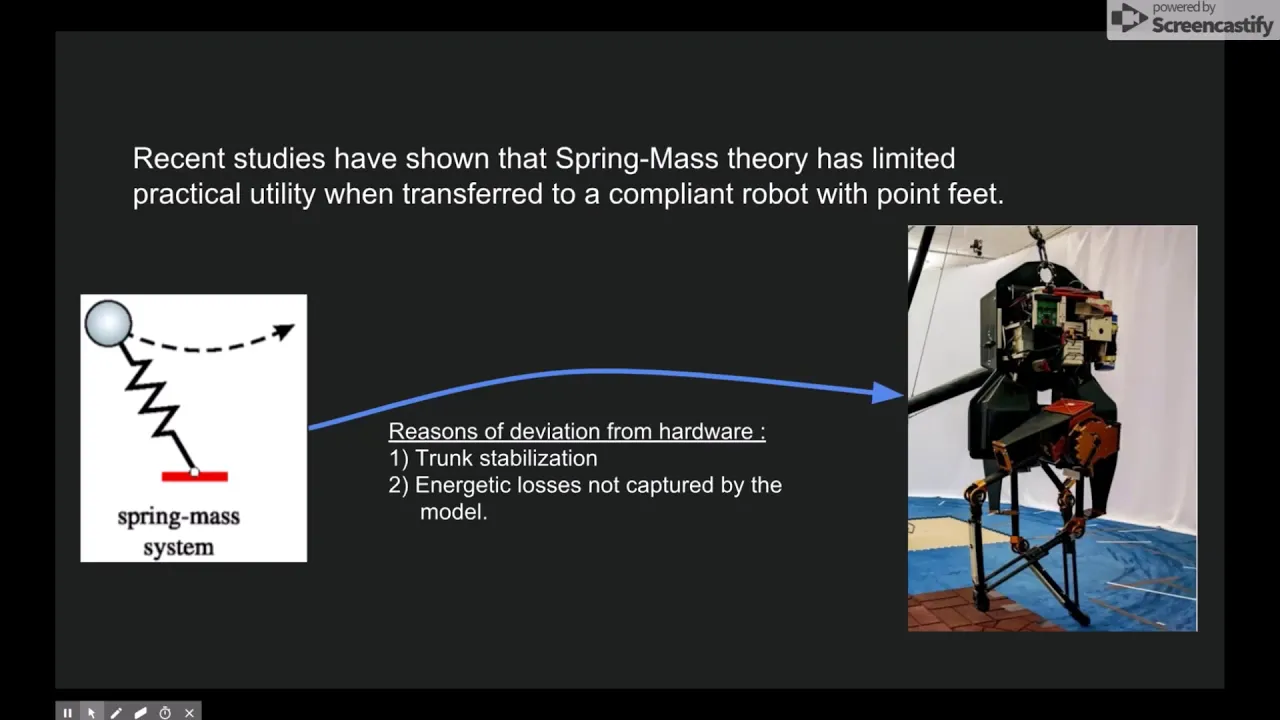
1:01
Robotics
Gorkem Secer: TSLIP-based Deadbeat Running Control of Bipedal Robot ATRIAS
DynamicWalking-wv6qm
298 views•2018-06-22

4:10
Robotics
Self-Driving Cars Need Lessons On Human Drivers | Maddie About Science
skunkbear
26K views•2018-08-21

3:12
Robotics
Milrem Robotics’ THeMIS UGVs used in a live-fire manned-unmanned teaming exercise
MilremRobotics
99K views•2021-05-20
Trending

9:05
Artificial Intelligence
2.4 BILLION Records Got Leaked...
DeepHumor
15K views•2026-07-22

13:25
Business
Playstation NO DISC/NO BUY Fight Is Over...
DavidJaffeGames
4K views•2026-07-23
19:32
Business
Should I buy a Sawmill?
essentialcraftsman
29K views•2026-07-22

16:52
Anthropology
Americans Confused in Australia for 17 Minutes Straight
IWrocker
17K views•2026-07-23