Identity anxiety is the emotional stress that arises when our sense of self becomes uncertain, particularly during major life transitions such as job loss, retirement, or career changes. This occurs because many people unknowingly build their identity around one dominant role, believing that who they are is the same as what they do. When self-worth becomes dependent on a single role, any threat to that role can feel like a threat to our entire identity. Psychological research, including Erik Erikson's work on identity development, shows that people with a more flexible and multi-dimensional sense of identity—including relationships, hobbies, creativity, values, and personal strengths—tend to adapt better and demonstrate greater psychological resilience. To rebuild identity, individuals should reflect on questions like 'Who am I beyond my profession?' and 'What values matter most to me?' to develop a stronger, more resilient sense of self that extends beyond external achievements.
Who Are You Beyond Your Job? | Understanding Identity Anxiety | Psychologist Explains
Added:Have you ever introduced yourself by saying I'm a doctor, I'm a lawyer, I'm a teacher, I am an entrepreneur or I am a manager. Most of us do. But I would like to ask you a different question today.
Who are you when you're not working?
Not your designation, not your LinkedIn profile, not your salary, not the degrees after your name, but who are you when all of this is taken away? It sounds like a simple question but for many people it is very difficult to answer. Hi, I am Dr. Hersshmid, a counseling psychologist based in South Delhi and today I want to talk about something I'm seeing more frequently in my therapy room which is identity anxiety. Now what is this? While identity anxiety is not an official mental health diagnosis, it is a very real psychological experience. It refers to the emotional stress that arises when our sense of self becomes uncertain, especially during major life transitions. This can happen after losing a job, retirement, changing careers, becoming a parent, experiencing an empty nest, going through a divorce, recovering from an illness, or even after achieving everything you once dreamed of and still feeling empty inside.
Now many of us unknowingly build our identity around one dominant role. We begin to believe that who we are is the same as what we do. We say I am a CEO, I am a mother, I'm an athlete or I am a high achiever. Now these roles are incredibly meaningful and important but they become psychologically risky when they are the only way we define ourselves. When our selfworth becomes dependent on one role, any threat to that role can feel like a threat to our entire identity. Now from a psychological perspective, work gives us much more than a paycheck. It provides structure, routine, purpose, achievement, recognition, belonging, and a sense of direction. It answers one of the most fundamental human questions, which is where do I fit in? That's why career transitions often feel so emotionally overwhelming. So you are not just adjusting to a new job or a different routine. You may be grieving the loss of an identity that you have spent years building. Our brains naturally seek certainty and predictability. And research in psychology consistently shows that uncertainty is one of the strongest triggers for anxiety. When when a significant life role changes, the brain begins searching for stability. This is why people going through career transitions often experience self-doubt, overthinking, fear of failure, or the feeling that they are somehow fallen behind. It's not because they are weak or incapable. It is because their internal map of who they are has suddenly been disrupted. Let me share a composite story inspired by several clients I have worked with over the years to protect confidentiality. This is not one person's story but a combination of shared experiences.
So I remember working with a senior corporate executive in his late 40s who had unexpectedly lost his job during organizational restructuring. Initially he came to therapy talking about finances and the uncertainty of finding another role. But as our conversations deepened something much more profound emerged. One day he looked at me and quietly said, "I've spent more than 20 years introducing myself with my designation." Now I don't know what to say when people ask me what do I do. He had started avoiding social meetups, gatherings uh because he feared people would ask about his work status. He hesitated to update his uh LinkedIn profile because every possible career move felt like admitting failure. Then he said something I'll never forget.
I don't think I've just lost my job. I think I've lost myself. Now this was heart touching. That sentence captures the sense of identity anxiety. His suffering wasn't only about unemployment. It was about losing the identity he had spent decades creating.
As therapy progressed, our work shifted from simply helping him secure another job to helping him rediscover who he was beyond his profession. We explored questions he had never really asked himself before. What values guided his life? What brought him meaning outside the work? What strengths had always been part of him long before he ever held that designation? What relationships, passions, and personal qualities had been neglected by him while he was chasing success? Eventually, he did find another role. But the biggest transformation was not professional. It was psychological. He realized that his design designation described what he did. It never defined who he was.
Psychological research supports this understanding. So a developmental psychologist Eric Ericson very famous name described identity as one of the central developmental tasks across the lifespan. More recent research on role identity shows that while work provides meaning and purpose, overidentifying with a single role makes us more vulnerable during periods of transition such as job loss, retirement, career changes, or illness. In contrast, people with a more flexible and multi-dimensional sense of identity tend to adapt better, recover more quickly, and demonstrate greater psychological resilience. In other words, when your identity includes your relationships, your hobbies, creativity, values, spirituality, community, and personal strengths, not just your profession.
You're less likely to feel emotionally shattered when one aspect of your life changes.
So, how do we begin rebuilding our identity? The goal is not to stop loving your work, my dear, or striving for success. The goal is to ensure that your work is not the only thing you value about yourself. I often encourage clients to reflect on a few questions.
Who am I beyond my profession? What values matter most to me? What gives my life meaning besides achievement? Who knows me beyond my job title? What parts of myself have I neglected while chasing success? Now, these questions aren't meant to be answered overnight. Identity is not discovered in a single moment. It evolves through living in alignment with your values, nurturing meaningful relationships, exploring your interests, and allowing yourself to grow beyond your external achievements.
However, they are important, but you need to grow beyond them. If there's one message I would like you to take away from today's conversation, it is this. Your profession is something you do. It is not the totality of who you are. Jobs change, businesses change, children grow up, people retire, careers take unexpected turns, but your kindness, your courage, your curiosity, your resilience, your compassion, your relationships, and your values remain.
Those are the foundations of an identity that can withstand life's inevitable changes. So, I leave you with one final question. If your job title disappeared tomorrow, what would still remain true about you? Sit with this question for a while. Your answer may tell you far more about your identity than your resume ever could. If this conversation resonated with you guys, I would love to hear your thoughts in the comments below. Have you ever experienced identity anxiety during a career change or another life transition? If you found this video helpful, please like, share, subscribe for more evidence-based psychology and mental health content.
Until next time, remember to take care of your mind as intentionally as you take care of your ambitions. Thank you.
Related Videos

Inside Ronaldo’s Team Meeting
RonoSphereCR7
1K views•2026-04-17

You Are Not So Smart: Chapter 4 Hindsight Bias, What is it?
TheBey8nD8
230 views•2019-09-15
Sigmund Freud's Mind - Master Your Inner World (Your Unconcious Mind)
Ngaslife
1K views•2025-01-25
What affects your mood?
RandyPaterson
602 views•2019-05-16
Can you outsmart this logical fallacy? - Alex Gendler
TEDEd
2164K views•2019-11-25

Understanding the Relationship between Fear of Falling and Mobility in Older Adults
fallpreventioncommunityofp3788
823 views•2019-04-08
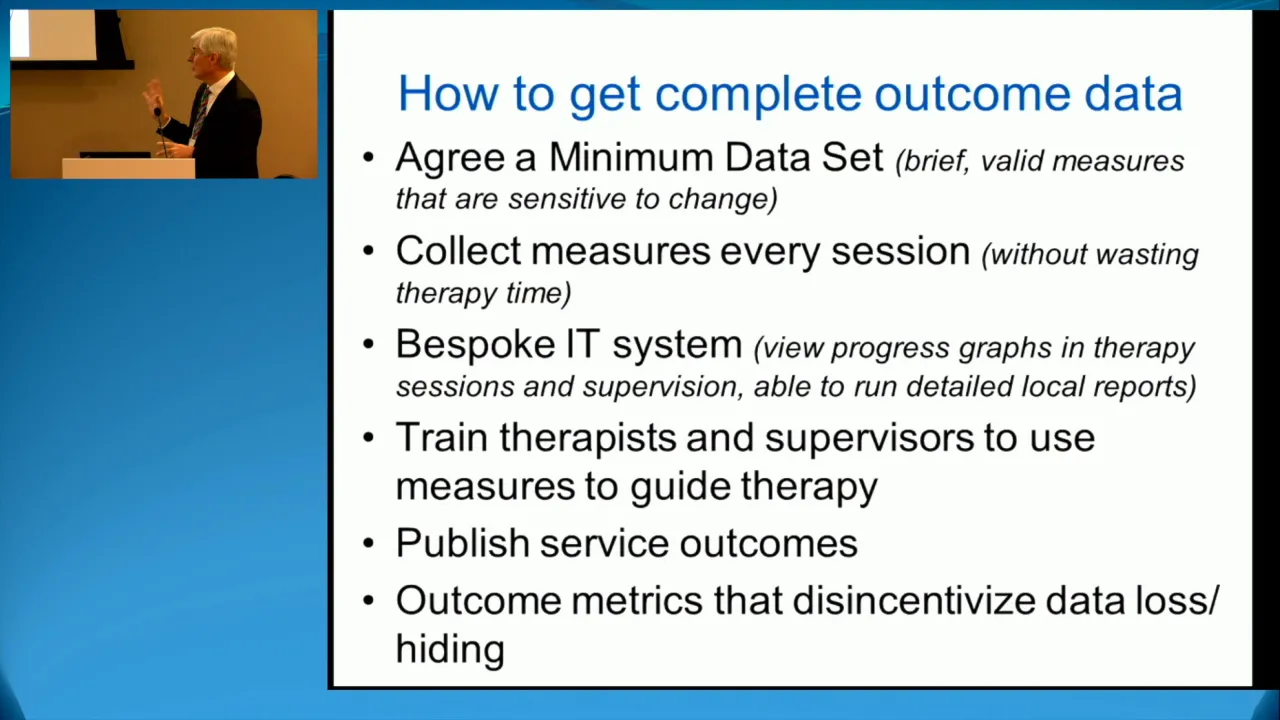
Measurement-based Care in Psychotherapy Workshop - Future of Psychotherapy Conference 2019
UofTPsych
243 views•2019-04-25

Dr. Carol Tavris — Mistakes Were Made (But Not by Me)
skepticmagazine
14K views•2019-05-02
Trending

WOW! Judge TURNS THE TABLES on Trump in His OWN $10B LAWSUIT!!!
MeidasTouch
197K views•2026-07-23

Playstation NO DISC/NO BUY Fight Is Over...
DavidJaffeGames
4K views•2026-07-23

Steam and Xbox Just Dropped The Hammer On PlayStation
OhNoItsAlexx
9K views•2026-07-23

Americans Confused in Australia for 17 Minutes Straight
IWrocker
17K views•2026-07-23