This is a masterclass in efficiency that weaponizes the curriculum for maximum scoring potential, perfectly catering to our result-obsessed exam culture. It’s the ultimate shortcut for those who value a Grade 9 over the actual beauty of mathematical discovery.
Install our extension to search inside any video instantly.
Every Single GCSE Maths Higher TOPIC - Watch before 2026 GCSE Maths Paper 1 and 2Added:
Here is everything you need to know for GCSE maths higher. It covers all of the content for your paper one and your paper 2 exams.
Just to let you know that all of the topics are available on the novel for GCSE AI platform which is just125 or even less now it covers all different GCSEs. And if you click onto maths at Excel, we've got all of the 40 topics that we're going to be going through.
You will also see them timestamped. And as you watch this video, you can go through each of the question banks. pull questions in any of the subtopics. This works the same for AQA as well. There are two key notices you need to know before watching the video. Firstly, if your GCSE maths paper is tomorrow, either for paper one or for paper two, you can watch this video for learning all the content and the methods. It's comprehensive. And then you can watch the GCSE night before live for exam question practice on the no GCSE channel. The second thing I wanted to let you know is that this is actually based on the higher edex and AQA specifications. You can use timestamps to navigate the video and select the topics that you are worse off at.
We are going to be going through all 40 of these topics. You can use the timestamps to navigate through the video. These are the exact GCSE notes that got me a grade 98% in GCSE maths.
And also I did level two further math.
So I use these notes. Since then I've done Alevel maths and further maths. So those are my credentials. If you just use the concepts and memorize them from this video, you are going to do well because it is exhaustive. It contains everything you need to know for hire. So let's get started. You can also access the PDF with the answers on at no AI on my website. So there are 10 key rules of thirds and indices that you need to be aware of. Firstly, anything to a negative power, I would always start by splitting it. So you have x to the minus1 and then times by n. This is the equivalent of saying x to the minus n.
So you can put a triple equal sign for identity. And anything to the power minus one is always 1 /x.
Okay? It's the reciprocal. And then to the power n and 1 to the n is always 1.
And so you have 1 / x to the n. For the next question, you've got x^ the 1 / n.
And this is always going to be the nth root of the value. If you have x to the minus1 /n, these are two effects. So again, break it up into x to the minus1 times by 1 / n. It's the equivalent. So that's an identity. And then xus1 is 1 /x the reciprocal. And then you do that to the power 1 / n. Now 1 / n, as we said, is always the square root or the nth root. Now the nth root of 1 is always one. And the nth root of x is represented like this.
Next, now x to the n / m. So again, we want to break this down into x ^ 1 / m*s by n. Remember this is an identity because it's equivalent. And then x^ the 1 / m. It's the same as saying the nth root just replacing it with an m in this case. So we've got the mth root of x and then tsing it by n and to the power n and that is the answer. Now roo<unk> m over n is the same as doing roo<unk> m over roo<unk> n. That's important to know with and for multiplication it's the same. Root a * root a is a okay root a * root a * root a is a roo<unk> a okay because this produces a and then you've got that extra root a. Now root a * root b is equal to root a b. So this is what I meant by um multiplication and division of thirds allows for you to just combine them easily. And then you've got x over y ^ - n. So you start off with x over y ^ -1 and then to n.
Now minus one is a reciprocal so it flips the fractions. You've got y /x and then to the power n which is just y ^ n / x^ n.
And then finally number 10 which is just min - n to the x. So split it up again.
You've got x^ the minus1 raised to the n / y. Okay. Now x -1 that is the reciprocal of x. So that's 1 over x.
Okay. And then you've got that to the power n. Okay. Those are those rules.
Onto the next topic which is rules of 10 addition and subtraction. So in this first question, we've got 1.52 * 10 5 + 5.4 * 10 4. The main issue as to why we can't immediately add it is because the powers are different. We need to get them into the same power. To do that, we can simply just do 1 or 1 15.2 * 10 4. Okay? And then add what we've got over there. Okay? Because now they are both in terms of 10 4. And you add them up, you get 20.6. 6 * 10 to the 4.
And don't make the mistake of leaving it like that. You need to put it into index notation, which is always the number here has to be between 0 and 10. So it would be 2.06 * 10 5. Now for this question, we've got division. So what I would do is simply start by writing the fraction out. 2.910 * 10 15 over 9 * 10 - 5. Now it clearly doesn't make sense to write one of them in terms of the other power of 10 because there's a huge gap there. So instead what we can do is with multiplication and division you can straight up divide each of them individually. So starting off with 7.29 / 9 that is simply 0.81. You can do it and work it out without a calculator. And then 10^ the 15 divided by 10^ the minus 5. Well, you should know from you know adding indicy powers. This is the equivalent sorry of doing 10^ the 15 plus 10 5 which gives you 10 20. Okay.
So you get 0.81 * 10 20. Again you need to put it in your index notation. So that is 8.1 * 10^ 9.
Brilliant. Let's go on to the next one.
Rationalizing the denominator. So here we've got 6 / 2 +<unk> 5. So we're going to use a rule that's at the bottom of the page here, which is the difference of two squares, which is the idea that if you have a + b and a minus b and you multiply them together, you basically get a square minus b^ 2. And the benefit of using this when we're thinking about SS is the fact that it actually cancels out any sort of SS. So you only get a normal number which is really helpful. So here what we're going to do is we're going to times the numerator and the denominator by 2 minus<unk> 5.
Okay? And so you get 12 - 6<unk> 5 over and then at the bottom you've got the difference of two squares. So you basically have 2^ 2 -<unk> 5^ 2 is 4<unk> 5^ 2 is 5. So you get minus1.
So you get this fraction over minus1.
And remember as it says here anything that divides by minus1 is the same as multiplying by minus1. And so you get -12 + 6<unk> 5.
Okay. Make sure you're answering along with me so that it is an active revision process for you as well. So next we've got conversions in terms of units and these are super important. So the first is converting 5 km/h to me/s. What I find the easiest way to approach this is to say okay we've got 5 * 1 km and then divided by 1 hour. This is the same then as saying this is 5 times by how many meters in a kilometer? Well there's 1,000 m. And then how many seconds in an hour? Well, there's 60 minutes in an hour and then there's 60 seconds in each of those minutes. So that's 3,600 seconds at the bottom. Okay? And then you just calculate that and you get 1.39 m/s.
Okay? Now let's do it in the reverse way. So we need to do 3 m/s to kilm/s.
So 3 * 1 m / 1 second. Now 1 m in kilm is 0.00 uh 0.001.
And then 1 second in minutes is just 1 divided by 3,600 hours. Okay. And then you can calculate that and you get 10.8 km hour.
Okay. Let's move on to the next one. So hopefully you can see we're swiftly moving through the topics. This is supposed to be as useful as possible to you. So finding average speed. Okay, average speed is total distance divided by total time. So you should be familiar with the fact that your speed is equal to your distance divided by time. But you this equation is really important as well because in this question you can see the distance is 80 km. the distance for distance A and the speed of par A is 50 km. Then for distance B it's 64 km and at a speed of 80 km/h. So students would often find the average speed by saying okay we just add up the two speeds and divide it by two. No, that's wrong. What you need to do is you need to find the time for part A and then the time for part B. So the time for part A, we use our basic equation that speed is distance over time. And so therefore time is essentially equal to your distance divided by your speed. Okay. And so that is 80 km divided by 50 which is 1.6 hours for part A. And then for part B it's distance divided by speed again which is 64 / 80. Okay. And that is 0.8 hours. Okay. Okay, so now we know the times. Now we can easily do the average speed which is the total distance which is therefore 80 + 64 divided by the total time which is 50 plus sorry not 50 which is 1.6 hours plus 0.8 hours. Make sure the units are correct and then your answer would be 60 km/h in this case.
Okay, let's move on to the next topic which is expanding and factorizing quadratics. So firstly solving this. So this is basic. Basically you need two numbers that multiply to give 12 and that add to give 8. So in this case 6 and two both positive factors work really well.
Okay? And so you would write a + 2 a + 6. Okay? And therefore given that we when we're solving this we're saying we're assuming that it equals zero. And so we're saying this equals 0 as well.
And therefore given there's two solutions, the first solution would be minus2 by equating it to zero because you're putting the two on the other side or the other solution will be -6.
Remember to change the signs. Okay. The next one is when we have a coefficient of x squ. So because we have a coefficient, we want to deal with that.
So we need to find two numbers that add to give us 16 but that multiply not to give us three but we actually do 5 * 3 which is 15. Okay. So two numbers that add to give 16 multiply to give 15. Well that's just 15 and uh that's just um 15 and one right? So then you split this into this middle value into these two numbers. So you get 5 x^2 + 15 x + x + 3. And now what you can do is you can um try and create two factors from here. So what you can do is in this case you've got 5x in common with the first two values and that gives you x + 3 and then in the next values you just have one in common and that just gives you x + 3 and there you go you have your two factors. So your first factor is your x + 3 and your second factor you bring your 5x and your one together and you get 5x + 1. And the reason why you do that is because you're essentially multiplying both together.
And so those are your two uh that's a factorized form. Now let's go through a complex factorizing question. So a little bit more difficult. Okay. So you've got 2 y + 2^ 2 + 4 y + 2^ 2. So one thing you can do there's two methods you can solve this question. The first is basically you just expand everything and then you factoriize again. So, um, in this case, you would say you've got 2 and then y^ 2 + 4 y + 4 + 4 y + 2. And then overall, you get 2 y^ 2 + 12 y + 16. Okay? And then you can factoriize that. Um, again, you've got a coefficient of the squared value. So, you take that out. y^2 + 6 y + 8. and then two numbers that multiply to give um eight and add to give six. That's easy. That's just four and two. So you've got two y + 4 and y + 2. Okay.
Now another way you could do this which is a little bit less time inensive is just saying okay let's substitute y + 2 as x. Right? So you've got y+2 here and here. So you can actually sub in x. then you would get 2 x^2 + 4x. Okay? And then you can easily solve that. You just take out the two, right? You take out the two, you got 2x and then you get x - um sorry 2x plus so um x + 2 and then you plug back in this substitution. So you get 2 y + 2 and then y + 2 plus another two. So that's y + 4 and you get the exact same answer in both methods. Okay? So do whatever feels intuitive to you. We're now on to sequences. So sequences, you've got two definitions, right? You've got the deductive definition. Okay? And that is basically your nth term and then you've got your inductive. So this is your termtoterm rule. Okay? So your nth term is how you get from any how you get to any value. For example, the hundredth value of a sequence. Whereas your inductive is if you're at the hundredth value, how do you get to the 101st?
Now there's two different types of sequences that you need to know.
Arithmetic and geometric. Okay. So for ar ar ar ar ar ar ar ar ar ar ar ar ar ar ar ar ar ar ar ar arithmetic sequences your deductive definition is always going to be u n = a + n minus1 d. Okay, so what does this mean? Well, your a is your first term as it says here. Your d is your common difference and your r is your multiplier. But r is in geometric sequences. So don't worry about that yet. Okay. Okay. So for example in the sequence 7 10 13 and 16 the first term is 7 this the um common difference is clearly + three. So that's your d and then you times that by n minus one and you get your nth term. Now for your inductive definition you would simply say the rule is in this case to add three or if you wanted to express it in some sort of formula it's basically un + 1 your next term is equal to your existing term plus your common difference which is in this case three.
Now let's look at the geometric sequences. So for the geometric in deductive the nth term you've got something similar. So you've got u n= a r n minus one. So remember a is your first term.
r is your common multiplier.
Okay. Because geometric involves multiplying. So for example in the sequence 3 6 12 24. We can see the first term is 3 and then the common multiplier it seems to be that we're multiplying by 2. And so that would be 3 * 2 to the n minus one. Now the inductive definition would simply be verbally you're multiplying by two each time. Okay. So your next term u n + 1 is equal to your existing term multiplied by two.
Okay let's do this question and then we are done with the sequences. So the first term of the geometric sequence is four and r is 5. Work out the 10th term.
So we basically get that sorry we basically get that a is equal to 4. r is equal to 5. We're told that it's geometric. So we know that it's going to be in the form a r n minus one.
So it's going to be 4 * 5 to the nus1.
And then we're trying to find the 10th term. So we say u 10 is equal to 4 * 5 ^ 10 - 1 which is 4 * 5 to the 9. Okay.
And then you get your answer.
Now something also important to know is what triangular numbers are. So triangular numbers are important.
they are 1 3 6 10 and they go on. So essentially it's one and then it's 1 + 2 and then it's 1 + 2 + 3 and then it's 1 plus 2 plus 3+ 4 etc. So that's just so starting off with the three different types of bar charts. Okay, you need to know simple, compound and comparative.
So a simple bar chart looks like this.
It essentially has separate bars. there were always gaps between bars and that's all it shows. A compound bar chart shows essentially a stacked bar chart and this is where you've got more than two different pieces of data that you want to show within your group. And a comparative is when you typically have two or three um different uh subgroups within your group that you also want to display. Now your discrete ta d d d d d d d d d d d d d d d d d d d d d d d d d d d d d d d d d d d d d d d da which bar charts are is grouped right your x-axis is always group data whereas your histograms are continuous data it's measurable okay so when you are comparing data sets you are going to need to always have one measure of central tendency and one measure of spread so the measure of central tendency is your mean your mode or your median for example if you were given two scatter graphs and you and they were showing the height of girls who are 16 and the height of boys who are 16. You would say okay if you asked to compare them I can see that the mean height of boys who are 16 is taller or is greater than the mean height of girls and that's one mark and then your second mark would come from saying however the spread of the girls heights is much greater in terms of um compared to the spread of heights of boys and therefore there is greater variation in the height of one of the parties. Okay.
So, um before we go any further, what is the concrete differences between bar charts and histograms? Well, you should know that bar charts have, as I said, equal gaps. The y-axis is frequency. The x-axis is group data. Whereas with histograms, you have no gaps. The y- axis is still frequency, but the x-axis is continuous data.
Okay. So, we're going to look at the different types of frequency graphs. So the first is a frequency table. So this is something you should be familiar with since primary school it's you basically have your uh groups on the first column, your tally and then your frequency. Then you have a frequency polygon. So notice how your frequency polygon basically looks at the middle. It picks the mid interval value of each of the data groups and it then plots the point of whatever the frequency is. For example, for between 5 to 10, the mid- interval value is 7.5. It then plots the frequency. And the reason why it's called a polygon is because it often produces these really angular shaped graphs. The next type you need to know is a grouped frequency table. Sorry if you can hear the rain. It's really loud.
Um the grouped frequency table essentially is an up level or an upgrade of the primary school version where in your first column you have whatever you're measuring in key class intervals.
So you use your um less than uh signals and signs to actually talk about the exact boundaries of upper and lower bound. You then have your frequency and you then have your mid interval value.
Right?
So your mid interval value in this case between 140 and 150 is 145. And then you continue this for each of them.
Now you finally have a frequency diagram. A frequency diagram is basically your version of the uh almost a bar chart. And on the x on the y-axis you're going to have your uh frequency.
And then on the x axis you're going to have um your class widths. Okay. So now with this you need to know how to find three different things. The mean, the range and the median. So let's go through each of them and explain how you would find it. So for the mean essentially what you'd have to do is you'd have to find the midpoints. So the mid interval values which might already there be a column for you. And then what you do is you do the mid interval values multiplied by the frequency. Okay? So you add another column basically. Okay?
And you do the m value multiplied by the frequency.
And then you get this once you do that for all of the different rows of the column. You sum them up. So the sum of all of the mid interval values times by the frequency and you then divide that by the total frequency which you might be told or you just add up this column here.
Okay. So um don't worry if you don't understand it should be go we will be going through more examples later on.
Now how would you find the range? So the range is basically looking at the highest versus lowest value. So if we go back to the group frequency table, say this goes up to the height of 230 cm for example, then you know that the range is simply going to be 230 minus 140. So you always get it from the first column and then finally looking at the median. So the median is the middle value. So say we know that 200 students took part in this and got their data collected. It's going to be whatever the uh class width is of the hundth person. So firstly you have to go into your frequency.
Sometimes it helps to add another column called the cumulative frequency. You've got to find out say the next um frequency for the next interval is 75.
You know then that the 100 lies within there because you've already got 50. So 50 into this next group exists your median value. So your median interval would be whatever this next one is.
Okay. Now really important a new concept which is frequency density. So your frequency is equal to your frequency density multiplied by your class width.
Okay. So this is for a very specific type of diagram. You can see that the x-axis represents the height. Okay? And then the y-axis represents the frequency density. So that then means that this area of the actual bar is the frequency and sometimes you're going to have to use these calculations.
Okay, let's now look at estimating the median from a histogram. So imagine we've got this histogram. You've got the various speeds and you've got the frequency. How would you estimate the median? right? They want the exact median value. So the first thing you'd want to do is you want to find out, okay, our total frequency is 40. So our median value is going to be the 40th divided by two cuz we're trying to find the middle. So it's going to be the 20th value.
Okay. Um the second thing you want to do then is you want to find out which group it exists in. Where is the 20th value?
So the 20th value is definitely not in the first because there's only 12. So it might help to add, as I said, a cumulative frequency column. So you've got 12 and then 24 and then uh 38 and then 40. So you can see that the 20th value is going to exist somewhere within this class width. Okay? Because that's a there's up to 24 values there. So what I'm saying is between 40 and 60, okay, 20 exists within. Now we need the 20th item, right? We're trying to estimate the 20th item. And so we're going to assume that all of the items between 12 and 24, right? So between 13 and 24 are all equally ordered within this interval. Okay? So because we need the 20th item, but we already know that it's definitely not here. Okay, it's definitely not within the interval of the previous group. So that means that we need the eighth item within this interval.
We are looking for the eighth person.
And so it's going to be the eighth value within the interval.
Okay. And so let's look at the frequency of this group. So given that there are 12 people in this group, right? Or there's 12 items in the group and we want the eighth one. We simply do the eighth out eth item divided by the 12th item. Okay? And then times it by the actual um gap that exists. So times it by the interval itself. So 60 - 40 that's an interval of 20. Okay. So once you do this you do 8 / 12 * 20 you get 13.3 recurring.
Okay. So 13.3 recurring into this group is your 20th item. So you then do 40 plus your 13.3 recurring. So your median value is 53.3 recurring. Okay, hopefully that makes sense. If you guys have any questions, ask me in the comments below. And then we're finally going to look at scatter graphs. So within scatters, you need to know time goes on the x axis. Scatter graphs have what we call bariate data and this is what gives us correlation.
Interpolation is when you basically use the line of best fit for a point. Okay.
And extrapolation is extending your line of best fit to get some new points.
Okay. Let's now move on to the next topic which is reciprocals.
So reciprocals is kind of what we mentioned when we talked about um indices. The reciprocal of any number is basically 1 divided by that number. And so we also refer to it as n the minus1.
Let's now move on to ratios and proportions.
Ratio compares part to part whereas fraction compares part to whole. For example, in a ratio, you would have like five colon 6 whereas in a fraction you would might have five out of 10 like out of the total amount. So let's have a look at some of these uh questions then.
So we've got direct proportion and inverse proportion. So direct proportion is when you're saying that y is proportional to x and so y must be some constant multiplied by x. And so you always have this graph here, right? It if it's um directly proportional, it's going to go through that. It's it's going to be a straight line. Now, if it's inversely proportionate, that means y is inversely is proportionate to 1 /x.
As x is increasing, y decreases. And so we can say that y equals k /x. It's some constant / x. And so you get the reciprocal graph. Okay. So let's answer these two questions. Now firstly, m is directly proportional to p. When m is 8, p is 18. Work out the value of m when sorry work out the value of p when m is 13. So we know that m is directly proportional to p. And what that can then be written as is some sort of constant multiplied by p. Okay. Now we know we're given a value. So when m is 8, p is 18.
Okay. And so k is clearly your 8 / 18 which gives us uh 4 over 9. So imagine if this is non-cal, you need to keep your values in terms of fractions. Okay.
So now we know what k is. We basically have the relationship m is equal to 4 over 9 * by p. And so we now want to work out the value of p when m is 13. So you have 13 is equal to 4 over 9 * p.
Okay? So you simply just do 13 / 4 9 which is the same thing as doing 13 * 9 over 4 is your p. And so your p value is 29.25 25 or you could have kept it in fraction form.
Now let's talk about an inverse proportion question. If it is known that h is inversely proportionate to the cube root of uh u and h is equal to 12 and u is equal to or v is equal to 27. Find the value of u when h is 18. Okay. are starting off we can clearly see that h is inversely proportionate um to the cube root of u. Okay, so it's inversely proportionate to the cube root of u. Okay. And so if we were to write that more clearly, we could say h is equal to some sort of constant times by the cube root of u. Now we're given certain values. So h is 12 and when h is 12, u is 27. So when h is 12, you've got the cube root of 27. And so you basically get that 12 is equal to K / 3. And so clearly K is 36.
12 * 3. So now you know the relationship. We can write our new expression. H is equal to or our equation rather. H is equal to 36 / the cube root of u. And then you want to plug in your values which is um find the value of u when h is 18. So 18 is equal to 36 over the cube root of u. And so you can just rearrange it and eventually you just get that u is equal to 2 cubed which is 8. So unfortunately I didn't get to film the recurring decimals onwards because it didn't film but I've already written the answer. So we're going to go through it relatively quickly. So starting off with recurring decimals to fractions. When you're trying to convert 0.21 21 to a fraction.
You start by saying, okay, let's let x equal 0.2121212121, right? Um because the two and the one are repeating. And then you say, let 100 x equal 21.21212121.
Then you notice that 100x - x would then be able to get rid of that recurring part. And so you would get that 99x is equal to 21. Okay? And you want to write it in terms of x. So you then say x is equal to 21 / 99 which is 7 / 3.
Now for another possible question you could have that just one of the numbers is recurring. So converting 0.15555 to a fraction you say okay let x equal 0.15555.
Okay. And then let's say 10 x right 10 x would be 1.55555.
But now we can't easily subtract this because essentially from beyond the bullet point we want it to be identical.
So let's say okay let's find out what 100x is. 100x is 15.55555.
Okay well now we can do 100x subtract 10 x and you then get 15.555us 1.555 90x is 14 and x is 7 over 45.
We also looked at interior and exterior angles. So the sum of interior angles in a polygon is always n which is the number of sides in the polygon subtract 2 * 180°. And then also for interior and exterior angles they always sum to 180°.
If we look at this polygon here it's because the interior angle here plus the exterior angle they're both on a straight line. So they'll always sum to 180°. Then we looked at similar solids.
So Amy says that 2.5 cm cubed is the same as 2.5 mm cubed. Is she right? Now, students often know the answer, but they don't know how to explain it. So, you would start by saying 1 cm is 10 mm. 1 cm cubed is then 10 mm cubed, which is 1,000 mm cubed. And therefore, they're not equivalent. And this then leads us on to the next topic, which is about scale factors. So, the linear scale factor squared is always the area scale factor, and a linear scale factor cubed is always the volume scale factor. So, let's just show you how this works.
Okay, in this example, you've got two squares. The length of the smaller square is two, and the length of the bigger square is six. So, you can see there's a scale factor because it's been enlarged of three. But the volume, the area scale factor, sorry, is different.
The area of the square one is four and square 2 is 36. So, there is the scale factor of 9. Okay, which is 3 squared.
And therefore area scale factor is the squared value of the linear scale factor and volume follows accordingly in being cubed as well. Then we looked at a little bit of trigonometry. We looked at each of these angles. So vertically opposite angles means if you have an x the opposite angles are equal.
Corresponding means if you have an f those angles equal. An alternate angle means zed those corner angles are equal.
And co- interior means the two angles within something are summing to 180. Now of course they have certain preconditions like for the alternate angle the two lines there need to be parallel to each other and straight lines. Then you've got the Pythagoras theorem and you've got socka and both of these are helpful to finding missing sides like the lengths of the sides or finding missing angles. You can pause to look at the examples on the screen. What you do need to know however are in specifically the non-calc paper is the exact trig values. So make sure you know them no matter what way you revise. And then looking at angles of depression and elevation. Right? So an angle of depression is always downwards from the horizontal whereas elevation is always marked upward from the horizontal. Then we looked at some graphs. So with straight line graphs the linear formula is always y= mx plus c where m is the gradient and c is the y intercept. Now the y intercept is basically the value of y when x is 0 and x intercept is the value of x when y equals 0. Now the formula for the gradient is just the change in y over the change in x. So the change in the vertical height divided by the change in the horizontal distance.
And if you have two parallel graphs that means the gradient is the same. But if you have two perpendicular graphs then look at the diagram in brown there. That means they're at right angles. So the gradient would be the negative reciprocal of its perpendicular equivalent. So if we said it was m then the gradient of the perpendicular would be - 1 / m.
Okay. And then we did an example where we found the equation of the line that passes through these two points. So essentially you start by finding the gradient. The gradient is the change in y over the change in x, which is what you see. And then you've got one part of your linear equation. You want to find the c, the y intercept, and you plug in any one of the points and you get your answer. The next question is finding the midpoint of the line segment. So you basically just use the equation that you do the sum of the x values divided by two and the sum of the y values divided by two. And what you get is then 4 and 1.5 in that example. The next question is finding the coordinates for when two lines intersect. Okay. And when two lines intersect that basically means the x values and the y values are the same.
So in this case you can basically equate them and say okay y = - x + 2 which equals 5 - 3x / 2. And you get your coordinate by simplifying.
We also looked at finding the area under curves. So when we're typically trying to find the area under a curve firstly why is this important in general? Well, you would have to look at velocity time graphs because underneath a velocity time graph, the area represents the distance. And so that's why it's useful to find this. So how we do it is we basically split um the area up into various intervals with class width what we call h and then we can calculate the area of the trapezium in each of them and sum them up and that then gives us the complete area of the entire thing.
Right? And how do we do that? Well, we start off by saying okay, the class width then is basically um the change in the x value and we say that we keep it constant. So let's say it's like two in each. Then the a corresponds to y 0 and the b corresponds to y1.
And then you can see that you can easily calculate the area of that trapezium.
But what you notice is that it's quite tiring to calculate the area of each and add up the area of each of the trapeziums. So what you then do is you say okay I notice that the first value y0 and the last value y5 appear only once but everything else gets double counted and that's because you can see there that the value of y1 is both the highest value of the first trapezium and the lowest value of the second trapezium. Okay. And so you can see that that repeats and therefore as that repeats you can get a general equation where you've got your first value plus your second value plus 2 * all the values in between. Now it's really important to say that the area is approximately equal to this is an approximation. It's not the exact area because of course we're assuming they're straight lines when there's literally a curve. So what makes it more accurate if is if you were to make the class widths of the trapeziums smaller. And then features of a distance time graph. The distance is on the y- axis. The time is on the x axis. You've got your speed, which is the gradient. Okay? And you would find that by finding the tangent at a specific point and the gradient of that. Now, you can see some suvat equations here. And you don't really need to know the proofs of the subat equations. It's not as essential, but I have them here if you do want to understand the reasoning behind them.
And the same goes for the next topic where we're looking at quadratics. So, as you can see, I've got the proving the quadratic formula. You don't tend to get asked that in an exam, but it's there for reference. Then I've got a little question which students often fumble a bit over. If we have a graph of y= 2x^2 + 5x -1, work out what line needs to be drawn to solve the others. Okay? And so basically just look at the two graphs.
You've got 2x + 5 x - 1 and then you've got 2x^2 + 4x - 1. So what's the difference between these two graphs?
Well, it's simply adding one x, right?
And so we say the graph that is needed is y = x. Now, it's the same thing with the second one. 2x^2 + 4x - 5. So the difference there is a + x and a + 4. So there you get y = x + 4.
We also did some work on looking at graphs of circles and intersections with lines. So find where the line x - y = 1 meets the circle with the equation x^2 + y^2 is 13. So what you want to start off by doing is write the first line equation in terms of x. So you get x equals. Now what you can do is you can substitute this value of x into the equation. So you got 1 + y^ 2 + y^2 is equal to 13. And then after a lot of rearrangement and expansion, you get it to this form, which is 2 y ^2 + 2 y - 12 = 0. Note that this is a quadratic. So what this means is that the line is intersecting the circle at two places because there are two solutions. And therefore, it's not a tangent. It's not the second line, it's the first line. So once you then solve the quadratic, you can divide it by two because everything is divisible by two. you get the two points.
Okay. And then finding an equation of the tangent to the circle. x^2 + y^2 is 25 at a specific point. So I always find it easy to draw a diagram especially if it's centered in the in the middle at 0 0. So you draw the diagram and then you draw the tangent. And notice how the gradient of this green line is perpendicular to the gradient of the tangent. And so what you can do then is you can calculate the gradient which is simply done by I mean you can see there the point is 3 4 and it's going from 0 0. So the change in y is 4 the change in x is 3. So the gradient of the green line is 4 3 and then the gradient of t given it's perpendicular would be the negative reciprocal which is - 3 over 4.
Now you know the gradient you have can just plug in that point and you get the full equation of the line. Now make sure if they ask for your answer in whole numbers that you multiply everything by four and ensure there are no fractions involved. Okay? For example, you would get 4 y = - 3x + 25. Okay? And then we just looked at some key key formulas on the left hand side that you need to memorize. Things like areas, volumes, surface areas of cones, all of these things that you need to be aware of. And then on the right hand side above we've got uh circles and the different components of them. And then we've got bounds as well. So the upper bound is always half a unit greater. So the importance of unit is really integral.
If it we're talking about centime that's going to be 0.5 cm. If we're talking about a kilometer however half a unit will be 0.5 kilometers. So it's dependent on the unit. And the same with the lower bound, right? It's half a unit less than the number.
But what's really important here is the upper bound and lower bound of a fraction. With the upper bound of a fraction, you're trying to get the largest possible number, right? So you're going to use the upper bound of a numerator, the biggest possible numerator divided by the smallest possible denominator. Whereas with a lower bound, you're trying going to get the lowest possible number at the top divided by the biggest possible number at the bottom.
the next topic which is elevations and plans. Always when you're looking at trying to draw the front, the side and the plan, the front is what you see from the purple. The side would be the pink in this case and the plan would be the top and the blue. Now, transformations, reflections, and rotations. So, um sorry, reflections.
Now transformation is moving one shape to a different position. A reflection is reflecting it on the other side of a mirror line and rotations are having the same shape but rotating it around a point. So when you're describing a rotation you need to ensure the following things. Firstly that you mention the direction of the turn. So is it anticlockwise or clockwise? Then you talk about the angle of the turn like the degree of how much it's moving. And then finally the center of rotation which is where the pencil pivots where you're moving it to. Okay. So if you actually have to use tracing paper in the exam you put the tracing paper out you copy the shape you then use the pencil as a pivot and turn the shape the angle specified and you then draw out the shape. Now if we're talking about enlargements firstly you have to specify the type of transformation. Okay? And then you want to talk about the scale factor and then you're going to talk about the center of enlargement. So in this case you're saying okay it is an enlar enlargement the scale factor of let's say five or k okay and by scale factor this is the linear scale factor the area would be enlarged by k squ and then you have to mention the center of enlargement. Okay. So, um what point is it kind of magnifying or zooming in or out of?
Now, this also means you need to know about column vectors and bearings. So, a column vector is basically the direction where the point moves. Okay? And as a result, you get what's called a resultant vector, which is the vector that moves the original shape to its final position. So, it's a type of column vector after a number of translations. Right? For example, if you had one translation moving it 7 and 8 and another transformation moving it minus 6 and 3, the resultant transformation would just be the sum of those which would be 1 and 11. And then let's look at bearings. So bearings are always always measured clockwise and they're given in three figures. So for example, even if it's 60°, it would be 060 degrees. Okay. From the north line.
So it always starts from the north line and then you measure the angle going clockwise to the new line and then you've got the center at that point there as well.
Let's now look at bisecting. So bisecting means cutting exactly in half.
Okay. And when we mean loy are the set of points that obey a set a set of rules. For example, a circle is an example of a loai because it it obeys the rules x^2 + y^2 is equal to r 2 where r is the radius. If you have a straight line that um obeys a rule, right? Anything like that goes under a loai. Let's do these equations and inequalities now. So let's work through calculating finding roots of quad quadratic equations um in a little bit of a harder way. So remember we start off by always saying that we add to get to the we add to get to this number and then we always multiply to get to another number. Okay? So in this case the another number is zero. We've got no other final number. So we need two numbers that times to get zero and add to get minus2. Well, that's clearly 0 and -2. And so you've got your two factors x + 0 and x - 2. And so your x is either 0 or 2. And the same with this next one. So 4 - y^ 2. So notice how this is the difference of two squares, right? You've got something squared um or you've got something squared two, which is 2 subtract something else squared, right? And so this is basically 2 + y 2 - y. So it's about recognizing that. And so y is equal to 2 or y is equal to -2. And then the final example you've got x^2 is -6.
Okay. This is also the difference of 2 squares. You've got x^2 and then you've got 4^ 2. So then it clearly is x + 4 and x - 4.
Okay. Now remember this is the equation to get one of the roots and you need to remember that because in a non-calculator exam specifically you're unable to always factoriize it efficiently and um simplify it to normal numbers and so you have to use this type of method okay to get your two solutions. Now what do we mean by completed square form? Completed square form is always x + a^ 2 - b^ 2. So let's have a look at this example for instance right you've got x + 4x x^2 + 4x - 3. So um you basically want to express it where a and b are integers. So you start off by saying okay let's um expand this. So you you divide the four right by 2. So you've got x^ 2 + 4x - 3. You divide the four by two. You always divide this value by two. Okay? And that gets you x. That gets you x + 2^ 2. Right? So you divide it by two and then you always put it as x + whatever it is squared. Okay? And then what you want to do is you want to expand what we've just got. So if you were to expand this, that gets you x^2 + 4 x + 4.
Okay?
Now, is this the same as this? No. Right? x^2 + 4 x - 3 is what we need. So, how do we get to that? Well, simply all we have to do is we need to get rid of an extra x^2 + 4 x^2 x + 2^ 2 - 4. Okay. So, we need to subtract 4 and then we need to get it to minus three. So, we basically need to subtract seven. this and so you can get your completed square form is your x + 2^ 2 - 7.
Okay, there are multiple ways to do it but that's the way I would do it. So let's try and do this question now. So explain to express 2x^2 + 4x + 1 in completed square form. So you've got 2 x^2 + 4x + 1. Okay. So I would start off by factorizing it. So factorizing it, we can take two out.
Okay. And then once you've taken two out, we can now complete the square of what's within. So completing the square, remember we always divide this by two.
Okay? So you've got two on the outside.
You divide this by two. And so you get x + 1 2. Okay?
And then um you've got the plus one.
And then if you were to expand what's in this bracket, you just get x^2 uh + 2x + 1. Okay? But we are trying to get and then if you were to um if you were trying to if you were going to expand it completely right you would get 2x^2 + 4x + 3 but we are trying to get 2x2 + 4x + 1. So we need to get rid of this. Okay. And how we get rid of this is we clearly need to see the difference. And the difference is minus2. So we then do 2 x + 1^ 2 and then you would have + 1 - 2 which is then -1.
Okay.
So now let's practice solving the quadratic by completing the square. So in this case we use our typical method.
Okay. So um we have got four and we do 4 / 2 which is 2. So you've got always x um and then minus 2 in this case squared. So you've got x - 2^ 2. But if we were to expand this, you would get x^2 - um 4x + 4. Okay? And we need to get -12. So clearly we need to subtract 16 from this. So our completed square form is x - 2^ 2 subtract 16.
Okay, now we have to solve it from here.
So we know that this equals zero. So the whole time we've had this that it equals Z. And therefore because it equals Z, we can then solve it. So we've got then that um 16 is = X - 2^ 2. You can square root it. And if you square root it, you get two solutions. So you get x - 2 is equal to 4 or x - 2 is equal to -4 and as a result you either get that x is equal to 6 or x is equal to -2. So don't forget that last bit of there being two solutions.
Okay. And so there's more a little bit more you can see on completed square form with simultaneous equations. These are interesting as well. So you always have two unknowns and three principles.
You can add the two equations and it will still hold true. You can subtract the two equations, it will still hold true. And you can multiply the equation by any constant and or subtract it and it will still hold true. So that would help you when you are solving it. Now inequalities is important to understand how to answer. So let's try and understand this. Find the maximum vertex okay of y = 6 - 2x - x^2. So firstly let's try and write it in the most normal form possible.
Okay. And then what we want to do is we are trying to um complete the square because completing the square is really important. It doesn't just give us a nice form. The coordinate minus a b actually tells us the maximum vertex or the turning point. So it can tell us this point or if the curve looks like that, it can tell us that point. Okay?
And it's always minus a b. So when you're asked to find the maximum vertex, you need to complete the square. In this case, we've got a coefficient of x squ.
However, so we want to take that out to begin with.
Okay. What you then want to do is you want to begin to complete the square. So you always start by um uh doing x and then divide that by two.
So + 1 squared. Okay.
And then we have got the um other bits. So now we know that x + 1^ 2 is equal to x^2 + 2x + 1.
But we are trying to get it to be x^2 + 2x - 6. Okay. And we've already got the - 6 here. So what do we need to do to get it?
Now we've got - 6. So this gives us x^2 + 2x um - 5. We're trying to get it to be equal to -6. So we then need to add a minus1 in there. So y is equal to -1 x + 1^ 2 - 6 - another 1. And so y is = - x + 1^ 2 + 7.
Okay.
And so now we've got that our turning point is then remember our turning point is then a minus a b. So our minus a would be minus1 and then our b would be 7. And so that is our turning point.
Okay.
Let's now look at quadratic inequalities. Starting off with a normal inequality. So if we were to solve this basically what you do is you split it into two. So you say okay let's solve the left hand side and then move the minus one here you get min - 8 is less than 2x and so x must be greater than -4 and then on the right hand side you've got 2x + 1 is less than 5 and so 2x must be less than 4 x must be less than 2 and so your overall thing you can then conjoin them again your answer would be that x is between -4 and two. Okay, but sometimes it gets a bit more difficult when we introduce quadratics. So when we introduce quadratics, we can't just answer it like that because we have multiple points. So we have to draw a diagram. So the first thing we do is we try and attempt to factoriize. So two numbers that multiply to give us -10 and add to give us -3.
Well, that seems to be uh -5 and + 2, right?
So you've got x - 5 x + 2 is greater than or equal to 0. So when we're solving this, it's basically asking us what are the x values such that this becomes greater than zero. So what you would want to do is you want to draw a diagram. Okay. Now we know what the two um intersection points with the x-axis are. Okay. We can see that it's when y when x = 5 and when x is minus2.
And we know that it's a positive graph because the coefficient of x^2 is positive. It's + 1. And so the graph is going to look like this.
Now we're trying to see when the graph is greater or equal to zero. And it's greater or equal to zero when y is here or here. And therefore we can answer the question by saying that y being greater than zero occurs like y is positive when y is less than or equal to sorry when x is less than or equal to minus2 or x is greater than or equal to 5. And the reason why we've also put the equal to is because we just copy the sign here. Okay, so that's how you would answer that.
So essentially here are the steps written out. So if you wanted to do this from the beginning, you start by factorizing. Okay, two numbers that multiply to give 12 that add to give minus 7. You then sketch the graph and we're trying to find out in this case what two factors are less than or equal to zero. And so it would be the bit under. Okay. So we are now on to probability. So probability when there are m ways of doing X and N ways of doing Y then the total number of ways of doing both X and Y is basically just M * N and we explain it more later. Now you need to be aware of a sample space diagram. Now a sample space diagram is shown and can be seen in this example. So you've got two fairsided dice. Spinners are spun and the results are added together. So basically a sample space diagram shows you every possible combination that exists. Okay, it shows the possible outcomes that happen. So you can see the probability that you get six. You basically count the number of times you see six out of the t the total number of um events and opportunities that occur.
So you also need to be able to calc to draw vin diagrams and be able to shade in the correct regions that represent and and all and things like that. So for the probability of a and b taking place that would be the intersection of both a and b. However, if you were the probability of A or B happening, it would literally be all of A and all of B and the intersection because even the intersection A or B is also included.
And then the probability of A happening is just the probability of A and the probability of B happening is just the probability of B and then mutually exclusive means they are independent of one another.
Okay. Okay, so if two events are independent, one event occurring doesn't affect the likelihood of another event occurring.
And so we would multiply the probabilities of A and B occurring.
Okay. Um so for example, the probability that it is sunny tomorrow and the probability that you win a lottery card.
These are independent. They can both happen, right? So the probability of both happening is just multiplying them together. That's when you use and. Or you can have mutually exclusive. So two events are mutually exclusive when one outcome excludes the possibility of the outcome of the other. So it's not necessarily that all or events are mutually exclusive, but mutually exclusive can happen. For example, the probability of it raining excludes the probability of it not raining at the same time. Right?
So if you know the probability of something raining is like 0.7 then or if the probability of raining like if the event actually happens so the probability would then be one and the probability of not raining would be zero. Now this table shows four different outcomes on a spinner. Find the probability of getting two points or getting three points. Okay, in that case you can have that happen. But you can't have getting two points and getting three points because that would be impossible. Now this formula is really useful to remember. The probability of A plus the probability of B minus the probability of A and B is the probability of A will be. Let's explain why that is in terms of diagrams. Right? So if you've got A and B, the probability of A is this. And then the probability of B is this. But if you add them together, you're double counting the intersection. And so you need to subtract the intersection. And that then gets you the probability of all of them without any double counting.
So I hope that makes sense. So let's do this question. The probability that you have a blue car is 0.2. The probability that a car has two doors is 0.15. And then the probability that blue car has two doors is 0.05.
So find the probability that a randomly chosen car is blue or has two doors.
So in this case, we can't actually assume that it's independent or that it's mutually exclusive because we don't really know the relationship that's happening. So in this case, it'd be helpful to draw a diagram, right?
So imagine this is a probability of it being blue and this is the probability of it having two doors. Right? So in this case the probability that the car is blue is 0.2.
The probability that it is both blue and has two doors is 0.05.
So that then means you can calculate this by doing 0.2 minus 0.05 which is 0.15. And then the probability of D would be 0.15 minus 0.05 which is 0.10.
Okay.
And then is there anything remaining?
Well, we need to sum up the probability.
And if it doesn't equal one, then the remaining is going to be the probability of it being both not blue and not having two doors. Well, if you sum it up, that's going to be 0.3. And so there's a 0.7 probability that it's got neither.
Okay? And so we need to find the probability that a randomly chosen car is blue or has two doors. And so that's going to basically be the probability of A or B, which is just um A or B taking place, which remember is just the probability of A in this case, which is 0.2 2 um plus the probability of B which in this case is D which is um 0.15 minus the probability of the intersection which is 0.05.
Okay. And so you basically get 0.3. So the probability of A or B or in this case blue and or blue or um door two doors is going to be 0.3.
So now looking at tree diagrams. So let's try and draw tree diagrams. A bag containing four yellow counters and three blue counters. Right? Four yellow and three blue. A counter is removed.
Its color is noted and then it's replaced. Then a second counter is removed and then its color is noted.
Okay? So draw the tree diagram. So the tree diagram I'll just show you what the answer looks like. Looks like this.
Okay. So you've got firstly two options in your first picking and then you've got your second picking. In your first picking, you've got four yellow counters. So the probability of picking a yellow is four out of the seven. And you've got three blue. So the probability is three out of the seven.
And then you remove a counter, but it's replaced. So the probability remains the same to pick another blue or to pick another pick another yellow or to pick another blue.
Then the next question is find the probability of removing two counters of the same color. So that means you have a probability of getting y and y or the probability of getting blue and blue. Okay. So the probability of getting Y and Y would just be 47 * 4 over 7. And then the probability of getting two blues is 3 over 7 * 3 over 7. Okay.
And so that would easily be your answer which would be 25 over 49.
So what about this question? There are 12 sherbets, eight refreshes, six chocolate buttons in a bag. Two sweets are selected at random. Draw a tree diagram to represent this. So this is a good uh diagram.
Then find the probability that I eat two sweets that are the same. Okay, so that would be having two S sweets, two R sweets, or two C or two B suits.
Now it's also important to note in this uh in this um example the sweets are not replaced. So once you've taken out one suite, notice how the the denominator reduces to 25 because you've taken out one and given depending on the one you've taken out, then the numerator will also change.
Like in the S example, you've taken a sherbet. So now you only have 11 left, not 12. Okay? So you then multiply it.
You do the multiplication. In this case, it would be 12 over 26 * 11 over 25. And then repeat that for reds and for uh the chocolate buttons. and you would get a really large fraction like that.
Okay, what about conditional probability? Conditional probability is when you have that weird apostrophe.
It's basically when you are given extra information which then shrinks that sample space, it shrinks the possible number of outcomes. Okay, so for example, the probability of A and then you've got this big line here which means given that B has occurred or the probability of B given that A has occurred. So the probability of A given B has occurred is basically the probability of A and B over the probability of B and the same vice versa when you switch for A. Okay. So in this example right we've got the ven diagram and it represents students A level choices. So you need to find the probability that a randomly selected student studies German. Okay. So that's going to be the probability of both studying French.
So in this case it's just studying German. So it would just be 8 + 3 divided by the total number of students.
Okay. And so that would be easily 11 plus over 64. The next would be studies German and French. So studying German and French is quite a rare thing to do and only three people do it out of 64.
But the next question is find the probability that they study French given that they studied German. So we're doing the probability that they studied French given that they've studied German which is then the probability that they've studied both French and German over the probability of German. Okay. So here is the mark scheme. So the probability of French and German would be 3 over 64 and then the probability of just German is 11 over 64. you then divide it, right?
Oh, sorry. The probability that they just study French in this case. So, the probability that they just study French would be 10 over 64. And then you would work it out like that. And you would do the same for the next question, too.
Now, we're going to look at congruencies.
So congruencies, you need to know that um congruent means you've got two shapes that are identical in both shape and size. For example, you have angle angle angle that are identical. Um and there these are five different ways to prove that you've got two congrent things. So three angles are the same. Two sides and an angle in between is the same. Or you can have angle side angle. Okay. Um, so the side doesn't have to be between angles. And then you've got a right angle, a hypotenuse, and a side. And a side, and a side, and a side. So if you have all three of any of these five conditions, then you can say and prove congruency.
Okay. So here are some examples that you can mention. So in this case, ABCD is a parallelogram. prove that triangle ABC, okay, is congruent to triangle A C.
So in this case, you'd start off by saying, okay, we can see that the length A D is equal to the length CB because we're given that, right? We're given that it's parallel and it's identical. Opposites in a parallelogram are identical. So that's one side. And then you've got that the length AB is equal to DC. Okay. And that's another side. And then finally, you've got that the length of AC is a shared side. It's common to both.
So, we've just proved it via side side side that it's congruent. Another example, given that AB equals uh I think this is a by the way. Given that AB equals DE, prove that A B C triangle ABC equals and is congrent to this triangle here. So in this case, you want to start off by saying we're given that AB is DE.
Okay? And this is a side like AB is equal to DE.
And then what else?
Well, we know that angle C A B, this angle here, is equal to angle C E D.
Why? Because they're alter alternate angles, right? This angle equals that angle. And so, as a result, we've got an angle.
And then angle ABC, which is here, here, here, this angle equals that angle. So, we've got two angles. So, we've got angle, side, angle. And that is one way to prove congrency as well.
Okay, so we're going to do a little bit more trigonometry. We're getting closer to the end. So well done for getting it this far. So in terms of you need to be able to draw the sign graph, the cos graph and the tan graph. So here are and you can basically derive all of the sign, co and tan values by using the unit circle and watching a derivation if you want to understand that. So the sign values are here. Okay. And the graph would look like this.
So it starts off at 0 x and 0 y. And then you can see at 90° it's at one. At 270° it's at minus one. With a cos graph it's the opposite. At 0° it it's at a y value of 1 and at 180° it's at a y value of minus1. And tan is a bit different.
It's got it's got asmmptotes. So it's an asmtote to 90° and then it's an asmtopte to um 270° etc etc. In the interval between 0 and 360 find the values of x for which sin x= 0.9397 give your answer to the nearest degree.
Okay so what you would want to do here is you basically have to do sin inverse um and you'd get 70° and 10 110°.
Remember, you can't just stick with one angle. You've got to ensure that you add 180 to get to the next angle. And we'll talk about the rules that you need to do. The area of a triangle with sign.
So, this is a key formula that helps you find the area of a triangle using the sign rule. The sign rule is here. So, it's basically the idea that sin a sin b which is equal to sin c / c. Whereas the cosine rule is can can either be used for lengths or for angles. So you got cos a is equal to b square + c square - a square over 2 bc or you've got a square is b^ 2 + c^ 2 - 2 bc cos a. So I don't know if you guys are given that in the formula booklet but it's something you need to know to be able to practice. Now transforming trigonometric graphs. So if you if you got this right y= fx plus a this is a translation by a vector. Okay zero and a. And so all it does is it basically moves it along.
Now if you were to translate sorry that's supposed to yeah this is supposed to be a and that's supposed to be zero and this is supposed to be zero.
Oh no that's correct. Sorry I'm getting confused. So um you can see here that this is your x and this is your y and you can see it's going up and then um in this case you can see that the a is within. So it's actually a movement of minus a okay backwards. So it's just understanding how the different graphs will move.
Okay. And then this is population recapture capture. There's really only one question type for this. It's basically the idea of when you have to estimate the size of a population. You then capture it. You mark the size. You then recapture another sample of size M.
Now, at the end of these notes, I've got an exact guide for how to answer these questions. Um, so you can pause at that point.
Cumulative frequency and box plots. So firstly, what does a cumulative frequency diagram show us? Well, it shows us how many data values are less than or equal to the upper bound of each data set, the lower bound, and within the inter quartile range. Okay, so you've got the maximum value and the minimum value and then you've got the upper quartile and the lower quartile and within those quartiles you've got the inter quartile range. So the lower quartile is found by doing n + 1 / 4.
Okay, where n is the number of x values and then the upper quartile is basically 3/4 of that is where 3/4 of the data is the 75 the 75th percentile.
Okay, this table gives the times taken by 50 students to solve a maths puzzle.
So I think the yeah the points are here.
So you can see um these are the times.
It starts from 0 to 2, 2 to 4, 4 to 6, 6 to 8, 8 to 10. Okay, just cuz it's been cut off here. Draw a cumulative frequency diagram. So what you'd want to do is you need to add an extra row which is a cumulative frequency row where you just add 3 15 34 44 and then you get the graph that looks like this. Okay, you've got time on the x-axis. Your cumulative frequency curve must be a smooth curve.
You don't draw straight lines. Okay. And then the next question is use the graph to find the median. So the median would be the middle value. Now given that there's 50, the total frequency is 50, the median value would be the 25th value. You then find out what time that is at and that's your answer. Then if you were to estimate the range of time, okay, you would do a similar sort of um method. So you would basically say you would plot 0 0 and you would plot each um data and you can clearly see that your maximum time is 10 minutes, your minimum time is zero. So the range is 10. And then you can see the interquartile ranges um the upper quartile range and the lower quartile. So the upper quartile is calculated by doing three times by the frequency. Okay, three times by the frequency + 1 over 4 and then finding that value and then the lower quartile is just the frequency plus 1 / 4 and then finding that value and then you can calculate the inter quartile range from that.
Okay, here is another question which is actually very similar uh which is to when we looked at calculating an estimate for the median. So for calculating an estimate for the interquartile range, you start by drawing and adding a column for the cumulative frequency. Okay, what you then do is you then say okay the interile range we know is the median divided by two and the median well how many terms are there? There's 81. Okay.
So the the 40.5th term is going to be the median and then um that is that lies in this.
Okay. And then so the the 20th term, right?
And then the lower quartile is 40.5 divided plus 20.25 like 3/4 of it, right? It's the lower quartile plus the median which is 75% of the data. And that gives you the 60.75th value. So what you can then do is you can say okay for the lower cile you basically find the class width you um in this case can see that 10 values are already in the first bracket. So we subtract our value from 10 to get so that we know that it's the 10.25th value in this. Okay. And then you do 10.25 25 divided by the total frequency within that group and you then times it by 10 and you do the same for the upper quartile. So it's the same method we already used and you then calculate the interquartile range.
Okay, now we're on to functions and iterations. Okay, we're getting through this relatively quickly which is great.
So f ofx is equal to 2x^2 and that's the same as saying y is equal to 2x^2. Okay.
So basically when we say f ofx we're saying to get from x to y this is the function. So if f ofx is equal to x^2 + 4x - 8 find the values of p when f of p is 2 p. Okay. So what does that mean?
Essentially you're putting p into x. So you basically swap x for p and it's pretty simple. And then you just solve it. In this case, it's a similar thing.
You've got two functions f ofx and g ofx. So f of g ofx is putting g ofx into f ofx. Okay? And you can see how that looks there.
Finding the function so that the f of 0= 3, f of 1= 8 and f of 2 is 13. So this is similar to sequences. Basically you have to determine the what the trait is which in this case it's an arithmetic sequence.
Now trial and improvement is an important part of uh the calc exam. So um find the solution to x cubed + x + 3 plus uh sorry equ= 7 to two decimal places. So using trial and improvement here are the different steps. The first thing you want to do is you want to make a table and you want to show your guesses. Then you want to show the answer that you get for each value of x and then you show the comments. So if you were to guess say x is one, right?
you typically guess a low number. Your answer is um two. Okay?
And we're trying to obviously get it to be equal to 7, right? So 1 cubed + 1 is 2 and that's too small. So then you try a higher number. Okay? Now when we try two, we get 10. It's too big. So now we know it's between two and it's between 1 and two. So then you try the middle. And you try the middle and you get 4.875.
this is smaller than 7. You try 1.7, you get slightly smaller than 7. Then you try 1.75, you get slightly bigger. So now you know it's between 1.7 and 1.75.
So you try 1.74 and you get 7.008.
Remember, we're trying to go to two decimal places here. Okay?
So then you've got and in this case, two decimal places would be 7.01. So we need to try again. Let's try 1.73. Here you get 6.907.
It's too small. But the next step is vital. Okay. So to two decimal places this would be 6.91.
Okay. 6.91.
And so you try 1.735.
Okay. And it's just enough to get you to seven. It rounds. It's just small enough to round. So then your answer would be to two decimal places 1.74. So notice how you go one step higher and say 1.735.
You always go one step beyond the two decimal places just to see whether this would be an upper value or a lower value.
Okay. Now these are inverse functions.
So be able to to be able to solve an inverse function you basically say okay we've got that y is equal to 3x - 2. So let's swap it and say x = 3 y - 2. And then your goal is to rearrange it to get back to y equals. So you've got x + 2 = 3 y. y = x + 2 over 3. And that is your function of x.
Okay, your inverse. And if you were given a value like six in the middle, for example, in this question, you just plug that in and that's the difference.
Now there's another calculator method you need to know which is interval bisection. So interval bisection is basically really using specific notation. So you say f ofx is this function. f of 20 because we're trying to solve it gets you 155. We're trying to get to zero. So it's too big. f of 15 gets you - 400 too small. So then you say okay it's between 15 and 20. Okay.
And so you've got that interval and you're then trying to bisect it. So we know that it's between x being 16 and x being 17. Right? So you try both and now we know that it's between that and then you bisect that interval again. Okay? So without intention we might just be bicting this but this is supposed to just be guessing right avid guessing whereas the actual bisection is happening not in trial and error but in interval bisection method.
Okay, here is some iteration calculations that you need to be able to do um to solve quadratics. So what is the method for this? You basically have to rearrange it to make x the subject.
Okay, so you've got x1 is equal to this and then what you do is you use your calculator and um you keep you put your initial value of x and then you put in this function and you put<unk> 5 minus answer. You keep pressing equals repeatedly until you get a value that repeats and that is one of your solutions. Okay.
So for this in case that's how you would do it. Okay.
So now let's go to um vectors and geometric proof. And this is the last topic. So well done for getting this far. So the magnitude is the length of a vector.
Magnitude is the length of a vector whereas the displacement okay is the change in position.
So they are very very different. For example, if you say you walked to Sainsbury's and then you walked back, your magnitude traveled, say the distance is 2 m, your magnitude traveled would be 4 m, but your displacement would be zero because from your initial position, you haven't changed a bit. So that's the difference. Right? Now, two displacement vectors from A to B would be written like this, right? A to B.
Okay? And this notation just means the magnitude of the vector A.
Okay, so just doing some basic vector notation. A is 3 4 and B is - 3 0. So how would you write AB as a column vector? Well, you would simply just do A minus B because you're going from A to B. Now the second part is to find the length of vector A. Okay? Okay. And the length would literally just be this value squared plus this value squared square rooted. Why does that make sense? Because if you're going okay -6 in the x direction and then -4 in the y direction, your total kind of distance traveled is this bit here. And so you can easily do that's a hypotenuse of a right angle triangle. And so you can do x square + y^2 rooted, right? You're trying to find your c.
Okay. And then your next question um add vectors A and B to get resultant C. So you simply just add the vectors. Draw a nosetotail diagram to show that the answer makes diagrammatic sense. Okay.
So you start off by saying you choose a point for A. Okay. You then draw B from the end point of A. So you say okay let's say this is point A. Now A would be as we said it's minus 21. So, it's going two to the left and um so for example, let's do it here. Right?
This is our point A and we're going two to the left and then one up. So, that's our new point. Okay?
So, this is our starting point and this is our point A. And then for B, you'd have to draw B on the end of A. So b on the end of a would be one going um in the positive x direction and then three going in the positive y direction. So it would look something like this. Okay.
And so the resultant vector is basically this and that's what you're trying to communicate.
Okay. The triangle law for vector addition is the resultant vector and it's the idea of using those diagrams.
If one vector is the same multiple of another then they are parallel. Okay. So in other words, two vectors are parallel when one is a scalar multiple of the other. So in this case, you can see it's a scalar multiple cuz you can multiply it by minus2 and you get that. So they are parallel.
Okay, exponential problems. Um here you can see some going ahead.
Now we've got some more vector questions. Okay. And essentially where I've got mo most of these vector questions, I would recommend you guys go to a YouTube video. I'll link it in the description, which is five hardest vector questions, okay? Because there's no point doing these easy ones. The five hardest vector questions, those are the ones that typically come up at the end of your exam. I think I've got the screenshots of some of them here.
Um, so notice you can see the screenshots. Um, or you can look at them directly from here. But essentially he goes through exactly how to go through all of those questions. Okay. And um we've got some more trigonometry ones for um level two further maths as well notes. So let me know if you guys want any of those. But that is it. We are done with the GCSE maths notes. So I hope you found this helpful and you've gone through all of the concepts now. Well done. Check out Noah for AI as well. You will find exam questions on every topic we have just covered.
Related Videos

Olympiad Mathematics | Indian | Can You Solve This One?
PhilCoolMath
650 views•2026-06-03

Escaping the Fog
LogicLemurGaming
760 views•2026-06-03
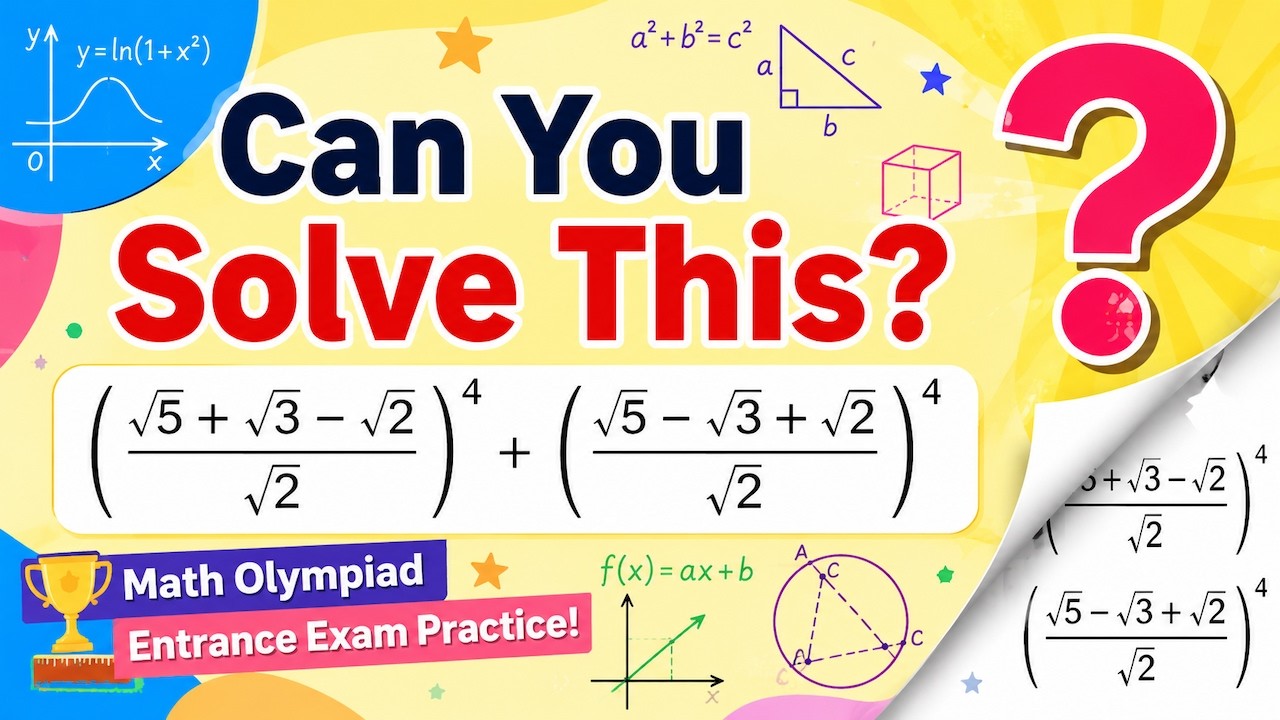
A Brutal Radical Expression Made Easy! The Shortcut Changes Everything.
tamoshop
112 views•2026-06-02

V : jee main /advance class 11 mathematics : Binomial Theorem class-1 ( 29 may 2026 )
dcamclassesiitjeemainsadva9953
125 views•2026-05-29

Is This Pentomino Tileable?
3cycle
241 views•2026-05-30
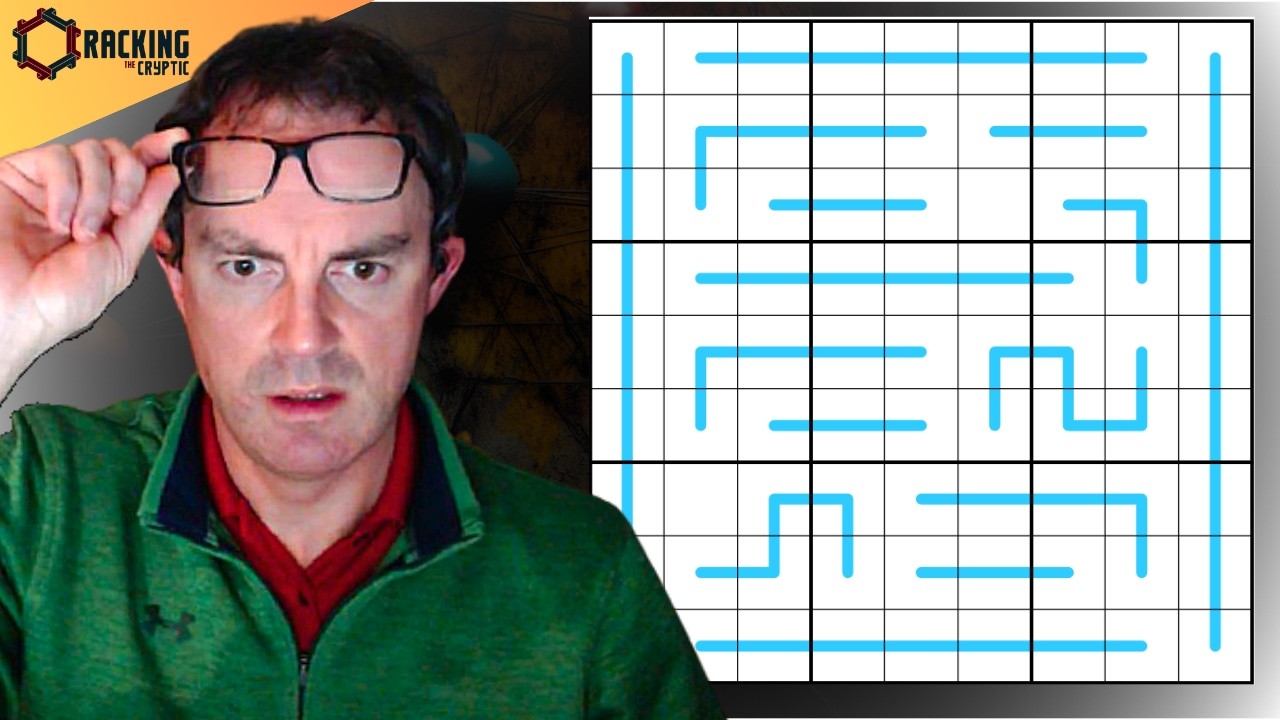
This Sudoku Has Many Lines!!
CrackingTheCryptic
2K views•2026-05-29

Olympiad Mathematics | Indian Can You Solve This One?
PhilCoolMath
268 views•2026-06-02
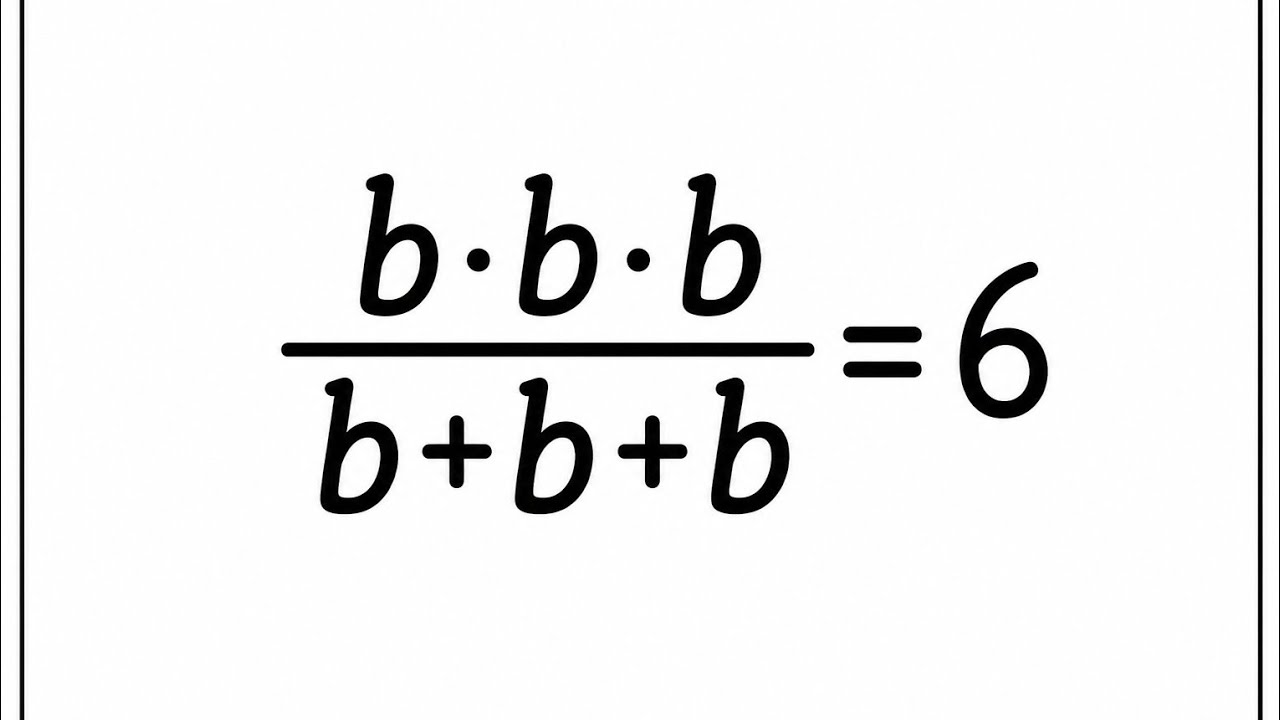
Olympiad Mathematics | Indian | Can You Solve This?
PhilCoolMath
669 views•2026-06-02



