The Kepler Space Telescope revolutionized exoplanet discovery by detecting brightness changes as small as 80 parts per million, verifying 1,284 new exoplanets in a single finding and suggesting 40 billion Earth-like worlds exist in our galaxy, while also detecting supernovae before they exploded.
Install our extension to search inside any video instantly.
Kepler's secret to finding impossible planets ✨ #shortsAdded:
Kepler saw Supernovi before they even exploded.
Kepler's data suggests 40 billion Earth-like worlds exist.
It verified 1,284 new exoplanets in one single finding.
Its telescope view equals your fist at arm's length.
It slowly falls millions of miles behind Earth annually.
It detects brightness changes as small as 80 parts per million.
Related Videos

Spiral Galaxy NGC 3370 from Hubble | NASA APOD 2025-11-05 #Shorts
galaxygallery
938 views•2026-05-30

SOMETHING inside the SUN is CHANGING
RaysAstrophotography
1K views•2026-06-03

Captured the Blue Moon (with a twist) 🌙✨ #space #bluemoon #telescope
realAstroExplorer
674 views•2026-06-01

There May Be A Giant Hole In The Universe... And We Might Be Inside It | The Cosmic Ledger Entry 015
TheCosmicLedger
145 views•2026-05-31

The Map We Sent to the Stars in 1977 — Why Scientists Now Regret It
TheAncientRecord7
183 views•2026-06-03

10 Planet Where a Black Hole Replaces the Sun
cosmicexplorer-EN
147 views•2026-06-02

Is this a copy of our galaxy? Discover Galaxy M81!
UniverseDocumentaries-cc4mb
995 views•2026-05-31
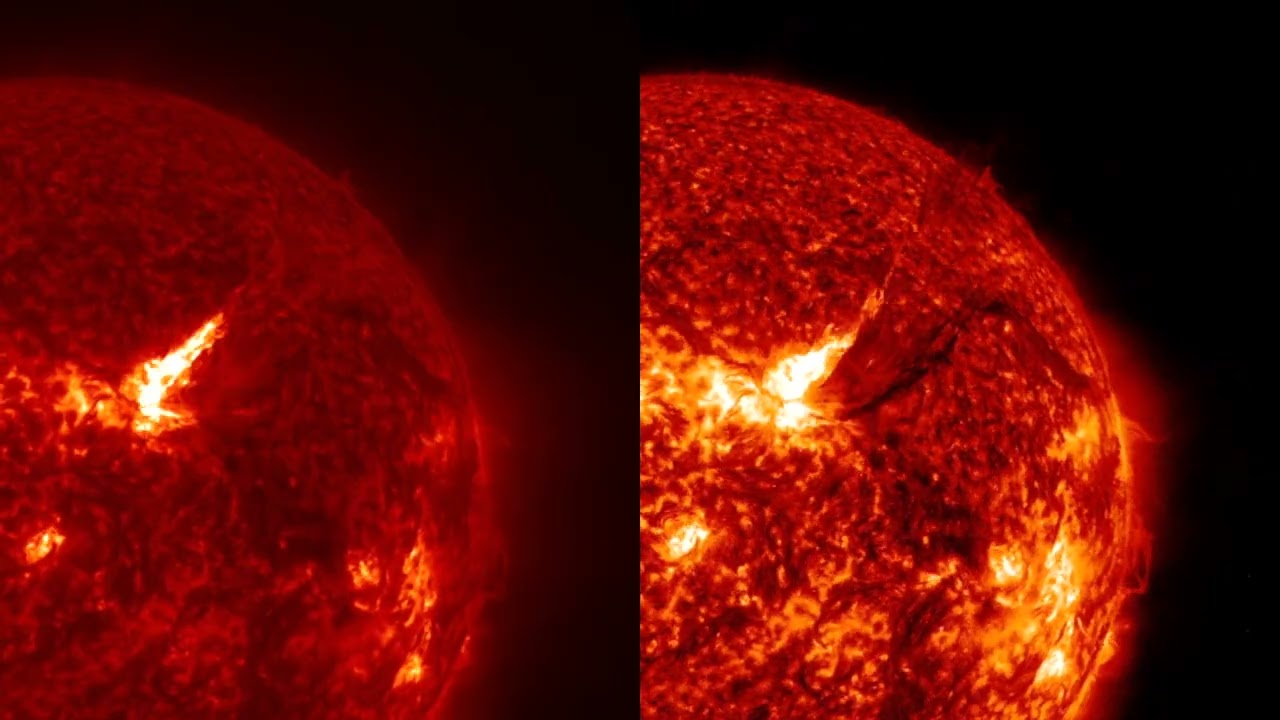
Solar Flares and CMEs at Earth - More Likely | S0 News June.3.2026
SpaceWeatherNewsS0s
2K views•2026-06-03



