SketchyCut is an AI-powered web application that converts user descriptions and reference images into laser-cut SVG files for 3D construction, using a hybrid architecture that combines semantic interpretation with deterministic parametric CAD to generate assemblable parts, assembly instructions, and 3D previews.
Install our extension to search inside any video instantly.
my submission for OpenAI Build Week 2026
Added:Have you ever thought, "Wow, that's so cool. How did they engineer that?" Or think, "I wish I could design and make something like that." Well, now you can with SketchyCut. SketchyCut turns your ideas into patterns that you can cut out so that you can assemble them together into a 3D masterpiece. You describe your idea, provide one to three reference images, and it will give you an SVG file for your laser cutter, a 3D preview of the model, and assembly instructions.
The software that exists today can turn an image into a laser cut ready 2D file, but none of them can turn your custom ideas into assemblable parts. I'm Early Spark, and I built SketchyCut with Codex and GPT 5.6 for Open AI's Build Week.
Let's dive into how SketchyCut was built, what challenges SketchyCut had to overcome, and what's planned for the future. I used Codex throughout the entire project from planning to design to execution. For the brainstorming and planning phase, I used GPT 5.6 Soul Ultra. I needed Soul to understand the user's description of an object, but I also needed a deterministic system to turn the idea into math so that in the physical space, the construction was sound. Soul is exceptionally good at translating word problems into equations, finding mistakes in mathematical reasoning, and visual reasoning. I leveraged those features to build out a hybrid architecture that pairs semantic interpretation with a deterministic parametric CAD and fabrication engine. This was a very hard challenge, and I had Codex look at existing software that solves similar problems and science papers to research the problem space so that I'm learning from past lessons and not starting from scratch. It came back with a few suggestions, but this problem has not been completely solved yet. There's software out there that turns images into SVG files for laser cutting and engraving, but I wanted something that could not only convert into SVG files, but reverse engineer a 3D structure so that it can be assembled into a 3D object. I also used GPT 5.6 Soul Extra High for the coding execution. I used other GPT 5.6 models to ask questions about the code, about 5.6's capabilities, and come up with prompts for goals that I could use to feed back into Codex to complete milestones overnight. The biggest challenge I faced was, "How do I design this without it becoming overfit to existing examples, or have the whole system be a series of heuristics?" To mitigate for that risk, I did a few things. First, I modeled designs as reusable semantic bodies, interfaces, and requirements. Second, I built a registry of general-purpose parametric construction operators that generate geometry from constraints instead of selecting fixed templates.
Third, I tested those operators against hidden and deliberately off-family examples. So, a feature only passed if it generalized beyond the examples it was built around. When this hackathon project was submitted, I was still trying to solve for how to expand the construction vocabulary without sacrificing generality, deterministic correctness, or fabrication reliability.
And I will continue to push to see how far I can get with that. As of this recording, I'm able to provide a description and one to three reference images to Sketchy Cut, and it will normalize those inputs, making API call to OpenAI to translate them into structured semantic intent, then pass that intent into a deterministic parametric CAD pipeline that calculates the construction, validates the geometry and motion, and generates a consistent 3D preview, parts layout, bill of materials, assembly instructions, and laser-cut SVG package. The project is on my GitHub, and you can see the example on access to try out the full experience for themselves. Thank you.
Related Videos
6:13
Computer Science
TOP 15 Data compression Interview Questions and Answers 2019 Part-2 | Data compression | Wisdom jobs
wisdomjobs
281 views•2019-06-28

27:51
Computer Science
CTS 158: 802.11w Management Frame Protection
ClearToSend
4K views•2019-02-04
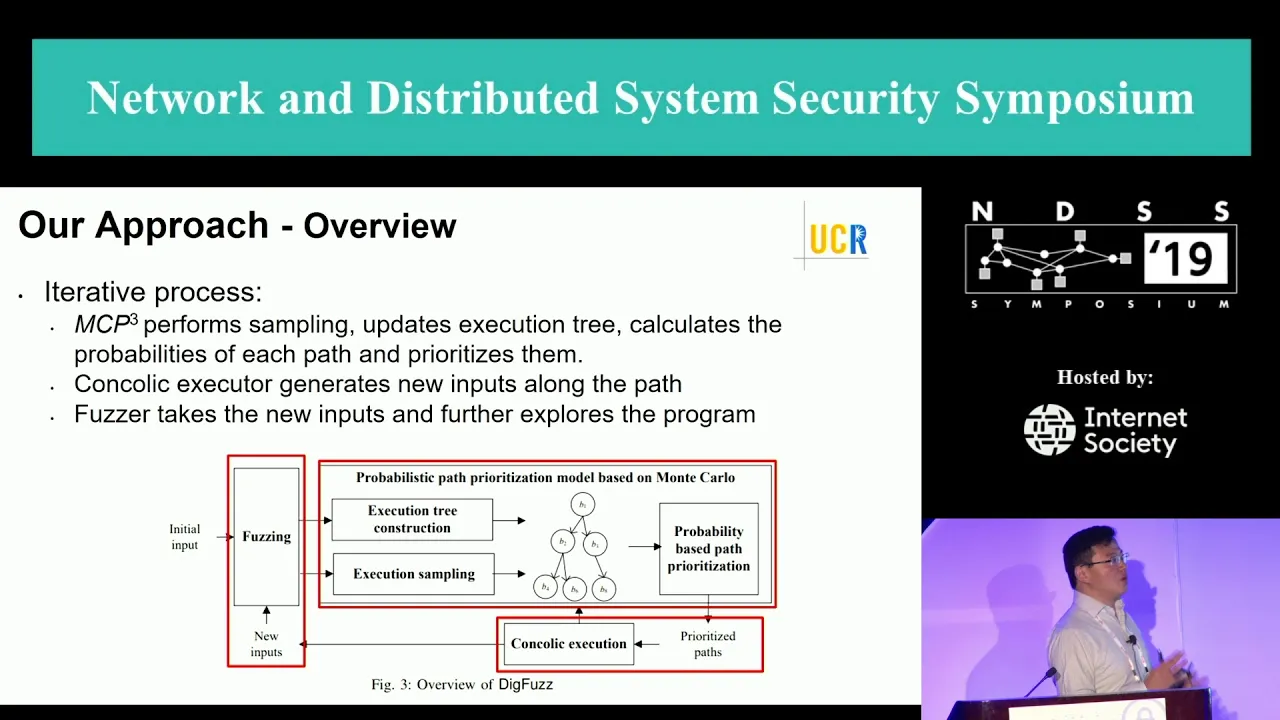
23:21
Computer Science
NDSS 2019 Send Hardest Problems My Way: Probabilistic Path Prioritization for Hybrid Fuzzing
NDSSSymposium
496 views•2019-04-02
12:48
Computer Science
How realistic is Cities: Skylines?
CityBeautiful
159K views•2019-02-14

46:39
Computer Science
GUIs & TUIs: Choosing a User Interface for Your Python Project | Real Python Podcast
realpython
2K views•2025-04-04

25:15
Computer Science
The OSI Model - Explained by Example
hnasr
225K views•2019-05-12
1:10:47
Computer Science
Cloud Computing - Introduction
elithecomputerguy
98K views•2019-10-07

2:24
Computer Science
From Traveler's Dilemma to Dynamic Routing | Demystifying Networking
IITBombayJuly
5K views•2019-08-04
Trending

13:38
Law
WOW! Judge TURNS THE TABLES on Trump in His OWN $10B LAWSUIT!!!
MeidasTouch
197K views•2026-07-23

13:25
Business
Playstation NO DISC/NO BUY Fight Is Over...
DavidJaffeGames
4K views•2026-07-23

22:40
Business
Steam and Xbox Just Dropped The Hammer On PlayStation
OhNoItsAlexx
9K views•2026-07-23

16:52
Anthropology
Americans Confused in Australia for 17 Minutes Straight
IWrocker
17K views•2026-07-23