This video presents a curated selection of trending open-source GitHub projects that enhance developer productivity, including PostHog for product analytics, Reflect for local-first markdown notes, Headroom for AI context compression, Blume for documentation generation, and Ant for lightweight JavaScript runtime, along with tools like herdr for managing multiple AI coding agents and Stitch Design Skills for UI design assistance.
Install our extension to search inside any video instantly.
Top Open-Source GitHub Projects : PostHog, Reflect, herdr, Blume, Headroom & Ant
Added:Every week, developers release new open-source projects on GitHub, and this is our weekly GitHub project update video that rounds them up for you. Top trending open source GitHub projects.
This week, you'll discover useful and trending developer tools from local first apps to AI coding agents. Without wasting time, let's get started.
>> Before we jump into today's project updates, here's a quick announcement for everyone. We've launched a brand new YouTube channel called AI Agent Studio dedicated entirely to AI Agent projects, tutorials, and tools. So, if you're interested in staying up to date with the latest AI Agent open source projects, learning how to build your own agents, or exploring cuttingedge agent frameworks, make sure to check it out.
Subscribe now to get weekly videos, in-depth guides, and realtime project breakdowns. The link is right there in the description. Don't miss it. All right, let's get into today's video.
>> Project number one, Apache AI vendor neutral semantic model standard for analytics and AI. Apache AI is an open-source specification that standardizes how semantic models move between data analytics, AI and BI tools.
It defines one JSON and YAML based format that any tool can read and write.
So a KPI means the same thing everywhere. The repository holds the core spec, a machine readable schema, validation tooling, example models like TPCDS and reference converters for DBT, good data, Polaris, and Salesforce. This gives data teams a single source of truth and helps AI agents work from consistent business logic. Explore the spec and align your semantic data.
Project number two, Postthog, open-source all-in-one product analytics and developer platform. Hostto Hog is an all-in-one open-source platform that gives developers the tools to understand and improve their products. It combines product analytics, web analytics, session replay, feature flags, experiments, error tracking, surveys, a data warehouse, data pipelines, and LLM analytics in one stack. You connect it through a JavaScript snippet, an SDK, or the API with libraries for React, Next, JS, Python, Node, iOS, Android, and more. It runs on Post Hog cloud or self-hosts with Docker, keeping usage and customer data together. Add it to your product and start learning from real users. Project number three, Awesome LLM apps. Ready to run templates for AI agents in RIG. Awesome LLM apps is an open-source collection of readyto-un templates for building AI agents and rag applications. It gives developers self-contained example projects with full source code organized into categories like starter agents, multi-agent teams, voice agents, MCP agents, retrieval pipelines, memory, and fine-tuning. Each template is provider agnostic, so you switch between Claude, Gemini, GPT, Llama, Quen, and XAI with a config change. Most projects use Python and run in a few commands after cloning.
It matters for anyone learning to ship real LLM apps. Fork a template and build on it. Project number four, GitHub Copilot CLI SDKs. Embed C-pilot agent workflows into your apps. GitHub Copilot SDK is a multiplatform toolkit that lets developers embed Copilot's Agentic workflows directly into their own apps and services. It exposes the same agent engine behind Copilot CLI. So you define agent behavior while Copilot handles planning, tool calls, and file edits. It ships for Python, TypeScript, Go.NET, Java, and Rust. And each SDK talks to the Copilot CLI running in server mode over JSON RPC while managing that process for you. It supports custom agents, skills, tools, MCP, and bring your own key for outside model providers. Install it and give your app an agent. Project number five, Stitch Design Skills. Agent Skills for UI design with Stitch. Stitch Agent Skills is an open- source library of agent skills that plug into the Stitch MCP server to help AI coding agents design interfaces. Each skill follows the agent skills open standard. So, it works with agents like Gemini CLI, claude code, cursor, and anti-gravity. You install skills with the skills CLI, which detects your active agent and places them in the right folder. The skills enhance prompts, build design systems, generate highfidelity screens, and turn stitch designs into React or Shad UI components. This speeds up UI work for developers and designers. Add a skill and design with your agent. Project number six, Impeccable design guidance that sharpens AI coding agents.
Impeccable is an open-source design skill that makes AI coding agents better at front-end design. It installs into tools like Claude Code, Cursor, Gemini CLI, Codeex, and GitHub Copilot, giving your agent a shared design vocabulary through commands like polish, audit, critique, animate, and distill. A setup step writes product.m and design. MB, so every command understands your audience, brand, colors, and type. A standalone CLI and browser extension. Run 46 deterministic rules with no LLM or API key. catching common AI design tells like purple gradients, overused fonts, and nested cards. Install it and sharpen your AI built interfaces. Project number seven, Herder Terminal Multiplexer to run all your coding agents. Herder terminal multipplexer for AI coding agents. It lets developers run every agent in one terminal and see which is blocked, working, done, or idle in a live sidebar. Each agent gets its own real terminal, so full screen TUIs render, right, and you split panes into workspaces and tabs by mouse. A background server keeps agents alive when you detach, so you reattach from another terminal or your phone over SSH.
It's one lightweight Rust binary for Linux and Mac OS and detects agents like clawed code and codecs out of the box.
Install it and herd your agents. Project number eight, Git Push, No Mistakes, a Git proxy that gets pushes with AI. No Mistakes is an open- source command line tool that puts a local git proxy in front of your real remote. Instead of pushing to origin, you push to no mistakes, which runs an AIdriven pipeline in a disposable work tree that reviews, tests, and lints your branch.
Only after every check passes does it forward to your real target and open a clean pull request. Safe fixes apply automatically while anything touching your intent stops for you to approve, fix, or skip. It works with agents like Claude, Codeex, and Copilot across Mac OS, Linux, and Windows. Push through the gate for cleaner PRs. The project number nine, Reflect local first notes with linked thinking and private AI. Reflect is an open-source note-taking app that keeps your notes as plain markdown files in a folder you choose. It opens to today's note and typing Bulka links, people, and projects into a personal graph. Search runs on your machine, including optional semantic search, and you can ask questions with your own open AI, anthropic, or Google key with answers that site your notes. Marking a note private keeps it out of any AI or online service. Enforced in code built on tar. Nothing leaves your Mac unless you connect a provider or get remote.
Download it and start writing. Project number 10, Docker Rollout. Zero downtime deployment for Docker Composed Services.
Docker- rollout is a Docker CLI plugin that deploys Docker Compose services without downtime. Instead of running Docker Compose up on a service, you run Docker Rollout and it scales that service to twice its current instances, waits for the new containers to become ready, then removes the old ones. It supports Docker health checks out of the box. A proxy like Trafic or Engine Max proxy routes traffic and a pre-top hook can drain old containers so no requests are lost. This suits teams running a single server compose setup without needing Kubernetes. Drop it into your deploy step and update without downtime.
Project number 11, Gruck Build. XAI's terminal-based AI coding agent and TUI.
Gruck Build is XAI's terminal-based AI coding agent distributed as the GRC command. It runs as a full screen TUI that understands your codebase, edits files, runs shell commands, searches the web, and manages longrunning tasks. You can use it interactively, run it headlessly for CI or embedded in editors through the agent client protocol.
Written in Rust, it ships as a pre-built binary for Mac OS, Linux, and Windows.
And it's extensible through MCP servers, skills, plugins, and hooks. It matters for developers who want an agent that lives in the terminal they already use.
Install it and start building. Project number 12, AOL, open-source web format for interactive stateful animation. AOL is an open-source webonly format and runtime for interactive looping animation. Instead of seeking a video file at every scene, it encodes independently decodable motion units and a small deterministic state graph into a single pot of L asset. So the browser plays a loop that never stalls. Hover focus application state and reversals become routes through that graph rather than handtime seeks with frame accurate transitions and packed alpha transparency. You author assets with a compiler CLI and embed them through an epo facer element. It's an early technical preview for web developers building richer motion. Try the playground and watch it loop. Project number 13. Roxley open-source native Mac OS HTTP debugging proxy. Roxley is an open-source native Mac OS HTTP debugging proxy that lets developers intercept, inspect, and modify network traffic. It captures HTTP, HTTPS, websocket, and GraphQL requests from any Mac app, command line tool, or iOS device, decrypting HTTPS through a root certificate it generates on first launch and seals in your keychain. You can set break points, replay requests, mock responses with map local and map remote rules, throttle the network, and compare responses. A built-in local MCP server exposes captured traffic to clawed desktop or cursor. It's a local first alternative to Proxy Man and Charles.
Build it from source and debug your APIs. Project number 14. What cable menu bar app that decodes your USBC cables.
What cable is a Mac OS menu bar app that tells you in plain English what each USBC cable plugged into your Mac can do.
USBC connectors look identical, but range from charge only cables to Thunderbolt ones. So, what cable reads the details Mac OS already exposes through IOKIT and shows them in a popover. For each port, it gives a headline, a charging diagnostic that explains why power might be slow, the cable speed and wattage, the charger's voltage profiles, and the connected device. It uses only public IOKIT services and runs on Mac OS 14 and later. Download it and check your cables. White project number 15. Bloom zero config AI ready doc sites from Markdown. Bloom is an open- source documentation tool that turns a folder of markdown or MDX into a production-grade doc site. You drop your content in, run Bloom Dev, and get navigation, search, theming, open graph images, and a component library with no boilerplate. It generates and drives a hidden Astro project. And Bloom Eject hands you a standalone Astro app when you want full control. Search runs locally, and it's AI ready with LMS. txt raw markdown URLs, an optional Ask AI assistant, and a hosted MCP server so coding agents can read your docs, run Bloom in it, and document what you ship.
Project number 16, Headroom, local first context compression layer for AI agents.
Headroom is an open-source context compression layer for AI agents. It compresses everything an agent reads, tool outputs, logs, files, rag chunks, and conversation history before it reaches the LLM, keeping answers intact while cutting most of the tokens. You can use it as a Python or TypeScript library, a local proxy with no code changes, a one-comand wrapper around agents like clawed code, codeex, and cursor, or an MCP server. It runs locally. Your data stays on your machine and its compression is reversible.
Caching originals the model can fetch on demand. Install it and shrink your agents context. Project number 17. Pixel art fixer. Convert fake pixel art into true grid aligned pixels. Pixel art fixer is an open- source tool that converts fake pixel art into real grid aligned pixel art. Images from generators, upscalers, and lossy pipelines often look like pixel art, but sit off-rid, blurred, and oversized.
Using only classical image processing with no model, it recovers the pixel grid and rebuilds each cell as one true pixel at its native resolution. Several independent detectors vote on the grid with arbitration for hard cases like non- integer cells, warped grids, and JPEG artifacts. It ships as a Python reference and a dependency-free Rust binary. Run it and get clean pixels back. Project number 18, Anti, a tiny fast JavaScript runtime built from scratch. Ant is a lightweight open- source JavaScript runtime built from scratch. Its engine called ants silver is handwritten rather than a wrapper around V8 or other engines and its JIT compiler is based on a fork of Mipper to reach near compiled speed. The whole runtime ships as a binary of around 9 megabytes with a cold start near 5 milliseconds. That makes it a fit for serverless functions, edge computing, embedded systems, and CLI tools. It targets the Winter TC minimum common API for serverside JavaScript. So standard code runs as expected. Install it and run your JavaScript lean wand fullon.
Project number 19, Writer Local First Desktop Markdown Editor for your notes.
Writer is a local first desktop Markdown Editor for folders of plain text notes, docs, and personal wiks. It keeps documents on disk as plain files. So your writing stays yours and works with any other tool. Built with Tari, React, and Rust. It opens multiple windows, respects each workspaces. Getit ignore rules, and renders extended markdown, including tables and mermaid diagrams.
It runs as a native desktop app rather than a web wrapper with a signed and notorized Mac OS build. This suits writers and notetakers who want a fast file-based editor they control. Point it at a folder and start writing. Project number 20, plugins. example plugins that extend OpenAI's codeex coding agent.
Plugins is OpenAI's repository of example plugins for Codeex, its coding agent. Each plug-in sits in its own folder with a required manifest and optional pieces like skills, commands, agents, hooks, and MCP or app definitions showing how to extend codecs with capabilities. The collection includes ready-made bundles for Figma design work, notion planning and research, building iOS, Mac OS and web apps, Expo and React Native projects and services like Netlefi and Google Slides.
Developers can study these examples to learn the plug-in format and adapt them for their own tools. Browse the plugins and build your own for codecs. Thanks for watching. See you in the next update.
Related Videos
6:13
Computer Science
TOP 15 Data compression Interview Questions and Answers 2019 Part-2 | Data compression | Wisdom jobs
wisdomjobs
281 views•2019-06-28

27:51
Computer Science
CTS 158: 802.11w Management Frame Protection
ClearToSend
4K views•2019-02-04
23:21
Computer Science
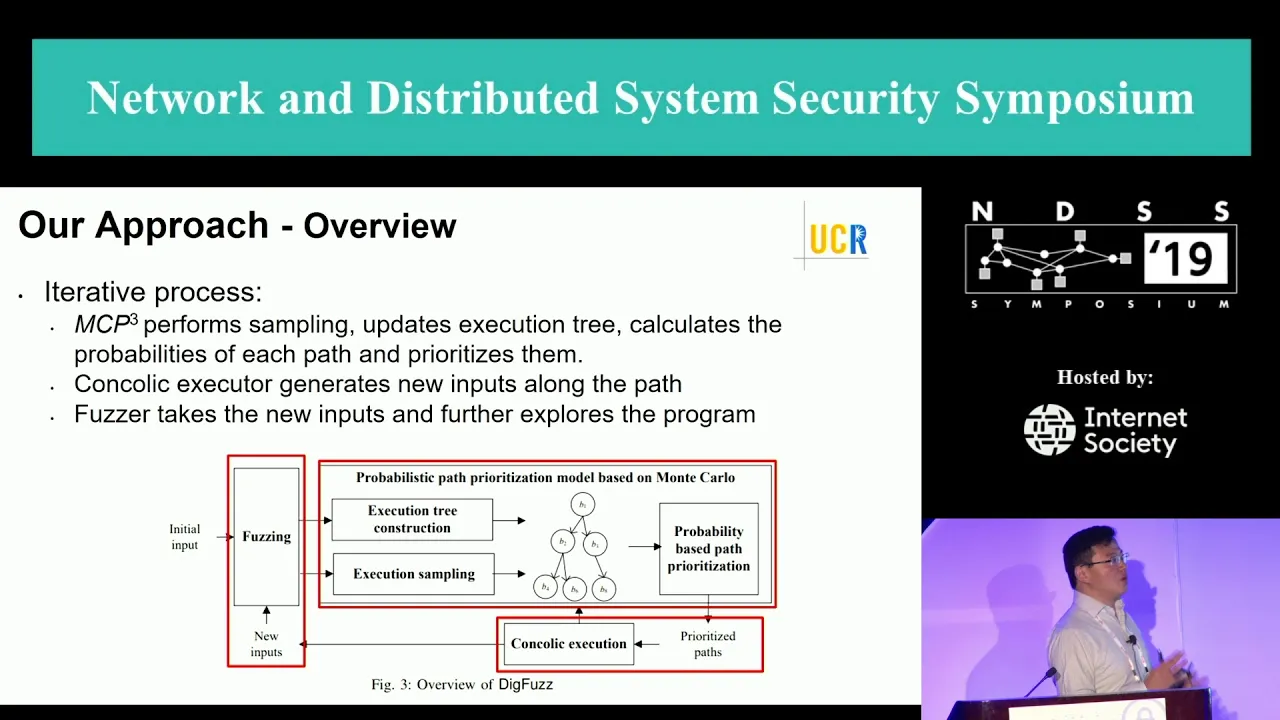
NDSS 2019 Send Hardest Problems My Way: Probabilistic Path Prioritization for Hybrid Fuzzing
NDSSSymposium
496 views•2019-04-02

12:48
Computer Science
How realistic is Cities: Skylines?
CityBeautiful
159K views•2019-02-14

46:39
Computer Science
GUIs & TUIs: Choosing a User Interface for Your Python Project | Real Python Podcast
realpython
2K views•2025-04-04

25:15
Computer Science
The OSI Model - Explained by Example
hnasr
225K views•2019-05-12
1:10:47
Computer Science
Cloud Computing - Introduction
elithecomputerguy
98K views•2019-10-07

2:24
Computer Science
From Traveler's Dilemma to Dynamic Routing | Demystifying Networking
IITBombayJuly
5K views•2019-08-04
Trending

13:38
Law
WOW! Judge TURNS THE TABLES on Trump in His OWN $10B LAWSUIT!!!
MeidasTouch
197K views•2026-07-23

13:25
Business
Playstation NO DISC/NO BUY Fight Is Over...
DavidJaffeGames
4K views•2026-07-23

22:40
Business
Steam and Xbox Just Dropped The Hammer On PlayStation
OhNoItsAlexx
9K views•2026-07-23

16:52
Anthropology
Americans Confused in Australia for 17 Minutes Straight
IWrocker
17K views•2026-07-23