This video frames elementary arithmetic as a profound intellectual trap to flatter the ego of anyone who remembers middle school. It is a classic example of engagement farming that prioritizes clickbait over genuine mathematical depth.
Not foundCounterpoint
PEMDAS represents a universal mathematical convention for expression evaluation with no substantive opposing theory or alternative framework in the field; variants like BODMAS are functionally identical.
90% of People Get Fooled By This Math Question! Can YOU Get It Right?
Added:Hi friends, welcome to turbomath channel.
In this video we are going to solve three questions about PEMDAS rule.
In the first question we have 16 divided by 8 times open parentheses 8 divided by 1 over 8 close parentheses then plus 9 to the power of 2.
What is the answer of this question? We have division, multiplication, parentheses, addition, and exponent.
To solve this question, we need to follow the order of operations which is PEMDAS.
PEMDAS shows the priority of the mathematical operations and if you don't pay attention to the PEMDAS rule, you get the wrong answer. In the PEMDAS rule, P stands for parentheses, E stands for exponents, M stands for multiplication, D stands for division, A stands for addition, and S stands for subtraction.
Multiplication and division have the same level of priority. Also, addition and subtraction have the same level of priority and when we have both in an expression, we start from the left and simplify the question.
Okay guys, according to the PEMDAS rule, first we simplify these parentheses. To solve these parentheses, we need to follow the KCF rule.
In the KCF rule, K stands for keep, C stands for change, and F stands for flip.
We keep the first number as it is then we change the sign and after that we flip this fraction.
Now we have 8 times 8 inside these parentheses. The question is 16 divided by 8 times open parentheses 8 times 8 close parentheses then plus 9 to the power of 2.
We have division, multiplication, parentheses, addition, and exponent.
Again, according to the PEMDAS rule, first we simplify these parentheses. 8 times 8 equals 64.
Now we have 16 divided by 8 times 64 then plus 9 to the power of 2.
We have division, multiplication, addition, and exponent.
In this step, we simplify this exponent.
9 to the power of 2 equals 81. Now, we have 16 / 8 * 64 + 81.
We have division, multiplication, and addition. In this step, we simplify this division. 16 / 8 = 2. Now, we have 2 * 64 then plus 81.
We have multiplication and addition.
According to the PEMDAS rule, multiplication has higher priority than addition. So, first we simplify this multiplication.
2 * 64 = 128.
Now, we have 128 + 81.
128 + 81 = 209.
The final answer of this question equals 209.
Okay, guys. Let's solve another question about PEMDAS rule.
1 over 5 to the power of 2 divided by open parentheses 4 minus 4 over 5 close parentheses.
What is the answer of this question? We have exponent, division, parentheses, and subtraction.
To solve this question, we need to follow the PEMDAS rule.
PEMDAS shows the priority of the mathematical operations.
If you want to get the right answer of this question, you must follow the PEMDAS rule. In the PEMDAS rule, P stands for parentheses, E stands for exponents, M stands for multiplication, D stands for division, A stands for addition, and S stands for subtraction.
Multiplication and division have the same level of priority. Also, addition and subtraction have the same level of priority. And when we have both in an expression, we start from the left and simplify the question.
According to the PEMDAS rule, first we simplify these parentheses. We have 4 - 4 over 5. Since the denominator of this fraction is 5, we can write 4 as 20 over 5.
We have 20 over 5 - 4 over 5 inside these parentheses. The question is 1 over 5 to the power of 2 divided by open parentheses 20 over 5 - 4 over 5 close parentheses.
Now, [snorts] we have exponents, division, and parentheses. In this step, according to the PEMDAS rule again, we simplify these parentheses. 20 over 5 - 4 over 5 equals 16 over 5.
Now, we have 1 over 5 to the power of 2 divided by 16 over 5. In this step, we simplify this exponent. 1 over 5 to the power of 2 equals 1 over 25. Now, we have 1 over 25 divided by 16 over 5.
To solve this part, we need to follow the KCF rule. In the KCF rule, K stands for keep, C stands for change, and F stands for flip.
We keep the first fraction as it is.
After that, we change the division sign to the multiplication sign. And after that, we flip this fraction.
Now, we have 1 over 25 * 5 over 16.
5 / 5 = 1. And 25 / 5 = 5. Now, we have 1 over 5 * 1 over 16. 1 * 1 = 1. And 5 * 16 = 80.
The final answer of this question equals 1 over 80. Okay, guys. Let's solve another question about PEMDAS rule.
10 to the power of 2 minus open parentheses 97 / 2 * 12 close parentheses then times 12.
What is the answer of this question? In this question, we have exponents, subtraction, parentheses, division, and multiplication.
Again, to solve this question, we need to follow the order of operations, which is PEMDAS.
PEMDAS shows the priority of the mathematical operations, and if you don't pay attention to the PEMDAS rule, you get the wrong answer.
In the PEMDAS rule, P stands for parentheses, E stands for exponent, M stands for multiplication, D stands for division, A stands for addition, and S stands for subtraction.
Multiplication and division have the same level of priority. Also, addition and subtraction have the same level of priority, and when we have both in an expression, we start from the left and simplify the question. Okay, guys.
According to the PEMDAS rule, first, we simplify this parentheses.
We have division and multiplication in this parentheses. Because multiplication and division have the same level of priority, we start from the left and simplify the question. 97 / 2 = 48.5.
Now, we have 48.5 * 12 inside this parentheses.
The question is 10 ^ 2 - (48.5 * 12) * 12. We have exponents, subtraction, parentheses, and multiplication.
Again, according to the PEMDAS rule, first, we simplify this parentheses.
48.5 * 12 = 582.
Now, we have 10 ^ 2 - 582, then * 12. We have exponents, subtraction, and multiplication.
According to the PEMDAS rule, in this step, we simplify this exponent. 10 ^ 2 = 100. Now, we have 100 - 582, then * 12. We have subtraction and multiplication.
According to the PEMDAS rule, multiplication has higher priority than subtraction. So, first we simplify this multiplication.
-582 * 12 = -6,984.
Now we have 100 6,984.
100 - 6,984 = -6,000 884.
The final answer of this question equals -6,884.
Thanks for watching, guys. Please subscribe to the channel and leave a comment. Goodbye.
Related Videos

Solving a 'Harvard' University entrance exam question
AsadInternationalAcademy
125 views•2026-06-14
Algorithms for Generalized Signed Distance and Winding Numbers (PhD thesis)
NicoleZFeng
269 views•2026-06-15

SUPER B - WAP vs WBPS
gravitylive7425
171 views•2026-06-20

Notes 6.3 Rectangle, Rhombus, Square
matthewmills6952
1K views•2026-06-18

Does the math actually hold up? Let's break down the logic.
rawXopinion
1K views•2026-06-15

NYT Hard Sudoku Walkthrough | June 17, 2026
Rangsk
2K views•2026-06-17
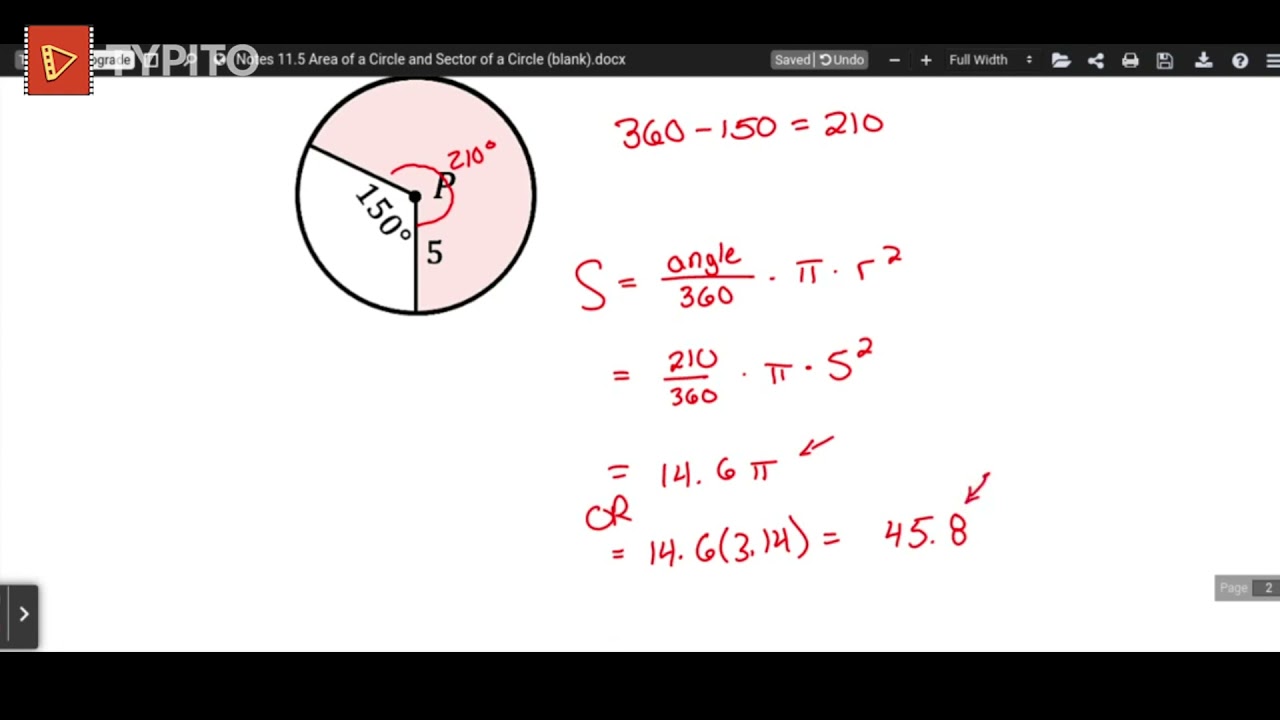
Notes 11.5 Area of a Circle and Sector of a Circle
matthewmills6952
251 views•2026-06-18

Notes 4.2 Isosceles and Equilateral Triangles
matthewmills6952
444 views•2026-06-18



