The 2026 rescue mission of the Neil Gehrels Swift Observatory using Northrop Grumman's Pegasus XL rocket and Catalyst Space Technologies' Links robotic servicing spacecraft demonstrates how orbital maintenance technology can extend the operational life of aging space assets, representing a shift from disposable space culture to sustainable space asset management.
Install our extension to search inside any video instantly.
Final Pegasus Rocket Launches Bold Mission to Save Falling Swift Observatory
Added:For decades, the Neil Gehrels Swift Observatory has been our primary sentinel in the dark, capturing the most violent and fleeting explosions in the universe, known as gamma-ray bursts. However, even the most legendary explorers are subject to the laws of physics, and as 2026 began, NASA faced a heartbreaking reality. Swift's orbit was decaying rapidly. Gravity was winning the tug-of-war, dragging the billion-dollar telescope toward a fiery end in Earth's atmosphere.
Without a miracle, one of our greatest scientific tools would be lost forever, leaving a massive hole in our understanding of the high-energy cosmos.
The solution came in the form of a high-stakes rescue mission that combined vintage aerospace engineering with cutting-edge private technology.
Northrop Grumman's Pegasus XL rocket, a legend in its own right, was called up for one final, historic duty. Unlike traditional rockets that roar off a launchpad, the Pegasus is an air-launched vehicle, carried to the edge of space by a modified Lockheed L-1011 TriStar aircraft known as Stargazer. This mission wasn't just a rescue, it was the swan song for the Pegasus program, marking the 46th and final flight of a rocket that revolutionized how we access orbit. Early on the morning of July 3rd, 2026, the Stargazer took off from the remote Kwajalein Atoll in the Marshall Islands. Thousands of miles away, the Swift Observatory was drifting dangerously low. The tension in mission control was palpable as the aircraft reached its release altitude of 39,000 ft. At precisely 4:36 a.m. EDT, the command was given, and the Pegasus XL was dropped into freefall. 5 seconds later, its first stage motor ignited, a streak of fire against the Pacific sky, beginning the climb to save a dying mission.
Tucked inside the nose cone of the Pegasus was the true hero of the day, the Links servicing spacecraft, developed by the innovators at Catalyst Space Technologies. Links is a robotic space tug designed for the sole purpose of orbital maintenance. This wasn't a standard deployment. The Links had to perform a delicate autonomous dance in the vacuum of space to rendezvous with an aging observatory that was never designed to be docked with. The precision required was staggering as any minor miscalculation could result in a collision that would destroy both spacecraft. Once the Pegasus reached the target altitude, the Links spacecraft separated and began its journey to intercept Swift.
Using advanced sensors and computer vision, it approached the observatory with surgical precision. The mission objective was a boost, a maneuver where Links would latch onto the telescope and use its own high efficiency thrusters to push the observatory into a much higher, more stable orbit. This maneuver effectively added years of operational life to Swift, ensuring that it could continue to monitor the universe for black hole bursts and neutron star collisions.
The success of this mission represents a massive shift in how we manage space assets. Instead of letting aging satellites burn up and become space debris, we are entering the era of the orbital mechanic. By successfully docking and boosting Swift, NASA and its partners have proven that we can extend the life of our most valuable scientific instruments indefinitely. It marks a transition from a disposable space culture to one of sustainability and repair, saving taxpayers billions of dollars in replacement costs. As the Links spacecraft successfully finished its burn and secured Swift in its new home, the team at Northrop Grumman also took a moment to reflect on the end of an era. The Pegasus XL rocket, which first flew in 1990, has officially retired on a high note. It provided the world with a unique, flexible way to reach space, and its final act was one of preservation rather than just placement. The Stargazer aircraft will return to its hanger, but its legacy, and the legacy of the Pegasus, lives on in the data still streaming back to Earth from the now safe Swift observatory. With Swift now out of the danger zone, the scientific community can breathe a sigh of relief. The observatory is back to work, scanning the heavens for the next great discovery. This rescue is a testament to human ingenuity, proving that when we combine the reliable workhorses of the past with the bold startups of the future, there is no problem in orbit we can't solve.
The high-stakes gamble paid off, and the sentinel of the stars will continue its watch for years to come.
Related Videos

1:08:04
Robotics
Setting up a curved screen with Immersive Calibration Pro 4 and multiple cameras (P3D v4)
FlyerOneZero
23K views•2019-07-21

1:01:27
Robotics
Robot Learning with Sparsity and Scarcity
allenai
379 views•2025-10-14

1:01:42
Robotics
Jorge Mendez-Mendez: Unlocking Lifelong Robot Learning With Modularity (2023-10-05)
umassmlfl
237 views•2024-01-06

2:16
Robotics
Northwestern’s MS in Robotics: Student Robotics Projects, 2023
NorthwesternEngineering
1K views•2024-05-31

11:14
Robotics
"Perfect" Turns: Turning by the Gyro - FIRST LEGO League (FLL) SPIKE Prime + EV3 RePlay Programming
ZacharyTrautwein
94K views•2020-10-02
1:01
Robotics
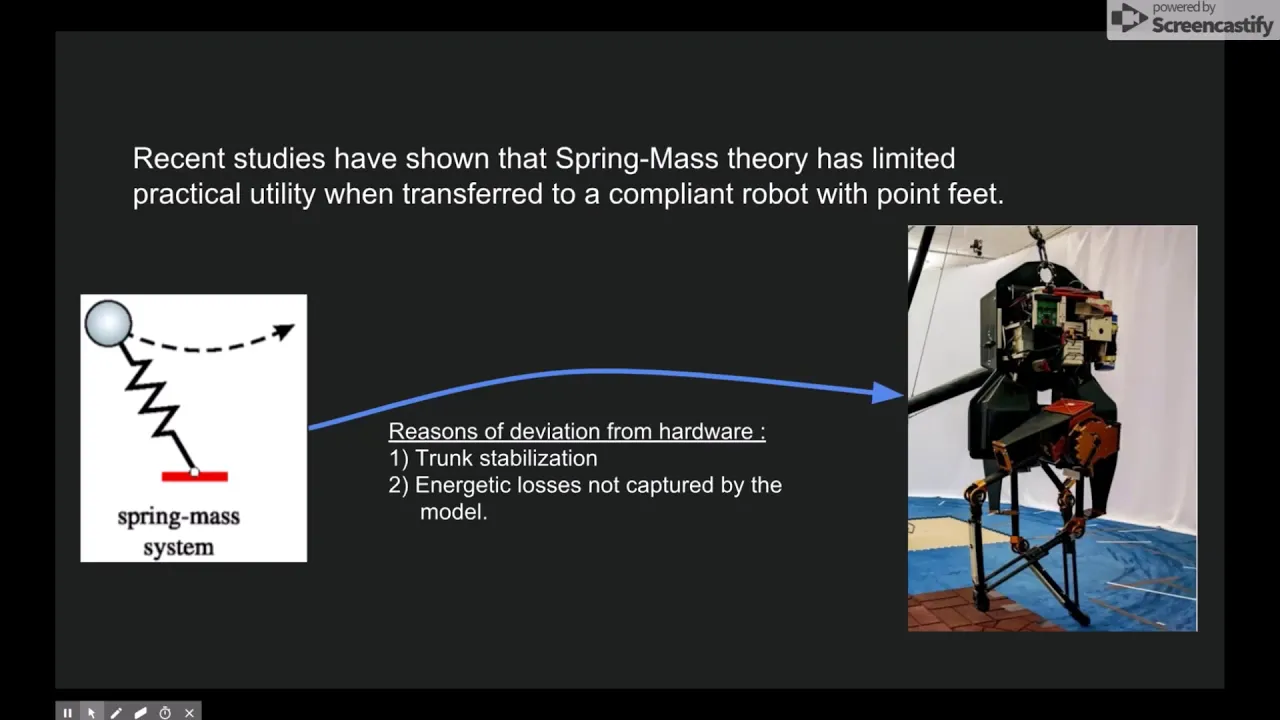
Gorkem Secer: TSLIP-based Deadbeat Running Control of Bipedal Robot ATRIAS
DynamicWalking-wv6qm
298 views•2018-06-22

4:10
Robotics
Self-Driving Cars Need Lessons On Human Drivers | Maddie About Science
skunkbear
26K views•2018-08-21

3:12
Robotics
Milrem Robotics’ THeMIS UGVs used in a live-fire manned-unmanned teaming exercise
MilremRobotics
99K views•2021-05-20
Trending
32:49
Engineering
we're almost finished the house (ep.125)
JennaPhipps
347K views•2026-07-22

21:29
Astronomy
We Finally Know Where Saturn’s Rings Came From
astrumspace
79K views•2026-07-22

12:13
Business
BIG BET: Cathie Wood goes ALL IN on Elon Musk
FoxBusiness
89K views•2026-07-22

13:55
History
MIC DROP: Smithsonian Director Called Out For Woke Propaganda
TheAmalaEkpunobi
37K views•2026-07-23