This is a masterclass in methodical hydrometallurgy that elevates scrap recovery into a disciplined chemical art form. It perfectly balances practical accessibility with the rigorous precision required for high-purity refining.
Install our extension to search inside any video instantly.
Stock Pot 7 Part 2 GOLD Recovery
Added:Welcome back to part two of stock pot number seven recovery and refining series of videos.
And I've got a little bit more nitric acid in this uh delivery apparatus.
So, what we're going to do is put another 150 ml.
I'm going to start slowly dropping this in.
I've got this thing on a rolling boil.
So, here we go. We're going to put a little bit more nitric in here now and see what happens.
A little bit at a time cuz I don't know how this is going to react.
I don't want to just dump it in there and cause a boil over.
So, we're going to put this on time lapse now.
And then I'm just going to let it cook until we can get all the base metals dissolved out of these solids.
The goal here is to get all of the copper, the metallic copper that's in those solids dissolved out with these nitric acid boils.
And there I added about another 150 ml more nitric acid with some distilled water and I let this boil all night.
I've had the solution on boiling all night long.
And uh I can't imagine there won't be any copper in here now.
It's uh I've had about 350 ml of nitric acid in here and some distilled water. So, I'm going to pull this down off the heat now and let it cool off.
I'm going to reach down in here with a piece of filter paper and we're going to try to do a stannous test, see what we've got going on in this solution.
If anything.
Oh, yeah. You see that stain?
That means we've got some precious metals in solution.
The solution has been allowed to cool to ambient temperature.
Notice there's some orange material that's come out of solution on the side of the beaker.
Not quite sure what that is.
What we're going to do now is get the solids separated from this uh this liquid.
The liquid should be copper, a little bit of palladium, maybe traces of platinum, and traces of gold.
Even though gold does not Gold does not dissolve well in nitric acid, as we've seen in the past, a little bit of gold will go into solution.
So, I'm just going to filter this liquid, capture the solids, >> I've got our solution pulled through this filter.
These are the solids.
Not quite sure what that's going to be.
Doesn't look like any kind of precious metals that I've ever seen.
But for right now, what we're going to do is we're going to transfer this filter with the solids down into this melt dish.
We're going to take this uh material here, we're going to put it in the furnace.
We're going to incinerate it.
Let's get in here.
Get some of our liquid.
See if we can figure out what we're dealing with here.
Get some up in a pipette.
What we'll do is add a little bit of this to the spot plate.
Got some ferrous sulfate here.
This is a very sensitive test for gold in solution.
If I put a few of these crystals of ferrous sulfate in this uh liquid that's in our spot plate, if I see a uh little brown cloud form, that means I've got some gold down in this solution. Here we go, let's see what happens.
Definitely, there's there's gold in that solution.
Put some more solution on a spot plate here.
And now I've got some uh DMG, which is dimethylglyoxime.
This is a very sensitive test for platinum, palladium rather, in solution.
Going to add a few drops of this. We're going to look for a bright yellow precipitate to form.
As you can see there, that's definitely an indication that we've got some palladium and gold.
I should say platinum group metals and gold in this solution up here.
Give this one a little stir.
Let's uh do a stannous test on some of this liquid.
Let's see what kind of reaction we get here with this.
I see a color. Definitely got a color going on in there.
Kind of see a little bit of orange going on, which indicates that we may have some platinum in our solution as well.
So, we got gold, palladium, and platinum in our solution.
I think we got it.
I think what we'll do here is go after the gold first.
So, let me arrange some stuff here.
Get our liquid.
We're going to add it to this uh beaker right here.
Pour it right in.
I like it.
I don't see any particulate.
So, we did a good job getting all the stuff filtered off out of here.
What we're going to do is we're going to use sodium metabisulfite to precipitate out the pure gold.
There's almost certainly going to be some excess nitric in here, so this may take a while.
Here we go. Start adding some sodium metabisulfite.
Get the gold out of solution.
Look at all that.
That's gold, man.
Yeah, here comes the uh excess nitric.
What will happen here is the excess nitric that is present in the beaker will redissolve the gold just as fast as it precipitates out.
We're going to get lots of heat and lots of red fumes. And this will continue to happen until all the excess nitric that's in that solution gets consumed by the additions of the SMB.
You look down here at the bottom of the beaker.
You've got a layer of gold that's formed down on the bottom of the beaker there.
That's ice to keep this solution cool as we keep adding the precipitant, the SMB, because the uh excess nitric will react with the gold.
It creates some heat.
And the heat will aggravate the whole situation.
So, we're going to add a few ice cubes to try to keep this cool as we continue to try to precipitate out the gold.
Let's go ahead and add some more sodium metabisulfite.
Here we go.
Glad I got a tall beaker.
Again, what's happening here is the excess nitric is in there.
And it's has the ability to dissolve gold as long as that excess nitric is present.
And the gold as it precipitates out reacts with that nitric acid in there uh and uh immediately redissolves, creates a lot of heat, and a lot of uh red fumes.
And this will continue until all the excess nitric gets consumed.
I've got a fresh filter here.
And what we're going to do, I believe, is go ahead and try to uh filter out the gold out of this solution so we can move forward with this process.
This is really unexpected.
Look at all the gold that I got out of there.
I had no idea there was that much gold [music] in the stock pile.
Here we go. We're going to take this this gold quite a bit of it, actually.
We'll put it right back in this beaker.
I think what we'll do now is just go ahead and put some uh some hydrochloric acid in here.
It's about 150 ml of hydrochloric acid.
I set this up on the heat.
Add a little bit of heat.
What we'll do is add a little bit of sulfuric acid to precipitate out any lead that may be present.
Now, going to add a few shots of nitric acid.
We're going to redissolve this ball.
I think we've got this to go into solution rather nicely.
So, now what we're going to do is pull this down off the heat and let it cool off.
Add some ice to this and uh cool it down a little bit.
Got the solution filtered out.
That's what the filter looks like.
There's definitely going to be some platinum group metals in these uh filters.
Just going to set this Uh, let's see. Let's put it over here right now.
And we'll transfer [music] our gold solution to this beaker.
It's obviously got some platinum group metals in it. That's why it's got that uh reddish tint to it.
I'm not worried about high purity here.
I'm more concerned about getting a yield.
>> We use SMB again.
Sodium metabisulfite.
Just so I can get this gold out of solution.
One more spoon in there.
I'm just going to get the stannous test.
Let's try to get rid of this gold.
Can't get a stannous test while we still can.
You can see that the solution was got a little bit of a orange tint to it.
That That tells me we got gold in there.
Put a half a spoon of SMB in there.
Just to make sure we got everything precipitated out.
Let's get another stannous test to verify we've got all the gold out of our solution.
There you can tell all the gold has precipitated.
There's probably going to be a touch of platinum group metals left in the waste solution.
I think what we'll do now is Let's pull up the heat source.
We're going to boil this solution and see if we can get it settle out a little quicker for us.
You can see obviously that we've got some platinum group metals in solution.
So, what I'm going to do here is just go ahead and add this waste solution directly into one of my stock pots instead of adding it into uh my settling containers.
What, let's do this. Let's get a stannous test on that.
See exactly what we've got in solution here.
It's probably going to be palladium.
Now, that looks orange to me.
Maybe a little bit of green going on.
So, green and orange means platinum or and palladium.
Pour this directly into my stock pot.
It's going to have copper in here.
And this uh any precious metals in this liquid will cement out onto the copper in my stock pot.
All right, man. Here's the gold.
It's looking pretty good.
Here we go. We're going to rinse the gold with lots of hot water to get all those chemicals off that we used to do the precipitation. Here we go.
Add some more hydrochloric acid.
And we're going to set it up on the heat over here.
And boil it in a little bit of hydrochloric acid.
I've got that boiling in hydrochloric acid now.
Going to pour it off straight into the stock pot and then rinse it with distilled water.
>> Hey.
>> Here's our little bar of pure gold.
Probably 990 in purity.
And we weren't worried about purity in this video.
I was just worried about getting the yield, which is 10.9 g. Not bad.
I'll throw this in with my next batch of carrot scrap and re-refine it.
And then we have our solids here from the filter that we incinerated in the oven.
We'll work on this in part three.
And then I've got the the liquid back here in that flask. That'll be platinum group metals, probably platinum and palladium.
We'll work on that in part three, as well.
This will conclude video number two in the stock pot number seven, a series of videos. Thank you for watching.
Related Videos
5:56
Chemistry
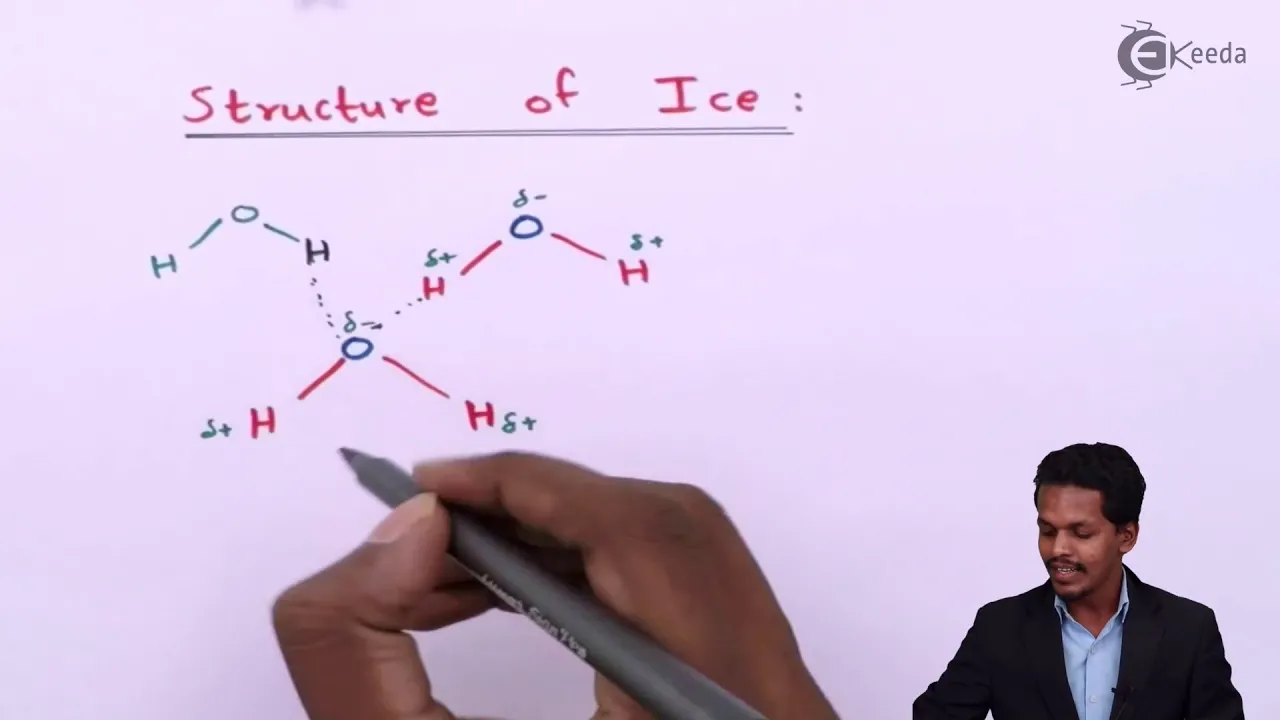
Structure of Ice - Hydrogen - Chemistry Class 11
Ekeeda
50K views•2019-05-06
45:56
Chemistry
2019 O Levels revision - O Levels Combined Chemistry 2018 revision
acescorers3110
646 views•2019-10-29
6:56
Chemistry
Study Organic Chemistry with Lluís: Total Synthesis of Vilmoraconitine
NROChemistry
2K views•2025-01-09
1:08
Chemistry
How to Write the Formula for Tin (II) sulfate
wbreslyn
11K views•2019-02-26
18:46
Chemistry
Why “Chemical-Free” is a Lie | Exposing Chemophobia
PaleBlueThoughts
978 views•2023-10-13

1:55
Chemistry
OCl2 Lewis Structure (Dichloride monoxide)
geometryofmolecules6271
5K views•2022-03-28

3:31
Chemistry
Lets Talk About Peacock Ore! Are Those Colors Natural?!
YeOldeRockShop-com
14K views•2021-03-09
2:42
Chemistry
Use of strontium in daily life
Viveksirmotivation
599 views•2022-01-18
Trending

13:38
Law
WOW! Judge TURNS THE TABLES on Trump in His OWN $10B LAWSUIT!!!
MeidasTouch
197K views•2026-07-23

13:25
Business
Playstation NO DISC/NO BUY Fight Is Over...
DavidJaffeGames
4K views•2026-07-23

22:40
Business
Steam and Xbox Just Dropped The Hammer On PlayStation
OhNoItsAlexx
9K views•2026-07-23

16:52
Anthropology
Americans Confused in Australia for 17 Minutes Straight
IWrocker
17K views•2026-07-23