Dr. Fuhrman’s pivot shows a commendable commitment to clinical evidence over long-held dietary dogma. It is a vital reminder that even the healthiest plant-based diets require scientific calibration to protect long-term brain health.
Install our extension to search inside any video instantly.
Dr. Joel Fuhrman: The Nutrient I Changed My Mind About After 30 Years of Plant-Based Medicine
Added:Has your views of nutrition, um, even if in a small way, how have they evolved from from that period, so 30-odd years ago when you were first thinking about this?
>> Right.
>> Since then there's been even more research that's been published. So, in what ways has your thinking about food and how it affects human physiology and health perhaps changed or been updated over that time?
>> Well, there's a tremendous amount of learning and also clinical experience dealing with people with specific conditions and how you might modify a healthy diet to meet the needs of these individuals with medical problems. That may be designing a diet for a person with renal insufficiency or a person with ulcerative colitis or inflammatory bowel disease that might be different from you just give every healthy person a diet.
So, it's and then what kind of supplements and adjunctive therapies can be useful for a person, including things like depression that doesn't involve nutrition or what kind of supplements might be useful.
But, I think if you're looking about some of the major changes in the nutrition field over the last three decades when I started in the 1980s, right? When I became when I graduated from medical school and started in this field, um, in the 1980s, I think it would be the fact that I became a doctor that attracted a lot of the people who were already in the plant-based community and people who already eating a healthy life.
And so, what at half it's taking care of people with significant and and serious medical conditions. And then other people seeing the deterioration of people on plant-based diets with neurological problems in later life for that I saw in my career. Like, for example, um, many of my mentors and people who I, um, looked up to who were on healthy vegan diets in those days, the society was called the American Natural Hygiene Society that's now called National Health Association where people were advocating this healthy plant-based but whole food diet that Dr. Shelton started in the 1950s that my father keyed onto his books.
>> Describe that diet for people that maybe haven't heard of it. Was it a very low-fat, like low total fat plant-based diet or what did it look like?
>> No, the fat intake was not the major factor, but they but they weren't eating processed foods. They were getting their fats from nuts and seeds. You know, they would eat almonds and walnuts, but it was mostly natural foods, plant-based natural food people who were who really um knew and lived the life of the so-called natural hygienist leading living a natural life.
And you would think these people would generally live a long time as they claimed it would happen and not develop heart disease and strokes and cancers, which was true.
But many of them as they aged developed neurologic problems like Parkinson's disease and mental issues like dementia.
And to my surprise and chagrin, I was you know, searching and look making sure what's the problem here. Why did they they live longer than the average American, but sometimes they didn't live longer. Sometimes they got Parkin Parkinson's at a young age. And so the So, what happened to my um information was actually doing a blood work, extensive blood work on all these elderly vegans, many of which I saw in my practice who were older than me and living not on a junk food plant-based diet, but on a very healthy plant-based vegan diet and recognizing some of these deficiencies that could arise on a vegan diet.
>> talking about things like omega-3s.
>> We're talking about predominantly about omega-3. We're talking about In those days, they knew about B12. Even back in the 1960s, they knew B12 was hard to find and people were taking B12 supplements. So, it wasn't due to B12 deficiency in these individuals who developed either Parkinson's or demen dementia. It was not because of B12 deficiency. And don't forget most dementia in the standard American eating, the regular population, is caused by lack of phytochemicals to the brain, atherosclerosis, cholesterol, and fat In other words, it's not >> pressure.
>> high blood pressure, diabetes, obesity.
Most dementia is caused by the standard American diet, the poor diet. So, these were people eating an excellent diet.
So, they did not have >> That They would have great cardiometabolic health.
>> Great cardiometabolic health. They had good nutrient levels. So, the question is, why did they develop these issues?
>> Where was the gap?
>> Where was the gap?
>> So, you think that DHA and EPA, which otherwise in a diet would be found from eating fish, you think that was the main gap?
>> That was the main gap, was the omega-3 index. When I drew the omega-3 index on these elderly vegans who had medical conditions, that neurological conditions, their levels were almost routinely very low. Some were almost undetectably low.
>> What do you like to get that up to? What percentage?
>> Well, if you ask me what I've changed in recent years, the Nutrition Research Foundation supported a study done about 10 years ago where we tracked the omega-3 index of a hundred about 150. I think it was 160 vegans. And we found the majority of them, about 66% have levels below four.
Because I used to think that it's better to have your level be above four for max- for maximizing brain size and brain health. But in the But since then, in the last decade, we've seen more studies to show increased lifespan, lower risk of inflammation from xenobiotics, which are toxic compounds like pesticides and chemicals that can damage the brain.
More protection against chemical damage to the brain, and more protection against cognitive impairment and shrinkage of the brain with levels above five and above six. So, I've moved gradually over the years to recommending people to put take their levels supplement accordingly to keep their levels above four. Then I changed it to five, and now I'm trying for myself and other people I'm advising to have their omega-3 index be above six.
>> And how for the average person, what dose do you think is required to get from 4%? If someone's listening now and they're thinking, "Oh, I've been following that style plant-based diet for a decade or a couple decades, but I haven't been taking DHA EPA. So, maybe they're at 4% or lower, and they want to get to six or a little bit higher." What dosage are How are we thinking?
>> Uh I don't know that answer because there's such a strong genetic factor in your ability to convert the ALA from flax seeds, walnuts, and greens into EPA and then DHA. The conversion is very poor for most people. They don't convert very well. But, some people do convert adequately. I've seen people take no supplements and have levels of seven or eight. And I'm shocked they take so In other words, the dose is dependent on individual need. And some And of course, um the supplement that I developed, which um has about 250 mg of EPA and DHA, and it gets most people in that favorable range, but it still leaves about a third of individuals requiring a little bit extra from the standard dose.
You know what I mean? It gets most people in that standard range. So, So, mo- mostly we recommend about If you add up the DHA and EPA together, about 250 for most people gets them up to above, you know, above 5.5 or above six.
Related Videos

0:19
Medicine
How Strong Are Breast Implants? Watch This Demo at LPH
londonprivatehospital
967 views•2026-04-20

4:16
Medicine
What is an Office Hysteroscopy? | Fertility Testing Explained at DIRM
DelawareInfertility
17K views•2019-05-06
13:25
Medicine
Pharmacological Management of Stroke Antiplatelet-Acute and Secondary Prevention
Learningin10
8K views•2019-03-04

3:25
Medicine
PMG - Pediatric Pain Management
EASTtraumasurgery
3K views•2019-07-01
20:29
Medicine
Anemia Symptoms And Treatment for Chronic Kidney Disease (CKD) patients
DADVICETV
27K views•2019-08-07
12:30
Medicine
Prostate Cancers and Mimics - Diagnosis
Pathologyminitutorials
3K views•2019-11-20

11:55
Medicine
Vitamin A for Vaccines & Viruses (including Measles!)
DrDavidMD
691 views•2025-03-11
4:10
Medicine
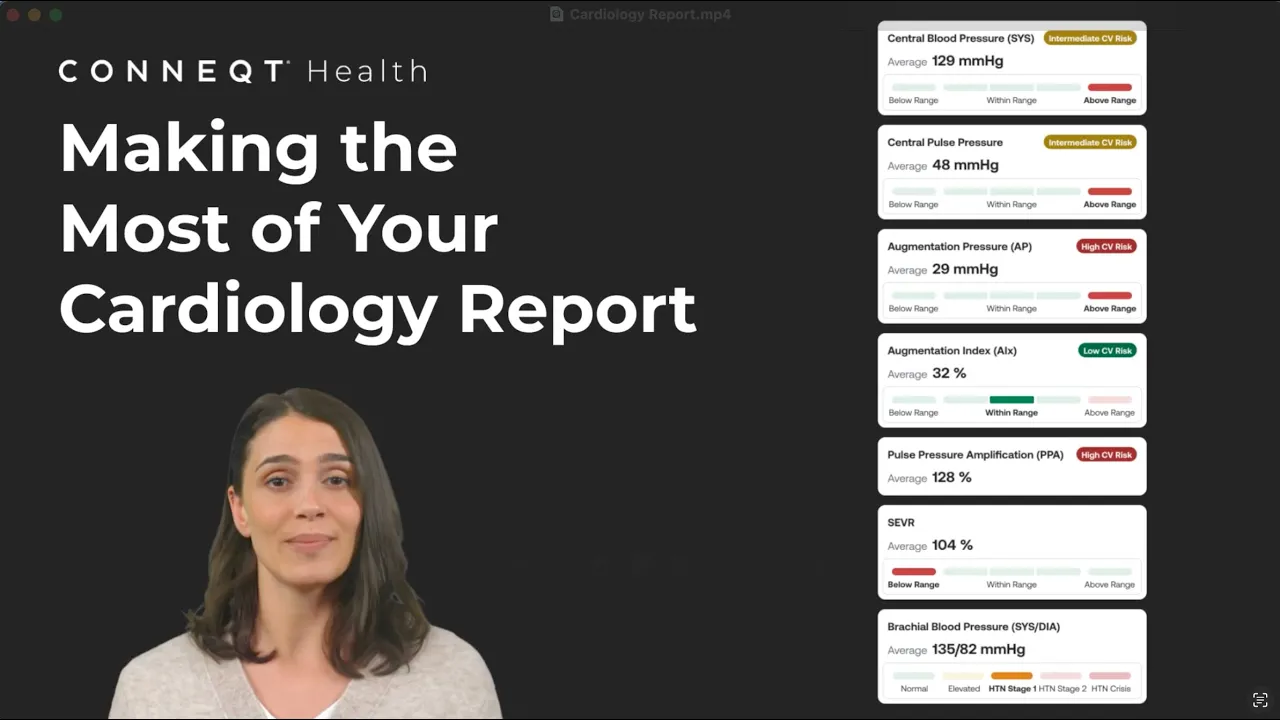
Making the Most of Your Cardiology Report | CONNEQT Cardiovascular Health Resources
conneqthealth
774 views•2025-03-04
Trending

9:05
Artificial Intelligence
2.4 BILLION Records Got Leaked...
DeepHumor
15K views•2026-07-22

13:25
Business
Playstation NO DISC/NO BUY Fight Is Over...
DavidJaffeGames
4K views•2026-07-23

19:32
Business
Should I buy a Sawmill?
essentialcraftsman
29K views•2026-07-22

16:52
Anthropology
Americans Confused in Australia for 17 Minutes Straight
IWrocker
17K views•2026-07-23