This video provides a lucid, no-nonsense demonstration of Zero Trust by shifting the security focus from network location to verifiable identity. It is an essential primer that replaces abstract buzzwords with concrete, practical AWS implementation logic.
Install our extension to search inside any video instantly.
Zero Trust Explained in 5 Minutes
Added:Think about what happens when you connect to your company's network at the office or over the VPN. Suddenly, everything just opens. The internal wiki loads, the file share mounts, the internal tools answer. Nobody asks who you are again. You're inside, so you're trusted. Here's the problem. Attackers are counting on exactly that. One fished laptop, one leaked password, and they're inside, too, inheriting all of that automatic trust. That's how most of the breaches in the news actually spread.
Nothing gets hacked. Somebody gets trusted. Today, we're building the architecture that ends that deal. A zero-trust internal API on AWS. The rule is simple and brutal. Nobody is trusted to be inside the network. Not our servers, not our own machines. Every request has to cryptographically prove who sent it, or it hits a locked door.
By the end, we'll fire two requests from the same machine on the same network at the same URL. One walks away with the secret data, the other gets stopped cold. And the only difference between them is proof of identity. And every piece comes with a free hands-on lab, so you can build the whole thing yourself.
Let's get into it. There are two sides to this build. Something worth protecting and something that has to prove itself to reach it. Protected side first, starting with the thing an attacker would actually want. That's a DynamoDB table holding our internal inventory. Inside it, we'll plant one item. A gadget whose status says exactly what's at stake. Top secret. DynamoDB encrypts this at rest, so even if someone got hold of the physical storage underneath, the bytes are useless to them. First zero-trust principle, before we've built any API at all, protect the data itself, not just the road to it.
Now, something has to read that table.
We'll add a Lambda function. And here is where zero trust gets concrete. The IAM role we give this function is read-only on DynamoDB. It can fetch inventory. It is physically incapable of changing or deleting it. If an attacker ever hijacked this code, the blast radius is already capped. That's least privilege.
Every piece gets the minimum it needs, nothing more. The lambda needs a front door, so we put API Gateway in front of it. A REST API with one route, a get for the inventory. And then we flip the most important switch in this entire build.
On that method, authorization changes from none to AWS IAM.
From this moment, every request must arrive carrying a cryptographic signature generated from real AWS credentials.
No signature, the gateway answers with a 403, and our lambda never even wakes up.
Anonymous traffic doesn't get to talk to our code at all.
That's the protected side. Now, the other half of the handshake, the side that has to prove itself.
Our internal client needs somewhere to live, so we create a network for it. A VPC with a public subnet, an internet gateway, and a route out. And here's the twist. In the old model, this network would be the security. Anything inside it, trusted.
In ours, the VPC gives us isolation and control over traffic, and that's all.
Being inside it earns a machine exactly nothing.
Into that subnet, we launch the client, a small EC2 instance.
Notice what we don't give it. No SSH key pair at all.
When we need a shell, we'll connect through instance connect. No keys to leak, no passwords to steal.
What it does get is the only thing that matters here, an identity.
We attach an IAM role with exactly one permission, invoke API Gateway.
This machine can't read the table directly, can't touch the lambda. All it can do is knock on the front door and prove who it is.
And now, the two requests we promised at the start.
We open a session on the client and run a short Python script. It picks up the role's temporary credentials issued to the instance automatically. Nothing hardcoded. And signs the request with signature version 4, AWS's signing protocol.
The signed get goes to the inventory endpoint. The gateway checks the signature, confirms this identity is allowed in, and lets it through.
Back comes a 200. Zero trust verified.
One item found, our top secret gadget.
Now send the same request without the signature, and it dies at the gateway with a 403.
Same machine, same network, same URL.
The only difference is proof of who's asking.
That's zero trust working.
So that's the build. An inventory table holding the secrets encrypted at rest. A back-end lambda reading them through a role that can look, but never touch. API gateway demanding a signed identity on every call.
A VPC that provides isolation, but hands out zero trust. And a client that reaches the data not because of where it sits, but because of who it can prove it is.
Two roles, two halves, one handshake, and nobody got trusted for free.
Reading about zero trust is one thing.
Watching your own 403 turn into a 200 just because you attached the right identity is the moment it actually clicks.
We've broken this into six short, free, hands-on labs. One each for VPC, DynamoDB, IAM, Lambda, API Gateway, and EC2.
Then the capstone walks you through the full build. Stand up the network, plant the secret, lock the gateway, launch the client, sign the request, and watch zero trust verified come back in your own terminal.
Links are in the description.
You just watched a request get through a locked-down API with no password and no API key. Nothing but a proven identity.
That's the architecture real companies are moving to right now, and it's what we build on this channel. Real AWS systems piece by piece, each with free labs to try yourself.
If that's the engineering you want more of, subscribe. And if there's an architecture you'd like us to break down next, tell us in the comments. See you in the lab.
Related Videos

6:13
Computer Science
TOP 15 Data compression Interview Questions and Answers 2019 Part-2 | Data compression | Wisdom jobs
wisdomjobs
281 views•2019-06-28

27:51
Computer Science
CTS 158: 802.11w Management Frame Protection
ClearToSend
4K views•2019-02-04
23:21
Computer Science
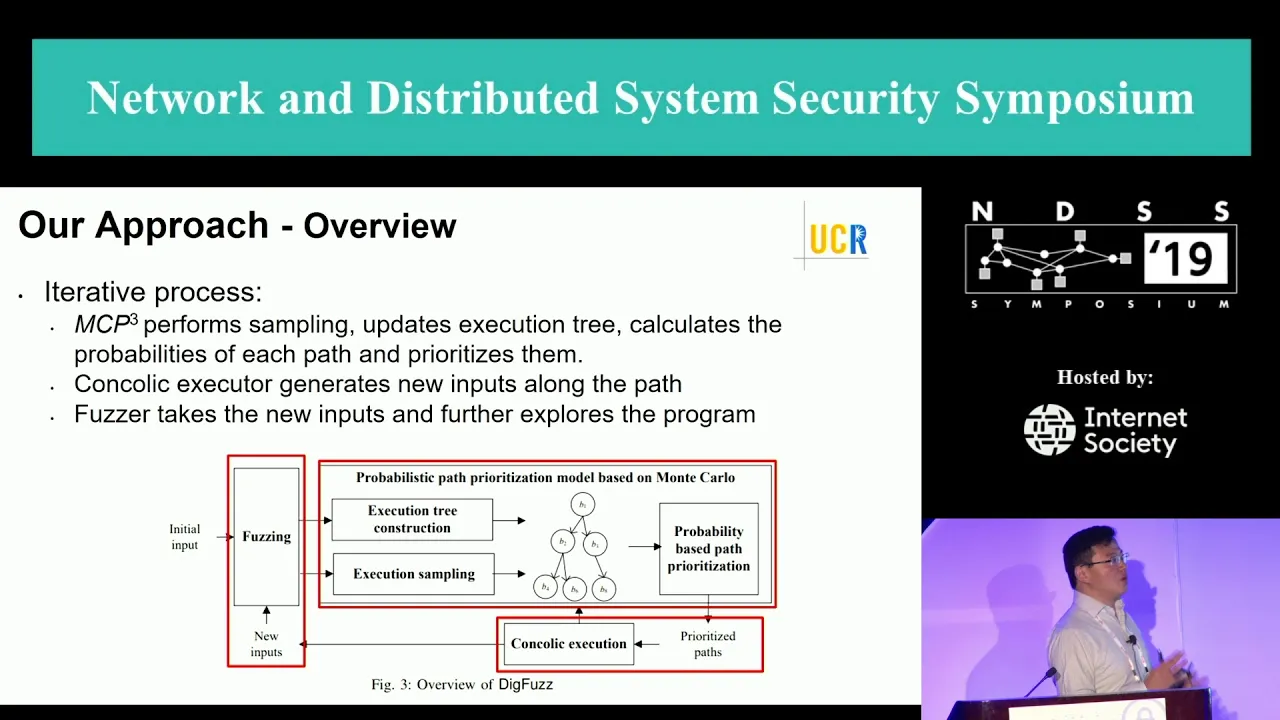
NDSS 2019 Send Hardest Problems My Way: Probabilistic Path Prioritization for Hybrid Fuzzing
NDSSSymposium
496 views•2019-04-02

12:48
Computer Science
How realistic is Cities: Skylines?
CityBeautiful
159K views•2019-02-14

46:39
Computer Science
GUIs & TUIs: Choosing a User Interface for Your Python Project | Real Python Podcast
realpython
2K views•2025-04-04

25:15
Computer Science
The OSI Model - Explained by Example
hnasr
225K views•2019-05-12
1:10:47
Computer Science
Cloud Computing - Introduction
elithecomputerguy
98K views•2019-10-07
2:24
Computer Science
From Traveler's Dilemma to Dynamic Routing | Demystifying Networking
IITBombayJuly
5K views•2019-08-04
Trending

13:38
Law
WOW! Judge TURNS THE TABLES on Trump in His OWN $10B LAWSUIT!!!
MeidasTouch
197K views•2026-07-23

13:25
Business
Playstation NO DISC/NO BUY Fight Is Over...
DavidJaffeGames
4K views•2026-07-23

22:40
Business
Steam and Xbox Just Dropped The Hammer On PlayStation
OhNoItsAlexx
9K views•2026-07-23

16:52
Anthropology
Americans Confused in Australia for 17 Minutes Straight
IWrocker
17K views•2026-07-23