Astronomers discovered SN2012Z, a white dwarf star that underwent a partial thermonuclear explosion but survived with its core intact, creating a stellar remnant that is brighter than the original star—challenging the traditional understanding that supernovae either collapse into black holes or completely vanish.
Install our extension to search inside any video instantly.
A Monster Star Exploded and Somehow Left Its Own Heart BehindAdded:
A supernova usually obliterates everything, but astronomers found a zombie star that refused to die.
Historically, when a star explodes, it either collapses into a black hole or vanishes entirely. However, observations of SN2012Z revealed something impossible. The star actually survived its own titanic blast. This white dwarf underwent a partial thermonuclear explosion, blasting its outer layers into the cosmos while leaving a battered, glowing core behind.
It is the first time we have ever seen a failed supernova create a stellar remnant that is physically brighter than it was before the explosion. This cosmic survivor is now rewriting our entire understanding of how stars end their lives, proving that even a total stellar meltdown isn't always the end.
Related Videos

Spiral Galaxy NGC 3370 from Hubble | NASA APOD 2025-11-05 #Shorts
galaxygallery
938 views•2026-05-30

SOMETHING inside the SUN is CHANGING
RaysAstrophotography
1K views•2026-06-03

There May Be A Giant Hole In The Universe... And We Might Be Inside It | The Cosmic Ledger Entry 015
TheCosmicLedger
145 views•2026-05-31

Captured the Blue Moon (with a twist) 🌙✨ #space #bluemoon #telescope
realAstroExplorer
674 views•2026-06-01

The Map We Sent to the Stars in 1977 — Why Scientists Now Regret It
TheAncientRecord7
183 views•2026-06-03

Is this a copy of our galaxy? Discover Galaxy M81!
UniverseDocumentaries-cc4mb
995 views•2026-05-31

10 Planet Where a Black Hole Replaces the Sun
cosmicexplorer-EN
147 views•2026-06-02
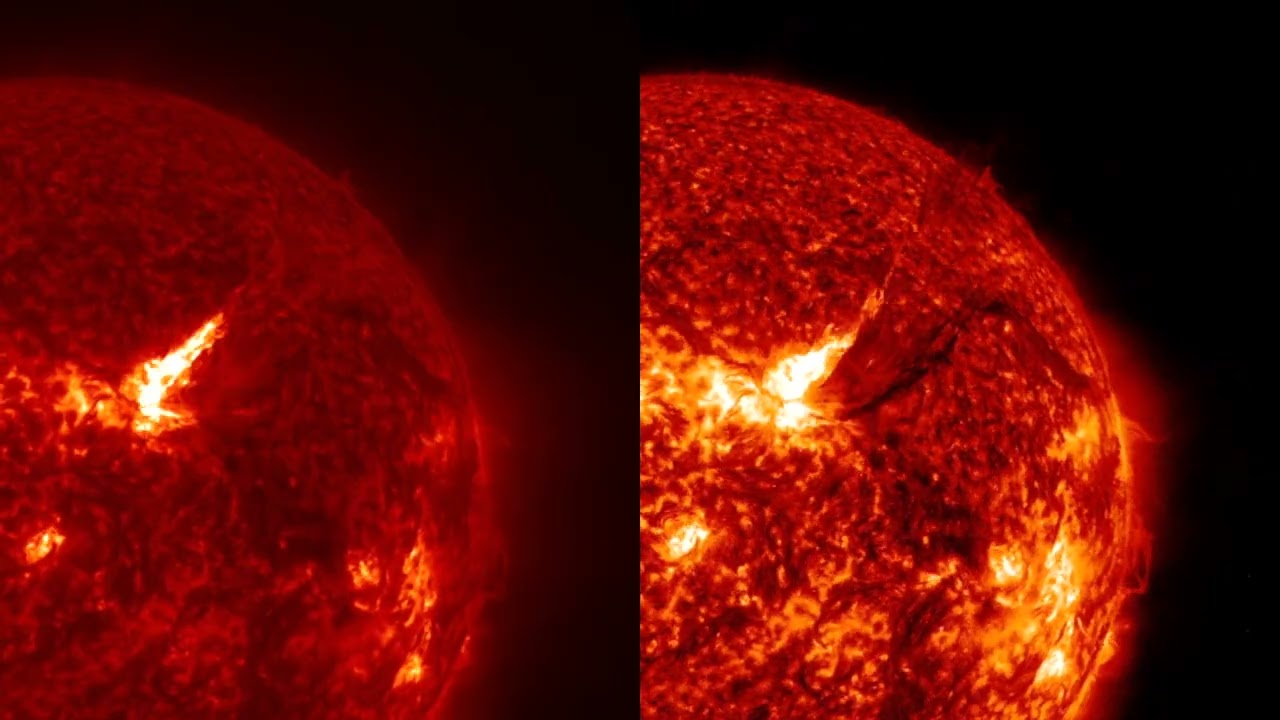
Solar Flares and CMEs at Earth - More Likely | S0 News June.3.2026
SpaceWeatherNewsS0s
2K views•2026-06-03



