The order of operations (PEMDAS) states that in a mathematical expression, you must first solve operations inside parentheses, then exponents, followed by multiplication and division from left to right, and finally addition and subtraction from left to right; for example, in the expression 5 - 3 × (5 - 3), you first solve the parentheses (5-3=2), then multiplication (3×2=6), and finally subtraction (5-6=-1), yielding the correct answer of -1 rather than the incorrect answer of 4 that results from ignoring operation priority.
Install our extension to search inside any video instantly.
This Math Trick Will Challenge Your Brain!
Added:Hello everyone.
Today I have this example for you to solve.
5 - 3 times a parenthesis 5 - 3 Maybe you can write the solution very easily. 5 - 3 is 2 Here also 5 - 3 is 2 and between them is a multiplication. 2 * 2 gives us 4.
But you should know this answer is not correct.
I erase everything and I will explain you this is wrong because you don't respect the rules for operations orders. When you have several operations like this example, you have to respect the rules for PEMDAS.
P E M D A S PEMDAS says in a calculation, you have to first go to P. P stands for parenthesis.
Like here.
E stands for exponent numbers.
M for multiplication.
D stands for division.
A stands for addition and then S stands for subtraction.
But the point is that here multiplication and division are in same order. No priority to solve them.
A and S, I mean addition and subtraction, also are in same order.
And these cases, in these cases, for same order situations, you have to choose solve the operations from the left side.
First, you have to go for the left one.
And then step-by-step you can go to the right side to complete the calculation.
But in our cases here you can see you have a parenthesis here.
So, to PEMDAS, first we have to do this parenthesis. 5 - 3, very simple, is 2. Yes, excellent.
Then you can write the rest numbers 5 3 and between this 3 and this parenthesis you have a multiplication.
And again according to PEMDAS, we have two different operations here. Subtraction and multiplication.
And this rule says us we have to go first for the multiplication. It has higher priority.
3 * 2 gives us a 6.
And now 5 - 6 gives us 1.
And - 1 is the last answer and you can see it's different from the first solution and first answer we got, it was 4. But it was wrong, but - 1 is the last answer and correct answer also.
Please write me here your solution, your answer. Maybe you can we can discuss more in the comments. And please don't forget to subscribe my channel.
You can find a lot of examples of calculations, different calculations from easy to hard everyday, every week. Thank you for your attention.
Related Videos

Solving a 'Harvard' University entrance exam question
AsadInternationalAcademy
125 views•2026-06-14
Algorithms for Generalized Signed Distance and Winding Numbers (PhD thesis)
NicoleZFeng
269 views•2026-06-15

SUPER B - WAP vs WBPS
gravitylive7425
171 views•2026-06-20

Notes 6.3 Rectangle, Rhombus, Square
matthewmills6952
1K views•2026-06-18

Does the math actually hold up? Let's break down the logic.
rawXopinion
1K views•2026-06-15

NYT Hard Sudoku Walkthrough | June 17, 2026
Rangsk
2K views•2026-06-17
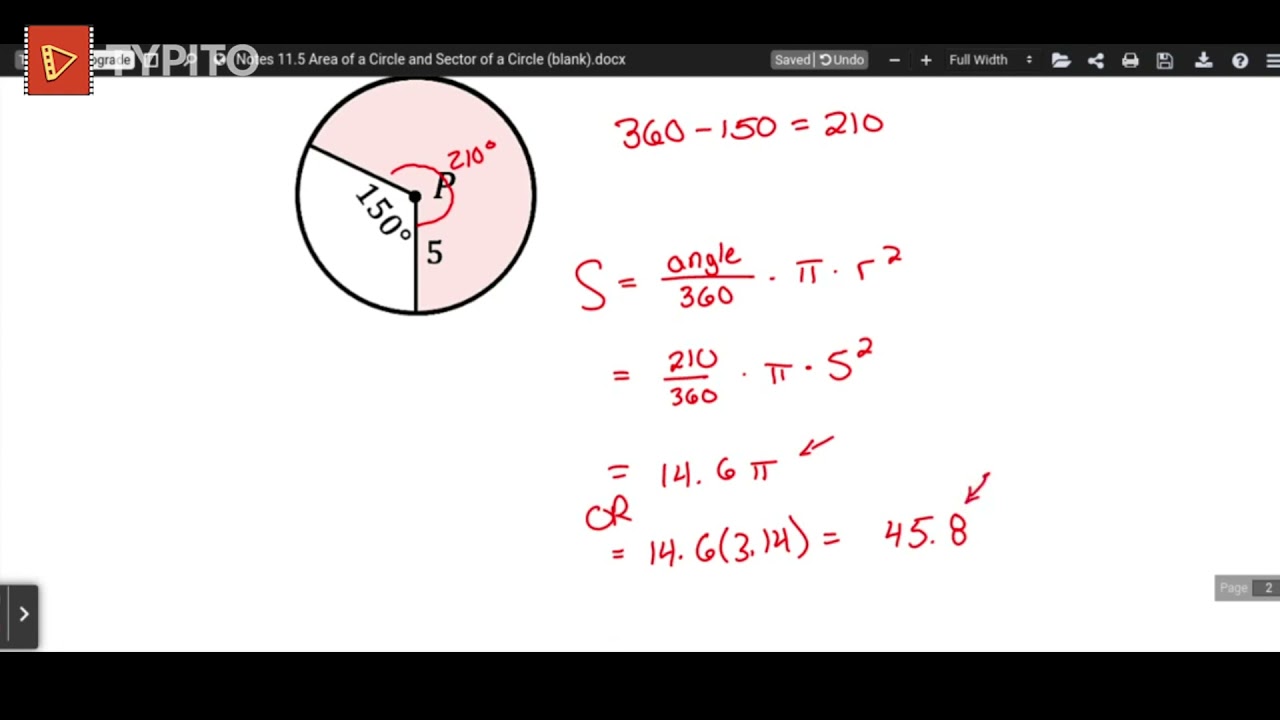
Notes 11.5 Area of a Circle and Sector of a Circle
matthewmills6952
251 views•2026-06-18

Notes 4.2 Isosceles and Equilateral Triangles
matthewmills6952
444 views•2026-06-18



