The tetragrammaton (YHWH) represents the verb 'to be' in the present tense, which is why it is not pronounced in Hebrew; in certain calligraphic traditions, the four letters are symbolically interpreted as a family (Yud as father, first Hey as mother, Vav as son, second Hey as daughter), reflecting the concept of existence and divine presence.
Install our extension to search inside any video instantly.
Torah Scribe Secrets: The Hidden Meaning in God's Name - NehemiasWall.com
Added:You're not allowed to sign it and you don't, right? Other than that, you are this is the way that you are serving God and you're serving your community. So it's not about you, it's about everyone out there.
>> Talk about you're not allowed to sign it.
>> Who's going to be reading it? Like you have to think about am I writing it Okay, is what I've written kosher? So it's fine, but is it hard to read? Is it ugly?
>> So So I want to go to that. So when you write a Torah scroll, you can't sign it at the end and say this was done by Aviela.
>> No, no, no. No, no, no, never, never ever.
>> Okay.
>> Not a Torah scroll.
>> Okay.
>> That's another one of those very specific laws. Now that being said, I did come across when I was um this is one of my little stories. Um I have I have a million of them cuz I've been doing this in October it'll be 20 years >> Wow.
>> since I earned my teudah, since I officially became a soferet. I started studying in Well, I started studying Hebrew calligraphy from the '90s.
>> Okay.
>> And then I've been a Judaic artist since 1994 and then from '97 I started learning soferut.
>> Okay.
>> Um and then it took me cuz I was living in Canada. I was living in Victoria >> and uh >> That you were living in Canada. I'm just kidding. [laughter] >> [gasps] [sighs] >> The great northern wasteland.
>> Yes. Yes. You know, my some of my ancestors actually immigrated to the United States and then they fought on the side of the British >> Uh-huh.
>> during the American War of Independence.
>> I see.
>> Yeah, [clears throat] and now it's on tape.
>> Okay.
>> And uh obviously they lost. So um >> And now you're And now you're in land in Ontario. They were given free >> Yeah, they were given free farms in Ontario. They negotiated with the local um First Nations people and they were given farms in Ontario as a reward from the king and they were given titles and it's the only title that's recognized in Canada.
>> Really?
>> United Empire Loyalist.
>> Wow. Okay.
>> all of this is irrelevant so it's going to be edited out.
>> No, no, we should keep this. This is fascinating.
>> about being sorry that I'm Canadian.
>> you're a refugee in the United Kingdom.
All right, let's move on. So >> I'm a UK citizen.
>> Okay. [laughter] >> I'm both.
>> All right, so all right, so you um Let's finish this.
>> don't even know what we're talking about now.
>> No, no, let's go back to this. So you wrote the word key. I think we lost our place. We're now on page nine Where were we? Weren't we in Uh we had a case Oh, here it is. Key mash-cheeth.
>> Right.
>> So you actually say each word as you're writing it? Is that how you were taught?
>> you come to the end of mash-cheeth, then >> Presumably you don't say God's name.
>> You don't Well, we don't know how to say God's name really, do we?
>> Uh >> I know there's a debate about that.
>> conversation. Let's let's move on.
>> But um what I would say is I would make a verbal declaration that I am about to write this name this holy name for the sake of the mitzvah of safer Torah and for the sake of the holiness of the name. Um and that does not give you permission to write it because really you still should only ever write any of these of God's names in stam, in like ritual items. You're not supposed to just be writing it all over the place.
Um I've I saw us online someone was like printing them on cushions and I was just like, "Please don't do that." You know, you don't want people sitting on God's name cushions. Anyway. Um >> [laughter] >> Well, you know.
Um and then the you then you would say you you know, you'd hey vav hey >> So you would you would pronounce out the each of the four letters?
>> say each of the four letters and I would still look each time, I know how to write this name.
>> Right.
>> Right? It's stamped you know, like simeni kahotam al libecha, right? Like it's stamped on my heart this name, you know? But it's but I still look and say it and write and look and say it and write because that's what you do. That's how you don't make a mistake. Sometimes you still make a mistake. Hopefully not with any of God's names. You might also notice that the two heys here are written differently.
>> Mhm. They have crowns on them.
>> one >> Is that what you're referring to?
>> No, I I mean like the see like the gog and the regal like the roof and the leg here of that one. That looks like a daleth.
>> Okay.
>> And this one is rounder like a resh.
>> And that's and that Okay, that's >> And then you see the little the yud the foot here of this hey is wider and it's got like a little foot sticking out and then this one is really narrow.
>> Mhm.
>> And every time you see God's name written by this particular scribe, you will see it written like that.
>> Really?
>> Because >> Yeah.
>> there is a a tradition not everyone writes God's name like this but there is a tradition that yud is the dad and the first hey is the mom and the vav is the son and the second hey is the daughter.
>> Of what?
No, I'm not trying to be silly.
>> Life the universe everything 42 This is and the two heys are differentiated from each other because because mama energy is different than daughter energy.
>> It's not the same.
>> So >> All mamas are daughters but they're not all mamas, right?
>> I'm lost here. So the >> It's a family. It's a nuclear family.
Not that that's the only way to be a family but you know >> So that isn't implying God is a family is it?
>> No but it shows that there in this in this particular tradition in this particular tradition there's this idea that being cuz we know that this is the the tetragrammaton as the Greeks call it that that is the verb to be in the present tense which is why when you're speaking Hebrew you don't say the verb to be in the present tense you just skip over it.
>> Mhm.
>> Right? When you like if you were going to translate it it would just have that missing. If it was in a different tense >> You know the context yeah.
>> Right. Okay yeah but you know what I'm talking about. So and that is because it's it's just it's being.
>> Right.
>> It's existence.
>> In other words when you say like >> both genders here.
>> When you say that you know the the dog is I don't know the boy is big.
>> Yeah.
>> hayeled gadol.
>> Right. The boy big.
>> and the word "is" is is not expressed in Semitic languages usually. Okay.
>> That's right. Yeah.
But that's why. Because because God is God is. It's like what it says in the Bible, I am I am which I am which I am or I am that I am. I am that what I will be.
Yeah, exactly. So so that's why we don't say that's why we don't say it, but it's also why So this is that is that tradition. Now that is not part of the tradition I was taught because my teacher actually had two teachers. They taught me in like more the German tradition.
Okay.
Mark was taught in more of a Polish tradition, although his teacher was Indian than my teachers were sort of Canadian and American Turkish Russian.
But but their teachers were, right? So you teach what your teacher taught you.
Okay. So I teach in the German tradition. There's different ways of writing like when you've seen my husband Mark's writing, that's very much more Polish. What I the way I write is like this.
And it's much more square. It's much more >> [clears throat] >> like as I like to say "eins zwei" "eins zwei". It's very, [laughter] you know, it's very square. It's very 0° 90°.
And his is much more dancey. His is a bit rounder because that's generally how the scripts go. And there's different scripts in different countries, but of course I'm not German. I've never, you know, lived in Germany, but that's the tradition I was taught in. So as you know from looking at manuscripts, you can go, oh well, this could have been written in a particular country or it could have just been written like it didn't necessarily it wasn't necessarily written in this particular country of the diaspora. It might have been written somewhere else by someone who's just trained that way. Cuz now with every people moving around so much, I mean people always moved around, but >> Yeah, so >> it's easier now.
>> We have a big problem with Italian uh, manuscripts in that well so a lot of manuscripts, of course, is what's called a colophon, which is section at the end where the scribe says, you know, it was the third day of the week of such and such month in the year and I wrote this for so-and-so. But most manuscripts that hasn't survived and in Torah scrolls it never existed.
Uh, there actually some exceptions, but that's a different story.
>> I I have a story about an exception.
>> Ooh, I want to hear that.
>> Okay.
>> So, um, well, there's a bunch of exceptions where the colophon is is a forgery, but there's actually a bunch of real exceptions. Um, what we mean with not a forgery. Um, not when I say a bunch, it's a few dozen maybe that have ever been found. Um, maybe less than that.
Um, >> A lot for Megillat Esther.
>> No, I'm I'm talking about Torah scrolls.
>> I know, but like with Megillat Esther also, you know, like a lot of these Italian ones, like these like these um, young women and actually girls that were writing Megillat Esther, like uh, you know, 200, 300, 400 years ago. Some of these Megillat Esther that have been uh, you know, up for auction in the last several years. Um, and they also have they all have colophons.
>> Okay.
>> Um, and some of the um, soferot living today also, you know, have colophons attached to their Megillat Esther.
>> Oh, just of Esther.
>> Yeah, yeah.
>> So, the problem we have with Italian manuscripts where there's no colophon or if it's a Torah scroll is that we have in the instances where we do have a colophon, we'll sometimes have the same scribe who will write in an Ashkenazi style, which is northern European German.
>> yeah.
>> The same scribe will write in a Sephardic style. The same scribe will start writing in an Italian style and it really came down to the patron who who bought the manuscript from him and it's not necessarily a Torah scroll, could be, you know, a book on medicine, will say, you know, I want this in the Sephardic handwriting. I want this in the German handwriting. And the scribes in Italy, especially northern Italy, did all three fluidly, like without a problem.
Related Videos

0:33
Philosophy
Open Tab is a new interview series hosted by Substack co-founder Hamish McKenzie
Hypeflicksss
1K views•2026-05-21

27:53
Philosophy
Street Epistemology: Maritza (1) | Student Demands the Truth (Valuation)
magnabosco210
124K views•2019-06-27
1:18
Philosophy
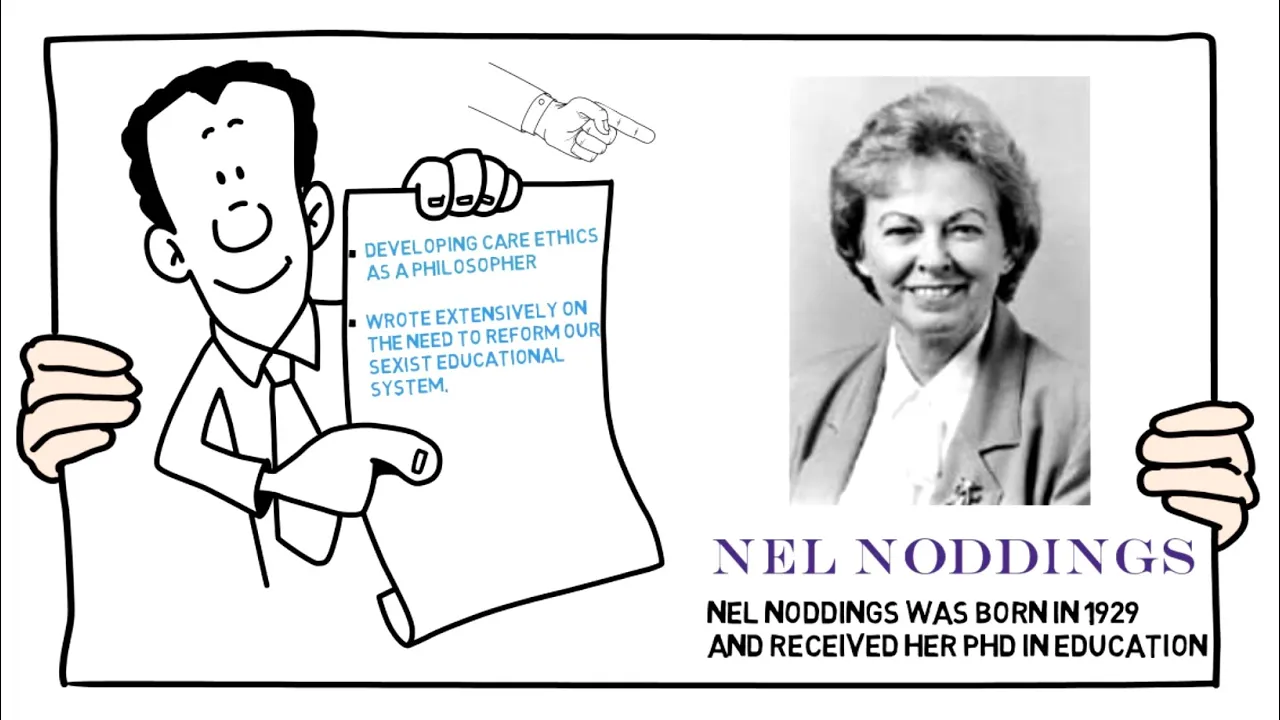
Nel Noddings | Feminist philosophy and education | Whiteboard Video
studioninety9110
3K views•2019-10-13

18:20
Philosophy
LEGAL METHOD CLASS: Law, Order, Justice & Freedom | Understanding the Concept of Law in Society
LAW-MADE-SIMPLE.c
371 views•2025-11-22

1:26:44
Philosophy
Does evolution DEBUNK morality?
MajestyofReason
7K views•2025-03-06

47:07
Philosophy
How the Gospels Pass the Historical Test | Tim and Lydia McGrew
TheAaronRennShow
713 views•2025-12-02

1:03:26
Philosophy
Pluriversal Design SIG Book Club 13: bell hooks' Theory as Liberatory Practice
pluriversaldesignsig2851
777 views•2022-05-24

1:37:10
Philosophy
NICK LAND MEETS THEORY UNDERGROUND (w/ Michael Downs and David McKerracher)
PhilosophyPortal
9K views•2023-10-23
Trending

13:38
Law
WOW! Judge TURNS THE TABLES on Trump in His OWN $10B LAWSUIT!!!
MeidasTouch
197K views•2026-07-23

13:25
Business
Playstation NO DISC/NO BUY Fight Is Over...
DavidJaffeGames
4K views•2026-07-23

22:40
Business
Steam and Xbox Just Dropped The Hammer On PlayStation
OhNoItsAlexx
9K views•2026-07-23

16:52
Anthropology
Americans Confused in Australia for 17 Minutes Straight
IWrocker
17K views•2026-07-23