Family estrangement, affecting 27-35% of Americans, typically begins with a 'quiet cutoff'—a gradual withdrawal so slow that neither party recognizes it as an ending—and is characterized by 'ambiguous loss,' a grief without death, funeral, or clear ending, where both parties often have completely different and equally valid explanations for why the relationship ended, making reconciliation rare and requiring both people to admit their version wasn't the only one.
Install our extension to search inside any video instantly.
"Why Does Family Just... Disappear?"
Added:Why does a mother stop calling her own daughter and just accept the silence?
Why does a daughter let the calls go to voicemail year after year and never explain why? Linda hasn't heard her daughter Kate's voice in 2 years. Not since the wedding. Kate hasn't heard her mother's voice in 2 years either. Same silence. Two completely different reasons for it. Somewhere in America right now, someone is living exactly what Linda and Kate are living. a parent, a sibling, a child, gone from each other's lives with no fight anyone can point to and no ending either one of them chose out loud. It's not rare. It's not even unusual. So, why does no one talk about it? And why does everyone going through it feel like they're the only one? If you're the parent in a silence like this, you already know exactly how loud that quiet gets. If you're the son or daughter, you know exactly how much judgment comes at you for not explaining yourself. Either way, stay with me until the end because by the time this video is over, you're going to understand why families like this go silent, why both people usually believe they're the one who's right, and what it would actually take to close a loop like this, whichever side of it is yours. This video is going to show you what's really happening inside families like Linda and Kate's and two terms researchers use for it that explain almost everything. Ambiguous loss and the quiet cut off. Here's the first question. How many families does this actually happen to? Researchers estimate that between 27 and 35% of Americans are estranged from an immediate family member. That's not a handful of broken homes. That's roughly one in three.
Linda and Kate are not the exception.
They're the rule nobody talks about. So, if it's that common, why does everyone who goes through it feel like they're the only one? Because arangement is one of the only major life ruptures nobody announces. A divorce gets a status update. A death gets a funeral. What happened between Linda and Kate just got quieter every year until people stopped asking. So, if silence is the only thing keeping it hidden, what does that silence actually look like from the inside?
Most people assume arangement starts with a fight, a slammed door, a phone thrown across a room. But that's not how it happened with Linda and Kate. And it's usually not how it happens at all.
It starts smaller. Researchers call this the quiet cut off, a slow withdrawal so gradual that nobody can point to the moment it became permanent. A call that doesn't get returned. A visit that gets shorter. A holiday where someone quietly isn't invited. For Linda, it was Kate's calls going from every Sunday to every other Sunday to I'll call you back that never came. For Kate, it was showing up to Thanksgiving and feeling like a guest in her own family, one comment at a time until staying away felt easier than showing up. By the time it's a strangement, nobody can even point to the moment it started. That's the quiet cutff doing exactly what it does.
Working so slowly that neither person clocks it as an ending while it's happening. So, if there's no single moment, how does anyone know when it's actually over? Before we go into what happened on both sides of this, I want to know which chair you've sat in.
Comment parent if you're the one who got the silence. comment child if you're the one who created the distance. Either way, I read every comment, and this is one of the only places people say the real version out loud. How does anyone know when it's actually over? Here's where it gets stranger. Ask Linda what happened and you'll get one story. Ask Kate and you'll get a completely different one. Here's how Linda describes it. I didn't do anything except tell her the truth about someone she was about to marry and she cut me off for loving her enough to say it.
Here's how Kate describes it. She didn't just disagree. She made me choose over and over until the only way to have my own life was to stop picking up the phone. Two people, one relationship, two entirely different explanations for why it ended. And both of them are telling the truth as they lived it. So, which version is true? Maybe neither. Or maybe both. Because what happened to Linda and Kate isn't usually about a single event.
It's about two people who stopped being able to feel safe, understood, or respected by each other. And one day, distance started to feel safer than closeness. That's not a betrayal. That's not always someone being wrong.
Sometimes, it's what happens when a relationship runs out of ways to repair itself. This is what researchers call ambiguous loss. Grief with no death, no funeral, and no clear ending. Linda's daughter is still out there alive, living her life, but she's gone from Linda's life all the same. And because nobody sends flowers for this kind of loss, people like Linda and Kate carry it in silence on top of everything else.
But then that raises the real question, can it ever come back? Reconciliation is rarer than people assume. It doesn't happen because enough time passes. It doesn't happen because someone finally apologizes. It happens when it happens because both people are willing to admit their version of the story wasn't the only one. Linda would have to sit with the possibility that loving Kate enough to say something still cost her the relationship. Kate would have to sit with the possibility that protecting herself still hurt someone who was trying, however imperfectly, to protect her, too. That's a much smaller number of people than the number who miss each other. So, if it's that hard to come back from, what does that mean for the people living inside it right now? It means most people living inside this aren't actually waiting for reconciliation. They're waiting to know what to do with a loss that doesn't have a name. So, whichever chair you're sitting in, here's what you actually do with it. One thing before we get into this, this isn't a list of ways to reach them, convince them, or finally get them to understand. If that's what you were hoping for, I want to be honest with you. That was never something you had access to. Not now, and honestly, not before the silence started either. What you do have access to is your own side of this. Every step here is about you moving forward with or without anything from them.
Step one, name it. Most people in this situation spend years looking for a category that fits. Was it a fight, a falling out, something they did?
Ambiguous loss doesn't fit any of those boxes. And that's exactly why it's so hard to grieve. Naming it out loud to yourself, to a therapist, to one trusted person is what lets you start grieving something real instead of chasing an explanation that may never come. Step two, write the version you haven't said out loud. Linda has never said the words, "I think I lost her trying to protect her to anyone." Kate has never said, "I miss her, and I still think I was right." to anyone either. Both things can be true at once. Write your version down. Not to send, not to win an argument that only exists in your head anymore, just so it exists somewhere outside of you. Step three, stop auditing the relationship for a verdict.
Most people replay the same handful of moments for years, looking for the one that finally proves who was right. That search doesn't end. It just keeps you standing at the same door waiting for a verdict that was never going to arrive from outside you. You don't need to win the case. You need to stop trying it.
Step four, grieve it like the loss it actually is. There's no funeral for ambiguous loss. So, most people never actually grieve it. They just wait quietly for years without realizing that's what the waiting is. Grief doesn't require the other person to be gone. It just requires you to admit that something real ended, even if they're still out there alive, living a life you're no longer part of. Give yourself permission to mourn that, not as a step toward getting them back, but as the thing that actually lets you stop being stuck. Step five, learn where disagreement ends and disrespect begins.
A lot of what fuels arangement isn't really about the original disagreement at all. It's two people who never learned how to communicate clearly and who couldn't accept that someone they love might see something differently without it meaning betrayal. Someone disagreeing with you, holding a different opinion, or making a choice you wouldn't make doesn't automatically mean they disrespect you. And it doesn't mean they're being abusive toward you either. Treating ordinary disagreement as if it were an attack is one of the quiet ways a relationship runs out of road. Here's the part that's actually yours to work on. your own ability to say what you mean clearly and to tolerate someone else's different view without needing it to collapse into agreement. If the other person can't tell the difference between I disagree with you and you're hurting me, that's genuinely not something you can fix for them. That's theirs to realize if they ever do. You may not fix this by tomorrow. You may not fix it at all.
That was never something either one of you fully controlled. But you know something now that you didn't 12 minutes ago. what's actually happening underneath the silence and one real step forward that belongs entirely to you, whichever side of it you're standing on.
A parent who doesn't know why the calls stopped. A sibling who hasn't been invited in years. A son or daughter who isn't sure if reaching out would help or make it worse. Linda still sets two coffee cups down out of habit some mornings before she remembers. Kate still starts typing a text some nights before she talks herself out of sending it. Neither one has said the words out loud to the other or to anyone. That's the quiet cut off. That's ambiguous loss. And it's happening in more houses than anyone admits. Estrangement doesn't happen because people stop loving each other. It happens because somewhere along the way, love stopped feeling safe enough to keep showing up for. If this helped you understand something you're living or someone you love is living, subscribe. This channel is built entirely around figuring out why people do the things they do. And if someone in your life needs to hear this today, send it to them.
Related Videos

0:39
Psychology
Inside Ronaldo’s Team Meeting
RonoSphereCR7
1K views•2026-04-17

7:25
Psychology
You Are Not So Smart: Chapter 4 Hindsight Bias, What is it?
TheBey8nD8
230 views•2019-09-15

49:35
Psychology
Sigmund Freud's Mind - Master Your Inner World (Your Unconcious Mind)
Ngaslife
1K views•2025-01-25

11:29
Psychology
What affects your mood?
RandyPaterson
602 views•2019-05-16

3:45
Psychology
Can you outsmart this logical fallacy? - Alex Gendler
TEDEd
2164K views•2019-11-25

1:02:21
Psychology
Understanding the Relationship between Fear of Falling and Mobility in Older Adults
fallpreventioncommunityofp3788
823 views•2019-04-08
54:04
Psychology
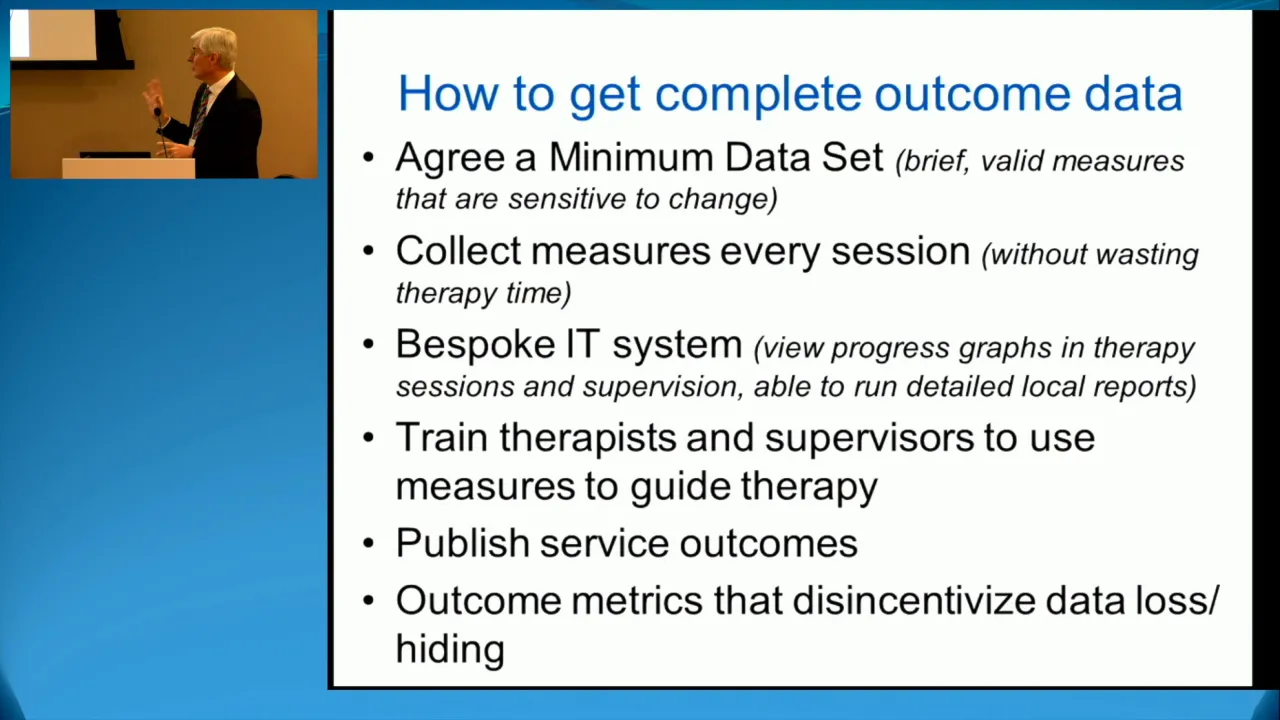
Measurement-based Care in Psychotherapy Workshop - Future of Psychotherapy Conference 2019
UofTPsych
243 views•2019-04-25

51:52
Psychology
Dr. Carol Tavris — Mistakes Were Made (But Not by Me)
skepticmagazine
14K views•2019-05-02
Trending

13:25
Business
Playstation NO DISC/NO BUY Fight Is Over...
DavidJaffeGames
4K views•2026-07-23

22:40
Business
Steam and Xbox Just Dropped The Hammer On PlayStation
OhNoItsAlexx
9K views•2026-07-23

16:52
Anthropology
Americans Confused in Australia for 17 Minutes Straight
IWrocker
17K views•2026-07-23

20:36
Business
SuperBike Factory Has Gone... What's Next for the Motorcycle Industry?
thatbikersimon
11K views•2026-07-22