In GATE Civil Engineering, when random variables X and Y follow normal distribution, linear transformations (scaling, sum, and difference) preserve the normal distribution, while product, ratio, and square operations do not result in normal distribution.
Install our extension to search inside any video instantly.
Normal Distribution Operations | GATE Civil Engineering #shortsAdded:
From engineering measurements to data science, normal distribution is everywhere. Normal distribution is used to analyze the real-world uncertainties in total demand, total measurements, and signal noising. If X and Y follow normal distribution, and X and Y are random variables, in the prospect of GATE previous year question, which operation results also in normal distribution? So, as part of this, if you perform linear transformation, scaling, sum, and difference, if X and Y are random variables, then the resultant will be also a normal distribution. And remember the class, X and Y are random variables following normal distribution. Now, which operations don't fall under normal distribution, even if X and Y are random variables and follow normal distribution, are the first important property is product operation, and also the ratio operation, and the square operation. These three operations, the resultant will not fall as normal distribution. I hope this video will help you.
Related Videos

Olympiad Mathematics | Indian | Can You Solve This One?
PhilCoolMath
650 views•2026-06-03

Escaping the Fog
LogicLemurGaming
760 views•2026-06-03

A Brutal Radical Expression Made Easy! The Shortcut Changes Everything.
tamoshop
112 views•2026-06-02

V : jee main /advance class 11 mathematics : Binomial Theorem class-1 ( 29 may 2026 )
dcamclassesiitjeemainsadva9953
125 views•2026-05-29

Is This Pentomino Tileable?
3cycle
241 views•2026-05-30

This Sudoku Has Many Lines!!
CrackingTheCryptic
2K views•2026-05-29

Olympiad Mathematics | Indian Can You Solve This One?
PhilCoolMath
268 views•2026-06-02
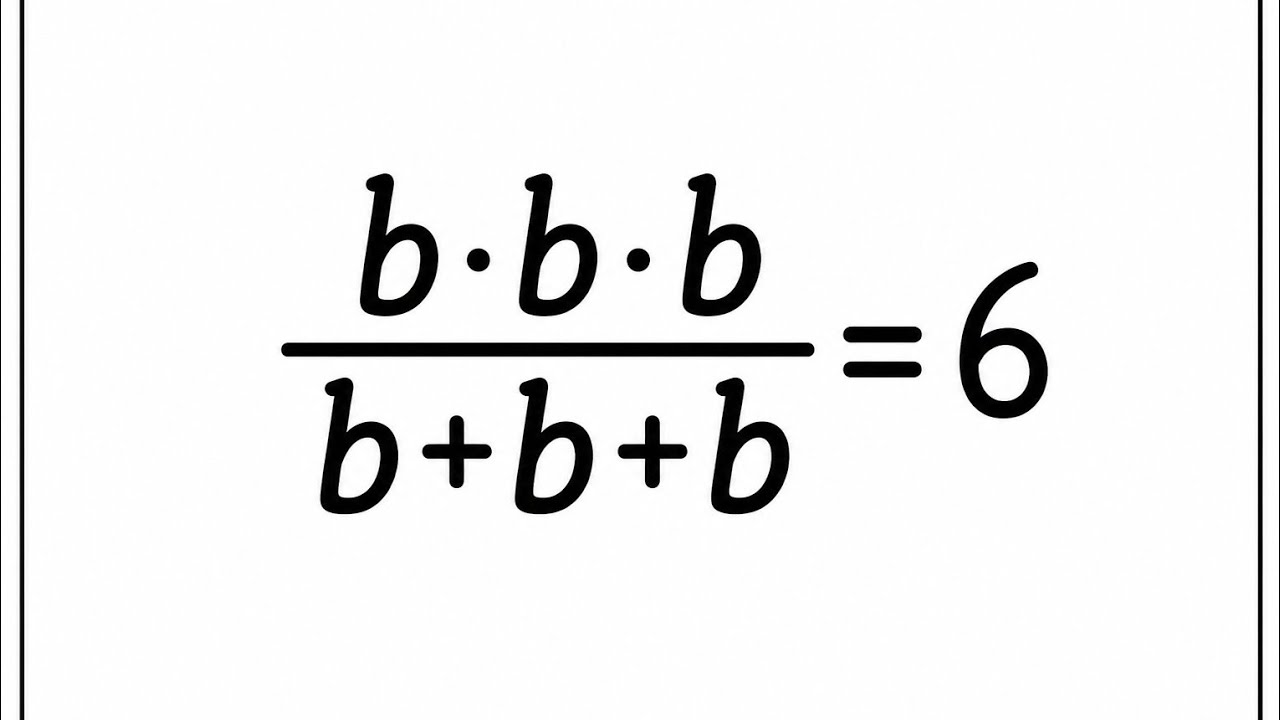
Olympiad Mathematics | Indian | Can You Solve This?
PhilCoolMath
669 views•2026-06-02



