The video effectively demonstrates how the scientific method replaces initial panic with empirical certainty through iterative data refinement. It serves as a sharp reminder that scientific uncertainty is a feature of progress, not a failure of knowledge.
Install our extension to search inside any video instantly.
NASA gave an asteroid a 2.7% chance of hitting Earth. Nobody knows what happened next.Added:
The asteroid's name is Apophis, 340 m wide, large enough to erase a city the size of Paris.
When astronomers first ran the numbers, they gave it a 1 in 37 chance of impact.
The internet [music] panicked. Scientists went quiet. For 72 hours, [music] this was the most terrifying number in all of astronomy.
>> [music] >> Then more data came in, the probability dropped, then dropped again, then went to zero. But here's what nobody [music] talks about. In 2029, Apophis will pass closer to Earth than our own satellites. [music] You will be able to see it with the naked eye. It's not [music] going to hit us this time.
Related Videos

Spiral Galaxy NGC 3370 from Hubble | NASA APOD 2025-11-05 #Shorts
galaxygallery
938 views•2026-05-30

SOMETHING inside the SUN is CHANGING
RaysAstrophotography
1K views•2026-06-03

There May Be A Giant Hole In The Universe... And We Might Be Inside It | The Cosmic Ledger Entry 015
TheCosmicLedger
145 views•2026-05-31

Captured the Blue Moon (with a twist) 🌙✨ #space #bluemoon #telescope
realAstroExplorer
674 views•2026-06-01

The Map We Sent to the Stars in 1977 — Why Scientists Now Regret It
TheAncientRecord7
183 views•2026-06-03

Is this a copy of our galaxy? Discover Galaxy M81!
UniverseDocumentaries-cc4mb
995 views•2026-05-31

10 Planet Where a Black Hole Replaces the Sun
cosmicexplorer-EN
147 views•2026-06-02
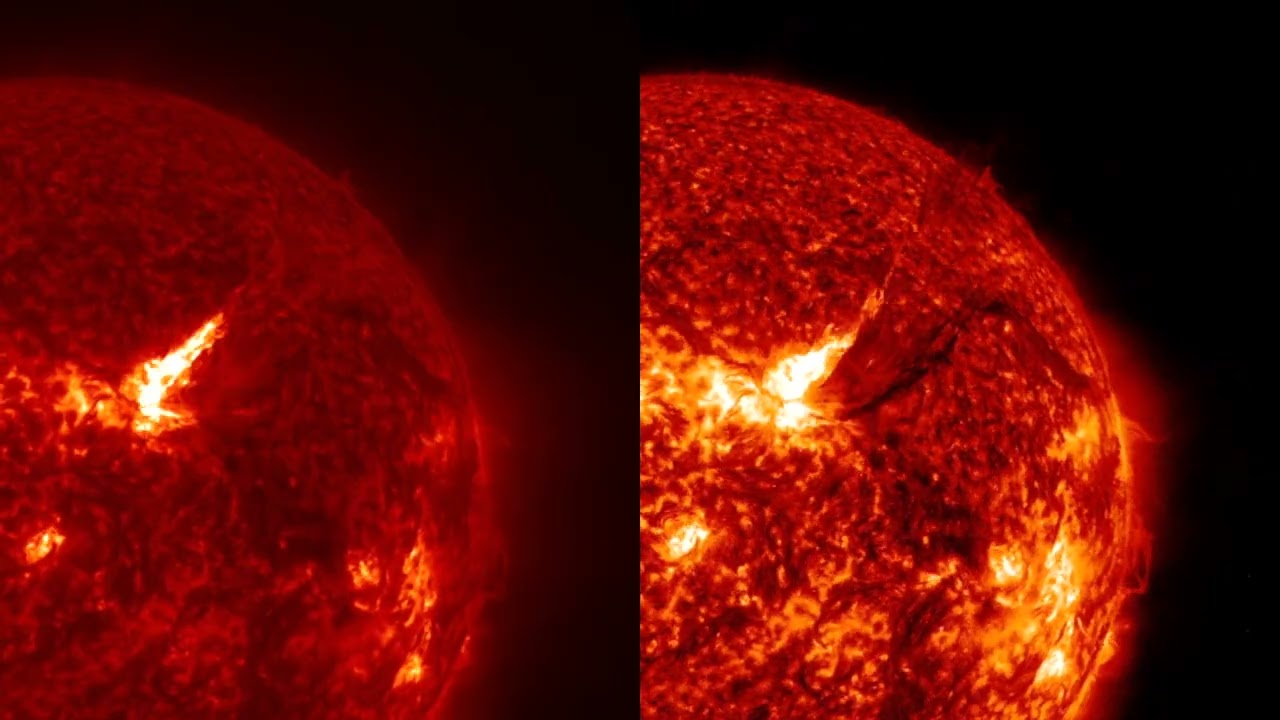
Solar Flares and CMEs at Earth - More Likely | S0 News June.3.2026
SpaceWeatherNewsS0s
2K views•2026-06-03



