Google's Managed Agent API enables a single API call to autonomously execute complex multi-step business workflows by leveraging an agent harness that can analyze data, access live web information, query internal systems, and perform actions like filing orders for approval, with key features including background execution, secure remote MCP connectors for private data, and custom function calling with human-in-the-loop control.
Install our extension to search inside any video instantly.
Google's New Managed Agent API (Antigravity Agent) in Plain English
Added:Let's think of a business scenario you may have come across in your work environment. You've got a business goal that touches four different systems.
Analyze the sales data set, check competitor pricing on the live web, query an internal ERP, and then file an order for human approval.
>> [music] >> Normally, you would solve this by building a multi-agent system, wiring it up with agent development kit or LangChain, and orchestrating the whole thing yourself.
But, what if you could [music] do all of this with a single API call?
That is what Google's managed agent API is all about. And here's the part that makes it work. It's the exact [music] same agent harness that powers anti-gravity. The cloud sandbox that runs commands, reads files, and [music] browses the web for you. Google just gave you direct API access to that very engine. This is powered by Gemini 3.5 Flash and is also now live on the free tier in Google AI Studio. So, let me show you how one API call can handle all four.
So, this was launched a few months ago.
Since then, Google has shipped updates [music] that turn it into something engineering leaders, PMs, and developers have really liked and actually started to use in production. I'm going to focus on three that matter the most, and you will see all three fire in a single run in the upcoming demo. One will be background execution. The agent runs on Google Cloud, not your browser tab, so you can close your laptop or drop your Wi-Fi, but the job will still keep going. Second is remote MCP connectors.
It connects securely to your own private data. That means an internal ERP or database API can all be done, but this happens over MCP, model context protocol. Three is custom function calling. When the agent needs to do something real like ordering inventory or writing to production, it pauses, throws a safety gate. That means it [music] can hand the control back to you as a human, right? So, that human in the loop is very much there. Okay? So, we'll see all of this as part of the demo. I just want to clarify this, right? So, manage agents is a pure back-end API.
So, obviously Google doesn't ship it with a UI. What I did was I build my own visual app so that you can understand everything what is happening under the hood. So, it will make it super clear for you to appreciate the stuff that is happening within the agent harness. So, we'll now look into the actual demo. A quick disclaimer before we do that, all of opinions are my [music] own and do not belong to my employer. All right, with that let's get into it. All right, so what you're seeing on the screen is a UI that I built in order for us to understand managed agents API, right?
So, let me start explaining the business problem first. In this scenario, we are a retailer and we buy different products from the manufacturer. So, this is [music] the unit price, the cost price that we buy and then the unit price that we sell, right? Our target is always to have a gross margin which is above 15%.
So, you can clearly see that this [music] particular SKU, which is a still water leather jacket, we have a problem here, right? Now, this is also represented here from a from an analytics perspective, you can see again there's a problem over here. And >> [music] >> what we have to also understand is what is the competition offering in the market, right? So, this is a previous analysis done, but we can also we will also need to understand the latest current competition pricing, right? So, in this scenario, what we will need to do is we will generally speaking, we'll have to like a multi-agent system where one agent will go research the competition, another agent will go look at the pricing, and then another agent will suggest price difference. But, in the case of managed agent, what we will do is we'll actually give [music] a task like this to analyze this particular file, flag any SKU with gross margin below 15%, and then check live competitive pricing to see if flagged items are underpriced, and then recommend a price adjustment to restore target margin and file it for human approval, right? So, there are a lot of things that we are trying to do. Then, we can also we could have done more where we could have asked [music] it to also reorder via the MCP connection, right? So, what I'm going to do is run this live, and you will see that the first thing it is doing is it is actually like spinning up a live Linux system, >> [music] >> and then it is doing a live price search, right? So, all of this is happening very quickly, and then you can see here at cost for me, right? So, the agent has finished finding market price analysis and requires permission. This is the function, as I was mentioning, right? So, I'm going to say that if we change the price to 370, the target margin will increase to 16.2. This is underprice versus market, which is 375, which you can see from our dashboard as well, which is the the market average was 375.
So, what it is going to do now is it is now working in order to go ahead and update in the back end on what should be the current price, and you will see that once it has done and made the actual change, and this is where the agent can actually take an action on your behalf, right? So, usually in a company, this would be directly in a ERP like an SAP.
So, this could actually go ahead and write that new price or updated price in an ERP system, right? So, this is what is happening right now. It is going in the back end and trying to update that price, and then it will come back and provide us with the final report. So, the key thing to note here is all of these sub agents were spun up automatically, as well as the tools and all of those things, right? And this is what an agent harnesses all about. So, you don't have to worry about the infrastructure, you don't have to worry about what kind of tools, etc. The agent will need to access. It will do that all that automatically for you in an infrastructure which it is spinning, right? So, what I would recommend is you test it out via AI Studio, give it a task which has complicated problem like this and see for yourself like how does it run, right? So, this is a long-running agent as well because it's a hardness. So, we'll give it a few seconds for it to complete the end result which is generating the report and then we'll come back and show you what the output looks like.
All right, so it has completed the job and you can see that the workflow is completed autonomously and you can also see that the price adjustment has been approved and the analytics dashboard is also reflecting that. You can see the margin has also been improved. You can see all of these things being executed directly and the data set also has been updated, right? And this is what the agent is actually able to do end-to-end.
So, you just saw that it took multiple actions. It went online, researched the competition, then it adjusted the price, it the adjusted the the dashboard over here. We just saw that it was here and this was also different. It actually adjusted the data set as well, right?
So, all of this happened live in front of you and that is what a managed agent API is capable of doing, right? So, with just one specific instruction which you have given over here. And that's the cool thing about this, right? I would highly recommend go ahead and try this.
It is available right now in AI Studio and give it an interesting problem and let me know in the comment section what you think about this. This is the actual definition of what agent harness is all about. So, let me know in the comment section what you thought about this video. If you're new here, please hit that like and subscribe button as well.
I'll appreciate it. As always, thank you very much for your time. Thank you for watching and I will see you in the next one.
Related Videos
6:13
Computer Science
TOP 15 Data compression Interview Questions and Answers 2019 Part-2 | Data compression | Wisdom jobs
wisdomjobs
281 views•2019-06-28

27:51
Computer Science
CTS 158: 802.11w Management Frame Protection
ClearToSend
4K views•2019-02-04
23:21
Computer Science
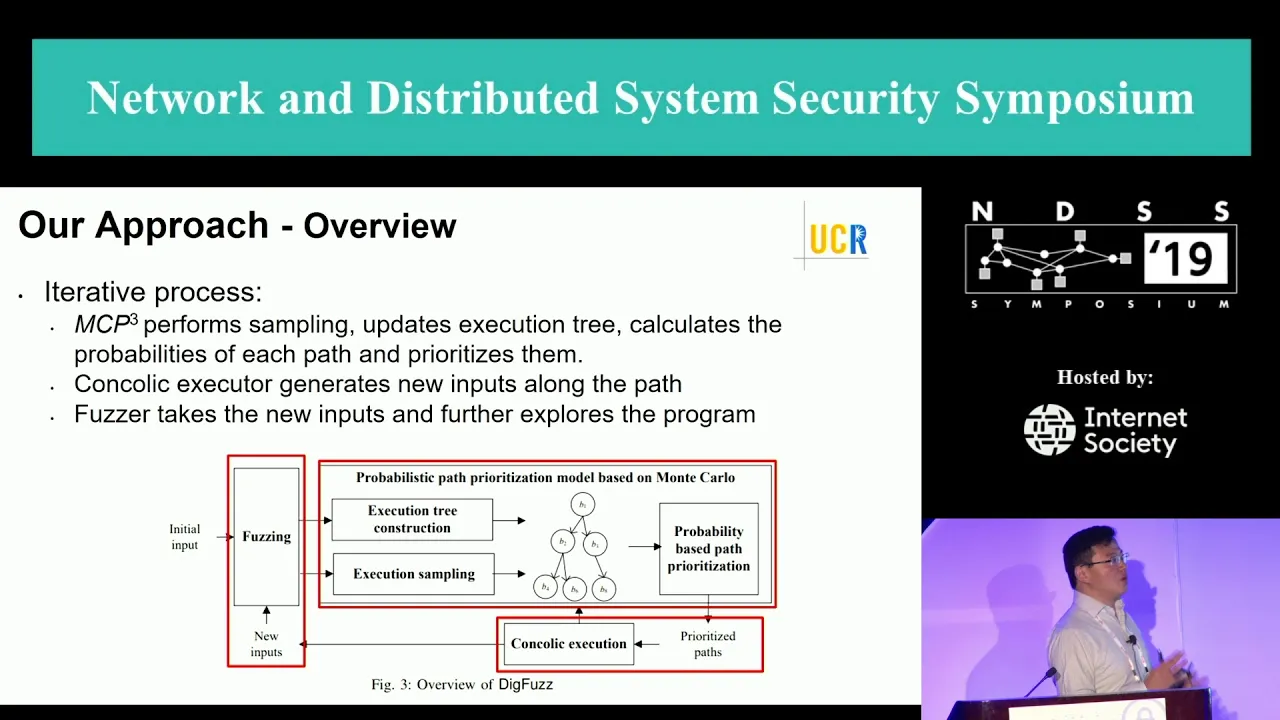
NDSS 2019 Send Hardest Problems My Way: Probabilistic Path Prioritization for Hybrid Fuzzing
NDSSSymposium
496 views•2019-04-02

12:48
Computer Science
How realistic is Cities: Skylines?
CityBeautiful
159K views•2019-02-14
46:39
Computer Science
GUIs & TUIs: Choosing a User Interface for Your Python Project | Real Python Podcast
realpython
2K views•2025-04-04

25:15
Computer Science
The OSI Model - Explained by Example
hnasr
225K views•2019-05-12

1:10:47
Computer Science
Cloud Computing - Introduction
elithecomputerguy
98K views•2019-10-07
2:24
Computer Science
From Traveler's Dilemma to Dynamic Routing | Demystifying Networking
IITBombayJuly
5K views•2019-08-04
Trending

13:38
Law
WOW! Judge TURNS THE TABLES on Trump in His OWN $10B LAWSUIT!!!
MeidasTouch
197K views•2026-07-23

13:25
Business
Playstation NO DISC/NO BUY Fight Is Over...
DavidJaffeGames
4K views•2026-07-23

22:40
Business
Steam and Xbox Just Dropped The Hammer On PlayStation
OhNoItsAlexx
9K views•2026-07-23

16:52
Anthropology
Americans Confused in Australia for 17 Minutes Straight
IWrocker
17K views•2026-07-23