This video showcases 10 groundbreaking personal transportation inventions that demonstrate how engineering innovation is transforming human mobility across multiple domains. The inventions range from jet-powered flight systems like the Jetman Jet Wing and Flyboard Air, to electric vertical takeoff vehicles like the Jetson ONE, to unconventional ground vehicles like the Buggy Rollin and McLean V8 Monowheel. These innovations share common characteristics: they leverage advanced materials (carbon fiber, 3D printing), integrate intelligent control systems, and push the boundaries of what personal vehicles can achieve. The progression from jet-powered flight to electric VTOLs to autonomous underwater vehicles illustrates a broader trend toward more accessible, efficient, and versatile personal transportation solutions that are increasingly bringing futuristic concepts from science fiction into practical reality.
This New Flying Invention From the United States Will Leave You Speechless
Added:What if escaping traffic was as simple [music] as taking to the sky? It may sound like science fiction, but a new generation of personal transportation is already making that vision a reality.
From jet-powered [music] flight systems and electric hover vehicles to futuristic air bikes and gravity-defying ride concepts, these incredible machines are redefining how people could travel in the years ahead.
In this video, we'll explore 10 of the most extraordinary personal transportation inventions ever created.
These aren't distant concepts or computer-generated ideas. They're real innovations that are flying, riding, and pushing the limits of modern engineering today.
Some let you soar through the air like a pilot, while [music] others completely rethink what a personal vehicle can be.
Stay with us until the end because each invention becomes more impressive than the last, offering an exciting glimpse into the future of human mobility. Few inventions capture the dream of human flight [music] quite like the Jetman jet wing. Instead of placing the pilot inside an aircraft, this remarkable [music] system transforms the person into the aircraft itself. Built around a rigid carbon fiber wing fitted [music] with four compact jet turbines, it is worn directly on the pilot's back, eliminating the need for a cockpit, landing gear, or conventional [music] flight controls. Flying the jet wing demands exceptional skill because every maneuver comes from the pilot's own body movements. Shifting body weight, tilting the shoulders, and adjusting posture control the aircraft's direction [music] and attitude in the air. Capable of exceeding 200 km/h, [music] it allows experienced pilots to perform sweeping turns, aerobatic maneuvers, [music] and even fly alongside conventional airplanes. Since the wing can't take off or land under its own power. Flights typically begin with a helicopter or high-altitude [music] balloon launch and conclude with a parachute landing. More than an engineering achievement, the Jetman jet wing offers one of the closest experiences yet to the timeless dream of flying [music] freely through the sky.
At first glance, [music] the Volador Airbike looks like something lifted straight out of a science fiction movie.
When footage of the vehicle first appeared online, many people assumed it was computer generated because it seemed impossible. A rider hovered above the ground on what looked like a floating motorcycle with no wheels and no large exposed propellers in sight.
>> [music] >> But the aircraft is real and it was created by Polish inventor Tomasz Patan, an engineer known for pushing the limits of personal flight. [music] What makes the Volador Airbike so remarkable is its combination of lightweight engineering and advanced propulsion. [music] Constructed from carbon fiber and 3D printed components, the prototype weighs only about 30 kg, roughly [music] seven times lighter than a typical motorcycle.
It is designed to reach speeds of up to 124 km/h while using a jet propulsion system supported by sophisticated flight control software that automatically maintains stability.
>> [music] >> Without large spinning rotors surrounding the rider, the aircraft has the potential to maneuver through tighter spaces than many conventional eVTOL designs.
With an estimated price of around $880,000, it remains an exclusive technology, but it offers an exciting glimpse of a future [music] where riding a flying motorcycle could become a reality.
The Flyboard Air [music] is one one most extraordinary personal flight machines ever built, proving that hovering through the sky on a jet-powered [music] platform is no longer just a science fiction fantasy. Developed by French inventor Frankie Zapata, the aircraft gained worldwide attention [music] after breathtaking public demonstrations that showed a rider soaring high above the ground while [music] standing on what appeared to be a floating board. Powered by multiple jet turbines beneath the platform, >> [music] >> the Flyboard Air lifts its pilot into the air using pure jet thrust.
>> [music] >> Steering is achieved through subtle shifts in body weight, allowing experienced riders to control direction much like balancing on a skateboard, [music] except hundreds of meters above the ground.
The technology has already demonstrated [music] impressive real-world capabilities, including Zapata's historic flight across the English Channel, covering more [music] than 35 km between France and England.
Capable of reaching speeds of around 150 km/h, [music] the Flyboard Air has become a remarkable showcase of engineering innovation, turning the long-held dream of personal jet-powered [music] flight into an unforgettable reality.
>> [music] >> The Jetson One has become one of the most recognizable personal eVTOL aircraft in the world, bringing the idea of owning a flying vehicle closer to reality than ever before.
Designed as a single-seat electric aircraft, [music] it lifts off and lands vertically like a helicopter, while relying on eight electric motors to provide stable drone-like flight.
>> [music] >> Compact, lightweight, and built for recreational flying, it offers a glimpse into what personal aviation could soon become.
>> [music] >> Pilots control the aircraft with two intuitive joysticks, while onboard computers continuously assist with stabilization to make flying more approachable.
Safety is further enhanced by obstacle detection sensors and an integrated ballistic parachute for emergency situations.
The Jetson One can reach speeds of around 100 km/h and remain airborne for approximately 20 minutes on a charge. In the United States, it qualifies as an ultra-light aircraft under certain regulations, allowing many operators to fly without a traditional pilot's license.
Originally founded in Sweden and now headquartered in California, the company has already delivered aircraft to early [music] customers.
Priced at roughly $148,000 and with production sold out through 2027, the Jetson One demonstrates the growing demand for practical personal flight.
The Anduril [music] YF-44A Fury is helping redefine the future of military aviation by introducing a new generation of autonomous combat [music] aircraft. Rather than replacing crewed fighter jets, the Fury is designed to fly alongside them as a collaborative wingman, expanding mission capabilities while reducing the risks [music] faced by human pilots.
Equipped to support reconnaissance, electronic warfare, [music] and combat operations, it represents a significant shift toward intelligent [music] networked air power.
One of the aircraft's most impressive achievements is the pace at [music] which it was developed. From its initial design to flight testing, the YF-44A progressed far more rapidly than traditional military aircraft programs, demonstrating a faster approach to developing advanced defense [music] technology.
Built to operate in coordination with platforms such as the F-35, F-22, [music] and F-15EX, the Fury can carry mission payloads, [music] increase battlefield awareness, and assist with complex operations across a wide range of scenarios.
Its design also emphasizes scalable, cost-effective production, enabling larger fleets of autonomous aircraft [music] to complement conventional fighters.
As artificial intelligence and autonomous systems continue to advance, the [music] YF- 44A Fury offers a compelling glimpse into a future where crewed and uncrewed aircraft work [music] together as an integrated combat force.
After exploring machines that conquer the skies, it's time to look at something that transforms the human body itself into a high-speed vehicle. The Buggy Rollin is unlike anything else on the road. A full-body suit fitted [music] with 31 wheels positioned across the arms, legs, chest, back, knees, and feet.
>> [music] >> Created by French inventor Jean-Yves Blondeau, it allows riders to glide [music] face-down over pavement, turning their entire body into the steering and suspension system.
Mastering the Buggy Rollin requires exceptional balance, precision, and courage. Riders control direction and speed by shifting their body weight and using their elbows, knees, and hands to guide the suit through turns.
>> [music] >> On steep descents, speeds can exceed 100 km/h, >> [music] >> placing the rider just centimeters above the road surface.
The experience is both exhilarating and unforgiving, where even a small obstacle demands total concentration.
More than just an extreme sport, >> [music] >> the Buggy Rollin is a remarkable fusion of engineering, athletic skill, and artistic creativity that pushes the limits [music] of what personal mobility can be.
As we move closer to the top of the list, [music] the machines become even more unconventional.
The McLean V8 Monowheel abandons the traditional two-wheel motorcycle design in favor of a single massive wheel that completely surrounds the rider.
>> [music] >> Instead of sitting above the vehicle, the pilot is positioned inside the rotating wheel [music] itself, creating one of the most unusual riding experiences ever engineered.
Designed by American inventor Kerry McLean, this remarkable machine is powered by [music] a roaring V8 engine, similar to those found in high-performance sports cars.
The combination of immense power and a one-wheel layout allows the monowheel to achieve impressive [music] speeds, but it also introduces unique handling challenges.
One of the best-known risks is a phenomenon enthusiasts [music] call gerbiling, where sudden braking or unexpected momentum can cause the rider to rotate inside the wheel.
Equal parts engineering experiment, [music] extreme machine, and mechanical spectacle, the McLean V8 monowheel remains one of the boldest and most unforgettable [music] personal vehicles ever created.
Few inventions have captured the imagination quite like a real hoverboard, and Lexus turned that long-standing science fiction fantasy into a working prototype.
>> [music] >> Inspired by the iconic floating skateboard scene in popular movies, the company created a board that glides without [music] wheels, demonstrating that magnetic levitation can produce genuine hovering under the right conditions. Instead of relying on hidden tricks, the Lexus hoverboard uses superconducting materials [music] cooled by liquid nitrogen to extremely low temperatures. When these superconductors interact with specially designed magnetic [music] tracks embedded beneath the riding surface, the board rises above the ground and floats with virtually no friction. The white [music] vapor seen during demonstrations comes from the evaporating liquid nitrogen that keeps the system cold enough to function.
To showcase the technology, Lexus constructed a dedicated hover park where professional riders performed turns, jumps, and even skimmed across [music] water while remaining suspended above the track.
Although the hoverboard only operates on specially prepared [music] magnetic surfaces, it stands as one of the most remarkable demonstrations of real-world levitation technology ever [music] created, bringing a legendary science fiction concept closer to reality.
>> This invention proves that the [music] future of mobility doesn't always require engines or electricity.
>> [music] >> The Bionic Boots, created by California inventor Keahi Seymour, are designed to amplify [music] human movement using nothing more than biomechanics and clever engineering. After [music] more than 15 years of development, the result is a wearable system that allows people to run faster [music] and more efficiently by working with the body's natural motion instead of replacing it.
Inspired by the powerful [music] legs of ostriches and kangaroos, the boots use spring-loaded mechanisms and artificial tendons to capture energy with every stride and release [music] it during the next step. This energy recycling effect provides an extra boost of forward momentum, allowing users to reach speeds up to 40 km/h under the right conditions.
There are no motors, batteries, or fuel tanks involved. [music] Only physics, mechanical design, and human power working together.
In a world [music] filled with flying vehicles and futuristic machines, the Bionic Boots offer a different vision of innovation, showing that sometimes [music] the most remarkable transportation technology begins with enhancing the abilities we already have.
The Manta Ray is a next-generation autonomous underwater vehicle engineered to carry out long-duration missions in the depths of the ocean [music] with minimal human intervention. Designed for stealth and endurance, this unmanned submarine can perform [music] surveillance, reconnaissance, and other strategic operations while remaining concealed beneath the surface [music] for extended periods, making it a significant advancement in autonomous maritime technology.
One of the platform's [music] most distinctive features is its ability to descend to the seafloor and enter an ultra-low power dormant state, [music] conserving energy until new tasks are assigned. When required, it can reactivate, [music] continue its mission, and travel across vast underwater distances while [music] maintaining a low profile. Its modular construction further enhances operational flexibility, allowing the vehicle to be transported in standard shipping containers [music] and assembled close to deployment locations.
Following successful sea trials, the Manta Ray has demonstrated [music] the potential of long-endurance autonomous underwater systems, offering a glimpse into the future of naval operations where intelligent unmanned [music] vehicles can remain on station for weeks or even months with very limited logistical support.
>> [music]
Related Videos

Setting up a curved screen with Immersive Calibration Pro 4 and multiple cameras (P3D v4)
FlyerOneZero
23K views•2019-07-21

Robot Learning with Sparsity and Scarcity
allenai
379 views•2025-10-14

Jorge Mendez-Mendez: Unlocking Lifelong Robot Learning With Modularity (2023-10-05)
umassmlfl
237 views•2024-01-06

Northwestern’s MS in Robotics: Student Robotics Projects, 2023
NorthwesternEngineering
1K views•2024-05-31

"Perfect" Turns: Turning by the Gyro - FIRST LEGO League (FLL) SPIKE Prime + EV3 RePlay Programming
ZacharyTrautwein
94K views•2020-10-02
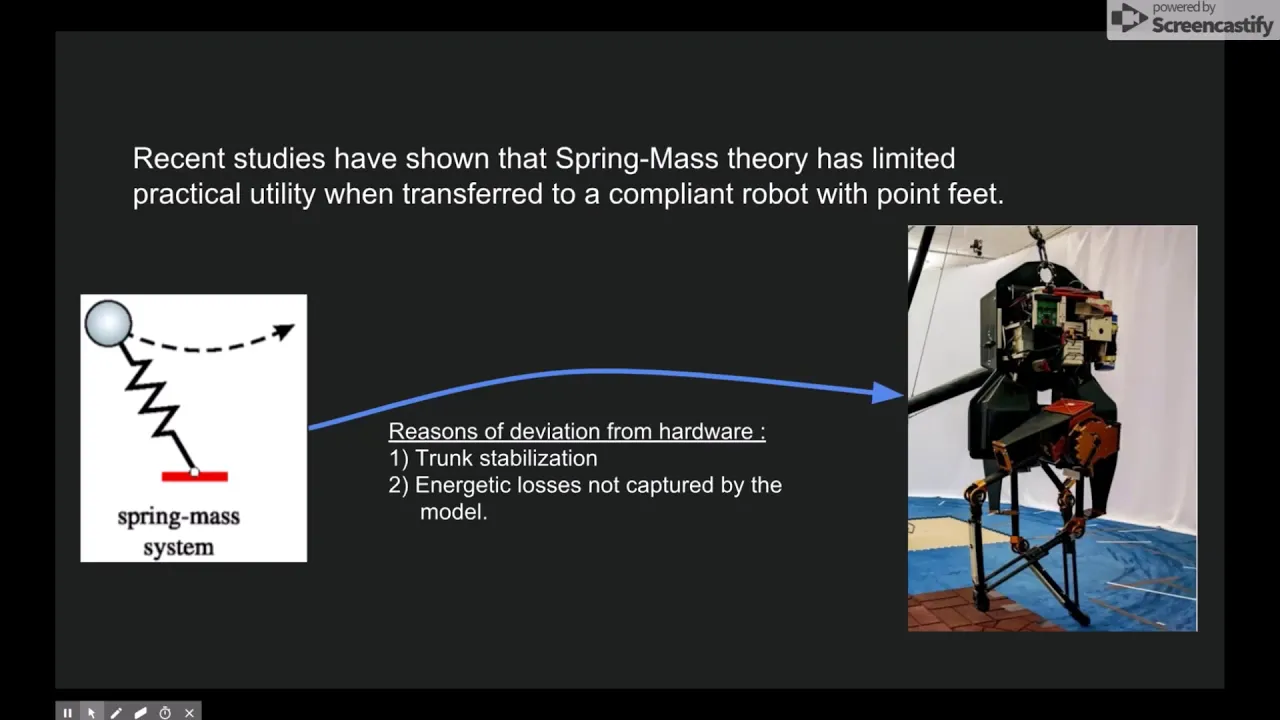
Gorkem Secer: TSLIP-based Deadbeat Running Control of Bipedal Robot ATRIAS
DynamicWalking-wv6qm
298 views•2018-06-22

Self-Driving Cars Need Lessons On Human Drivers | Maddie About Science
skunkbear
26K views•2018-08-21

Milrem Robotics’ THeMIS UGVs used in a live-fire manned-unmanned teaming exercise
MilremRobotics
99K views•2021-05-20
Trending

WOW! Judge TURNS THE TABLES on Trump in His OWN $10B LAWSUIT!!!
MeidasTouch
197K views•2026-07-23

Playstation NO DISC/NO BUY Fight Is Over...
DavidJaffeGames
4K views•2026-07-23

Steam and Xbox Just Dropped The Hammer On PlayStation
OhNoItsAlexx
9K views•2026-07-23

Americans Confused in Australia for 17 Minutes Straight
IWrocker
17K views•2026-07-23