The video masterfully exposes how the "peace" of isolation is often just a survival mechanism turned into a self-imposed prison. It offers a necessary wake-up call, though its clinical approach risks over-intellectualizing the raw, messy necessity of human connection.
Install our extension to search inside any video instantly.
The Psychology of People Who Isolate Themselves (And The Trap of Peace)
Added:[music] You don't hate people. You're just exhausted. You think pushing everyone away is how you protect yourself. But over time, that boundary becomes a wall.
And today, we're looking at the dark psychology of selfisolation and why your peace might quietly be destroying you.
Think about the last time you canled a plan at the very last minute. You sat on the edge of your bed, staring at your phone, drafting a text message, deleting it, and typing it again. I'm so sorry.
I'm just not feeling well. I can't make it tonight. You hit send and then you wait. The moment they reply saying, "It's fine." What is the very first thing you feel? It's not guilt. It's not regret. It is a massive, overwhelming rush of relief. Your shoulders drop. The tightness in [music] your chest completely disappears. You put your phone on do not disturb. You look around your quiet empty room and you tell yourself a very convincing lie. [music] I am just protecting my peace. It sounds so mature, doesn't it? It sounds like growth. Modern society [music] tells us that stepping back, cutting people off, and setting strict boundaries is [music] the ultimate form of self-care. But if we look at this through the lens of behavioral psychology, what just happened in your brain [music] is actually much darker. When you cancelled that plan, your anxiety [music] levels instantly dropped to zero. Your nervous system, which was bracing for the exhaustion of small talk, the fear of judgment, or the draining energy of a crowded room, suddenly realized it didn't have to perform anymore. And your brain, doing what it is evolutionarily designed to do, took notes. It registered that avoiding people equals safety. It registered that isolation equals a reward. And this is exactly where the trap is set. The brutal truth is that the peace you are feeling right now is a complete illusion. It is [music] not true foundational peace. It is simply the temporary absence of being triggered. You haven't actually solved the underlying social anxiety, the emotional burnout, or the deep fear of being misunderstood. You have just successfully removed all the human variables that remind you of those wounds. Because selfisolation offers immediate, instant [music] comfort, it is incredibly seductive. It feels like a warm, heavy blanket on a freezing day.
[music] But just like any substance that provides instant relief from pain, avoidance is highly addictive. Every single time you say no, every time you ignore a phone [music] call, every time you choose the absolute safety of your bedroom over the unpredictable friction of the outside world, you are feeding a habit. You are quietly teaching your brain that [music] the only way to survive is to be completely alone. You think you are finding peace but in reality you are just successfully running away from the panic.
Let's take a step back for a moment. If you are sitting there feeling a heavy sense of guilt right now. If you're wondering if there is something fundamentally broken inside of you because you keep pushing people away, I need you to hear this loud and clear.
You [music] are not broken. In fact, your brain is functioning exactly the way it was designed to. To understand why intelligent, deeply feeling people suddenly disappear, we have to look past the surface behavior and look directly [music] at the human nervous system. You see, isolation almost never starts as a conscious lifestyle choice. It starts as a primal survival mechanism. Throughout human evolution, our brains have been hardwired with one primary objective.
Keep you safe, not keep you happy, not make sure you have a thriving social life or ensure you are universally liked. Its only goal is to keep you safe. Your nervous system is constantly scanning your environment for threats.
And while our ancestors looked for physical dangers, [music] in our modern hyperconnected world, the threats have become intensely emotional and psychological. When you are a highly observant, deeply analytical person, you don't just casually participate in social interactions. You process them.
You process the micro [music] expressions, the passive aggressive tones, the unspoken expectations, and the sheer amount of energy it takes to wear a mask that makes everyone else feel comfortable. Neuroscience tells us that for an overinker or an introvert, engaging in superficial small talk actually consumes significantly more glucose in the brain than it does for an extrovert. You literally burn through your biological energy just trying to exist in the same room as other people.
We call this a rapid depletion of your social bandwidth. And if you have a history of being let down, if you have poured your empathy into people who only took from you, if you have been manipulated, rejected, or made to feel like your genuine self is somehow [music] too much. Your brain starts to run a very simple, very tragic equation.
It learns that connection equals danger.
It learns that vulnerability [music] equals exhaustion. Once your amygdala, the threat detection center of your [music] brain, accepts this equation. It will do everything in its power to protect you from experiencing that pain again. It will flood your system with anxiety at the mere thought of attending a gathering. [music] It will make you feel physically ill when someone asks for a favor. It will convince you that answering a simple text message requires a monumental, impossible amount of effort. This leads us to the greatest misunderstanding about people who isolate themselves. Society [music] looks at the quiet, distant person and assumes they are arrogant. They assume they are cold, antisocial, or that they simply hate humanity. But that couldn't be further from the truth. You do not hate people. You love people deeply, perhaps too deeply. What you hate is the feeling of being drained. You are terrified of the [music] inevitable disappointment. You are avoiding the severe emotional hangover that comes from shrinking yourself to fit into rooms where you don't actually belong.
You aren't avoiding human connection.
You are avoiding the [music] devastating cost of fake connection. Your brain recognized that your environment was hurting you. And because it couldn't change the people around you, it did the only thing it could do to keep you safe.
It pulled the plug. It shut down the system to stop the bleeding. So if you take away anything from this, let it be this. Let go of the guilt. Closing your door doesn't prove that you hate the world. It simply proves that you opened it to the wrong people way too many [music] times.
There is a profound difference between being alone and being isolated. And this is exactly where the trap of protecting your peace quietly [music] claims its victims. Solitude is intentional. It is the deliberate act of stepping away from the noise of the world to recharge your batteries, process your thoughts, and reconnect with yourself. When you are practicing true [music] solitude, there is an underlying healthy assumption. I am resting so that I can eventually return. You step out of the arena to catch your breath, knowing full well that you [music] will step back in.
Isolation, however, is not about resting. Isolation is about hiding. It is driven not by a need for self-discovery, but by a deeprooted fear of being triggered. You aren't stepping away to recharge. You are running away to avoid being hurt, disappointed, or [music] drained. And here is the terrifying thing about avoidance. It demands more and more space. The comfort zone doesn't just stay the [music] same size. If you let it, it actively shrinks. Think about how it started for you. It probably didn't begin with cutting everyone off. It started small.
You decided to stop going to large, loud gatherings. That made sense. Large parties are exhausting. You felt a wave of relief. But then the brain [music] wanted that relief again. So you started avoiding the break room at work. You started wearing your headphones in public even when nothing was playing just to guarantee no one would talk to you. Then it bled into your close relationships. [music] You started taking days to reply to text messages from people you actually care about. You stopped picking up [music] phone calls, just sitting there watching the screen light up in silence until it finally went to voicemail. Fast forward to today and your safe zone might have shrunk down to just the four walls of your bedroom. Anything outside of that physical door feels like an unbearable psychological load. What you're experiencing is [music] not the attainment of peace. It is the domino effect of avoidance. When you isolate yourself for a prolonged [music] period, something very real and very measurable happens to your brain. Psychologists refer to it as the atrophy of your social muscles. Just like a physical muscle that is placed in a cast for 6 months, your social skills literally wither when they aren't used. Your brain's neuroplasticity begins to rewire itself exclusively for isolation because you are no longer exposed to the natural [music] everyday friction of human interaction.
You completely lose your tolerance for it. You forget how to navigate a minor disagreement. You forget how to handle an awkward pause in a conversation. You lose the cognitive agility required to read someone's tone without immediately assuming they're attacking you or judging you. This is why after months or years of isolating yourself, the simple thought of meeting a friend for coffee feels like you are being asked to climb Mount Everest, your brain no longer has the emotional stamina to handle even the slightest bit of social unpredictability. This is the first brutal twist of selfisolation. In your desperate attempt to protect yourself from the exhaustion of the outside world, you haven't actually made yourself stronger. You have made yourself incredibly fragile. You have created an isolated environment where you are so unaccustomed to minor discomfort that anything less than total silence feels like a massive [music] threat. Look at the boundaries you've set over the last few years. Look at the people you've cut off, the events you've skipped, the doors you've locked. You told yourself you were building a fortress to keep toxic people out. But take a close look around you right now.
You didn't build a fortress. You built a prison. And you locked yourself inside.
Let's talk [music] about the stories you tell yourself when you are alone in that room. When you cut off the outside world, you don't just stop interacting with people.
>> You start having conversations with ghosts.
>> Human brains are fundamentally meaning making machines. When you deprive your [music] brain of actual realtime social data, it doesn't just power down. It doesn't accept the silence. It fills in the blanks. And because your nervous system is already operating [music] in survival mode, it fills those blanks with worst case scenarios. Think about it. When a friend doesn't text you back [music] right away, and you are already in an isolated state of mind, you don't assume they are busy. You assume they are tired of you. You convince yourself that if [music] you went to that dinner party, you would just be a burden or that people would secretly judge you for being quiet. When you lack [music] real world social experiences, you hallucinate rejection before it even has a chance to happen. You become completely unaware that your own isolated brain is manufacturing the very pain you are trying so hard to avoid.
And this is where we hit the [music] most dangerous phase. This is the ultimate identity trap. If you stay in this defensive avoidant state [music] long enough, a profound psychological shift occurs. What started as a temporary defense mechanism hardens into a permanent personality trait. You stop telling yourself, "I am isolating right now because I am overwhelmed and need to heal." Instead, you start telling the world, "I just like being alone." This is simply who I am. I don't need anyone.
But I want you to sit with a very uncomfortable question for a moment. I want you to be brutally honest with yourself. Are you really naturally meant to be entirely [music] alone? Or are you just someone with a deeply wounded heart wearing the heavy suffocating armor of hyperindependence? Highly intelligent people are incredibly good at intellectualizing their trauma.
>> If you are smart, you can use your intellect to defend your worst habits.
You can build a flawless, logical, bulletproof argument for why you should remain completely alone. You tell yourself that your standards are simply too high. You tell yourself that modern conversations are too shallow, that people are too exhausting, that no one possesses the emotional depth required to truly understand you. This is a protective arrogance. It is your ego jumping in to shield you from the terrifying, [music] messy vulnerability of being truly seen by another human being. It feels empowering [music] to say, "I have outgrown everyone." But deep down, it is often just the frightened part of you ensuring that you never have to risk being abandoned, [music] rejected, or misunderstood ever again. And here is the tragic irony of the identity trap. Isolation completely prevents the healing process.
Psychological healing does not happen [music] in a vacuum. You cannot journal your way out of relational trauma. You cannot meditate your way into trusting people again. You cannot sit in an [music] empty room and think your way into feeling safe in the world. Your nervous system is stubborn. It only changes when it is presented with new, undeniable physical evidence. To teach your brain that the [music] world is not entirely a threat, you have to actually experience safe people. You have to experience someone keeping their [music] word. You have to experience someone respecting your boundaries without making you feel guilty for having them.
You have to experience the warmth of someone holding space for you when you are imperfect. By keeping your door permanently locked to protect your peace, you are actively blocking the exact medicine you [music] need to heal.
You are denying your brain the new data it desperately needs to rewrite the core belief that all human connection [music] equals pain. Saying you don't need anyone, that you are perfectly content sitting alone in your fortress forever is [music] like dying of thirst in the middle of a barren desert. But refusing to drink a glass of water because you were terrified it might be [music] poisoned. You are surviving, yes, but you are dying of thirst.
Let's talk about the fortress [music] you've built. It's quiet in there, isn't it? When you successfully isolate yourself, you do achieve a certain kind of perfection. You create a completely sterile emotional environment. Think of it like a clinical white room. In a sterile room, [music] there are no contaminants, no unpredictable elements, no sudden storms. There are no arguments. There is no betrayal. No one is going to manipulate you. No one is going to make you feel like your needs are a burden or that your personality is simply too much. You have successfully eliminated all the chaotic human variables that could possibly break your heart again. But here is the tragic reality of a completely sterile room.
Absolutely [music] nothing can grow there. By completely removing the possibility of pain, you have unknowingly removed the possibility of serendipity. You have eliminated those rare, beautiful moments of unscripted human connection that make all the exhaustion worth it. When you isolate, there are no spontaneous bursts of laughter that make your stomach ache.
There are no late night, emotionally raw conversations where someone looks at you and says the exact words your soul has been desperate to hear. There is no deep, quiet resonance. The kind of resonance that only happens when two beautifully imperfect people choose to stay in the room and work through a misunderstanding together instead of walking away. True, profound happiness is almost never born in a state of absolute safety. It is born in the friction. It is born in the messy, complicated, highly unpredictable collision of human lives. When you remove that friction, you don't just stop hurting. You slowly, gradually stop feeling altogether. This is the ultimate hidden cost of your invulnerability. You wanted to protect yourself from the harshness of the world. But in doing so, you have accidentally numbed yourself to the very things that make the human experience worth enduring. You walk through your days completely unbothered, perfectly detached, safely observing everyone else from behind a pane of glass. You have become the ultimate observer, a [music] ghost haunting the corridors of your own life. You are entirely safe from the world, but you are completely disconnected from its heartbeat. I know how much it hurts to be let down. I know how deeply exhausting it is to give pieces of your empathy to people who simply do not know how to hold them. But I also know this.
The opposite of emotional suffering is not isolation. The opposite of suffering is meaning. [music] And meaning always, without exception, requires vulnerability. You can keep the door [music] locked forever. You can succeed in making sure that no one ever has the power to hurt you, disappoint you, or drain your energy ever again, but you have to sit in the silence and ask [music] yourself if the trade-off is actually worth it. You can absolutely succeed in never being hurt again. But the terrible price you pay [music] for that invulnerability is that you also never truly live again.
So, how do you [music] get out? If you are sitting there realizing that the fortress you built to protect your peace has actually become a prison, [music] how do you open the door without letting all the chaos back in? You have to start by understanding a [music] fundamental rule about human psychology. Your nervous system cannot be healed through logic. You cannot sit alone in your room, journal your thoughts, and simply convince your brain [music] that the outside world is safe. Your brain doesn't care about your logic. It only cares about evidence. It only rewires its trauma response when [music] it is presented with new physical undeniable proof. To break the addiction of selfisolation, [music] you have to provide your nervous system with safe corrective experiences. Now, this does not mean you need to force yourself to go to a massive crowded party this weekend. It doesn't mean you have to unblock the toxic people from your past or suddenly say yes to every invitation.
Doing that will only trigger your amydala, overwhelm your system, and send you running right back into hiding.
Instead, you have to rebuild your social bandwidth intentionally and very, very slowly. The ultimate goal of a highly intelligent, deeply feeling person is not to isolate. The goal is curation.
True emotional maturity isn't about burning [music] down the entire village just because a few people were too loud.
It is the art of carefully selecting who gets to sit at your table. It is the shift from building massive, impenetrable walls that keep everyone [music] out to setting healthy, flexible boundaries that allow the right people in. You need to curate a microtribe, a very small handful of people who do not require you to perform. People who understand that when your social battery is low and you need a weekend of silence, it is not a personal attack on them. You start by sending [music] one text. You start by having one coffee with someone who makes your nervous system feel calm. You give your brain the tiny pieces of evidence it needs to realize that not everyone is going to drain you. Yes, unlocking that door and stepping back out comes with a risk. You [music] might get misunderstood again.
You might face disappointment, but that risk is the entry fee for a meaningful life. It is the only way to experience the profound, undeniable beauty of being truly known, truly seen, and truly loved for exactly who you are. If this video resonated with you today, if it made your own mind feel a little less heavy and a little more understood, please take a second to hit that subscribe button. It genuinely helps this channel grow, and it allows me to keep creating these deep psychological essays for you.
And before you [music] go, I want you to leave a comment down below. Tell me about the walls you have [music] built to protect yourself. Are you still hiding behind them, or are you finally ready to take down a few bricks? There is a whole community down there and you might just realize how completely unalone you actually are. This world can be incredibly loud, shallow, and exhausting. But somewhere out there in the middle of all that noise, there are people quietly looking for someone exactly like you. Don't hide so well that they can never find you.
Related Videos

0:39
Psychology
Inside Ronaldo’s Team Meeting
RonoSphereCR7
1K views•2026-04-17

7:25
Psychology
You Are Not So Smart: Chapter 4 Hindsight Bias, What is it?
TheBey8nD8
230 views•2019-09-15
49:35
Psychology
Sigmund Freud's Mind - Master Your Inner World (Your Unconcious Mind)
Ngaslife
1K views•2025-01-25
11:29
Psychology
What affects your mood?
RandyPaterson
602 views•2019-05-16
3:45
Psychology
Can you outsmart this logical fallacy? - Alex Gendler
TEDEd
2164K views•2019-11-25

1:02:21
Psychology
Understanding the Relationship between Fear of Falling and Mobility in Older Adults
fallpreventioncommunityofp3788
823 views•2019-04-08
54:04
Psychology
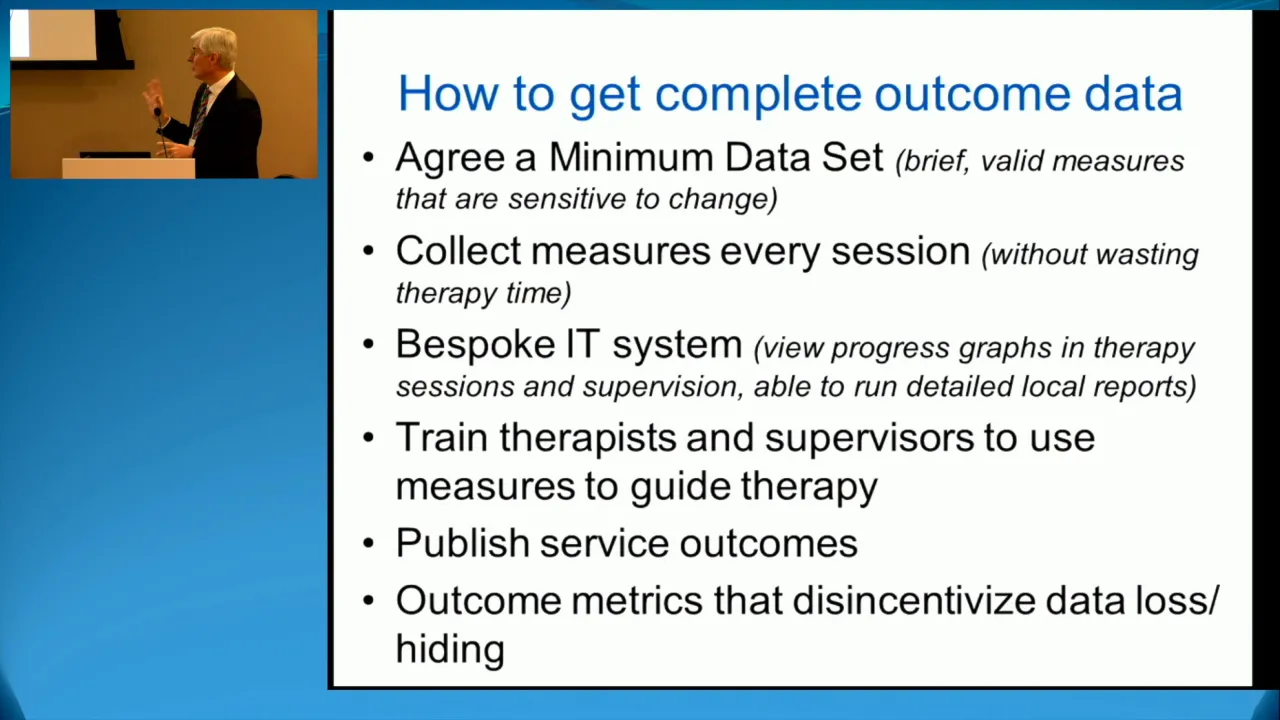
Measurement-based Care in Psychotherapy Workshop - Future of Psychotherapy Conference 2019
UofTPsych
243 views•2019-04-25

51:52
Psychology
Dr. Carol Tavris — Mistakes Were Made (But Not by Me)
skepticmagazine
14K views•2019-05-02
Trending

13:25
Business
Playstation NO DISC/NO BUY Fight Is Over...
DavidJaffeGames
4K views•2026-07-23

16:52
Anthropology
Americans Confused in Australia for 17 Minutes Straight
IWrocker
17K views•2026-07-23
7:38
Blockchain & Crypto
Bitcoin Social Interest: Dozens of us Left
benjaminjcowen
12K views•2026-07-23
11:32
Business
Tesla Profits Plunge & SpaceX Stock Continues Fall
TheJohnJohnstonLounge
6K views•2026-07-23