Early life deprivation and adverse experiences can fundamentally alter brain development and cognitive function through epigenetic mechanisms, affecting neural plasticity and stress responses across the lifespan; however, the brain maintains capacity for adaptation and resilience throughout life, with key windows of opportunity for intervention during critical developmental periods.
Install our extension to search inside any video instantly.
Impact of Early Life Deprivation Danielle Stolzenberg Marcus Pembrey Bruce McEwen
Added:(cheerful piano music) - [Narrator] We are the paradoxical ape.
Bipedal, naked, large brain.
Long the master of fire, tools, and language, but still trying to understand ourselves.
Aware that death is inevitable, yet filled with optimism.
We grow up slowly, we hand down knowledge, we empathize and deceive.
We shape the future from our shared understanding of the past.
CARTA brings together experts from diverse disciplines to exchange insights on who we are and how we got here, an exploration made possible by the generosity of humans like you.
(electronic music) (light electronic music) - So I've spent my research career focusing on the phenomenon of mothering, and I'd like to start with a video that I think does a good job illustrating why I find mothering to be so phenomenal.
The maternal instinct is sometimes greater than the instinct for one's own survival.
And you can see this wild rat was caught chasing a predator, attacking this predator, so that it would release her baby, or pup, as we call it.
And my favorite part is the last part, where after the snake releases the pup, she actually continues to run after the snake and continue to attack it, just to make sure that it gets the point to stay away from her nest.
So certainly, this behavior is not limited to wild rats, but we can see these kinds of behaviors in the laboratory, as well.
This is a rat from my lab, and we were weighing her pups one morning, she's rearing them in a semi-natural environment, so this is outdoors, and you can see, she wasn't having any of it, and she retrieved each one of her pups back into her nest box.
So rats aren't the only ones that care for infants.
Maternal care is a defining characteristic of mammalian behavior.
And this behavior is really motivated, and it's also unconditional, so as we saw in these videos, moms care for infants across multiple contexts, even when those contexts are quite challenging.
So it's not escaped my attention that not all mothers are committed to the survival of their infants, unfortunately, and this is quite predominant in humans.
So we've already heard a little bit about this earlier today, but the statistics are really quite staggering.
So three million annual reports of child abuse in the United States.
Many of these incidents go without report, so I think this is probably a conservative estimate.
Five children die every single day, due to abuse, maltreatment, or neglect.
And actually, a large portion of abuse or maltreatment is neglect, failing to care for infants, failing to provide basic food, water, shelter, protection from harm, as well as, of course, emotional support.
Every 10 seconds is how often abuse gets reported.
So these statistics, for me, were really staggering when I read them.
And I think what I find most outrageous is that despite the prevalence of neglect, we know almost nothing about dysfunction in the maternal brain.
And to me, this is a huge gap in our literature that we really need to focus on.
So today, I want to propose, first and foremost, that studying mothers has merit.
If we want to understand how to prevent child neglect, I think it's important to understand what causes a neglectful parenting style in the first place.
And with respect to this, I want to talk about my hypothesis for one of the ways that I think neglect might emerge, and that's related to disruption in experience-dependent plasticity within the maternal brain.
And specifically, on talking about neural systems that have been identified in rodent models that we know are important for the onset of mothering behavior.
And these systems are changed during this transition to motherhood, to both increase the likelihood that positive responses are displayed towards infants, but also, and importantly, to reduce the likelihood that some negative, fearful, defensive type of response occurs when moms are interacting with infants.
So my laboratory has addressed these issues using rodent models, and I think it's important to take a moment and talk about why I think that studying rodents can tell us something about humans.
So first and foremost, what we know about the neurobiology of parental care actually comes from work that was conducted in rats, so rats have been a really important model organism for studying caregiving behavior.
They reproduce well in the laboratory, they have short gestations.
But what's, really, I think, most important is that they don't form selective attachments with their young.
And so when we talk about selective attachment, I'm talking about this idea that a mother would recognize its own infants, and distinguish its own infant from other infants, and provide care and support only to its own infant, while actually actively avoiding or rejecting the advances of any other infant.
I'm not really interested in mechanisms that underlie infant recognition, and that's why I think it's important that rats allow us to study questions about motivation to interact infants, more generally.
And we can therefore use foster infants when we conduct studies with rats and with mice to ask questions about the capacity an animal might have to show caregiving behavior, regardless of whether or not it's actually appropriate for that animal to show caregiving behavior at all.
We don't have to worry about lactation, variability in the health of offspring, any of those things.
We can ask questions about, how does this animal respond to infants, how can we turn caregiving behavior on?
In this regard, I think one of the greatest things about using rodent models is we can ask questions about turning caregiving behavior on in males.
So rodents are uniparental.
Like most mammalian species, it's the mother that provides the sole care, but because we can use foster pups, we can ask questions about what turns on mothering-like behaviors in males, and I won't have time to talk about that today, but I think it's an important point.
So the first indication that experience might be an important regulator came from work that was done studying the onset of maternal behavior in rats.
And this work was conducted by Alison Fleming, and at the time, people were really interested in hormonal changes that happened around the time of birth that function to synchronize birth with the onset of maternal motivation, and the onset of care.
And those hormonal changes are undoubtedly important, but Alison really wanted to ask, what happens in a situation where mom isn't allowed to interact with her infants anymore?
Will those hormonal events produce a longterm change in how she perceives infant stimuli, or is it the experience of interacting with infants that's really important?
So to address this, she separated mother and her offspring right at the time of birth, and what she found is that this separation actually completely blocked the onset of caregiving behavior, and produced this state of infant avoidance.
So rats are not particularly keen on interacting with infants if they haven't given birth to their own, and so these animals kind of reverted back, as though they had never given birth to offspring at all.
So this is a graph you can see from her paper.
On the left, you see animals with no experience, so those that were completely separated from their infants, literally took days to show any caregiving behaviors at all when presented with foster infants.
Animals with full experience that naturally interacted with their infants at birth were immediately responsive to young.
And so again, what's important about this is that although hormonal changes that are associated with pregnancy and birth are important, they certainly aren't producing any lasting effect, in and of themselves.
Instead, it's interacting with infants in the context of those hormonal changes that's so important.
So she concluded, experience is necessary for care.
And when I started my own lab at UC Davis, I was actually interested in the opposite question.
So if we can remove experience, and completely obliterate the onset of maternal behavior at birth, can we deliver experience to animals that have never been pregnant, and can we get these animals to show a level of caregiving behavior that's on par with what a new mother would show?
And I did this work using a mouse model, and I had to give them a challenging task, so rodents are very neophobic, they hate new things, this is a novel environment, and I was asking whether they would be willing to rescue infants in this novel environment, rather than try to find an escape route for themselves.
And what I found is that if they had no experience at all with infants, they'd never seen an infant before, they were more likely to spend all their time on the maze trying to find a way out.
However, if they had as little as eight hours of experience, as you can see, they retrieve pups back to the nest.
And so this graph actually represents a meta-analysis from my lab.
I've shown this now several times, replicated it on a number of publications, and these are all of the data lumped together.
And you can see that around 80% of females with no experience at all avoid infants, look for an escape route on the maze, whereas as little as eight hours of experience produces a completely different effect.
And what I found to be most exciting when I ran these first experiments is I thought, new mothers respond to infants with high levels of motivation, and that tends to be consistent for a long period of time.
And so I said, "What happens a month later?"
And what I found is that, a month later, even though these animals had not had any additional interactions with infants, really seems like some plasticity took place, because they responded in exactly the same way.
So I concluded, then, that experience with infants in the absence of pregnancy and birth can promote maternal care, it can block avoidance, and therefore, experience is sufficient for care.
So I was excited when I conducted these studies, and it kind of led me to think, well, if experience is so critical for caregiving behavior, what if neglect is actually related to some disruption or dysfunction in experience-dependent plasticity?
And I had to ask myself the obvious question.
Is neglect a failure to learn?
But is this relevant at all to humans?
Is there any evidence at all that experience is involved in human parenting?
So I scoured the literature, and lo and behold, I found that there is a lot of evidence that increased contact between mother and infant just after birth can promote attachment, can promote maternal care for years beyond that period of time.
But I found one paper that I thought was particularly compelling, and this work was done in the '80s, and at this time, it wasn't very common for mothers to actually be able to interact with their infants after birth.
The infants were typically taken to a nursery, unless the mothers were financially well off enough to afford their own maternity suite.
So in this paper, the authors looked at mothers that were considered to be high risk.
So these were very young women, low socioeconomic status, considered to be high risk for potential abuse and neglect.
And they conducted a really simple manipulation.
Half these women were upgraded to a maternity suite, in which they could spend just a few extra hours with their infants on the day of birth, and then the authors followed these women for years.
And what they found is that, women who had experienced this rooming-in manipulation were significantly less likely to show any signs, or show any pathology in their parenting.
On the other hand, control women that were subject to the standard procedures of the time had substantially more instances of child abuse and neglect, and I thought this was really compelling evidence.
So in my laboratory, what we've been focusing on is trying to understand the neurobiological mechanisms that regulate caregiving behavior, and importantly, prevent neglect.
And in thinking about this, I've turned to what we know about the neurobiology of the onset of care, again, work that comes from rats.
And this work suggests that not only do maternal neural systems need to be turned on for motivation to occur, but also, infant access to defense, fearful circuitry, needs to be limited, needs to be turned off.
And so there are kind of these two distinct neural systems that need to be manipulated in order for the appropriate response to infants to be selected.
So to get a little bit more specific about what I mean, when I refer to infant stimuli and behavioral responses, I'm talking about sensory cues from the infants, vocalizations, odors, etc., and I'm wondering how these cues lead to these two distinct behavioral responses, neglect versus care.
We know from rat literature that there's a defensive neural system that can be activated before a female becomes maternal, before the onset of care, and my work recently in mice has shown that when females are ignoring pups on that novel maze, we see an activation of this same defense system.
On the other hand, caregiving responses are associated with activation of reward pathways within the brain.
And the idea really is that the medial preoptic area, which is the central site for maternal care, it's an important region in the hypothalamus that we know regulates caregiving behavior in many studied species likely plays a role in coordinating appropriate responses by simultaneously inhibiting the activation of this defense system, and activating the activation of this approach system in response to infant cues.
And so the idea is that sensory cues from infants might reach this defensive system to induce neglect, but once plasticity has occurred in the MPOA, the MPOA inhibits that activation.
So even if sensory cues are still capable of reaching this defense system, they don't result in any neglectful behavior.
And then simultaneously, this approach system is activated to induce care.
So in my laboratory, what I've been particularly focused on over the last few years is trying to understand how this plasticity occurs within the medial preoptic area.
And specifically, if we think about hypothetical neurons which project to these two different systems, I'm interested in how pup cues alter gene expression.
So the idea is that, infant cues, which are processed by receptors at the cell surface, can induce cascades which function to alter the activity of regulatory molecules that then affect which genes are expressed, when these genes are expressed, to mediate plasticity, or change the way these neurons respond to infant cues in the future.
And through this plasticity, we've hypothesized that there's a permanent reduction in neglect, and a permanent upregulation in care.
So in summary, caregiving behavior is critically regulated by experience, we've seen that.
Understanding how experience sustains care and prevents neglect, I think, has really critical implications for child neglect.
Work from rodent models indicates that infant neglect occurs when infant cues fail to activate a neural reward system, and instead activate a neural defense system.
And I think the key to understanding the neural basis of neglect is to uncover the critical events that happen within these neurons of the medial preoptic area, which then program the appropriate neural system, and hence, appropriate response to infant cues.
So I just would like to acknowledge members of my lab who have contributed to the ideas and work I've show here, and of course, also, my funding from NICHD.
Thank you.
(audience applauds) - It's a pleasure to be here, and the first thing I should say is that I'm not actually a nutritionist, but I've had a very long standing interest in what contributes to the developmental variation in people at a population level.
Now of course, if I wanted to follow up that interest, one needs a population. (chuckles) And, being a geneticist, I also not only wanted the children, but also both parents.
So Jean Golding and I set up the Avon Longitudinal Study of Parents and Children in the late '80s.
And that has a wealth of information about nutrition and so on, and so that's partly, I think, why I was asked to talk.
The first thing I would say, right at the start, is that the development variation we see in the population is not just down to the DNA code that you inherited from your parents and the prevailing environment.
There is a lot more to that, and I hope to bring that out in this talk.
Now, nutrition and human cognitive development and evolution is an absolutely massive topic, so I had to focus on something, and iodine was the one.
This is one of the many minerals and vitamins that are absolutely essential for normal cognitive development, and of course, it operates through the thyroid.
I'm then going to look to the payoff between a large enough birth canal and maintaining body size in the face of variable food supply.
And along the way, I will point to the evidence that information about the early life nutritional experience of parents and grandparents is biologically transmitted to the next generations, along with genes.
Now the story of iodine deficiency, this is an admirable statement here, from UNICEF.
"Iodine deficiency is so easy to prevent "that it is a crime to let a single child "be born mentally handicapped for that reason."
Well, I'm going to demonstrate that it's not as simple as all that.
The message which will keep coming back is what happened in the previous generation that sets the scene for the current?
But there was a bit of luck in the early days.
Iodized oil was developed as a contrast to use in X-rays, so when you were looking for TB, and so you could see the cysts, and so on.
And it had already been proven to be safe to be injected in humans.
And so this gentleman in New Guinea, he had this nodular goiter of his thyroid, and we can see that that was reduced within just three months.
But what about the less severe end of the spectrum?
Now this is the ALSPAC cohort data, and you will see that on the top, we've got the verbal IQ, to the left, and then the total IQ, and then the reading accuracy and the reading comprehension, below.
And this is in relation to the maternal urinary iodide concentration in the first stages of pregnancy, the first trimester.
In fact, during the first trimester, the fetus itself is not generating very much iodine.
I think the point I want to show here is that it isn't an all or none situation.
Even the suboptimal situation here, of iodine, has a significant reduction in verbal IQ.
And at the bottom, as I say, we have the maternal concentration.
So clearly, and one thing I should say before leaving this is that it's the verbal IQ that has been replicated when you bring all the different studies together from different populations.
And you can see, it's the more significant one here.
So that's a thing to hang onto, there.
So, iodine is central to the thyroid system, and it's essential for the cognition.
You'll note that the thyroid hormones, here, which are produced by the thyroid gland, and stimulated the thyroid gland to produce them from the anterior pituitary and the hypothalamus, T3 has three iodines, and T4, four iodines, so you can see the connection.
And thyroid hormones are crucial for increasing metabolism, growth, and development of all sorts, and also maintaining the flight and fight response.
But the thing that we need to emphasize is this negative feedback system.
The negative feedback system is sensitized to developmental experiences, and adjusts for the long term.
Also, that it's not just the long term of the individual, but even can across the generations.
And it's maintaining brain plasticity.
Thyroid hormones tends to make cells reach their full differentiation, and if you want plasticity, that's got to be delayed.
But what about this situation across the generations?
Well this just takes us to the lovely island of Sao Miguel in the Azores, and there was a natural experiment which assessed the non-genetic transmission of altered thyroid function, down the generations.
There was an ancestor, five or six generations back, who had a very rare standard genetic monogenic mutation, involving one of the thyroid hormone receptors, which meant that 50% of her children would inherit that mutation.
Now, the ones who did not inherit the mutation, they were, of course, exposed to the very large dose of thyroid.
It's as if the mother, during pregnancy, was the environment, a very high dose of thyroid.
And they followed the genetically unaffected males down for three generations, from that exposure.
And this induced... And what happened was that the exposure led to a low sensitivity to thyroid hormone.
But remarkably, it was then transmitted on, long after that situation.
Now we move to the bonobos.
They live in communities, and there's a two year bonobo project that I'm referring to, and here's a picture of them fishing for, in this case, the white water lily.
The Congo Basin, where they live, is known to be iodine-deficient.
And so it was particularly interesting to look at the mineral content of the various things that were found in these fishing trips.
They go to the swamp, during this two years of observation, they would go every two weeks, and when they were there, they'd spend about 96 hours feeding.
They would go with their... All the adult bonobos would go and feed.
So would the juveniles, and the older infant bonobos.
So they analyzed what they were eating, and they found that they were particularly going for the stem of this lotus.
They would discard all the rest, but just choose the stem.
And that had this iodine content of milligrams per kilogram of dry matter.
And then they went for the pith of the Juncus, which is a form of reed, which I've shown here.
And again, it's the root just under the water they go for, and that has 7.4 iodine level, and that is comparable to the algae along the coast, and it ties in with the notion that early hominids tended to be on the coast, because there was a ready supply of iodine.
Now interestingly, you might say, "Well what about the humans in the Congo Basin?"
Most of them, and this is why it got a iodine-deficient classification by the WHO, is that they show symptoms of iodine deficiency.
The only exception that didn't show marked symptoms of iodine deficiency in a large proportion were the Efe tribe, but they're a tribe of pygmies.
And the speculation is that the relative lack of iodine there, there were genetic mutations, variants, that selected for, so that they basically became pygmies.
They wouldn't grow so much, so, much less demand.
Now these next people are certainly not pygmies.
The neanderthal.
Now we're all, in a way, related to the neanderthal.
All of us, most of us, in this audience would have neanderthal DNA in us.
And a group this size, you could construct a very large part of the neanderthal genome sequence.
Now as you can see here, the neanderthals are big, they have big heads, and they have wide pelvises.
And that fits with the pattern that if you have a large brain, and a large cranium, you need a wide pelvis and a birth canal.
So you have to have a big size.
And then the problem comes, what if there is lack of food?
What of the variation in the food supply?
Unless of course there's a different strategy, that the baby is born relatively early in development, and can be successfully nurtured by the group, as the brain develops, the development continues.
And one can wonder, was this the virtuous circle for the emergence of modern humans?
That just because of the food supply and everything else, the variation in it, they needed to have smaller babies born earlier.
But that strategy would only survive and work if there was that cooperative nurturing, and so on.
So now, let's look at the situation with regard to the previous generations.
Now, what we have here is, the situation, we're all inside our mothers for nine months, and it's a sort of Russian doll effect.
And Chris Kuzawa refers to this integrated nutritional signal.
So you have these intergenerational phenotypic inertia.
What he's really saying is that, when there's a swing in the food supply, you don't suddenly get babies being born bigger or smaller, there's something that integrates the past experience.
But what about the fathers?
Now these are human males.
(chuckles) Human males, sorry.
(audience laughs) The human sperm, from... The question is, do they carry information about the ancestral environment?
Well, we looked at this in Northern Sweden.
Some of you may have seen the film, "The Ghost in Your Genes."
And it was a relatively small study, it was obviously started by Professor Bygren, and, we had 303 probands, they were essentially the grandchildren that we would know what they had died of, and what their mortality rate was.
And then the food supply of the father's father, when he was very young, before puberty.
So, a way we can look at it is that this is the grandfather's age.
This is the grandson's mortality risk ratio.
So if it's over one, they're dying early.
You can see that a good food supply during this period leads to increased mortality of the grandsons.
And a poor food supply leads to increased longevity, of the grandsons.
So this is what we're seeing.
The food supply between ages of 10 and 12, coming down through the father to the grandson.
No effect on the granddaughters, but quite a significant increase in mortality.
Now the good news is that this has now been replicated by Denny Vagero and his colleagues in 2018.
So we have this original paper, and it was the sex-specific male line response that we were particularly focused on.
He looked at it and found that exactly the same, he did exactly what they did in the Overkalix study, in terms of the timings, and everything else, all based on the harvest records, and so on.
And he found the paternal grandfather's access to food is critical, mid-childhood period, predicts all-cause, and also cancer mortality in grandsons.
And this is, the important take home message is it's the poor food supply that leaves the grandsons living longer.
And my conclusions are this.
Mother's nutrition affects her baby's IQ.
We've just seen the example with the iodine.
Mother's nutritional experience is a composite of hers and of her own parents', in terms of the signals passed on to her own offspring.
And the father transmits information about his own father's access to food mid-childhood to his future offspring.
This influence to the grandson's longevity is on longevity at present, but cognitive studies are awaited.
And these are the people I'd like to thank.
(audience applauds) - [Bruce] I very much regret that I can't be there in person to give this talk, and I certainly send my best to everyone.
The starting point for this talk is the notion that the human mind has evolved to be able to anticipate and plan into the future.
The downside is that we sometimes stress ourselves out and get caught up in fear and anxiety by imagining and anticipating negative things that will never happen.
This was depicted by Robert Sapolsky in his book, "Why Zebras Don't Get Ulcers."
But what goes on in our brains and bodies when this is happening?
So I'm going to speak to you via this PowerPoint about a new way of looking not only at stress, but at experiences in general, whether or not we call them stressful, and how they affect both the brain and the body and shape the human mind.
This involves epigenetics, referring to mechanisms that express what is in our DNA to shape us as individuals over our life course, and hopefully instill in us the capacity for resilience.
So what is stress?
There is positive stress, exhilaration from a challenge that has a satisfying outcome, after giving a talk, or passing an exam.
There's tolerable stress, when bad things happen, and yet we can show resilience and move on in our lives.
For both of these, we need to have good self esteem, good sense of mastery and control in our lives.
But then there's toxic stress, where there is a lack of this sense of mastery and control, and one can feel helpless.
Poor self esteem is probably a factor, lack of social and emotional support from friends and family.
But also, there may be what we can call compromised brain architecture, due to the effects of early life adversity.
Not everything is called stress, and experiences related to social isolation, circadian disruption, as in jet lag, shift work, just simply being deprived of sleep, living in an ugly, noisy, polluted neighborhood with a lack of green space, and of course, our health damaging behaviors, diet, exercise, and alcohol and smoking, all of these get under the skin and disregulate our physiology.
This slide highlights a term called the exposome, which is really the sum total of our experiences, which, an environment that provides opportunities, but also limits what we can do.
It also points out that the brain is the central organ of stress and adaptation to it, determines those health behaviors, influences physiology, enables us to adapt, or to become disregulated in what we refer to as allostatic load, and reflects the experiences over our entire lives.
Allostatic overload refers to the fact that the same mediators like cortisol, and adrenaline, and metabolic hormones in the immune system that allow us to adapt and survive can also cause damage when they are overused and out of balance with each other.
The metaphor of having weights on the seesaw illustrates that.
The system may maintain its balance for a while, keep homeostasis, but eventually, there is a breakdown, or wear and tear, a disorder.
So we often talked about an inverted U-shaped dose-response curve, describing both the beneficial and the deleterious effects of the same mediators.
As a heads up for later on, this slide, again, points out the importance of individual differences early in life, especially adverse experiences early in life that can determine a trajectory for our entire lives that may increase our vulnerability to various disorders.
Now we come to epigenetics, which speaks to how genes are regulated by experiences that are mediated in part by hormones and other chemical mediators in the brain and body.
Epigenetics shapes individuals, and it does so through a number of mechanisms, including transcription factors, non-coding RNAs, the phenomenon of RNA editing, the methylation of cytosine residues in the DNA, and modifications of histones.
The genes that we have determine what is possible.
Let's look at what happens to a pair of identical twins, because of what are called non-shared experiences.
Early in life, children, the twins show very similar patterns of methylation of DNA, as shown on the left.
But when twins are in their 50s, there are considerable differences, because of the fact that they haven't always experienced the same things, and certainly not at the same time.
This is a reflection of how experiences shape individuals, even individuals that have exactly the same DNA.
Experiences via epigenetic mechanisms cause ongoing remodeling of the developing and adult brain, that involve not only changes in gene expression, but also structural changes that are seen in dendrites, synapses, and limited amounts of neurogenesis in the hippocampal region of the adult and developing.
Hormones and other systemic mediators of the metabolic and immune system play a mediating role in this brain plasticity.
Stress, sex, and thyroid hormones enter the brain, and they bind to receptors and influence neuronal activity, gene expression, and alter neuronal architecture.
To do this, metabolic hormones like leptin, ghrelin, IGF-1, and insulin have largely pro-cognitive and protective effects.
Yet as we'll see, when there is resistance to these actions because of disease processes, then other things, not so good things, happen.
The brain also contains cells called microglia, related to the immune system, and also responds to immune system cells and chemicals in a way that are just now being revealed.
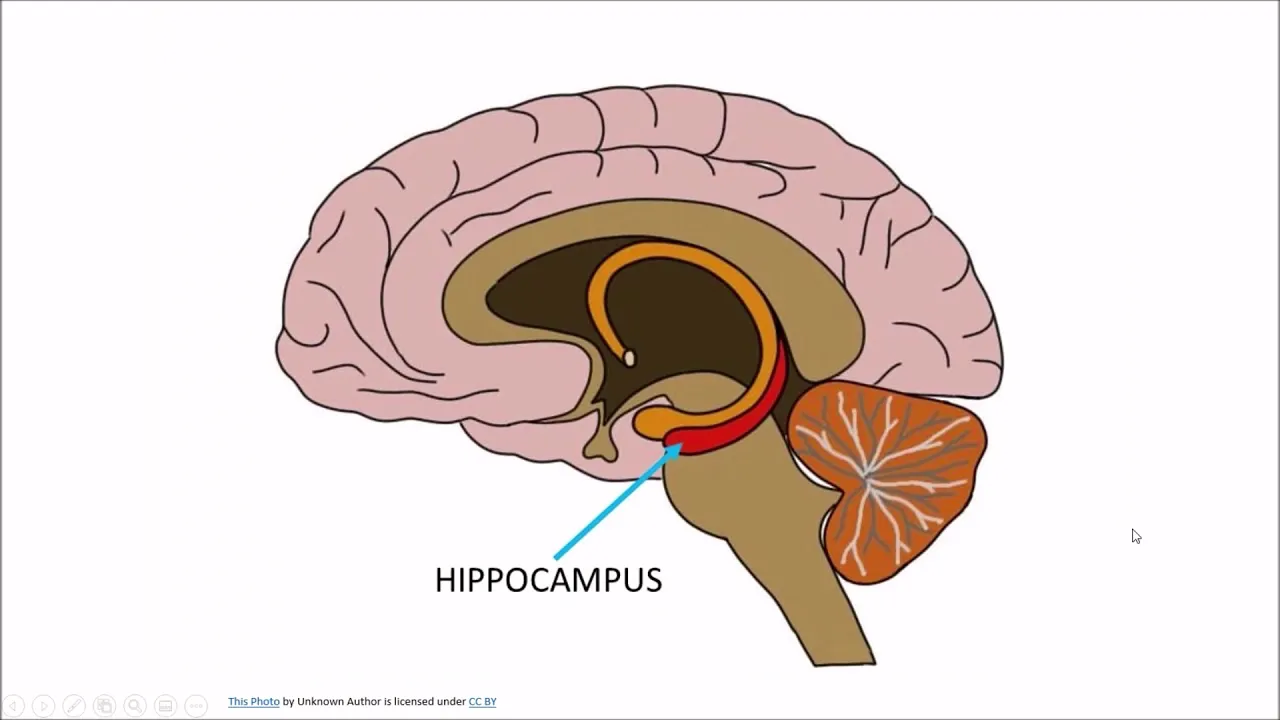
We discovered a number of years ago that the hippocampus brain region involved in memory, and we now know, mood regulation, has receptors for glucocorticoids, like cortisol.
This discovery actually provided a gateway into discoveries by us and by many other laboratories that the hippocampus and other brain regions for higher brain functions, like the amygdala, the prefrontal cortex, the nucleus accumbens, have receptors and respond to sex, stress, and metabolic hormones, and immune system chemicals, and also, hormones even from the bone and the muscle.
Stress induces the secretion of glucocorticoids and the release of excitatory amino acid neurotransmitters, and these have biphasic effects on the hippocampus, that is, they promote, as we'll see, structural remodeling, which is not damaged but in the extreme, seizures cause irreversible damage and neuronal loss to these CA3 pyramidal cells, while, as I said, repeated stress actually leads to reversible debranching of apical dendrites that we think is actually a protective response against permanent, irreversible damage.
One bit of evidence for this is that hibernating hamsters that are low on energy resources show a rapid dendrite shrinkage of the CA3 neurons within hours, and an equally rapid regrowth when aroused, which is an important ability in order to protect them from danger.
Translational studies on the human hippocampus have shown shrinkage of the hippocampus with major depression, also in diabetes, in post-traumatic stress disorder, and in Cushing's disease, and also, of course, in dementia.
Of course, the hippocampus also changes without disease processes in chronic stress over many years, and chronic jet lag, as for air crews who have regular international flights, with lack of exercise, and also with chronic inflammation, which is a common denominator of many of the disorders like depression, and diabetes, and PTSD, and Cushing's disease.
The good news is that when people even in their 60s and 70s walk an hour a day, five out of seven days a week, as in this study from the University of Illinois, over the six months to a year, the hippocampus actually gets larger, cognitive function improves, mood improves.
Regular exercise is a well-recognized antidepressant for mild and moderate depression.
And what's remarkable, based on animal studies, is that the increase in neurogenesis, which would be one of the factors that enlarges the hippocampus, actually requires a hormone from the liver, namely, IGF-1.
In animal studies, blockade of that hormone by putting in, immunoneutralizing it, actually prevents exercise from stimulating neurogenesis.
And there are other systemic factors that also appear to be involved, or required, shall we say, for exercise to increase neurogenesis.
I mentioned the metabolic hormones before, I'll just remind you again that in states of, for example, insulin resistance, or leptin resistance, the brain begins to malfunction.
Insulin resistance is associated with diabetes, it's also associated with a specific form of depressive illness, and people with these conditions have an increased likelihood of developing dementia, because of this disregulation that also affects the overflow of excitatory amino acids that can cause, ultimately, cause irreversible damage.
So here, we have the inverted U-shaped dose-response curve, in which we have, on the upside, the enhancement by moderate levels of cortisol and these excitatory amino acid transmitters that are so important in the brain, enhancement of cognitive function.
But more intense activity can actually impair the same functions.
As we sometimes say, stress makes you stupid.
There is the adaptive plasticity I've referred to, described already.
There is the damage potentiation with seizure, stroke, and head trauma, which are very real and part of the downside of the inverted U.
And of course, brain aging is associated with extra glutamate and inflammation, and degeneration of brain structures.
And then, the loss of ability to show resilience and recovery after a challenge, for example, after a stressful experience, instead of spontaneous recovery, if the state of anxiety retains, then one has an anxiety disorder and there needs to be external intervention, either pharmacologically, or behaviorally, or both.
The hippocampus is not the only brain structure that is affected by these stressful and other experiences.
The amygdala actually turns on stress hormones and increases heart rate, it's the nexus of anxiety and fear, and neurons in the amygdala actually grow and become more active, even while neurons in the hippocampus are shrinking.
In the prefrontal cortex, which is important for our self regulation, of our behavior, mood, and impulse regulation, decision making, working memory, the prefrontal cortex also shuts off the stress response.
And so these brains structures are involved both in the systemic responses to stressors as well as in cognitive and other functions, and there is rearrangement of their architecture as well.
So far, we haven't considered whether males and females differ, and indeed they do, in many of the things I have discussed.
Sex differences involve not only hormonal programming, but also genes on the X and Y chromosomes and mitochondrial DNA, which we inherit from our mothers.
In fact, the entire brain has receptors for sex hormones in both the male and female, both types of sex hormones, androgens and estrogens, in both males and females.
Many of these receptors mediate what we call non-genomic effects that change the cytoskeleton, modulate neurotransmitter release, affect how mitochondria buffer calcium ions, which is very important to maintain free radicals at a moderate level, and also, there are cell nuclear effects, that has genomic effects in inhibitory interneurons that regulate excitatory neuron activity.
One example of how males and females differ in a part of the brain that we never suspected would be affected differently has to do with the stress-induced debranching of dendrites in the male, of neurons in the prefrontal cortex that project to other critical regions, they shrink with repeated stress in the male.
But in the female brain, under the same chronic stress, these neurons do not shrink.
But then there are neurons from the prefrontal cortex which project to the amygdala, and these don't change with chronic stress in the male, but the dendrites of those neurons in the female that project the amygdala actually expand their dendrites under chronic stress, but only when there are estrogens on board.
Because this is so surprising, and because there are sex hormone receptors in many parts of the brain, we suspect that there are many other subtle sex differences that are yet to be discovered.
And indeed, males and females handle many of the same things with similar outcomes, but looking at how the human brain, human male and female brain, handles challenges, it turns out that they use somewhat different circuitry, probably related to the underlying sex differences, some of which I have just described in this slide.
Another aspect of plasticity and resilience is that when the dendrites shrink with repeated stress in the middle, and then recover on the right, the shrinkage has occurred from the more distal parts of the dendrites, further out, but the recovery occurs more approximately to the cell body, so these are different neurons than they were before stress, and yet functionally, they appear to do many of the same things.
So the brain is continually changing.
We haven't addressed, so far, the effects of early life adversity on brain development, brain body interactions.
I promised you earlier that I would talk about this, and indeed, a major focus of ongoing work in our laboratory has to do with the effects of early life deprivation, and my participation in the National Scientific Council on the Developing Child, also means that I'm involved in thinking about this in human terms, as well.
An experiment on this next slide, where the mother, in this case, mouse, also rat, is deprived somewhat of the bedding, so that she becomes less attentive, and irregular in caring for her pups.
They develop behavioral alterations, and increased levels of anxiety.
And if one looks, as we did here, at how the hippocampus responds, epigenetically, gene expression responses, it turns out that animals subjected to early life stress have a more restricted response to experiences later in life.
This has implications, and there are studies, as many of you know, in the human, with early life stress having effects to alter the ability of the human brain to respond in the same way.
And of course, then we come to the developmental issues where children experience adversity.
And this involves abuse, neglect, living in chaos and uncertainty, and also, the effects of poverty.
Many of these things overlap with each other, the consequences of which include greater helplessness and distress, and poor self-regulatory behaviors that can lead to such things as substance abuse, mood, anxiety disorders.
And in terms of brain development, indications are that these various forms of adversity can alter the development of the prefrontal cortex, poverty, leading to smaller amounts of gray matter, a smaller hippocampus.
And the neglect of children, lack of stimulation by their parents, results in development of a smaller vocabulary, which has implications for their ability to function in society, and education.
And then there are systemic effects, such as elevated blood pressure, cardiovascular reactivity, and later on, cardiovascular disease, depression, diabetes, substance abuse, and antisocial behavior.
So when the brain is programmed for uncertainty, there is increased vigilance, amygdala reactivity, and a reduced capacity for proactive, what we call proactive planning.
The question is, can this be changed later in life?
And the answer is, we hope so, that the capacity for showing plasticity, brain plasticity, combined with particular windows of opportunity, such as adolescence, the early life, including also the mother, the pregnant mother, transition to adulthood, family formation, and even retirement, these are opportunities for interventions that can improve the trajectory towards a healthier life.
So to summarize what I have told you, first, I've told you that experiences shape individuals epigenetically, within what our genes will allow, that there is something called adaptive plasticity of the healthy brain, that requires ongoing interactions with the body.
Allostasis and allostatic load and overload reflect the biphasic nature of the mediators, epigenetic mediators, which can help us adapt.
On the other hand, when overused and disregulated, they can cause problems.
It's very important, of course, that there are sex differences, which permeate the entire brain, allowing males and females to use different strategies, but often, with similar outcomes in problem solving throughout life.
Also, there is the continuity of the life course, including transgenerational epigenetic effects that I've mentioned.
And in particular, early life adversity redirects and limits the responses to experiences.
But because of ongoing adaptive plasticity, windows of opportunity are present throughout the life course that allow interventions, specific for that stage of the life course, in many case, to have beneficial effects.
Collaborators and colleagues are shown here.
An enormous number, I can't possibly go through all the names, but obviously, they're the ones who deserve credit for many of the things that I've talked about.
I also want to acknowledge the MacArthur Network for Socioeconomic Status and Health, the National Scientific Council for the Developing Child, which is ongoing now, and the Hope for Depression Research Foundation, that supports some of our ongoing current research.
Thank you very much.
(audience applauds) (cheerful electronic music)
Related Videos
8:08
Neuroscience
What is neurodegeneration?
TheSheekeyScienceShow
3K views•2019-08-19

57:35
Neuroscience
IPL - Ruth Empson "Mind the Gap"
otagouniversity
251 views•2019-07-08

14:01
Neuroscience
How our body shapes our mind | Pancho Tolchinsky | TEDxNapoli
TEDx
2K views•2019-12-05

10:32
Neuroscience
β-Caryophyllene for Parkinson’s: Protecting Dopamine & Easing Symptoms
parkinsonsdiseaseeducation
6K views•2025-08-09

20:44
Neuroscience
New Insights from Inside the Brain with Rodrigo Braga, PhD
NUFeinbergMed
421 views•2025-04-14
9:57
Neuroscience
Highlights for dystonia • 2025 MDS Congress
movedisorder
145 views•2025-10-27

58:17
Neuroscience
Animal Welfare Synergy Series: Dr Tom Smulders on hippocampal neurogenesis
costactionlift
135 views•2025-07-14

5:50
Neuroscience
Neuroscientist Dr Lila Landowski On Social Media, AI And The Brain
Rockatscientist
496 views•2025-03-01
Trending

23:35
Film Analysis
What Went Wrong With Alpha? | Spoiler Talk & Discussion
TriedRefusedProductions
76K views•2026-07-06

10:17
Business
Ford Rehires Engineers They Had Replaced With AI
stevelehto
39K views•2026-07-06

10:59
History
A night at Chateau de Lalande
Brianslifeinfrance
49K views•2026-07-06

18:47
Business
Asking Africa’s Richest Man How He Made $30 Billion!
theschoolofhardknocks
82K views•2026-07-06