The Cosmic Microwave Background Radiation (CMBR) is the afterglow of the Big Bang, captured as a faint microwave signal with an average temperature of 2.752 Kelvin, representing a snapshot of the universe approximately 370,000 years after the initial expansion when protons and electrons recombined and began emitting light; this radiation was accidentally discovered by Arno Penzias and Robert Wilson in 1965 while working at Bell Labs in New Jersey, and has since been mapped by satellites including COBE, WMAP, and Planck.
Install our extension to search inside any video instantly.
Cosmic Microwave Background Radiation #cosmolgoy #astronomy #universe #shortsAdded:
This is the CMBR. It's a or the cosmic uh microwave background radiation. It's an image taken in the radio frequencies or microwave frequencies.
And the average temperature of what you're seeing is about 2.752° K.
It's about taken This is like a picture of the universe taken about 370,000 years after the initial uh Big Bang. The Big Bang It was more of an expansion than a Big Bang. But also the differences in the in the temperature in this image is also different differences in densities of gas.
Um The the the gas later became like galaxies and clusters of galaxies.
Um But what happened after the Big Bang is it expanded rapidly and it was very very hot and energetic and the protons and electrons separated and created a plasma in about 370,000 years afterwards. They started recombining and started giving off light again.
So that's what's being seen here is the the light after they started recombining.
Uh this was taken by the Planck's uh satellite. There's been a several satellites that have mapped this.
There's the COBE satellite, the uh WMAP, and Planck, and the observations of the of this actually started by accident. There was two guys working for Bell setting up a radio uh dish just outside of New Jersey or in a coastal New Jersey.
Uh Wilson and Penzias and they found this signal and they scrubbed the dish uh down and got all the pigeons out of the dish and all the stuff and they still had the signal.
I'll probably be doing more on this stuff, but I just thought this would be a good introduction to the cosmic background.
Okay, I hope everybody has a good day and goodbye and see you next time.
Related Videos

Spiral Galaxy NGC 3370 from Hubble | NASA APOD 2025-11-05 #Shorts
galaxygallery
938 views•2026-05-30

SOMETHING inside the SUN is CHANGING
RaysAstrophotography
1K views•2026-06-03

There May Be A Giant Hole In The Universe... And We Might Be Inside It | The Cosmic Ledger Entry 015
TheCosmicLedger
145 views•2026-05-31

Captured the Blue Moon (with a twist) 🌙✨ #space #bluemoon #telescope
realAstroExplorer
674 views•2026-06-01

The Map We Sent to the Stars in 1977 — Why Scientists Now Regret It
TheAncientRecord7
183 views•2026-06-03

Is this a copy of our galaxy? Discover Galaxy M81!
UniverseDocumentaries-cc4mb
995 views•2026-05-31

10 Planet Where a Black Hole Replaces the Sun
cosmicexplorer-EN
147 views•2026-06-02
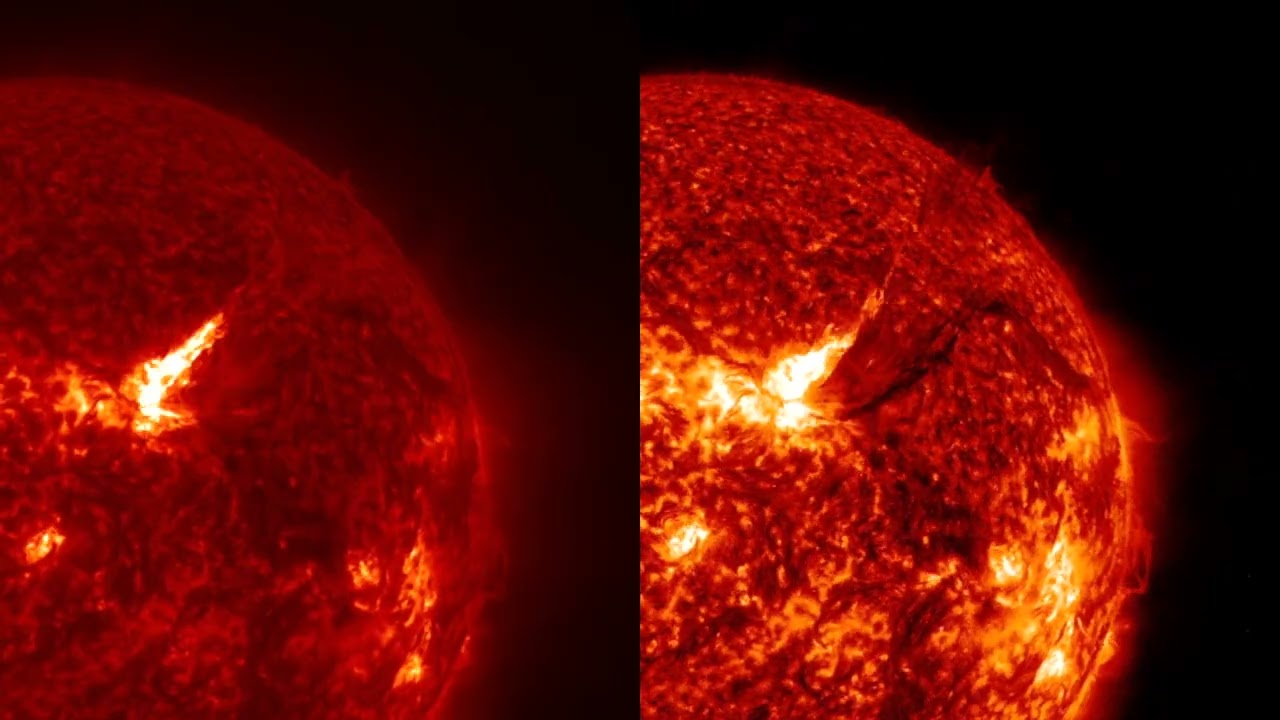
Solar Flares and CMEs at Earth - More Likely | S0 News June.3.2026
SpaceWeatherNewsS0s
2K views•2026-06-03



