Apostol’s rigorous framework offers a sophisticated foundation for those seeking to master formal analysis without the immediate overhead of measure theory. It remains the gold standard for transforming mathematical intuition into the precise language of pure research.
Install our extension to search inside any video instantly.
skip measure theory, domain expand with apostol vol 2
Added:Hey guys. So, we're going to be moving on to the second volume of also calculus 2. Um, let's have a quote here. Divided Yeah.
divided by So, it's going to be divided into three three uh sections.
This book is analysis in the linear and the nonlinear sense as well as um special topics which will cover like set functions and all these things um which kind of combined elements of you know linear and nonlinear analysis. Um again this is a calculus book so it's the sequel to the first volume that kind of develops just the idea of um integrals and uh you know diff uh derivatives and how to define them in a way that's natural.
Um so yeah um that's pretty much it. I mean every everything that's going forward with Apostle in his volume two I guess the main goal is just to make sure that you convey this uh pure mathematical type of rigor um with the spirit of modern mathematics you know and and you need to de develop the skill of formalization. So formalization uh gets really emphasized in this second volume on how to you know formulate such um you know and explore different things. So of course he goes into linear spaces um linear transformations determinants um values vectors values operating on uklidian spaces linear differential equations systems and so that would be linear analysis um as a subject. Now, this would actually be interesting to tie in with linear algebra. She loves linear algebra. It would be it would be an interesting thing to try to I guess develop some kind of study plan that looks at the intersection um that you know gets motivated in here from a calculus textbook. Um and uh you know from this kind of semi calculus to like rigorous um you know uh formulation of uh aiomatic uh linear slash like aine spaces in general. So it does a really good job of doing this. Um talks about uniqueness.
Uniqueness is is uh talked a little bit more uh in the differential equations.
It's expanded upon um as well. So it's just nice uh progression here for the linear analysis section. The nonlinear analysis section starts to define um differentials upon scalar and vector fields. So you can have um you know different types of uklidian spaces um open balls. So you get some topology as well. um and some of the language that's used in topology. It's you know and and the the level of thinking behind it, the first principles um like fundamental like irreducible um things are emphasized in this book um for nonlinear analysis um as a complete subject as a whole. And you can kind of think of this as like a draft um for you know then being able to uh you know apply it to differential calculus um which gives you which later gives you the way to think about coalology dur theory um you'll get line integrals u multiple integrals define iterative integrals or integrals of multiple functions over some domain then you'll get surface integrals and so those are the things that you will be able to um do after nonlinear analysis and uh yeah and then lastly how the book decides to end is to end with set functions and elementary probability.
So what's cool about this is you will get some uh notions if you will from pro from measure theory and taking the nonlinear and linear analysis to then uh you know start defining uh combinatorics in a nice way. Hold on sorry had a terminal pop up. um combinatorics um distribution functions in generals for defining probability in general uh the introduction to numerical analysis as well. This is just another kind of nice addition to um you know being able to actually physically compute things. Um so that's what these texts are.
um a lot of reading a lot of reading between in Apostles um calculus one and two series but it's essential so um and it's motivated in a way that's uh very uh contained to allow you to have the background that's necessary to get into you know something like linear algebra by Sheila or you know etc. So it helps you fill in a lot of the gaps for um conceptually what's what's happening. So let's start with linear analysis. Um really what this does is um it just moves to inner products. There's kind of an aiomatic linear. So of course it it lays out the axioms for linear space just like any other linear algebra book would. Um but you know you get the aiomatic definitions.
Um but really I think the construction of orthogonal sets is introduced right out the get-go in chapter one. Uh the Graham Schmidt orthogonalization process is right here.
Um and this is a theorem basically how to approximate elements in uklitian space. So you know you're automatically getting the tools that are necessary for preparing yourself for things like foryear analysis, approximation theory, infinite dimensional hilar spaces, all of that depends on your Graham Schmidt process. So you know this uh you get a nice introduction to this geometric type of um projection um analytically right out in the first chapter. So you're basically primed for advanced functional approximation already. All right. And then um let's just move on and try to make this pretty quickations um because all of this gets covered in line in the other linear algebra thing that I covered. So I don't really want to have like too much overlapping content because these are like really basic things. Um yeah, you'll have the concept of new space and range. The text uh explores nuity of rank and transformations. So you know we'll go through how the operator like you'll define operators and themselves linear equations projections on subspaces and then you know nity um you know and you can think I I would say um isomorphisms between linear and uh transformations uh of matrices as well are established.
So this kind of reflecting on this, right? If I was to take calculus again with this book, like I would think about this fundamentally from like a systems of linear equations for the computation of like matrix inverses like all of these things are super super this is heavy machinery for like what you know people are actively doing in the field.
So you want to emphasize um you want to emphasize the this isomorphism uh between linear transformation of matrices simply because um it'll introduce you to the idea of like category theory structural equivalence and abstract algebra. So you know you're getting that pure mathematical uh you're getting a logical progression into pure mathematics that's like kind of a just each concept builds upon the next one in such a way that's um you know uh see we talked about distributive laws for matrix multiplication.
Um, so yeah, it just it it builds it a mental image that makes a lot of sense and it's a way to just get the quick and dirty types of computational things out of the way. Um, determinance.
So determinance then is now uh introduced. It's different from Sheilov's where determinists themselves are motivated in such a way that you know would give you like the multilinear algebra perspective on it. um you know from a purely like parody type of combinatorical approach but um determinist here you're instead of relying on the permutation uh deter like definition of determinist immediately for like you read sheil um apostle he's going to give you motivation for the choice of axioms so of uh think determinant function That's what he uses. Yeah. Choice of axioms for determinant function. So you he's going to define the uh first of all he defines the determinant as this unique alternating multilinear form on the rows of a matrix and then it'll give you this nice it actually does give you the tensor algebraic perspective um set of maximums for a determinant function. So yeah, he goes through um and kind of justifies this and the computation of the determinant.
Um but it's it's like a nice coordinate free I would say a tensor algebraic perspective. Um and so the uniqueness as well of the of the um the uniqueness theorem of the determinant I think is covered in here as well.
Yeah, here it is. Perfect. Yeah, the uniqueness ser theorem it should be and um you'll get product formulas and expansion formulas miners and co-actors that naturally follow from everything.
So you get I mean you're getting this pure aimatic um uh treatment that will give you the idea necessary for um you know computing differential forms on exterior algebbras on manifolds alternating forms really this is the building block of of integration itself.
So um in the next we can continue on with um values values and vectors.
Um I'm not going to get too into this. I think I would actually say right here with determinants is a good place to stop and then read she loves linear algebra until you get to the you know spectral theory type you know values chapters and then come back here. that makes a lot more sense to me. Um, and in fact, I might go ahead and read like reread in that in such a way and see like if that makes sense um to me. But, um, yeah, that makes that makes that would make a lot of sense to try to read up to here and then open up a linear algeb's linear algebra book algebra book for a little bit. investigate, you know, everything up to IGEN values and then come back over here and see if you can get something out of it. I mean, there's different ways to approach it. There's not like one single way, but um yeah, that's kind of uh you got to get you got to see the patterns and recognize the patterns for yourself and try to put them all together. So, anyways, um linear independence So really when you get the linear independence of IGEN vectors uh assuming that you've had some sheil already um you can just have the foundation of spectral theory from this and I think he kind of uh warning the converse what's theorem 4.2 two forward.
Oh, okay. Okay. Okay.
Unverse does not pull. What does that mean?
Understanding. So, okay.
That's right. Because they represent the invariant directions of the operator.
Yeah. Okay. Okay. Okay. So, that's what uh linear algebra or that's what the the wait I'm going have to think about that. the warnings see like like you'll notice different things like why does the converse does not hold independent distinct okay okay they don't have to be distinct so sorry I I I missed this the first time through writing it down okay anyways moving on um yeah so this is I mean this is important for you know quantum mechanic study of dynamical systems everything uh within here. Now values of operators acting on uklidian space and I can't spell there we go values of operators acting on uklidian space um not too much to say about this that adds anything upon that adds anything to Sheila. Um you know hermission skew her mission transformations get talked about um in a calculus textbook. [laughter] Um existence of an orthonormal set for vectors for hermission skew herission operators act finite dimensional spaces.
Yeah. [laughter] Diagonalization of a hermission matrix.
um you know quadratic forms, diagonal forms, all of this we talked about in in Sheil love. So but it is kind of cool to see that in here. Um yeah these theorems are the mathematical backbone pretty much of quantum mechanics. You know you can think about that where you know any physical observable right you can model that as a Hamiltonian operator. So you know this just this is important then to motivate the the probability um or the I guess the multivariate the statistical multivariate probability that comes later in this book.
Um so yeah I think we can move on linear differential equations.
Yeah, linear differential equations.
Now, okay, so Bosel is going to treat this differently.
Um, so you you take the differential equations from the previous volume, right? I think we covered a little bit of uniqueness. Um, and it was just kind of like an introductory type of, you know, exercise. Now this actually is going to give you some maturity on how to think about differential equations.
Um because of the constant coefficient operators being formalized, you can think of the linear differential operator itself um as this or we can get it into an operator type of language. So let's see uh operator notation. Yeah, here we go. So, general, yep, yep, yep, yep.
All functions with first derivatives are continuous on J. So, let P sub one P sub NB functions and the operator L from C and J to CJ be equivalent to this. All right. And so this is the kith derivative operator and uh you or the yeah this is the kth derivative operator and the operator l itself is acting on a function. Okay, that's how I think about it. And you can um you know you can use the Ronskian matrix to you know prove the non-s singularity of independent solutions. You probably seen that in a different equations class or you probably will see that if you take one but the study of Leandre equations as well.
He studies Leandre equations here. Yeah.
which is kind of insane for a introductory chapter uh for a well it's not introductory calculus it's the volume two but yeah he talks about the leandre equation itself um and how to uh you know and other second order differential equations that are pretty interesting um with you know these nice analytic coefficients to give you um special functions these special types of functions in mathematical physics and uh stern Louisville theory. So that's how we um get different types of polinomials, different types of exotic uh you know representations functions um by you know upgrading ourselves to the oper language of using linear differential equations as operators.
Rodriguez formula it's all covered in aposle you know it's all there.
What isn't in a possible that's the real question. uh systems of linear differential equations or systems of differential equations. Okay.
All right.
Now how we can think about this is uh we have to move out of like well with the systems themselves uh you can model them with matrix calculus pretty much. So you have the rigorous proof of existence and uniqueness for ordinary differential equations um from the ODEs. But now we can use uh I think it was we shall use that Yeah, we shall use um where is it? We shall use the method of successive approximations.
What does that mean?
um it's an iterative method method which also has application to many other problems. So his methodology you basically are casting it in the language of something called um uh contraction operators. Yeah.
So, I would recommend uh going to the introduction to tensors in she loves linear algebra text. Um and then up to there and then going to systems of differential equations.
Reason why you'd probably you might want to do that is because um you can cast uh you can cast it in the language of um contraction operators and like what particularly um contractions mean themselves in the ter in terms of differential in the context of differential equations you'll get a contraction mapping principle that is precisely related to the bac a fixed point.
It's not Let's go.
Doesn't want to show up. But um the bac fix point theorem uh allows you to think about the contraction mapping. So Oh yeah, here it is. Perfect. It's before you you call it the bak fix point theorem but basically it says if you have a contraction operator there exists at least there at least uh there exists one and only function fi in c of j s such that you know you have this and then you' proof you'd go through the proof and demonstrate this convincingly um using all of the method methods that we have developed um to get you know upper bounds and lower bounds. So why this is important is because what you're doing is you're performing or with applications right you're performing essentially advanced nonlinear functional analysis um by completing by just replacing the need to learn Bard's existence theorem later in a separate you know real analysis course you just learn it here all right so it makes a lot of sense and really okay so let's let's take a step back um the the OD the differential equation okay yeah because we're going to move on to nonlinear analysis but this is basically the end of linear thinking so and it kind of culminates in the realm of systems of ordinary differential equations because what we do is we have solution spaces right and normally you would just like want to memorize specific solution forms of the solution spaces. But if you're thinking uh in terms of a more of an apostilian apostolian um type of view of uh of linear analysis, vector spaces and dimensionality theorems come out uh and we were talked about very early in calculus. Next one is uh uniqueness existence and uniqueness. So usually you want to think about like emitting um or stating things about uniqueness and existing without like any proof. But from utilizing the first volume um and like you know obtaining specific bounds and then using the metric spaces and uh fixed point theorem that gets talked about as well in these uh in this text that kind of upgrades your I guess normally what you would expect to be an introductory type of calculus thing.
Also systems of equations. Normally people use elimination methods to solve them. But you know you get I mean a very basic calculus problem is just matrix exponentials and operator basic operator algebbras that are used uh to compute things and motivate them properly. And then you have particular solutions um undetermined coefficients. You know usually you have some undetermined coefficients and then you solve for them. But he shows uh the annihilator method and operating operating factorization types of things. So that's very important. Okay. So keep in mind as we move on from linear analysis to nonlinear analysis, this is where the fun begins. uh to quote Anakin Skywalker um the derivative of a scalar or a vector field um is not you're not going to define it as like some you know collection of some partial derivatives but you're going to try to um as a linear transformation or the total derivative you're going to try to best approximate the function locally so you'll get you know the chain rule for scalar and vector fields will kind of come out of this. Um but you know first you introduce you know open balls of sets interior points motivates a little bit of of of preliminary notions and uh topology and um derivative whatever proven.
So here's a quote that I thought was interesting.
Sufficient condition the sufficient condition for equality mixed partial derivatives. So you take a you take a potential function or you take just a function and where are the mixed partial derivatives?
They are sufficiently nonlinear.
Okay, perfect.
A sufficient condition for mixed partial derivatives. Sufficiently nonlinear um scalar field such that the partial derivatives exist on an open set.
Um and you can think about just basically rigorously deducing the symmetry of the hessen um early on and uh you'll get a nice linear algebraic formulation of the derivative by accomplishing uh this way of thinking about it and you will treat um in differential geometry this this formulation of the derivative is exactly how it's treated in differential geometry I would say and the calculus of manifold. So that is super important to get right uh from from the get- go.
Now we can move on to the applications of differential calculus.
Okay.
What this does is it says well we have extrema functions in several variables correct and we have ways of thinking about them uh from the previous book uh in the previous chapter as well um for well we haven't really thought about extreme uh extrema of functions yet but we can def we can think about the topological properties of the real of the uklidian case that was uh developed in the linear analysis and we can utilize that heavily here. So if a scaler let's say um let's see is a scalar field continuous. [snorts] Come on.
Yeah, that's being weird. But anyways, so if f is a scalar field of continuous at each point in closed interval, we can uh say it's bounded. This I mean we're just I mean this chapter is pretty computational. We'll just talk about lrange multipliers extreme value theorem in multiple dimensions that requires an understanding of compactness for cementing different ideas and topology.
Now let's move on to the interesting stuff. So if we have line integrals line integrals um are very interesting because um we can discuss he discusses work potential functions and the fundamental theorem for line integrals which is essentially just a physics um it's just the background and the mathematics that you need for physics and that's basically all this Um you can condition a vector field to be a gradient of some open convex set with um yeah we can say uh continuously differentiable yeah necessary conditions for a field to be gradient. So this is yeah so for he really really develops this um nicely which is that if you have a a vector field on an open convex set in s then f is a gradient on s if and only if uh we have this condition satisfied. So this explores path independence very nicely and conservative fields um to then rigorously establish what Damco homology is all about. um the concept of uh you know closed differential forms. And so you know a nice like uh background in this will then and probably some differential geometry will then give you then the tools to approach uh the language of differential forms and how they top or algebraic topology kind of naturally allows us to compute coalology of differential forms. So anyways that's just stuff to get excited about.
um multiple integrals.
So integrating over yeah integrating over several variables or over some domain with several variables. Um how you can think about this is um the definition of a bounded function over a rectangle and think about this um as just the let's see it's the supreum where is it rectangles or they partition it and then how do they choose to find I remember seeing it nicely. Yeah, here we go. Perfect.
So, it's it's defined as essentially the um supreum or the the number the number the supreum of s uh it's called the lower integral of f denoted by um some lower integral lower integral here. And what happens is that the chapter is going to cover you know evaluation by repeated integration and you'll get this nice like rigorous analog to Fubini's theorem like in measure theory um it just motivates that very nicely so that next time you take a real analysis class or measure theory if you want to further go into measure theory like um I don't know why you would want to do that but you can do that if you want um you can go ahead and do that uh and then with the Jordan region screens theorem you get a change of variables formula for the chacobian and because the integral is defined using the suprema of step functions over in dimensional intervals you can just implicitly do you're just basically doing low back measure theory by the time that you get out of this uh chapter. Okay. Then next you'll do surface integrals.
Um surface integrals or integrating over surfaces. Usually you need some way to parameterize them. That's like the first thing that comes about. So if you have uh surface integrals over um apostalian types of geometric concepts, you could say the solid angle. For example, let's go to solid angle.
I think the solid angle is probably the best way to start off with parameterizing because it's kind of the it's the analog of the of um it's the analog of the angular velocity or sorry the angular velocity of the angular dimension but it's like you have like cones basically coming out. So it's like it's like yeah it's a vertex subended by s. Um so it's the ratio of like the yeah oh yeah it just talks about it right here. Um and by framing these theorems analytically you'll be able to understand generalized stokes theorems on differential manifolds and [snorts] you know integrate geometry into calculus.
Um and yeah the last thing we'll be we'll talk about is elementary set theory and uh elementary so functions and elementary probability um but part three. So you have you know just traditional approaches to probability whatever um there's different ways to motivate it.
um you usually want to motiv usually probability is motivated combinatorically but you are bypassing the entirety uh to produce probability via measure theory which states that uh I think it's it's very uh gamblers dispute this is the story that they choose to tell here so this feud in 1654 led to the creation of a mathematical theory of probability by two famous French mathematicians Pascal and FMA.
Um and to formalize this basically he's introducing the calculus of sets and boolean algebbras and you can define a probability measure formally.
Let's go. Come on.
Yeah. So a finitely additive measure finally additive measure or a probability measure if you will that's really how to think about it is if you [sighs] Basically how to really think about probability is defining over um things that are you measure these particular sets right you have the measurable sets from apostles uh chapter 1 right or from apostles volume one sorry I'm just thinking about this like what's the best way to intuitively do this because I mean like yeah this does like a non- negative set function a to r that is finally added adding a finely additive measure simply a measure right um but I feel like that's a little bit this is my own take with it like um really what the defining key feature of a measure um is really the boolean algebra of sets and when you are learning abstract measure theory That's kind of what you want to think about like so random variables for example defined as measurable functions out uh mapping outcomes to real numbers or whatever right that's kind of the way that you want to head towards but like you have to you have to bridge the gap between probability and real analysis yourself because there's kind of a weird um there's kind of a weird uh axiomatic type or the kulgarov axioms of probability um which I think we'll get talked talked about later. Um, but they all get they're all fundamental or they all come from something very fundamental. Um, which is which has to do with measure and measurable sets which then gives us measurable set functions. Okay. And you have it's your job to kind of fill in the gaps between what those things are, what they refer to and how to make them uh rigorously motivated in that sense. So um yeah anyways uh prob calculus of probabilities let's do all right so coming out of the elementary fun set functions uh we then now have the calculus of probabilities themselves elves probabilities themsel themselves what is probability right that's what we're going to try to answer so continuous distributions expectation variance um all these things all you need to know is you know from our ideas of measurable burell sigma algebraas you know it's just how to generalize okay sigma algebra is just how you generalize a Um so we're approaching it from again this very pure mathematical standpoint but uh you need continuous distributions expectations uh and variance you know from you know whatever generating functions that you have or uh you you basically just need to treat them as integrals themselves.
Um and uh this is a very nice this is a very nice introduction to the subject but you know and you can use calculus to dis study both one-dimensional and two-dimensional random variables and that gets covered here eventually. Um it is kind of a longer chapter. Yeah. So you start off with you know the mass function um you know all of these different ways of uh building upon this density function um what probability really is. Now that's a subject of debate in physics.
Um probability is really I see it as just kind of uh defining some hermission structure on a configuration manifold but that's just how I see it. [laughter] Um people might have different opinions about what probability really is philosophically but I don't really want to distract too much with this. Um it's very important to master the pure uh mathematical proofs that lead to um measure theoretic probability trying to find um yeah Koshi distribution it's also called Lorenzian distribution for the reasons that detector physicists like to or detector physics you know gives us smeared infinite variance types of uh um energy deposits on our detectors. So, whatever. Um what else? How do we think about this?
Um the central limit theorem.
Yeah. The central limit theorem.
Let's just go to that. That's much easier to think about. Central limit the central limit theorem of the calculus of probabilities. formul formalizing this.
Um, basically you just you have this nice proof here of like how if you had a bunch of random numbers it just gives you a and if they're independently and identically distributed you get you know Gaussian type of distribution taking the limit as goes to infinity whatever. Okay, so that's like uh how to um that would be the central limit theorem and then you'd also have chevves inequality chevves in the discrete case. So this is how we find bounds um and you know the laws of large number types of limits. Um so you know the integration of measure theoretic probability directly into a calculus textbook you know is like an introductory calculus textbook is kind of I would say this is a revolutionary type of achievement here and he even you know does some citations as well towards the end. So this is definitely probably something that um Apostle was very proud of creating. So go ahead and read through it and uh see what you can connect with what planet Uranus was discovered in 1978.
That's cool. Um anyways, uh numerical analysis. Um this is the last one.
And uh the history of numerical analysis goes back to ancient times. That's a quote that I have here. I don't feel like looking it up. You can you can that sounds like apostle. Well, but he he goes through I really really like this chapter by the way. What a really cool read. You should go ahead and do that by yourself. Um and enjoy it. Um yeah, so the uni the ideas are going to be unified by notation and the terminology of linear algebra um in numerical analysis.
So you know you'll think about Simpsons rule.
Let's just go ahead and try to find it.
Simpsons rule, which is like trapezoidal approximation of areas. It's like quadriure.
Where is it? I've played around with Simpsons rule plenty of times trying to find some results and upper bounds on fractional calculus type stuff. So, it gets used. I promise. Uh, [laughter] if you have the dirty computational techniques, you'll be able to prove some new results and stuff like very easily.
Um but yeah, Simpsons rule.
Um and numerical analysis isn't really that high skill of a subject either. It sounds kind of hard. It looks interesting, but like a lot of the times uh you know, you just have to kind of go through these exercises and see like oh there Simpsons rule or whatever for polinomials.
Um so yeah I mean uh Oilers's summation formula, Sterling's formula, those things are also in here. Um error bounds on the Oh, let's do the tailor remainder theorem.
Come on. Getting error bounds on your tailor remainders is pretty important as well. Um oh that was in chapter that was in volume one. Yeah. So that already we already covered that. That's right. Um but yeah, I mean just numerical methods aren't like you know pulled out of they're not just generated out of thin air, you know, we kind of have to go through and do them with our brains first. Um and like you know then AI can kind of inference whatever from you know the method of numerical approximation that you're using and you know diagnose how well it converges or how you know accurate it is or whatever but you basically should be writing out uh I mean numerical analysis is a field of analysis right so it's uh pretty pretty important to get right so anyways that's I think I'm kind of rambling now so let's just kind of end it Um, I just want to end it, guys. [laughter] All right.
Uh, yeah. So, volume one, volume two, right? you basically become out of both of these volumes as mathematically mature. I would say instead of just like blindly like an like a monkey, you know, just like computing calculus uh problems like a you know like a monkey basically like you know just grinding a bunch of calculus problems and trying to get like computing and computing and computing. Uh this is going to get you to do everything. So it'll it'll get you to do pure mathematics.
You'll have computational ability.
You'll have physical reasoning from this book. Um because and you'll have historical accuracy as well. Um you defining derivatives of fields as these linear operators. Um you know uh probability and the theory of finite additives functions you know continuous mathematics.
Like you know if you go through this exhaustive two volume sequence and you grind it effectively that's going to replace the necessity for any introductory course in real analysis or measure theory hands down and you know the traditional real analysis course will it exists to primarily I guess fix the pedagogical errors of calculus and that's really all it is it's just kind of a remedial type of calculus class. Um whereas this is like the this is like the real stuff.
It's not like the ghetto calculus, right? It's like the this is the real you know? [laughter] So, you know, you have the treatment of integration, anti-ifferiation.
Um you know, Apostle never makes these errors. Uh his students are forced into suprema infinite uniform convergence topological compactness from the very beginning.
So, um, you know, and also the Graham Schmidt process, contraction mapping.
I mean, trying to remember what else like got mentioned. I'm like looking at my notes like from everything that I came across. Um, so yeah, you're going to make sure that um you're not going to struggle with linear algebra and calculus um as like these isolated types of disciplines. You will master these two volumes. um with just kind of a nice understanding of complete metric spaces, uniform convergence, operator theory, lebeg style bounding guys like very cool. Um so yeah you'll be going through like a deductive exposition also of mathematical analysis and you're going to fulfill a lot of promises to convey this precise spirit of modern pure mathematics and fully prepare for the rigors of graduate level study. And notice I said graduate level.
Doesn't mean you have to be a graduate student to pick up graduate level books.
Okay? Some people just think and some people just want to read good books and good books are graduate level. So a lot of them are. So this is a good uh you know it's good philosophy. Um it's a good underlying philosophy for approaching the subject of calculus.
Okay.
That's all I have to say. Um, sorry for monologuing towards the end there. I was kind of reading from a script that I kind of wrote. So, a script that I kind of wrote. [laughter] You get it. You get it. All right.
Anyways, peace out, guys. Have a good one.
Related Videos

Solving a 'Harvard' University entrance exam question
AsadInternationalAcademy
125 views•2026-06-14

The Woman Who Made GPS Possible | The Untold Story of Gladys Mae West
Mikeydenuuncovered
2K views•2026-06-15
Algorithms for Generalized Signed Distance and Winding Numbers (PhD thesis)
NicoleZFeng
269 views•2026-06-15

SUPER B - WAP vs WBPS
gravitylive7425
171 views•2026-06-20

Notes 6.3 Rectangle, Rhombus, Square
matthewmills6952
1K views•2026-06-18

Does the math actually hold up? Let's break down the logic.
rawXopinion
1K views•2026-06-15

NYT Hard Sudoku Walkthrough | June 17, 2026
Rangsk
2K views•2026-06-17
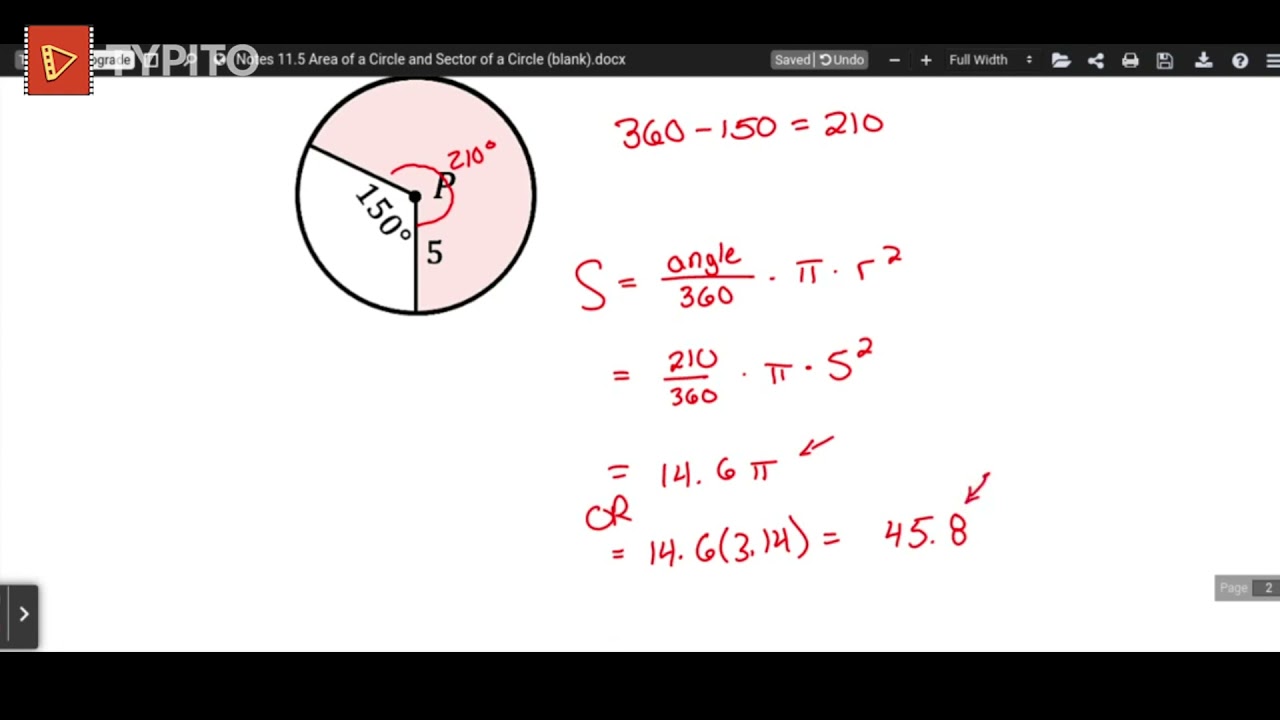
Notes 11.5 Area of a Circle and Sector of a Circle
matthewmills6952
251 views•2026-06-18



