This analysis effectively dismantles "body language" pseudoscience, replacing cinematic tropes with the cold efficiency of evidence-based cognitive psychology. It reveals that ultimate investigative power lies not in dominance, but in the strategic manipulation of human autonomy and memory.
Install our extension to search inside any video instantly.
This FBI Manual Trains the World's Sharpest Investigative Minds
Added:Your ability to get at the truth, what somebody [music] actually did, actually knows, or actually intends, is one of the most essential yet underemphasized skills you can learn. However, this skill is [music] entirely trainable. In the FBI training document, Interrogation, a review of the science, compiled by the high value detainee interrogation group unit of the FBI, the authors compiled more than a hundred peer-reviewed studies on human memory, deception, and influence. And in this video, I'll walk you through five of its techniques that genuinely work, and more importantly, exactly how to use each one in your own life, whether it's a highstakes negotiation or simply an argument at your kitchen table. Let's start with the first mistake nearly everyone makes the instant they think they're being lied to. The accusation reflex. Now, picture it. You're convinced someone did something, so you lead with, "I know you missed the deadline because you weren't really working." And that feels strong and direct, but it's also the single fastest way to learn nothing at all. You see, the moment you reveal what you think you know, that's the exact moment you hand the other person all the cards, now they know precisely what they have to explain away, and they can then tailor their story to fit it. But what's worse, an accusation triggers defensiveness so predictably that it can actually muddy the very thing you are trying to detect, including in documented cases, false confessions and false denials, where the pressure itself actually produces a distorted account. The FBI's counter technique is called the strategic use of evidence or sue. And the principle is probably the exact opposite of what you might instinctually do. You see, you never reveal what you know upfront.
Instead, you ask open, casual questions and let the person freely commit to a full account. Only after they've locked themselves into a version of events do you then introduce the one fact that doesn't fit. You see, your power never lies in an accusation. Instead, your power lies in the gap, or in other words, in the inconsistency between their story and the evidence you didn't immediately reveal. In controlled studies, interviewers trained in this approach detected deception at roughly 85% compared to barely better than a coin flip for untrained interviewers running on gut instinct. And so here's how this applies to your actual life.
Let's say you manage someone whose performance has been slipping and you suspect they've mentally checked out.
Well, the amateur move in this situation is to open with your accusation. But the trained move is to instead ask them to walk you through their week in detail, what they worked on, what got in the way, and then let them commit to it. If the picture they paint is even slightly inconsistent with what the project tracker sitting open on your screen tells you, well, you now know far more than any accusation would ever have given you. And so, the habit underneath this is simply the following. When you suspect you're not getting the whole story, never lead with what you know.
Ask first, let them commit, then check it against the facts you already have.
But now, once you start practicing this technique, you might inadvertently fall into the second trap this FBI document outlines. And this one is a belief almost everyone holds that is simply, measurably false. And that is the body language myth. You see, we've all been taught that liars give themselves away.
They fidget. They break eye contacts.
they touch their face and so on. And it's the premise of a hundred different TV dramas. But according to the research, it's very nearly worthless.
You see, when you pull hundreds of studies and tens of thousands of judgments all together, it turns out that human beings detect lies at about 54% accuracy. Essentially a coin flip.
But the somewhat disturbing finding, well, it's that trained professionals, police, agents, judges do essentially no better than anyone else. And the reason is that the cues we trust, that fidgeting or that averted gaze, are often faint and unreliable noise. The confident liar reads as honest. The anxious but truthful person can read as guilty. And so, your gut often isn't reading any real deception at all. It might instead simply be reading nervousness and then essentially biasing you to convict the innocent, so to speak. But if you can't observe a lie, what can you do? Well, you stop watching and you start loading. You see, lying is cognitively expensive. A truth teller is simply remembering, but a liar has to invent a story. Keep it internally consistent and monitor your reactions to the lie all at the same time. And so the tactic the FBI's researchers have tested is to deliberately overload that cognitive machinery. One example of this, ask the person to tell their story in reverse order from the end backward.
You see, a genuine memory has real anchors and can be reordered without much trouble. But a fabrication tends to come apart because it was only ever built to run forward. Now, this won't make you a human polygraph. Nothing will. But it tilts the odds back in your favor. and in your life. The deeper lesson here is a warning. Namely, that the next time you find yourself certain that someone is being shady because of the way they're acting, whether that's in an interview, on a first date, or across a negotiating table, stop.
Because that certainty you feel is that 54% accuracy talking. So, instead of judging the person, test their account.
Ask for an unexpected detail. Ask what happened in the moments just before. ask them to go back over it from a different angle because the truth will ultimately hold together under that kind of pressure whereas a fabrication simply won't. But now these first two traps are all about how we handle people. But the third trap we find within this FBI document is about how we handle their memories. And it's the one I find kind of unsettling because it implies that you can corrupt your own evidence without anyone lying at all. And it's called the leading question. Consider one of the most famous experiments in all of psychology. Researchers showed people footage of a car accident, then asked them about it, but they changed a single word in their framing of the question. You see, some were asked how fast the cars were going when they hit each other, others when they smashed into each other. And that one small difference in wording actually raised people's speed estimates. A week later, the people who had heard the word smashed were significantly more likely to remember seeing broken glass at the scene. Yet, there was no broken glass.
You see, the question itself had secretly rewritten their memory. And this is the seriously dangerous trap that's often built into ordinary lines of questioning. For instance, the moment you ask, "Did you see the red car at 3:00?" You've planted a red car and a time. and a cooperative, perfectly honest person may absorb both details straight into their recollection. And so at this point, you're not gathering information anymore. Instead, you're actively contaminating it. And the FBI's counter to this is a method called the enhanced cognitive interview. And the tactic at the heart of this is what's called context [music] reinstatement. You see, before asking a singleointed question, you basically guide the person back into the scene.
What was the temperature like? What were the sounds like? Where were they standing? What were they feeling at that moment? And this [music] reopens the actual memory and lets it pour out in their words instead of yours. And here's why this is so important in your everyday life. For instance, if you run a post-mortem on a work project by asking, "So, the vendor dropped the ball, right?" You'll never learn what actually happened because you just handed the whole room its conclusion. And if you ask your kid a loaded question such as, "Did so and so hurt you?" you may get a yes that was in fact never true. And so whether you're a manager, a parent, a journalist, a clinician, or whatever, the rule is the same. Tell the person you're speaking with, "Walk me through it." And carefully rebuild the scene of the crime, so to speak, before you ever drill into the specifics. Now, these first three approaches are important tactics to learn. But if you want to take a deeper dive into critical thinking and persuasion as it applies to these and other difficult situations and want to work with me personally, then feel free to check out my critical thinking academy at the link in the pin comment below. Okay, so the fourth trap is the one that contradicts our deepest instinct about what to do when someone won't cooperate. And this FBI document calls it the pressure instinct. When a person goes silent or gets hostile or becomes stubborn in their position, the natural human response is to just push harder. But pushing harder is almost always the wrong move. You see, there's a principle in psychology called reactants. When a person feels their freedom to choose is being stripped away. They don't merely resist the demand. They cling to the threatened freedom more tightly than before. In other words, pressure does not open people up. Well, duh. It instead cements them in place. And so the FBI studied counter technique here seems almost paradoxical. Instead of seizing control, you hand it back out loud. For instance, operators are trained to say in effect something like, "I can't make you tell me anything." Whether you speak or stay silent is entirely your choice. And by explicitly returning that person's autonomy, you dissolve the very resistance that pressure was creating.
And this isn't some soft feel-good idea.
In dozens of studies, simply adding a brief pause that reminds someone they are free to refuse measurably raises the rate at which they actually cooperate.
And you can use this today anywhere you've been failing to persuade someone.
That colleague who won't get behind your plan. That teenager who won't open up.
Stop pushing and try the opposite. I'm not going to try to talk you into this.
It's genuinely your call. More often than not, you'll watch the resistance drain out of the room bit by bit.
Because you see, it was never your idea they were fighting. Instead, it was simply the feeling of being cornered.
Which leads us to the fifth and final trap the document outlines, and it's the one that overturns our entire image of what a great investigator even looks like. And that is the domination trap.
We picture the relentless cross-examiner dominating the room, firing off question after question. But the science points to something close to the reverse. The more you talk, the less you learn. And the clearest illustration of this comes from a man named Hans Sharf, a Luftvafa interrogator during the Second World War. Okay. Now, it's important to keep in mind, Sharf was a Nazi interrogator, and Nazism is unequivocally evil. Full stop. That being said, there are principles the FBI has learned from his approaches that are actually instructive here. You see, Sharf never raised his voice. He took prisoners on long walks, brought them food, and talked with them like companions, and so his subjects routinely walked away, convinced they'd given up nothing of value. But they were wrong. In fact, he extracted an extraordinary amount. And decades later, when researchers finally put his method under scientific scrutiny, they found that it genuinely outperformed direct questioning. And the heart of it is what's been called the illusion of knowing it all. Rather than interrogating, Sharf would simply make statements, small, confident claims woven into the conversation and then let the prisoner correct the details.
Because here's the thing, people who will flatly refuse to answer a direct question will almost reflexively jump in to fix something that you've gotten slightly wrong. And so, the everyday version of this is one of the most useful social skills you can possibly build in a negotiation. The person who can sit in the silence after an offer instead of rushing to fill it tends to walk away with more. In any conversation where you genuinely want to understand someone, let's say a counterpart, a new colleague, even a first date, resist the urge to interrogate. Talk less. Offer a gentle, slightly off read of the situation. For instance, sounds like the presentation went pretty smoothly, right? And let them correct you into the real story. After all, you will learn more by being quietly correctly wrong than you ever will by firing off a dozen pointed questions. So, if we step back and look at all five, the accusation reflex, the body language myth, the leading question, the pressure instinct, and the domination trap, what do they actually all have in common? Well, it's this. None of them are really interrogation tricks at all. They're the underlying structure of how human beings reveal what they know, defend what they fear, and reconstruct what they remember. And that structure is secretly operating in your negotiations and in the arguments at your kitchen table every single day. The FBI invested millions into understanding it because for them, getting it wrong is catastrophic. So, you have your own versions of these exact same highstakes conversations all the time. And from now on, you'll understand how they work, how to spot them, and ultimately how to win.
If you want to keep leveling up your critical thinking to make a massive impact, not only on your own life, but also on the lives of countless others, then be sure to watch this next [music] video.
Related Videos

0:39
Psychology
Inside Ronaldo’s Team Meeting
RonoSphereCR7
1K views•2026-04-17

7:25
Psychology
You Are Not So Smart: Chapter 4 Hindsight Bias, What is it?
TheBey8nD8
230 views•2019-09-15

49:35
Psychology
Sigmund Freud's Mind - Master Your Inner World (Your Unconcious Mind)
Ngaslife
1K views•2025-01-25

11:29
Psychology
What affects your mood?
RandyPaterson
602 views•2019-05-16

3:45
Psychology
Can you outsmart this logical fallacy? - Alex Gendler
TEDEd
2164K views•2019-11-25

1:02:21
Psychology
Understanding the Relationship between Fear of Falling and Mobility in Older Adults
fallpreventioncommunityofp3788
823 views•2019-04-08
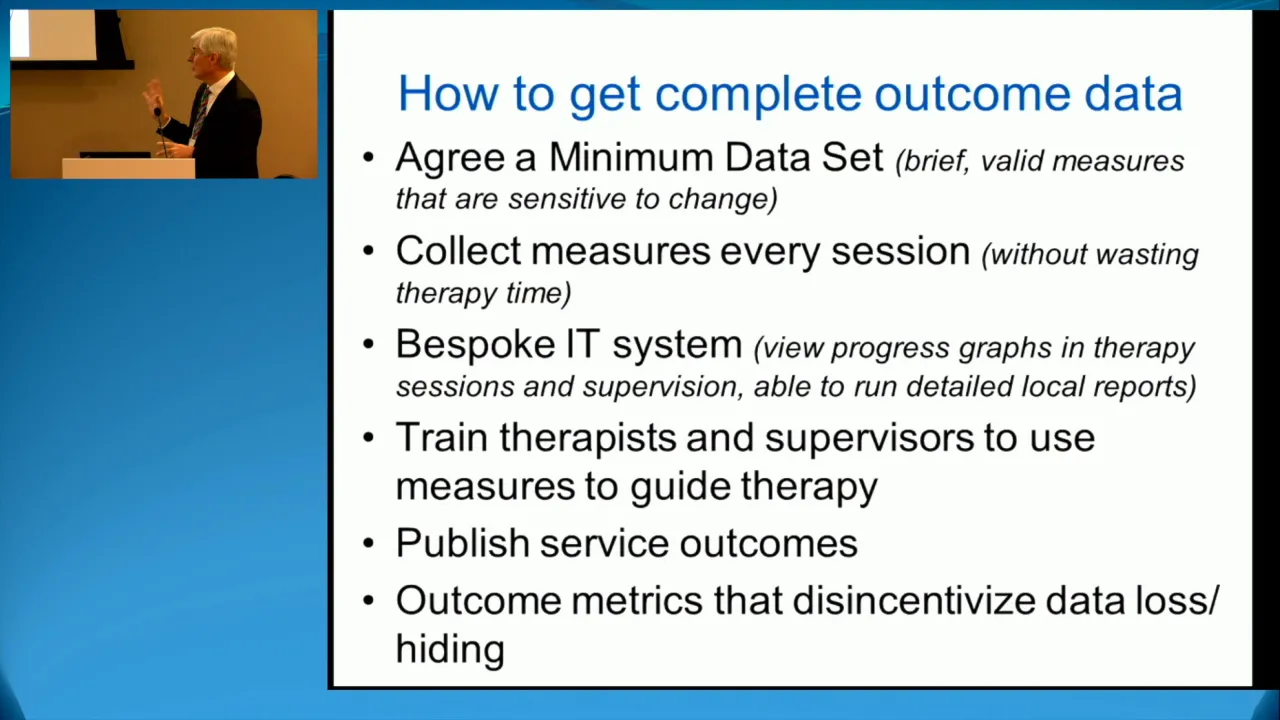
54:04
Psychology
Measurement-based Care in Psychotherapy Workshop - Future of Psychotherapy Conference 2019
UofTPsych
243 views•2019-04-25

51:52
Psychology
Dr. Carol Tavris — Mistakes Were Made (But Not by Me)
skepticmagazine
14K views•2019-05-02
Trending

9:05
Artificial Intelligence
2.4 BILLION Records Got Leaked...
DeepHumor
15K views•2026-07-22

13:25
Business
Playstation NO DISC/NO BUY Fight Is Over...
DavidJaffeGames
4K views•2026-07-23

19:32
Business
Should I buy a Sawmill?
essentialcraftsman
29K views•2026-07-22

16:52
Anthropology
Americans Confused in Australia for 17 Minutes Straight
IWrocker
17K views•2026-07-23