Mathematical literacy involves interpreting real-world data and applying mathematical concepts to solve practical problems, such as calculating areas, perimeters, and percentages from geometric shapes, analyzing weather prediction tables using probability scales, converting units between metric and imperial systems, and verifying claims through calculations like determining average speed from distance and time data.
Instala nuestra extensión para buscar dentro de cualquier video al instante
MEMO 2026 MATHEMATICAL LITERACY P.2 GRADE 12 MAY-JUNE(THUNDEREDUC) GRADE 12 MATHEMATICAL LIT PAPERAñadido:
Africa senior certificate examination or national senior certificate examination May June 2000 26. Possible answers.
Question number one.
Choose one Choose one word {slash} term from the list below for each of the following explanations or definitions using mathematical literacy. Write only the word {slash} term next next to the question next to the question numbers in the answer book.
Okay. Uses meters, liters, grams, and degrees Celsius for measurement quantities.
This is metric.
The metric system.
So, we shall take metric. So, this was supposed to be metric.
Metric system. A map of a section of a traveling route not drawn to scale.
Strip map.
It's a strip chart.
A a visual representation of the special arrangement of various elements within a property.
This is a layout plan.
A lay out plan.
A vent and numerical description of how likely an event can occur.
Probability.
Proba bility. Then, 1.1.5 it says double the distance from the center of the circle to any part or any point on its own boundary, its diameter.
From the center, it's radius, not diameter.
Sorry, double the distance from the center of the circle to any other part point of the of its boundary.
From the center, they are saying double the distance.
So, meaning this is a diameter.
It's It's double the radius.
Okay, we [clears throat] continue.
1.2 1.2 talks of a weather prediction table from Toronto, Canada, and a probability scale are given below. The weather prediction table is there from Monday, Tuesday, Wednesday, Thursday, Friday, Saturday, Sunday.
Together, mainly sunny, cloudy, you go through that. Predictions there, the probability scale is also given. Then, the POP stands for probability of prediction, sorry, of participation.
Not prediction, participation, any form of water falling from the sky, like like rain, fog, or mist. Okay.
Determine the number of days for which this weather prediction table is valid.
Then, these are seven cuz they are from Monday to Sunday. Monday, Tuesday, Wednesday, Thursday, Friday, Saturday, so it's seven days, actually it's a week.
So, we say seven.
Seven days, okay?
Write down the percentage and the day on which it is equally likely or participation to occur.
So, meaning equally, it's here. Remember this is we have it at 50%.
This is 75% and this is 100%.
So, we're looking for equally, which is 50%. So, we come here P of P it's this one here and the date was the date is Saturday.
Saturday the 4th.
They say the day, which is what?
Saturday.
Write down the percentage and and it's at 50%.
Equally likely but special to occur.
Name the day on which the predicted temperature is 6% higher than what is actually feels like predicted higher than.
So, predicted higher than, meaning this temperature has to be 6° a difference of 6°.
6°. Now, when you check this nicely here, we have um -5 + 6, you get a positive one. So, it is that Wednesday.
Um right, name the day on which the predicted is So, we said it's Wednesday.
Wednesday.
The actual rainfall for Monday, Thursday, and Sunday was 1.3 mm, 1.4 mm, and 18 mm respectively. Calculate in the millimeters the total rainfall. So, we all we do is to add 1.3 + 1.4 + 18, which becomes which or which which became, not which becomes.
Mhm.
Yes.
Yes.
So, this becomes 20, 7 20, 7 mm.
It started to snow at 14:53 on Wednesday. Write down this time in words. What can we say?
14 hours 50 53 14 hours 53 All right. This is 14 hours 53 or you can say 14 14:50 14:53 The reason maybe I'm doing this is because it's in a 24-hour system, which is the digital format.
Okay, we continue.
Question number 1.3.
Lazar is a hiker. Below is a map of one of the highest Sorry, toughest hikes she undertook.
Name the type of map shown above. This is called the elevation.
It's a coded elevation map.
Okay, write down the approximate Write down the approximate value of the highest above sea level for point A.
Approximate They said approximate. And when you check it nicely, it's in between uh 1.6 and 1.8.
So, definitely approximately we can take it to be Let's take it to be 1.7.
Identify the points A, B, C, D after which the steepest decline begins.
The steepest decline begins.
Identify the point.
So, this one corresponds to it. It says at 3 km.
A says at 3 km. Is it true?
The steepest decline starts at steepest is a here.
So, it says at 16 16 km.
Calculate the distance covered from B to D.
Now, B is approximately is at around five.
Where is It's not exactly at four.
It's around five here. Five could be five. Then they're saying at D. D is around 16. So, you're looking for the distance, which will become 16 km minus the five making it what? 11 km.
11 km.
Question number three.
The outside dimensions of a soccer field and the penalty box are given in the diagram below.
Diagram one soccer field including actual dimensions.
As we see them.
So, this one says the penalty box is is in the center of the width of the sugar field.
Determine the value of D.
We want to know this value of D.
So, if it's in the middle we need the value of this, meaning this plus this here plus another D should give us this other answer here.
So, in other words, what you're going to do is going to be it's going to be the 90 m minus the 40 Okay.
90 minus the 40.3 Because it's in because it's in mids the answer we get is going to be divided by two.
Let's say we're going to get the because they said the pattern the penalty box is in the center of the width of the sugar field.
So, here the answer becomes get your answer there we say 90 minus 40 {comma} 39.8 So, the answer becomes 24 {comma} 85 and these are meters.
Calculate the area of one penalty box as a percentage of the area of the field. First and foremost look for the area of the field.
Area of the field, we are going to say 120 * 90.
Let's do that.
120 * 90.
So, this becomes 120 * 90, you have your answer as 1 Sorry, 10,000 800.
These are meters.
Okay. Remember we are looking for a percentage.
I understand. We are calculating the area of one penalty. So, this is the area of the field. What about the area of the penalty box? We shall take the penalty So, they say the penalty box is enclosed by So, we shall say it's 16.5 5 * 16.5 * So, this is the area of the penalty box.
But, we don't stop here. We are looking for the percentage. So, meaning the area of the penalty box divided by the area of the field * 100. Why? We are looking for the percentage.
So, we do that and we see we end up having 600 64.95 divided by 10,800 * 100.
Let's see that.
Okay.
Uh we get the answer as 6.1 6. Don't forget this is a percentage.
Okay.
>> [clears throat] >> 3.1.3. As part of the training schedule, a soccer player needs to run around the outer edge of the soccer field.
A player stated that if if he ran 10 times around the field, he would have covered a distance total distance of 4 km.
Verify using all calculations whether player's statement is Sorry, whether the player's statement is valid. So, what we're going to do? First and foremost, let's look for the length of the field, which is 120.
The width is 90.
Okay.
So, we shall say perimeter we say it's equals to 120 plus 90.
Uh this is the same as what? 2 * 210.
Which is approximately 400.
420. These are meters.
10 times I'm saying 10 times because the person will move run 10 times. So, this is 42.
You get 4,200.
4,200.
These are meters.
We want to be kilometers, we divide by 1,000. So, the answer became what?
4.2 km.
Where it's not Okay, he would have a total uh They said now, he would have covered more. So, the statement is invalid.
Because the distance covered is more than Okay, it's 4.2 km.
Okay.
Go to the next question.
Uh Lebo decides insides to make a pinboard from recycled corks.
All the corks are cylindrical in shape and exactly the same shape.
The corks are pasted onto the rectangular wooden board with a board of 4 cm all round.
Okay, let's look at that.
So, determine the radius of one cork.
Now, once you see the cork, it's it has a diameter of 20.
So, the radius is going to be straightforward.
Radius will always equal to diameter divided by two, which is 20 divided by two, and the answer becomes 10 mm.
Okay, calculate in millimeters the outside height of the pinboard with the border rounded off to your nearest 100 m. Now, we are looking for the outside height.
Outside height, meaning we're going to get this height plus the 4 cm plus another 4 cm. This is the first 4 cm, and the other 4 cm will be here.
So, we are adding but remember these are centimeters, these are millimeters. What do you do? Change them to the same units, so we can't say when you change this we divide by 10 to make them centimeters, so you end up having this. So, plus eight, and I believe the answer becomes 38.9 cm.
That is the outside height.
Outside height.
So, we have Oh, yeah.
We can change the 4 to millimeters, which becomes 309 plus 80, which became 389.
So, rounded to the nearest 100, it becomes 400 mm.
Okay.
Let me quickly do 53 She completely painted each with three layers of special paint.
The spread rate of the paint is 3 m² per liter.
And it costs 55 for 125 mils. Calculate the paint.
Sorry. Calculate the total cost of paint required.
So, now, what you're going to do first is to look for surface area.
All right? Surface area, remember very well, we're looking at a cylinder. And the shortcut for surface area is 2πr into r plus h when I summarize this one here.
So, meaning it's 2.3142 times What's our radius now?
I would I would rather have it in the meters because my spread rate is 30 m.
So, meaning my radius is going to change into meters. So, if it's 10 mm to meters, we divide by 1,000. You have 0.01.
So, I'll bring my radius to be 0.01.
And another radius, the same radius inside, plus the height. The height, we saw it as 43 mm also has to change. This is the radius.
So, our height has to change. 43 divided by 1,000, you have 0.
043.
All right?
43 divided by 1,000, Yeah, we have that much. So, we put it here.
Everything is going to be in the meters.
So, what we do next, we substitute into the formula.
Sorry, we put it in the calculator.
We said it's two times 3.14 two times 0.01 open brackets 0.0 one plus 0.0 0.04 three. I'm looking for area of only one.
I'm looking for the area of only one.
one cone a what what one coke Let me say it to beat.
And now the air that we have is the same as 0.0033 0.0 0 33 333 0.52.
But this is for only one coke. So, what we do? Multiply by three because only one coke is going to get uh paint three times. So, you multiply by three.
I get the answer still at 0.0 0.0999 15 six.
This is for only one coke. How many are there? There are 53. So, I need to multiply by 53. So, I will say times 53.
And ended up having 0,0,59 96. These are meters squared.
Now, how much paint shall we need?
Remember, the paint sorry, the uh it's three.
This was for the three layers. This is the number of coats. So, uh and it needs three the 1 L can, so we need to find out how much. So, we divide this by three to find out how much paint shall we need.
So, we shall get the answer there divided by three.
We shall need 0, 17 651.
These are the liters. We need it to be in milliliters because the the paint is bought in milliliters.
So, we shall multiply this by 1,000.
Multiply by 1,000.
times 1,000 You get 100 100 76,52 milliliters.
So, but the paint is sold in 125.
So, we divide that by 125.
Divide by 125 to find out how many cans shall we need. We need 1,4.
Simply meaning we need two cans.
So, how much will cost for the two cans?
Well, what will be the cost for the two cans?
2 * 55 which is 110.
Eight marks.
80 marks.
4.2 The person decides to use a different pattern than the one in the picture for question 4.1. You know, the one in the picture it says you see to lie down, to stand, to lie down, and then to stand. However, in this scenario now they have changed.
Two Okay, one will lie down and one will stand.
One will lie down, one will stand. So, the person says or the person claims she is now going to use another pattern by placing two corks lengthwise and one up upright along the inside width of the pin board.
This pattern is repeated ensuring that the border is still 4 cm.
See the diagram below.
Okay, now we are going to ask ourselves they have width that is They have width that is to be placed exactly four times.
Remember, in the row of the widths of the pin board.
Look here.
They are They are putting it inside, so we don't know what is the width.
But, it will take us back to the system here we shall see. If you to look for the distance from here to there, this width here, what shall we do?
The width there, what you're going to do, look at that nicely.
From here to there, it's this much.
But, you remove the four and remove the four again in this side.
Meaning, our inner width is going to be the width inside is going to be 37,2 cm minus eight.
Why do we say eight?
The four on one side and the four on the other side.
So, this one will give us gives us 29.
It gives us 29,2.
So, this is the width inside the lining.
So, now we are going to divide. What are we going to divide? First and foremost, you have to find out what's the length from here to there.
So, first you're going to divide it.
This is the length of the cork. Let's check the length of the cork. The length of the cork we saw it as 43 mm.
So, this is 43 mm.
Plus this at the diameter, which was 20 mm. All in all, the space taken is I'm saying the length taken up by by the what?
By the cork to become 43 plus 20, which is 63 mm.
So, what are we going to do? This is centimeters, this is millimeters. So, make this So, it became 6,3. Now, you can divide 29 comma that much divided by 6,3.
Let's see what we get.
29,2 divided by 6 comma 3.
So, we have the answer as 4,6 3 which is approximately five times.
In other words, in other words, the claim is invalid.
Success High School has lockers for the learners to use.
A stack of lockers has 12 lockers and five stacks of lockers are placed next to each other to form a set as indicated in the diagram. Now, these are the five ones.
You can see 1 2 3 4 5.
A set of This is the one.
It's a picture of a stack of lockers.
So, we have 1 2 3 4 5 6 * 2.
So, you say we have six of them. That's why it makes it 12.
Okay. Let's go. Determine the total number of individual lockers in the set of lockers. Now, set of lockers is here.
This only one, it has 12. But, there are five of them. So, we shall say 12 * 5 and we shall say there are 60 what?
60 lockers.
B. State one use of lockers. This is what to keep to keep what?
People's what?
Belongings.
I wouldn't say safely, but it's to keep them.
Lock them away.
Okay, here we go.
We have a scenario whereby say a single locker has a front width B, a side length 45 cm, a height of 18 cm, as shown in the drawn diagram below.
The measures of a single locker, they are given already here. The front view of the stack of lockers, that means only this one here. It's good for It's this one here.
When you pull out one, put it aside, it's this as you see it here.
Okay, we'll go on and we say, the volume of one locker is 32,400.
So, they want us to determine the value of B.
B, remember it's a length.
Are we there?
They're saying the length at the front or width, it's okay.
So, meaning uh volume equals to length * width * height.
We already have our volume as the volume we have it as 32, 400.
The length we have it as the length we have it as 45.
The width is we don't know it, we'll leave it as B. The height they told us it's 18. So, we're looking for this B.
So, meaning it become divided by So here the length becomes 40 cm.
So if it it was it needed in any other unit? No.
So B is 40 cm.
Okay. So they're asking hence calculate the total length of the set of lockers.
Here we are.
The set of this one here.
But before we look at that, we need to know only one only one stack of locker, what is its length?
Let me take.
So from here to there what is it? So A it's 28.
But there are two.
So we shall multiply by two.
Plus the 57.
These are millimeters. Do we do not stop there? We add on plus the B which we've just got as uh 40 cm. So it becomes 400.
So from here to there we have 400.
Now we shall add on the space but the space we shall count it the separate.
Okay.
So we shall say only from here to there we have um 28 * 2 28 * 2 plus 57 plus 400.
So, the answer becomes what? 513.
These are millimeters.
And it's for only one stack.
However, let's go back and we see here. How many stacks do we have? We have 1 2 3 4 5.
Each will have the same. Uh-huh. But, there's a small space of 20 mm. So, if there's a space of 20 mm, what happens?
A space of 20 mm, this will be it will mean the spaces in between this. So, it's 1 2 3 and 4. Why don't we count this side? We don't need that. We don't count this side. So, there are only four.
So, we shall come back and say 513 times This is for the five.
plus the two times four.
So, 513 times five, we have 2,000 565 plus eight which became 2,000 573.
These are the millimeters.
That is the That's the length of the length of the set of lockers.
Question number five. And in An international surfer studied the tide table and the sun's sunrise and sunset times on Arlington Beach for the period of of Sorry, of from the period of 2nd Feb to 9 February 2025.
Okay. So, they're asking us write down the date when only one high tide occurred. High tide we look into this.
So, it was only the first one whereby we only have one. The rest they have two.
The rest they have two. So, which is 2nd Feb.
Write down the date. I didn't say write down the tide. So, 2nd Feb Feb 2000 25. Okay. Calculate the difference between the heights of the highest wave and the height of the lowest wave.
So, highest wave when we look at it, we go through this and we find that it's a The highest wave is a The highest wave looks to be this one here.
And the lowest looks to be this one here.
Okay. So, we look for the difference there.
And the difference becomes The minus which becomes 2, 27 minus 0,09.
So, the answer becomes 2,18.
Meters, eh?
These are meters.
A self assisted that that fit the time from sunrise to sunset will be more than 10 hours 48 minutes. So, we shall to look at that.
So, here we are.
Sunset, sunrise on the third.
So, we shall take I think this is the last time, eh?
Which is time finished or time ended and this is the time what? Started.
So, duration we are looking for time.
So, it will be time ended minus time started which is going to be but change everything to 24-hour system.
So, the 5:25 becomes 17 25 minus the 6:00 a.m.
remains at 6:00 but 6:00 what?
46 and the answer here became Let's see.
17 25 minus 6 45.
So, it's 10:38.
10:39 Remember for him he said 10:48.
So, the statement becomes invalid.
The statement becomes invalid.
5.2 Mike Marker is going to surf is going to a surf competition at Huntington Beach.
The map below shows that then we look at that all.
So, the question ask us Read the number of airports on the on this map. Number of airports.
We have one, two, three, four.
So, I believe there's no any other.
So, our answer then becomes four airports.
Four airports. Then they say the measured And so yeah, the the measured direct distance from Beverly Hills to Huntington Beach is 65 mm.
Convert the scale to kilometers.
What are we converting? When you look at the scale here, we have a bus scale.
It's in miles. So, we need to convert this 20 to kilometers.
So, meaning we shall get the 20 we divide by 0.6213 71. The answer becomes It's 20 divided by 0.62 13 71 And then that means it's 32 32.19 km.
Meaning where we see the 20, we are saying we have a 32.19 km. What did they say? Convert the scale into kilometers.
Okay. So, here we go.
Mika stated that the real direct distance from Beverly Hills to Huntington Beach is more than 50 km.
Using the measured distance and the converted scale, verify verify whether his statement is valid.
So, simple. What you're going to do for me, pick a ruler measure from here to there.
When I measured when I measured mine I got uh 35.
I got 35 mm.
So, meaning our scale now is going to It has changed.
It simply means if you have 35 mm you have an equivalence of 32.19 km.
But, the distance we're talking about we're talking of 65 the one that he measured. So, we want to know what it is. So, we don't know. So, what do we do? Cross multiply.
So, we get our 32.19 * 65 divided by 35 Let's look at that.
82 {comma} 19 times 65 divided by 35 So, the answer is 59 {comma} 7.
{comma} 78 These are kilometers.
He said more than So, the statement is what?
The statement is valid.
The statement is valid.
5.3 5.3 it says the this person had booked an Uber to travel.
The 21.3 miles from the motel to Huntington Beach. Information below shows the traveling time and the fuel consumption for the Uber.
Calculate in miles per hour the average speed maintained by the Uber.
Remember, look at what they have given you.
So, a mere changing this into the normal formula you get a mark. So, first and foremost, change that. Speed equals to distance over time. Ask yourself, what's the distance?
The distance we've already seen it.
It's 21.3.
So, our distance will become 21.3.
Divided by what is our time? So, we check our time. The time is going to be the 9:21 a.m. minus 8:50 a.m. So, simply meaning this is approximately 30 or 29.
39 or 29?
Let's calculate and we see.
9 minus 8 So the answer is a These are minutes.
We need it in hours. What do we do?
>> [clears throat] >> We divide this by 60.
So now when you divide it by 60, I believe you have the same answer as that much.
It becomes 0 comma 52.
These are hours.
Which is 31 divided by 60.
Okay. So that is it. So we come now we have our hours.
We shall divide this by this.
So we have the distance 21 divided by 0 comma 52.
Which is 40 40 comma 96 miles per per hour.
miles per hour.
The Uber driver uses SUV and stated that the cost of the fuel used for this trip within the city would be more than $4.
Show by means of calculations whether his statement correct.
The cost How shall we get the cost? Actually, they say the cost of fuel.
So, shall I go to the SUV and we find out? So, the SUV, what does it say? Note MPG, miles per gallon. So, we come here, SUV, what's the MPG in city?
Cuz it's in the city, eh?
All right?
Okay.
So, in the city, do we see how it say?
25 per So, how much was it? So, we're saying 25 per 1 gallon.
But remember, this guy used 21,3 miles.
What is it?
Cross multiply.
Giving us Uh 25 times the unknown equals to the one times this, which becomes We are looking for that. We divide through by 25.
Divide through by 25. This goes with that.
Our box there becomes what?
So, 21,3 divided by 25.
So, the answer is 0,85.
This is the gallons of water, but it costs so much. How much is the fuel?
It's four $4.
$4.
757.
So, we shall multiply by 4,75 7. What answer do we end up having?
Multiply this by 4 4, 7 5 7 So it's 4, 0 5 8 4, 0 5 I think statement is correct.
Is more than So the statement is statement is correct. This brings us to the end of this.
See you later.
Let's look at the possible answers to this question paper. Basic education, Department of Education, African Senior Certificate Examination or National Senior Certificate Examination, May June 2000 26. Possible answers.
Question number one.
Choose one Choose one word {slash} term from the list below for each of the following explanations or definitions using mathematical literacy. Write only the word {slash} term next next next to the question numbers in the answer book.
Okay. Uses meters, liters, grams, and degrees Celsius for measurement quantities.
This is metric.
The metric system.
So we shall take metric. So, this was supposed to be metric.
Metric.
System.
A map of a section of a traveling route not drawn to scale.
Strip map.
It's a strip chart.
A a visual representation of the special arrangement of various elements within a property.
This is a layout plan.
And lay out plan.
Event and numerical description of how likely an event can occur.
Probability.
Proba bility. Then, 1.5 it says double the distance from the center of the circle to any part or any point on its own boundary.
It's diameter.
>> [clears throat] >> From the center, it's radius not diameter.
Sorry, double the distance from the center of the circle to any other part point of the of its boundary.
From the center, but it says double the distance.
So, meaning this is a diameter.
It's It's double the radius.
Okay, we continue.
1.2.
1.22 talks of a weather prediction table from Toronto, Canada and a probability scale are given below. The weather prediction table is there from Monday, Tuesday, Wednesday, Thursday, Friday, Saturday, Sunday.
Together mainly sunny, cloudy, you go through that. Predictions day, the probability scale is also given. Then the POP stands for probability of prediction, sorry, of participation.
Not prediction, participation. Any form of water falling from the sky, like like rain, fog, or mist. Okay.
Determine the number of days for which this weather prediction table is valid.
These are seven days because they're from Monday to Sunday.
Monday, Tuesday, Wednesday, Thursday, Friday, Saturday.
So, it's seven days, actually, it's a week.
So, we say seven.
Seven days, okay.
Write down the percentage and the day on which it is equally likely or participation to occur.
So, meaning equally, it's here. Remember this is we have it at 50%.
This is 75%.
And this is 100%.
percent. So, we're looking for equally, which is 50%. So, we come here, POP, it's this one here, and the date was the date is Saturday.
Saturday, the 4th.
They're saying the day, which is what?
Saturday.
Write down the percentage and and it's at 50%.
Equally likely participation to occur.
Name the day on which the predicted temperature is 6% higher than what is actually feels like, predicted higher than.
So, predicted higher than, meaning this temperature has to be 6° a difference of 6°.
6°. Now, when you check this nicely, we have um -5 + 6, you get a positive one.
So,
Videos Relacionados

Olympiad Mathematics | Indian | Can You Solve This One?
PhilCoolMath
650 views•2026-06-03

Escaping the Fog
LogicLemurGaming
760 views•2026-06-03

A Brutal Radical Expression Made Easy! The Shortcut Changes Everything.
tamoshop
112 views•2026-06-02

V : jee main /advance class 11 mathematics : Binomial Theorem class-1 ( 29 may 2026 )
dcamclassesiitjeemainsadva9953
125 views•2026-05-29

Is This Pentomino Tileable?
3cycle
241 views•2026-05-30

This Sudoku Has Many Lines!!
CrackingTheCryptic
2K views•2026-05-29

Olympiad Mathematics | Indian Can You Solve This One?
PhilCoolMath
268 views•2026-06-02
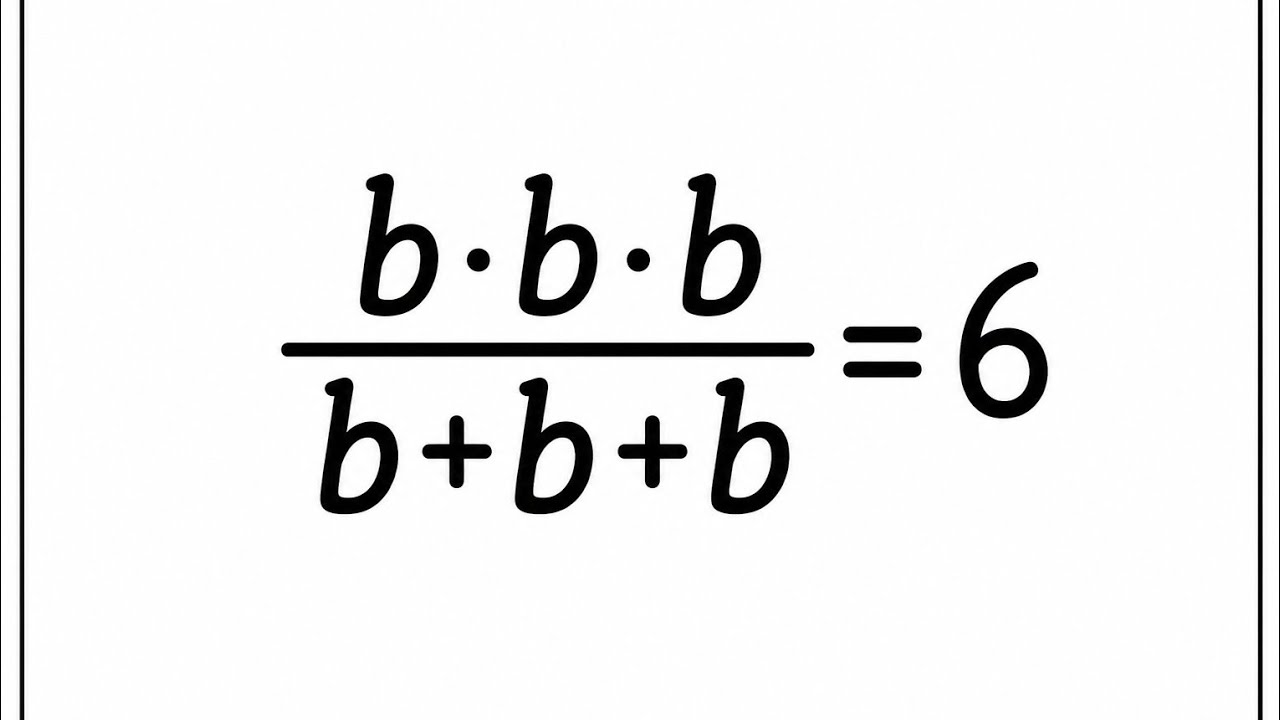
Olympiad Mathematics | Indian | Can You Solve This?
PhilCoolMath
669 views•2026-06-02



