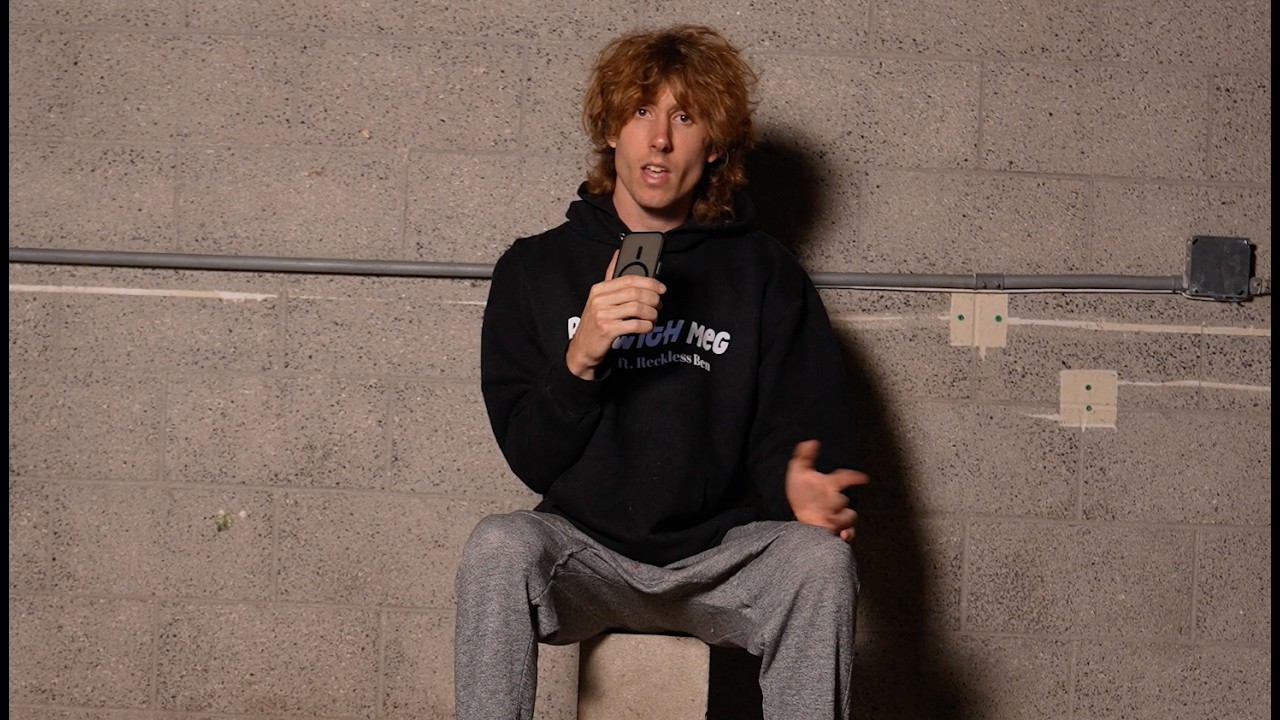
This video presents a debate between a Catholic and a former Catholic about the interpretation of the Eucharist, with the Catholic arguing for transubstantiation (the literal transformation of bread and wine into Christ's body and blood) based on John 6:50-58 where Jesus explicitly identifies the bread as his flesh, while the former Catholic argues for a symbolic interpretation, citing passages like 1 Peter 3:18 and Romans 6:10 that emphasize Christ's sacrifice was 'once for all' and not repeated, and noting that the Book of Acts does not record the early church practicing what the Catholic Church teaches.
Install our extension to search inside any video instantly.
I Debated the Eucharist with a former Catholic
Added:like uh but so I know that you like grew up Catholic. Uh what what do you remember about like the Catholic like Eucharist, the understanding of communion?
uh that is the literal body and blood of Jesus and um through the process of transubstantiation that is also an issue for me because >> alive >> because the Bible the Bible over and over says Christ died unal alived once for all once for all it nowhere do I see in scripture where it says that he is continually It's literally the body and blood of Jesus every time. It's a It's an emblem.
It's not literal.
>> Yeah. So, I mean, um, what do you think we could like look through some scripture together and maybe you could tell me or like we could like find out where we disagree over what the Bible is saying?
>> Sure. Sure. Let me hear what you have to say.
>> Awesome.
>> All right. So, um, you're probably very familiar with like the bread of life discourse in John 6.
>> Mhm. Sure. Yes. Absolutely.
>> Yeah. So, why don't we flip open to that? I got my uh my Bible here and um to John 6 real quick.
Okay.
>> Mhm.
>> Are you there?
>> Yes, I'm here. Can you hear me?
>> Yes, I can.
Okay. And maybe we could start from like verse 25. Is that okay?
>> Yeah, sure. John 6 verse 25.
>> Right. So, we can agree that the the context here is that um a handful of disciples and other Jews that uh were present during the the feeding of the 5000 had kind of like uh followed Jesus, right? And he's gonna he's going to give them this new teaching, right? That's kind of like how it kicks off.
>> Yes.
>> All right. So it says, "When they found him on the other side of the sea, they said to him, "Rabbi, when did you come here? And Jesus answered them, truly, truly, I say to you, you seek me not because you saw signs, but because you ate your fill of the loaves. Do not labor for the food which perishes, but for the food which endures to eternal life, which the Son of Man will give to you. For on him has God the Father set his seal." So, I would say so far like he's acknowledging that what they're like fixated on is the literal food that he had given them before, but now he's saying that he's going to give them a new kind of food, right?
>> Yes. You know, I'm not going to disagree with any of that. What we what we need to establish is does the transsubstantiation taught in the Catholic Church is it biblical?
>> Okay.
>> You don't you don't you don't convince me that that that we should um celebrate the Lord's supper. I know that. Right.
What what you need to convince me is that the Catholic teaching of transsubstantiation is biblical. And I'm saying it's not.
Well, I would say that the transubstantiation is rooted like fundamentally in the idea that in this particular discourse and elsewhere in scripture when Jesus says that um you must eat my flesh and drink my blood that he is speaking literally and not like purely metaphorically.
So you must have some other interpretation of like John six here where you don't think that he he's he really means his actual flesh and his actual blood. Correct.
>> Yes. It's an emblem. It's not it's not literal. So for so for example um 1 Peter 3:18 um 1 Peter 3:18 says, "For Christ also suffered once for sins, the righteous for the unrighteous."
Um Romans 6 verse 10 for for the unalive meant he unal alived he unal alive to sin once for all.
>> Yeah. So >> and it's many many places many many places once. Once once >> so I think there's like two layers to our conversation so far. So, one, I hear you saying that the Bible makes it clear that Christ's sacrifice uh is once and for all, and you seem to be implying that the Catholic position is that his sacrifice takes place um over and over and over again repeatedly.
>> That's one that's one layer of the conversation I'm hearing. And then the second one is that you believe that when Jesus speaks of his flesh and drinking his blood that he's speaking like symbolically only.
>> It it's it's it's spiritual, >> right? So, we got to we got to tackle like only one of those at a time because I'm kind of talking about like analyzing the language of eating flesh and drinking blood >> and you're kind of talking about the whole idea of like the once and for all sacrifice and we can talk about both >> but we got to pick which one we're going to stick to.
>> Okay. Any one you choose.
>> Okay. So um so yeah, why don't we stick here on John 6 and um after we kind of like uh break down the scripture exed and find out where we disagree, we can talk about the the once and for all sacrifice.
>> Okay, >> also uh chat like uh can you guys hear me well? Awesome. You said that I sound quiet.
Uh yeah, please let me know if I got to like turn my mic up or something. Okay.
Um but anyway, so uh so anyway, so we we were talking about um Okay. So I'll try to make this more brief. So we'll skip to where it says um in verse 35. So Jesus says to them, "I am the bread of life. He who comes to me shall not hunger, and he who believes in me shall never thirst. But I said to you that you have seen me and yet do not believe." Okay. So when Jesus says that I am the the bread of life, I would affirm right there that he is in a in uh in one sense speaking symbolically because of course Jesus is not like literally bread. Right.
>> Mhm. Correct.
>> So we can agree on that. Right. So I would say initially it's clear that he's when he speaks about this bread that he's uh going to give them he's speaking symbolically but correct or metaphorically you could say but I also believe that Jesus explains what this metaphor is all right because he goes on to say and um let's see where is All right. So if we read from verse 50, he says, "This is the bread which comes down from heaven that a man may eat of it and not die. I am the living bread."
Again, bread is a metaphor which came down from heaven. If anyone eats of this bread, he will live forever. But then he explains what the metaphor is. He says, "And the bread which I shall give for the life of the world is my flesh." So I would say in this statement, he's clarifying, hey, like the bread that I'm talking about, it's not like my teaching or like like a belief in me. It's it's my flesh. That's what I mean. And I think when we keep reading the passage further, he keeps like doubling down on this. So he says in um because you know initially in verse 52 the Jews are like trying to figure out what he means.
They're saying uh how can this man give us his flesh to eat right? And he doesn't like say to them look like guys I I don't really mean my flesh. I'm I'm just talking about like spiritual belief in me. He doesn't do that. He he doubles down and says, "Truly, truly, I say to you, unless you eat the flesh of the son of man and drink his blood, you have no life in you." Right? He who eats my flesh and drinks my blood has eternal life, and I will raise him up on the left last day. So, um, what do you think of that?
>> Um, uh, I I don't think that's a a strong argument. I think I think that we anything that we say about the scripture, it has to square with everything else. So, and I'm sure you'll agree with that. We can't focus on specific verses um and say, "Okay, well, this proved my point and I'm I'm going to ignore all the other verses. I have to look at the entirety of scripture."
And when I look at the entirety of scripture and also and also when we the book of acts is very important. It doesn't teach the um the the disciples when they met together when the the followers of Christ meeting together. We don't see them doing this practice that is in in in um the Catholic tradition.
We we just don't see it. We see them breaking bread, but we don't see them saying, "Hey, this is the literal body and blood of Jesus." We don't see them saying that. It's just not there in the Bible.
>> But wouldn't you agree that they also don't say, "Hey guys, just so you know, this bread is just like a symbol of Jesus." Like, don't think that this is his actual body. Like are you saying that in order for like uh the Catholic interpretation to be true, they have to every every time there's a mention of bread, there has to be some sort of explicit statement that hey guys, just so you know, this is the literal body and blood of Jesus.
>> Um I I I wouldn't say I wouldn't say they have to say it every time, but show it to me even one time. Show me in the book of Acts where they said that this is the literal body and blood of Jesus.
It's not there.
>> Well, do you believe that that instance is the Lord's supper?
>> Yes, of course. And he said, "As often as you do it, do it in remembrance of me."
>> Mhm.
>> Right. So, so yes, we are supposed to practice it. We are supposed to absolutely. Um but to but again my my issue is not with the ceremony itself.
We're supposed to do it but my issue is with transsubstantiation right and and I've not seen transsubstantiation in my study of the Bible. If you see see it in the Bible, show it to me. But I don't see it.
>> It's a Catholic dog.
>> That's why I'm I'm kind of pointing you to John 6 here. like like what what did you said that you don't think my argument for uh him talking about his literal flesh is strong, but I didn't really hear you explain why from the text. You kind of just said that well you got to look at other passages that aren't John 6.
>> No. No. My point is my point is that John 6 doesn't support it in my view. But why?
>> But but even if it did, but even if it did, what it would have to it would have to to be in agreement with all the other scriptures that we are seeing.
>> Okay?
>> Right? Because the Bible can't because on the principle that the Bible cannot contradict the Bible.
>> Okay?
So, um, but I'm still not hearing because I could I could point to you other scriptures that I think support the Catholic view, but I still haven't heard you explain like what you think is wrong with my reasoning for like John 6 because I pointed out how initially he starts talking about the bread of life which is going to give and how he specifically identifies that the bread of the life which he's going to give is his flesh. And then when the Jews are trying to figure out how they're supposed to eat his flesh, he doesn't make any sort of correction or attempt to tell them that he's not really talking about his actual flesh. He just doubles down and says, "You have to do this or you have no life in you." Like what what do you think is wrong with my reasoning there?
>> Yes. Okay. Okay. So he is speaking to those people at that particular point in time and he's not speaking about a lot firstly a lot of what Jesus says especially with these people who were unbelievers he spoke in parables and he spoke in in in in ways that they wouldn't necessarily understand immediately and he he says why he tells us why. He says the reason why I do this is because these are wicked people and they don't really want to change. And we could look at that verse if you want. So So he does speak um um in in a in a um a way let's say in a parable.
>> Mhm.
>> That that that does confuse the his enemies. Um that's one. Two. when it comes there's nothing there that says that okay this is my body that is going to be offered forever every time I'm going to be un alive for this particular service we just don't see it we just don't see it we just don't see substance transsubstantiation in the scriptures we don't see it in the practice of the the apostles we just don't >> and you have to try to I'm saying you have to try to read into the scripture.
What? Transubstantiation. That's what I'm saying. You have to try to read it into the scripture.
>> Okay. Um but but you you believe that like Christ is speaking metaphorically, right? So you have Yes. you have a metaphorical interpretation and I I could just as easily show you or like say to you that you're reading your metaphorical only view into the scripture as well because like look at all the last supper discourses. He doesn't say this is a symbol of my body. He says this is my body and I feel like the more straightforward reading of that is that it's his actual body just like he said.
So when I hear, you know, a Protestant or a non-atholic say, "No, like he he doesn't really mean it's his actual body," that to me sounds like, "Okay, well, don't aren't you reading your interpretation into the text then?"
>> All right. Can we can we look at Paul's teaching on the matter if you don't mind? Um, in first 1 Corinthians 11 and Yeah. and verse 26.
All right. Uh, >> okay. Do you want me to read verse 26?
>> Yeah. Yes. So, he what? So, in the previous verses from 23, he is he is basically uh summarizing the Passover, right? But then verse 26 is the one that I want us to focus on.
Okay.
>> Can you read it please?
>> Sure.
>> And and you can read 272 as well if you don't mind.
>> Uh say that again.
>> You can read 27 as well. 26 and 27.
>> For as often as you eat this bread and drink the chalice, you proclaim the Lord's death until he comes. Whoever therefore eats the bread or drinks the cup of the Lord in an unworthy manner will be guilty of profaining the body and blood of the Lord.
>> Right. Right. So, so notice he calls it bread.
He doesn't call it the literal body. He doesn't say he would say as often as you eat this body and drink his blood. He doesn't say that. He calls it bread.
It's bread. It's It's an emblem. The bread is an emblem and the drink is an emblem.
>> Sure.
>> Is there ever a per a time in scripture where Jesus like explicitly identifies the bread as his flesh?
>> When he's doing the Passover, when he was at Passover. Yes. When he was instituting the the um communion service. Yes.
>> Um >> Yes. He says, "This is this is my body.
This is my flesh which is poured out for many >> for the forgiveness of sins."
>> He doesn't say that. He's he he says, "This is my body." Right? But um he doesn't use the word flesh in the last supper institutions. What? See, this is why I read you what I read you in in John six because you remember how I was explaining that initially he's explaining to these people that he's going to give them this bread, right?
And then he explicitly says the bread which I shall give for the life of the world is my flesh. That's why I think it's important to look at that because you know you're you're looking at verse 26 saying look he he called it bread and that is true but elsewhere in the bread of life discourse he specifically explained to his audience that the bread he's referring to is his flesh.
>> Yeah. Well, well, I well, we just have to agree to disagree on this because I don't see >> I would also >> unsubstantiation.
>> I would also even say that when the second verse there, whoever therefore eats the bread or drinks the cup of the Lord in an unworthy manner will be guilty of profaining the body and blood of the Lord. And that's a very serious warning. Like, yes, I would I would say that if this is only a symbol of Jesus's body, only a symbol of his blood, then you wouldn't have Paul like saying that you really need to like examine your conscience before you partake in this.
All right. I think that it makes much more more sense for Paul to give this warning if you're actually talking about the real body and blood of Jesus. So that I actually point to 1 Corinthians 11 like this passage all the time because I think it just lines up much more with the Catholic literal interpretation as well. And that's why I look at the early church fathers that the first >> So what about verse 28? What about verse 2? But let a man examine himself and so let him eat the bread and drink of the cup.
Okay. So, so notice he's not calling it the body and blood of Jesus. He said he calls it bread.
>> Yeah. But like like I I addressed that before by explaining that >> 27 bread is identified as his flesh.
>> So him can we agree that him calling it bread is not like some sort of knockdown argument that he's not talking about his literal flesh?
Well, I'd expect him to say that this is the literal body and blood of Jesus, which he doesn't say.
>> So, so let me So, going back to John 6, when he says that the bread which I shall give for the life of the world is my flesh, what do you what do you think he's he's talking about when he says his flesh?
>> Yes. It's spiritual. He's going to be unal alive.
You're going to sacrifice his human human >> from the rest of the for what he says.
So clearly you're going to be unali he's going to be unal alive for the sins of the world. When he says he's going to give his flesh he's saying that I am going to be unal alive.
>> Well I mean it's not like Jesus says that in the passage. You have to be getting that from somewhere else.
Correct.
Um, we have to look at the entire context. I don't think he's saying this literally means that I'm going to be sacrificed over and over every time you hold a mass.
>> I don't think he's saying that.
>> And Okay. So, I think we've kind of exhausted the the whole um literal versus uh non.
>> Yeah. Yeah. We have to agree to disagree. Yeah. We have to disagree.
Agree to disagree. So, um, yeah, you you did bring up, um, how you believe the mass, like, you know, we're doing the sacrifice of Christ over and over again.
We're resacrificing him at every mass, right?
>> Um.
>> Right. Exactly.
>> So, like, is there like, can you point me to somewhere in like the catechism of the Catholic Church that talks about this repeated sacrifice?
Because I've never heard anyone teach that we are repeatedly sacrificing Jesus at every mass.
But that's that's the idea of trans of of of um transubstantiation is literal >> is is the the doctrine that in through the eucharistic prayer the body or the bread is and the blood or excuse me the bread and the wine are changed into the the body and blood of Jesus. All that all transubstantiation is is the change itself. It's not it doesn't have anything to do with like continual sacrifice. There's there's I'm not sure where you're getting that definition of transubstantiation from.
So you're Okay. So you're saying it he's not literally being sacrificed again.
>> Correct.
>> Okay. So how is it his literal body and blood if he's not being sacrificed again?
How is it his literal body and blood?
>> So, so I think I think I think we need to um make sure that we have clear definitions. What is your because sometimes this is what causes um confusion in conversations. I'm sure you know is that people are using different definitions for terms. What is your definition for transubstantiation?
Yeah, I would say that transubstantiation is the teaching that through the eukaristic prayer at mass, the bread and wine offerings are changed into the real substantial body and blood of our Lord Jesus Christ.
>> Right.
Right. Okay. Right. Okay. And and I'm It's right. So he you notice he said the real body and blood of Jesus Christ. Correct.
>> Correct.
>> Right.
Right. So you're saying it's literally his body and his blood. Correct.
>> Yes. And that's why I looked at those scriptures to explain why I think scripture teaches that.
>> Yeah. Well well well um we'll probably have to take this up some other time. Um But I think I could find many um teachings from theologians in the Catholic Church that says yes that it is literally his body and his blood. And I can even I think I can even find I think I've even read somewhere where they say Jesus is sacrificed again. I think I can find that. Hey, if you find that, please hop back on my live and and show me that coming from an official Catholic source.
>> Yes. Yeah, no problem. I'll do that.
>> Awesome.
>> I look in I look in my catechism, too, because I have two of them. I have the basic catechism and I have the full catechism as well.
>> Oh, yeah. That'd be great. Yeah, if you can find them in the cate.
>> I still I still have I still have them.
I've kept them. I have them in my in my library.
>> Oh, well, good for you, George. Good on you. That's That's awesome.
>> Yeah. All right. Take care. Nice chatting. Take care. Bye. Bye.
>> God bless. George.
>> Yeah, George seems like a cool guy. I like George. That was fun.
Oh my gosh. No one has been talking in here. It's really something.
I to I totally could have guessed that George was from Jamaica. Yeah, he he has a a that's a real Jamaican accent, too.
Fun fact about me, I actually spent the first like 19 years of my life believing that I was half Jamaican until I found out that that was not true.
Related Videos

Socrates: The Wisdom of Knowing Nothing #shorts
BIT-BOCA
4K views•2026-06-07

How to overcome the pressure of success. #ancientwisdom #marcusaurelius #philosophy #stoicism
AncientWisdomDailyu
420 views•2026-06-07

The fates guide the willing, but drag the unwilling. | Cleanthes
forged.in.stoicism
138 views•2026-06-10
Kant and Hume: When Reason Undermined Itself | Church History 121
DavidGuzikEnduringWord
148 views•2026-06-12

Are you serious? | Krishnamurti
kft
439 views•2026-06-07

Cliffe Knechtle Debates the Problem of Suffering: Why Does God Allow Cancer?
Bible_Alive
3K views•2026-06-10
Morality Without God || A Conversation with Two Former Christian Ministers
timmygibsonkc
382 views•2026-06-10

Tertullian's An Answer to the Jews: The Earliest Major Latin Refutation of Judaism
TheCatholicState
295 views•2026-06-09